George Chandra Eka
NVIDIA CEO Jensen Huang announced today that NVIDIA has agreed to acquire Hugging Face in a landmark deal valued at $12.93 billion. This confirmation follows weeks of swirling rumors, with reports indicating NVIDIA intensified its interest after other potential buyers entered the fray. The strategic acquisition positions NVIDIA, already a global leader in AI hardware, to establish a dominant presence across both the hardware and open software segments of the burgeoning artificial intelligence market. Hugging Face has become an indispensable platform for developers globally to share, discover, and rigorously test AI models, cementing its status as a central hub for open-source models since the onset of the generative AI boom in 2022.
A Strategic Acquisition for AI Dominance
The acquisition of Hugging Face represents a pivotal moment in the competitive landscape of artificial intelligence. NVIDIA, renowned for its graphics processing units (GPUs) that power much of the world’s AI infrastructure, is now making a definitive move to integrate its hardware prowess with a robust software ecosystem. This vertical integration aims to offer developers a more streamlined, powerful, and comprehensive environment for building and deploying AI solutions, from foundational models to specialized applications.
Hugging Face: The GitHub of AI
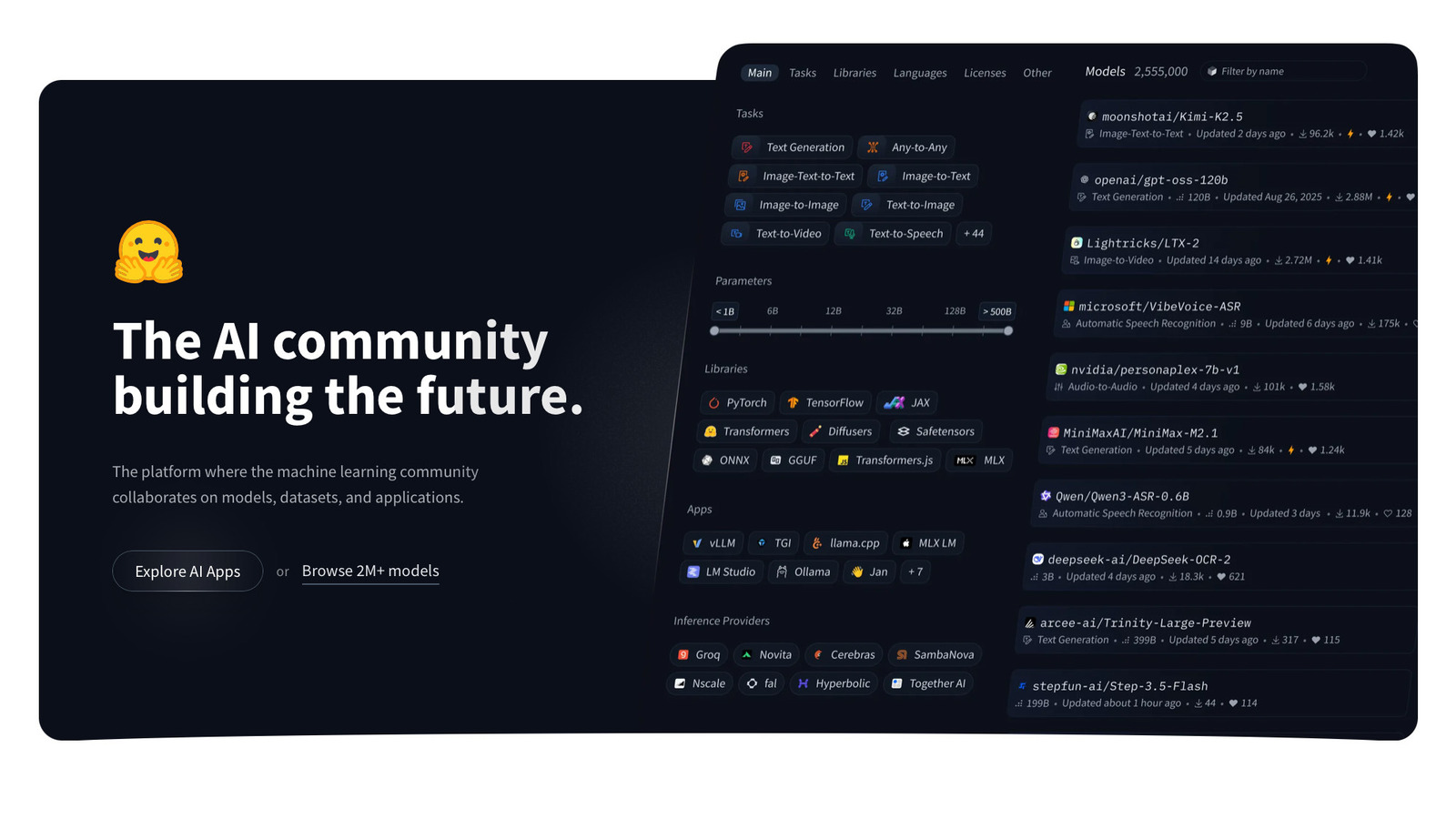
Founded in 2016, Hugging Face initially ventured into the market with a focus on chatbot development. However, the company rapidly pivoted its strategy to become a leading platform for machine learning, particularly specializing in transformer models, which are now foundational to large language models (LLMs) and generative AI. Often dubbed the "GitHub for AI," Hugging Face provides a collaborative space where researchers, developers, and companies can host, version, and share their AI models, datasets, and applications. Its flagship "Transformers" library has become an industry standard, simplifying the implementation of complex models for natural language processing, computer vision, and audio tasks. The platform boasts an immense and active community, hosting hundreds of thousands of models and datasets, including popular open-source offerings like Meta’s Llama series, Stability AI’s Stable Diffusion, and various models from Google and Microsoft, making it an indispensable resource for the AI community. Its commitment to democratizing AI by making powerful tools and models accessible has been a cornerstone of its success.
NVIDIA’s Full-Stack AI Vision
NVIDIA’s journey to AI dominance began decades ago with its relentless innovation in GPU technology. While initially designed for graphics rendering in gaming, the parallel processing capabilities of GPUs proved uniquely suited for the computationally intensive demands of deep learning and neural networks. NVIDIA capitalized on this by developing its CUDA platform, a parallel computing platform and programming model that unlocked the full potential of GPUs for scientific computing and AI. Today, NVIDIA’s data center GPUs, such as the H100 and A100 Tensor Core GPUs, are the backbone of virtually every major AI research lab and cloud provider globally, commanding an estimated 80-90% market share in the AI chip sector.
However, NVIDIA’s vision extends beyond merely supplying powerful hardware. CEO Jensen Huang has consistently articulated a strategy for a "full-stack" AI platform, encompassing hardware, system software, networking, and application frameworks. The acquisition of Hugging Face perfectly aligns with this vision, adding a critical layer of open-source software and community engagement that can significantly enhance the utility and reach of NVIDIA’s hardware. By integrating Hugging Face’s platform, NVIDIA can potentially optimize the performance of open-source models on its GPUs, provide better developer tools, and deepen its relationship with the vast AI developer community. This move is not just about expanding market share; it’s about shaping the future architecture and accessibility of AI development itself.
The Road to Acquisition: A Chronology
The path to this significant acquisition reflects both Hugging Face’s meteoric rise and NVIDIA’s strategic long-term investments in the AI ecosystem.
- 2016: Hugging Face is founded by Clément Delangue, Julien Chaumond, and Thomas Wolf, initially focusing on an AI-powered chatbot for teenagers.
- Late 2010s: The company pivots towards open-source machine learning, specifically focusing on the then-emerging transformer architecture. This strategic shift proves prescient as transformers become the backbone of modern AI.
- 2018-2019: Hugging Face releases its "Transformers" library, which quickly gains traction for its ease of use and broad compatibility, becoming a standard tool for natural language processing.
- 2020-2021: As AI research accelerates, Hugging Face establishes itself as a critical infrastructure provider, attracting a growing community of researchers and developers who contribute models and datasets.
- 2022: The generative AI boom, spurred by the release of models like OpenAI’s ChatGPT and Stability AI’s Stable Diffusion, significantly elevates Hugging Face’s prominence. The platform becomes the primary hub for sharing and iterating on these groundbreaking open-source models.
- August 2023: NVIDIA participates in a significant funding round for Hugging Face, alongside other tech giants including Google, Amazon, Salesforce, AMD, Intel, and IBM. This investment signals NVIDIA’s early strategic interest and recognition of Hugging Face’s growing importance.
- Several Weeks Prior to Announcement: Rumors begin circulating in the tech and financial press about NVIDIA’s potential acquisition of Hugging Face. Reports suggest that NVIDIA intensifies its pursuit, driven by interest from other major players, underscoring the high strategic value placed on Hugging Face’s platform and community.
- Today (Announcement Date): NVIDIA CEO Jensen Huang officially announces the acquisition of Hugging Face for $12.93 billion, marking a new chapter for both companies and the broader AI industry. The deal is now subject to regulatory approvals.
The Open-Source Philosophy and Market Dynamics
The acquisition also underscores a fundamental debate within the AI community regarding the balance between proprietary "frontier models" and open-source or "open-weight" models.
The Rise of Open-Weight Models
While companies like OpenAI, Anthropic, and Google invest heavily in developing proprietary, closed-source frontier models, a significant portion of the AI community, including many analysts, believe that open-source or open-weight AI will play an increasingly vital role. Open-weight models, where the model’s parameters (weights) are publicly accessible, allow for greater transparency, auditability, customization, and community-driven innovation. This approach fosters a vibrant ecosystem where developers can inspect, fine-tune, and build upon existing models without proprietary restrictions, leading to faster iteration and broader applicability. For enterprises, open-source models offer more control, reduce vendor lock-in, and can often be more cost-effective for specific use cases. Clément Delangue, Hugging Face CEO, previously highlighted the strategic importance of open models, notably stating earlier this month that China was gaining an edge in the global AI race due to its enthusiastic embrace of open-source AI development. This perspective aligns with a broader industry trend acknowledging the power of collaborative, community-driven AI.
Hugging Face’s Role in Democratizing AI
Hugging Face has been a champion of this open-source ethos, providing the infrastructure that has democratized access to advanced AI models. Its platform has lowered the barrier to entry for countless developers, researchers, and startups, enabling them to leverage state-of-the-art AI without needing to build models from scratch or incur prohibitive costs. By offering tools like Spaces (for hosting demos), Datasets (for sharing data), and Accelerate (for distributed training), Hugging Face has fostered an environment where innovation can flourish beyond the walls of large corporations. This commitment to accessibility and collaboration has made it a critical enabler for the rapid proliferation of AI applications and research globally.
Industry Reactions and Leadership Perspectives
The announcement has elicited significant reactions across the tech industry, from the leadership of the involved companies to independent analysts and the broader AI community.
Jensen Huang’s Vision
NVIDIA CEO Jensen Huang is expected to frame the acquisition as a natural evolution of NVIDIA’s strategy to provide a complete, end-to-end platform for AI. While specific direct quotes beyond the initial announcement are anticipated, his likely message would emphasize the synergistic potential: "By bringing Hugging Face into the NVIDIA family, we are accelerating our mission to empower every developer and every enterprise with the most advanced AI capabilities. This deal is not merely about combining hardware and software; it’s about uniting the two most vibrant forces in AI – NVIDIA’s computing power and Hugging Face’s open-source innovation and community – to democratize AI development and propel the next wave of breakthroughs. We are committed to nurturing Hugging Face’s open-source ethos and expanding its reach, ensuring that the platform continues to be a neutral, indispensable hub for the global AI community."
Clément Delangue’s Continuity
Hugging Face CEO Clément Delangue’s public statements are likely to reassure the vast Hugging Face community about the platform’s future. While formal statements are pending, he is expected to express optimism about the enhanced resources and scale NVIDIA can provide: "Joining NVIDIA marks an incredibly exciting chapter for Hugging Face. Our mission to democratize good machine learning remains steadfast, and with NVIDIA’s unparalleled resources, technical expertise, and commitment to innovation, we are now poised to accelerate that mission like never before. We envision a future where even more developers can access, build, and contribute to state-of-the-art AI, fostering a truly collaborative and open ecosystem. Our community, our platform, and our commitment to open-source principles will continue to be at the heart of everything we do, now with even greater backing."
Analyst Insights
Financial and technology analysts largely view the acquisition as a shrewd and strategically sound move by NVIDIA. "This is a game-changer for NVIDIA," commented Dr. Emily Chen, a senior AI industry analyst at TechVista Research. "NVIDIA has long dominated the AI hardware layer, but Hugging Face gives them an instant, unparalleled presence in the AI software and developer ecosystem. It effectively creates a formidable full-stack AI powerhouse, potentially rivaling even the integrated AI offerings from hyperscalers like Google and Microsoft. The valuation of $12.93 billion, while significant, reflects the immense strategic value of Hugging Face’s platform, community, and its critical role in the open-source AI movement." Another analyst, Mark Thompson of Global Tech Insights, added, "The move highlights NVIDIA’s understanding that true AI leadership requires not just raw computing power, but also a thriving software layer and a deeply engaged developer community. This acquisition could set a new precedent for how hardware giants approach the software side of AI, potentially spurring further consolidation in the sector."
Implications for the AI Ecosystem
The NVIDIA-Hugging Face acquisition is poised to have profound and far-reaching implications across the entire artificial intelligence ecosystem.
Vertical Integration and Synergies
The primary implication is the creation of a vertically integrated AI behemoth. NVIDIA’s hardware (GPUs, networking, systems) combined with Hugging Face’s software platform (models, datasets, tools, community) creates a powerful synergy. Developers could benefit from tighter integration, optimized performance of models running on NVIDIA hardware, and potentially new tools that bridge the gap between model development and deployment. This could lead to faster iteration cycles for AI projects, reduced friction for developers, and ultimately, accelerated innovation across various AI applications. NVIDIA could offer a "full-stack" solution, from the silicon up to the deployed application, simplifying the complex process of building and scaling AI.
The Future of Open-Source AI
The acquisition raises important questions about the future of open-source AI. While NVIDIA has expressed commitment to maintaining Hugging Face’s open-source principles, the underlying tension between a commercial entity’s strategic interests and a community-driven open platform will be a critical dynamic to watch. Will Hugging Face retain its neutrality as a platform for all models, regardless of their underlying hardware optimization? Will NVIDIA use its influence to subtly steer the open-source community towards its own ecosystem, potentially marginalizing competing hardware platforms? The open-source community will be keenly observing how NVIDIA manages this balance, ensuring that the platform remains a truly open and accessible resource for everyone. Continued investment in maintaining the open-source ethos, potentially through an independent foundation or transparent governance, will be crucial for maintaining trust.
Competitive Landscape and Innovation
This acquisition significantly alters the competitive landscape. NVIDIA now possesses an undeniable advantage in offering a comprehensive AI development environment. This will put pressure on competitors such as AMD, Intel, and even cloud providers like Google Cloud, AWS, and Microsoft Azure, who are all vying for a share of the AI market with their own hardware and software offerings. The move could spur these competitors to accelerate their own vertical integration strategies, potentially leading to more acquisitions or deeper partnerships. For innovation, the synergy could be a net positive, as optimized tools and greater resources could empower developers to create more sophisticated and impactful AI solutions. However, concerns about potential monopolistic tendencies, if NVIDIA controls too much of the AI value chain, may also arise.
Regulatory Oversight
Given the scale of the deal and NVIDIA’s existing market dominance in AI hardware, the acquisition is almost certain to face rigorous antitrust scrutiny from regulatory bodies in the United States, Europe, and other key jurisdictions. Regulators will be keen to assess whether this consolidation stifles competition, limits choices for developers, or creates unfair advantages. NVIDIA’s previous attempt to acquire ARM, which ultimately failed due to regulatory pushback, serves as a cautionary tale. The company will need to convincingly argue that this acquisition fosters innovation and competition rather than hindering it.
Financial Outlook and Market Impact
The $12.93 billion price tag reflects the enormous strategic value Hugging Face brings to NVIDIA. While Hugging Face’s direct revenue streams might not immediately contribute significantly to NVIDIA’s multi-billion dollar quarterly revenues, its strategic importance lies in its role as an ecosystem enabler. By deepening its engagement with the developer community and solidifying its position in the software stack, NVIDIA can reinforce its hardware sales, attract more developers to its CUDA platform, and potentially open new avenues for enterprise services around open-source AI.
The financial markets are likely to react positively to the news, viewing it as a bold and forward-thinking move that further entrenches NVIDIA’s leadership in the most transformative technology of our era. Investors will be looking for clear strategies on how Hugging Face will be integrated and how its open-source model will coexist with NVIDIA’s commercial objectives to drive long-term value.
This acquisition marks a defining moment, signaling NVIDIA’s intent to not only power the AI revolution but to actively shape its direction, from the foundational chips to the collaborative software platforms where the next generation of AI innovation is born. The industry watches with anticipation as NVIDIA and Hugging Face embark on this new, integrated chapter, promising to accelerate the future of artificial intelligence.