Sisilia Frederika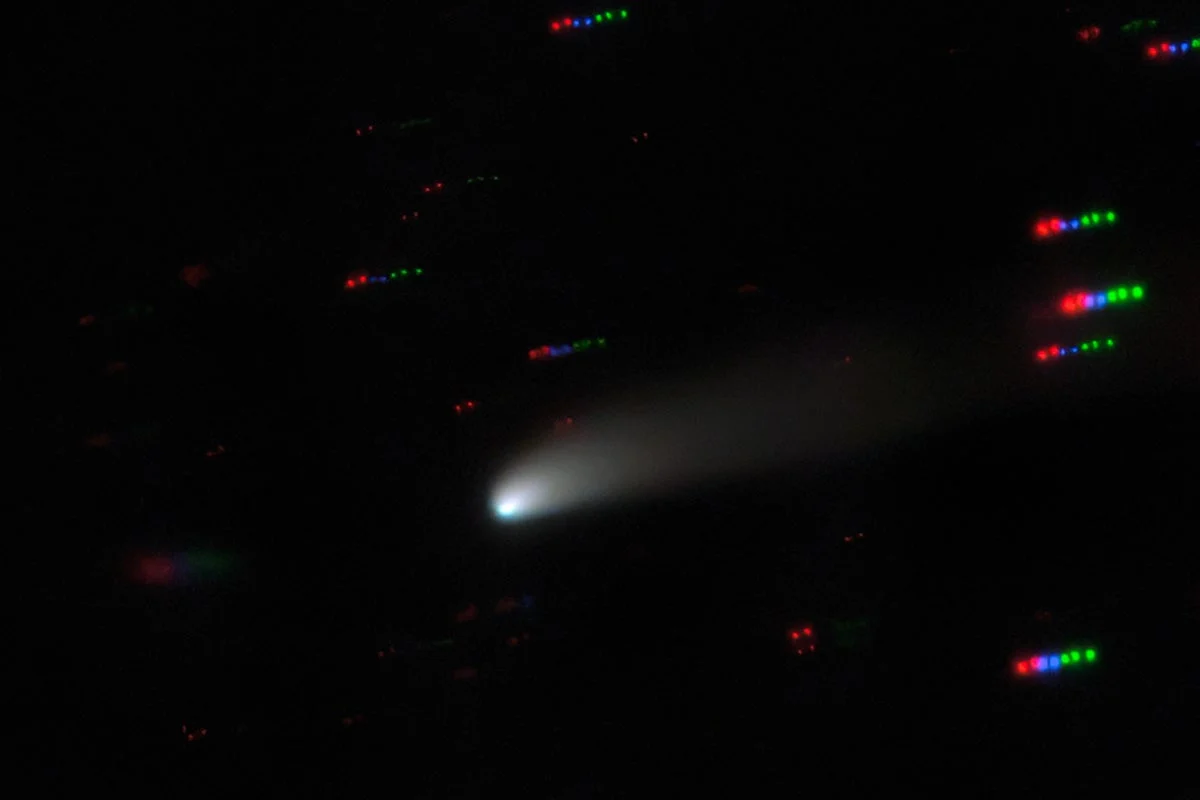
The exploration of the outer solar system has reached a significant milestone with the detailed observation of 450P/LONEOS, a Centaur currently undergoing a dramatic metamorphosis into a cometary body. Centaurs, a class of small solar system bodies that orbit the Sun between the orbits of Jupiter and Neptune, represent a critical link in the evolutionary chain of icy celestial objects. Because they occupy the chaotic gravitational corridor between the gas giants, their orbits are notoriously unstable, frequently subject to the massive gravitational influence of planets like Saturn and Jupiter. This gravitational "nudging" eventually forces these objects either toward the Sun, where they become active comets, or flings them outward into the desolate reaches of interstellar space.
Recent findings published in The Planetary Science Journal, led by researcher Charles A. Schambeau and an international team of astronomers, utilize the unprecedented sensitivity of the James Webb Space Telescope (JWST) and the Gemini North observatory to document this transition in real-time. The study provides a rare glimpse into the chemical and physical processes that occur when a cold, dormant object from the outer solar system begins to warm up, revealing that the traditional "dirty snowball" model of comets may require significant refinement when applied to objects in the early stages of activity.
The Nature and Origin of Centaurs
To understand the significance of 450P/LONEOS, one must first understand the unique position Centaurs occupy in the solar system’s architecture. Discovered first in 1977 with the identification of 2060 Chiron, Centaurs are named after the mythological creatures that were half-human and half-horse, reflecting their dual nature as part-asteroid and part-comet. They originate primarily from the Kuiper Belt, a vast reservoir of icy bodies beyond Neptune. When the gravity of the outer planets disturbs a Kuiper Belt object, it can be pulled inward, entering the Centaur region.
Unlike the rocky bodies of the asteroid belt, which have been baked by billions of years of proximity to the Sun, Centaurs retain a high concentration of volatile ices. However, they are not as pristine or dormant as the objects remaining in the Kuiper Belt. As they migrate inward, the increasing solar radiation begins to sublimate their ices—turning them directly from solids into gases—which creates a coma (a fuzzy atmosphere) and often a tail. This makes Centaurs the primary precursors to Jupiter-family comets (JFCs), the short-period comets that frequently visit the inner solar system.
A Chronology of Orbital Instability: The 1992 Encounter
The specific history of 450P/LONEOS provides a textbook example of how planetary gravity dictates the fate of small bodies. In 1992, the object experienced a significant close encounter with Saturn. This event acted as a gravitational slingshot, radically altering its trajectory. Prior to this encounter, 450P/LONEOS resided in a more distant, colder orbit where solar heating was insufficient to trigger significant sublimation.
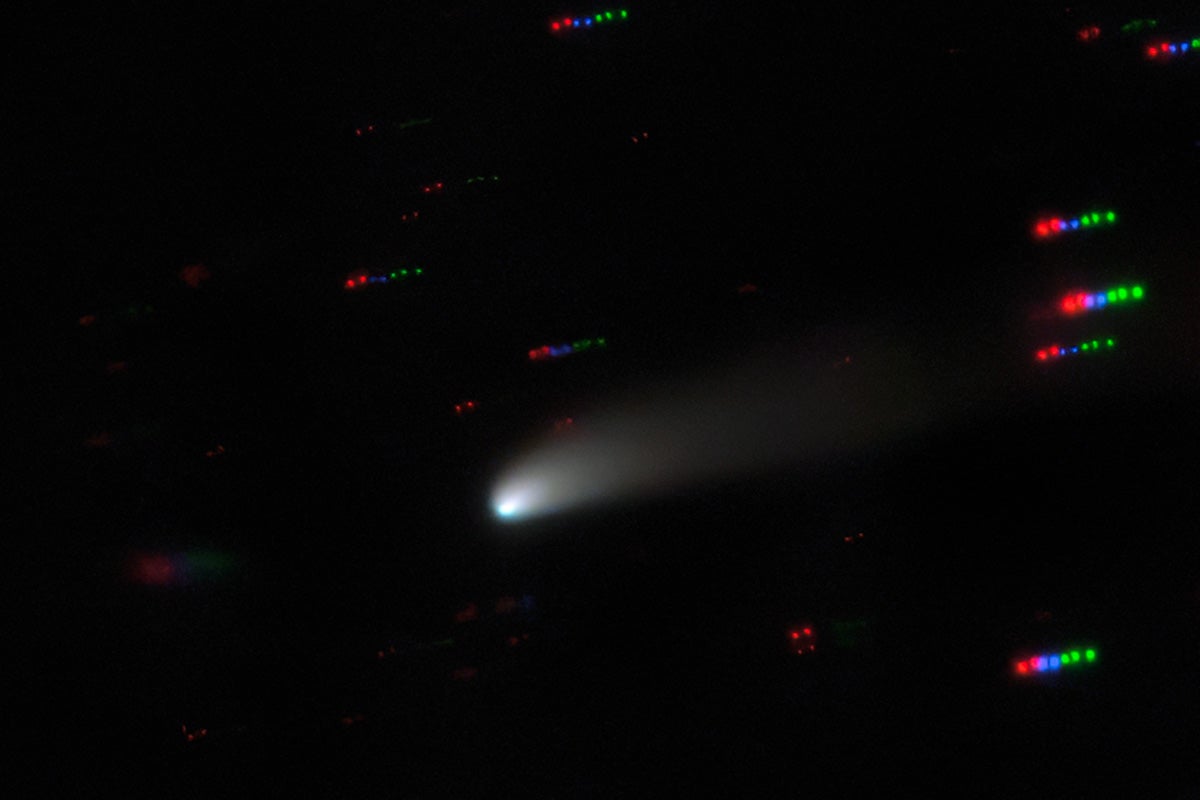
Following the encounter with Saturn, the object’s perihelion—the point in its orbit closest to the Sun—was shifted inward to the orbital distance of Jupiter. This shift exposed the body to a level of solar energy it had likely not experienced for thousands, if not millions, of years. By the time it was observed for the current study, 450P/LONEOS had begun to exhibit clear signs of activity, including the development of a vapor and dust tail. This marks its transition from a relatively dormant Centaur into an active, comet-like body.
Advanced Observations: JWST and Gemini North
The research team employed a dual-observatory approach to capture a comprehensive view of 450P/LONEOS. The James Webb Space Telescope, situated at the second Lagrange point (L2), utilized its Near-Infrared Spectrograph (NIRSpec) to analyze the chemical composition of the gases being vented from the nucleus. Simultaneously, the Gemini North telescope, located on Maunakea in Hawaii, provided high-resolution imaging and additional spectral data to characterize the dust tail and the physical structure of the coma.
The use of JWST was particularly crucial because many of the most important volatile gases, such as carbon dioxide (CO2) and carbon monoxide (CO), have spectral signatures that are difficult or impossible to detect from Earth’s surface due to atmospheric interference. The "infrared eyes" of JWST allowed the team to peer through the dust and identify the specific molecules driving the object’s newfound activity.
The Carbon Dioxide Revelation
The most striking discovery of the study was the composition of the gases in the tail of 450P/LONEOS. For decades, the prevailing "dirty snowball" hypothesis suggested that water ice (H2O) is the primary driver of cometary activity. It was expected that as an icy body approached the Sun, water vapor would be the most prominent gas detected. However, the spectral data from JWST revealed a surprising lack of water vapor.
Instead, the observations showed a dominant presence of carbon dioxide. This finding suggests that dry ice (solid CO2), which sublimates at much lower temperatures than water ice, is the primary engine driving the transition of Centaurs into comets at these distances. At the orbital distance of Jupiter, the Sun’s heat is sufficient to turn CO2 into gas, but it is often just on the threshold of being able to sublimate large amounts of water ice efficiently, especially if that water is buried beneath a layer of insulating dust or "regolith."
Amorphous Ice and the Release of Volatiles
The study proposes a sophisticated physical model to explain the high CO2 levels and the presence of dust. The researchers suggest that much of the ice within 450P/LONEOS exists in an amorphous, porous form. Amorphous ice is a non-crystalline state of water that forms in the extreme cold of deep space, where water molecules freeze so quickly they do not have time to arrange themselves into a neat hexagonal lattice.
This porous, amorphous ice acts like a sponge, trapping other volatile molecules like CO2 within its structure. As 450P/LONEOS moved closer to the Sun following its 1992 Saturn encounter, the internal temperature of the body began to rise. When amorphous ice reaches a certain temperature threshold, it undergoes a phase transition, rearranging itself into a crystalline structure. This "crystallization" process is exothermic and causes the ice to shrink slightly, opening pathways that allow the trapped CO2 to escape violently.
This theory is corroborated by the Gemini North observations of the object’s dust tail. The data indicated the presence of tiny ice crystals mixed with the dust. The release of CO2 likely acts as a propellant, blowing these ice crystals and dust particles off the surface and into space, creating the visible coma and tail observed by the astronomers.
Supporting Data and Technical Analysis
The team’s data analysis involved measuring the production rates of various species within the coma. The CO2 production rate was found to be significantly higher than expected for an object of its size at that distance, while the upper limits for H2O production remained remarkably low.
Specifically, the "CO2-to-H2O ratio" in 450P/LONEOS is much higher than that seen in well-established comets like 67P/Churyumov–Gerasimenko, which have spent more time in the inner solar system. This suggests that 450P/LONEOS is "fresh" in terms of its thermal processing. It still possesses a reservoir of highly volatile ices that more mature comets have long since exhausted.
Furthermore, the size of the nucleus was estimated using the thermal infrared data. By calculating the amount of heat the body radiates, the team could distinguish between the light reflected by dust and the heat emitted by the solid core. These measurements help astronomers understand the "mass loss rate"—essentially how much of itself the Centaur is losing to space during each orbit.
Implications for Solar System Evolution
The findings from 450P/LONEOS have broad implications for our understanding of the early solar system. Because Centaurs are effectively "time capsules" from the Kuiper Belt, their chemical composition tells us about the conditions in the protoplanetary disk four billion years ago. The fact that CO2 plays such a central role in their initial activation suggests that the transport of carbon-bearing volatiles from the outer solar system to the inner solar system is a more complex and CO2-heavy process than previously thought.
This research also highlights the "Comet Gateway," a region of space near Jupiter where many Centaurs are temporarily "parked" before they either move further inward or are ejected. 450P/LONEOS is currently a resident of this gateway. Studying objects in this region allows scientists to build a statistical model of how many icy bodies are currently making the trek toward Earth’s neighborhood and what their impact (both literal and chemical) might be on the inner planets.
Future Outlook: A Potential Jupiter Encounter
The story of 450P/LONEOS is far from over. Orbital simulations suggest that the object is likely to have another close encounter, this time with Jupiter, in the coming decades or centuries. Such an encounter could have two primary outcomes.
First, Jupiter’s massive gravity could fling the object into a much tighter orbit around the Sun, bringing it into the inner solar system (near the orbits of Mars or Earth). If this happens, the increased solar heating would finally reach the threshold required to sublimate water ice on a massive scale. The "dry" tail currently observed would become enriched with water vapor, and 450P/LONEOS would take on the classic appearance of a bright, active comet.
Alternatively, the object could remain in its current orbital regime for several more revolutions. Over time, the easily accessible CO2 near the surface will be exhausted, a process known as "devolatilization." Eventually, the activity might subside until the object moves even closer to the Sun, or it may leave behind a crust of dark, organic material, potentially appearing more like a D-type asteroid.
Conclusion
The study of 450P/LONEOS serves as a vital case study in planetary science, demonstrating the power of next-generation observatories like JWST to solve long-standing mysteries of the solar system. By catching a Centaur in the act of transformation, astronomers have confirmed the critical role of carbon dioxide and the amorphous-to-crystalline ice transition in cometary activation.
As 450P/LONEOS continues its journey through the gravitational gauntlet of the giant planets, it remains a primary target for observation. Each orbit provides more data on how these icy wanderers evolve, ultimately helping us understand the origins of water and organic molecules on Earth, which may have been delivered by similar objects billions of years ago. The transition of 450P/LONEOS is not just a local event in the outer solar system; it is a window into the dynamic and ever-changing nature of our celestial neighborhood.