Sisilia Frederika
The quest to understand the fundamental building blocks of human life has reached a new frontier as researchers at New York University (NYU) bridge the gap between genomic science and astrobiology. A groundbreaking study led by the Center for Soft Matter Research at NYU has provided fresh insights into how the human genome—the intricate instruction manual for life—responds to the unique mechanical environment of microgravity. By utilizing innovative simulation techniques and advanced 3D imaging, the research team has begun to decode the physical rules that govern genetic organization when the constant pull of Earth’s gravity is removed. This work, recently published in the journal Science Advances, represents a critical step in preparing humanity for the physiological challenges of long-duration missions to the Moon, Mars, and beyond.
The Genomic Frontier: From Sequencing to Structural Analysis
To understand the significance of the NYU study, one must look back at the trajectory of genetic research over the last three decades. The Human Genome Project, launched in 1990, served as the foundational effort to map the three billion chemical base pairs that constitute human DNA. When the project was declared complete in April 2003, it provided a linear map of our genetic code. However, scientists quickly realized that knowing the sequence was only half the battle. The physical organization of that sequence—how two meters of DNA are coiled, folded, and packed into a cell nucleus only 10 micrometers wide—is just as vital to biological function as the code itself.
The genome’s 3D architecture influences which genes are "turned on" or "turned off," a process known as gene expression. Deviations in this structural organization have been linked to a myriad of conditions, including various forms of cancer, premature aging, and developmental disabilities. While biologists have spent years studying how chemical signals affect this structure, the role of mechanical forces, specifically gravity, has remained an elusive variable. On Earth, gravity exerts a constant, subtle mechanical stress on every cell in the human body. The NYU team sought to isolate this variable to determine if the very shape and movement of our DNA are dependent on the gravitational environment in which we evolved.
The Physiological Toll of Spaceflight: A Growing Body of Evidence
The necessity for this research is underscored by decades of data collected from the International Space Station (ISS). NASA and other international space agencies have documented that prolonged exposure to microgravity causes significant and often detrimental changes to human physiology. Astronauts frequently experience muscle atrophy, a reduction in bone mineral density, and cardiovascular deconditioning. More recently, "Spaceflight-Associated Neuro-ocular Syndrome" (SANS) has emerged as a concern, where shifts in body fluids cause changes in vision and brain structure.
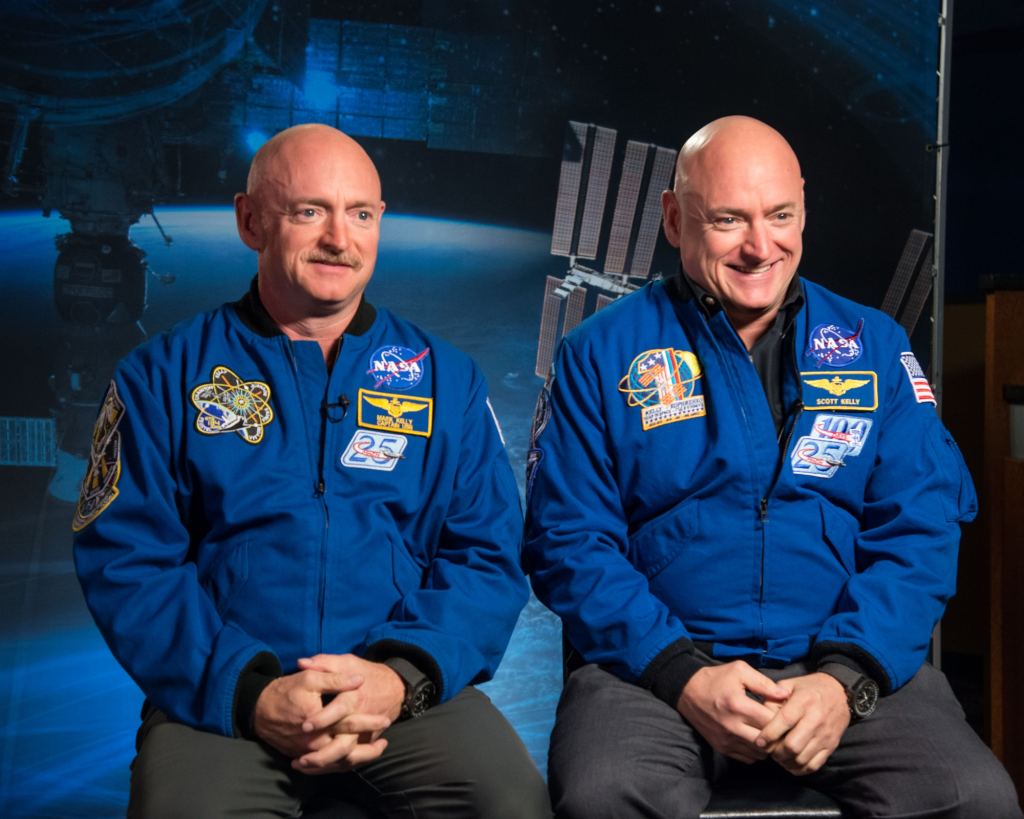
One of the most pivotal milestones in this field was NASA’s Twins Study, which compared astronaut Scott Kelly, who spent nearly a year on the ISS, with his identical twin brother Mark Kelly, who remained on Earth. The study revealed that spaceflight induces changes at the genetic level, affecting gene expression and even the length of telomeres—the protective caps at the ends of chromosomes. While many of these changes returned to baseline after Scott’s return to Earth, some persisted, raising urgent questions about the long-term viability of multi-year missions to Mars. The NYU study builds upon these findings by focusing on the immediate physical and mechanical responses of the genome to the absence of gravity.
Innovative Methodology: Simulating the Void on Earth
Conducting genomic research in space is prohibitively expensive and logistically complex. To circumvent these hurdles, the NYU researchers, led by Alexandra Zidovska, an associate professor in the Department of Physics, developed a sophisticated ground-based simulation. The team designed and constructed a Random Positioning Machine (RPM), a device that rotates biological samples along two independent axes. By constantly changing the orientation of the cells relative to Earth’s gravitational vector, the RPM creates a "time-averaged" microgravity environment, effectively tricking the cells into behaving as though they are in freefall.
However, Earth-based microgravity simulations often face a significant technical challenge: fluid shear stress. When a liquid-filled dish is rotated, the movement of the fluid can create mechanical forces that interfere with the experiment, potentially damaging the cells or masking the true effects of microgravity. To solve this, the NYU team developed custom 3D algorithms designed to minimize fluid flow within the culture dishes. This innovation allowed the researchers to distinguish between the effects caused by the lack of gravity and those caused by the motion of the surrounding environment—a distinction that has plagued previous studies in the field.
Experimental Results: Resilience and Morphological Shifts
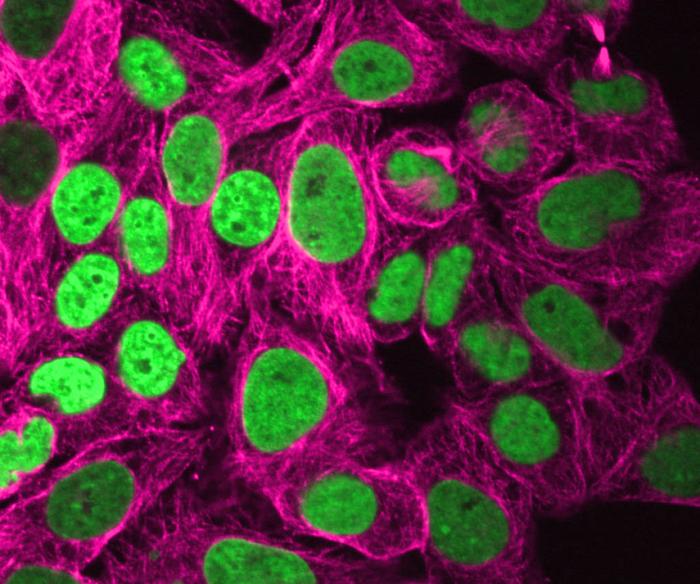
After subjecting living human cell cultures to 24 hours of simulated microgravity, the team employed high-resolution imaging and sophisticated data analysis to observe the results. The findings provided a nuanced look at cellular resilience.
One of the most immediate observations was a change in the physical dimensions of the cell nucleus. The researchers found that microgravity leads to an increase in nuclear volume. This suggests that on Earth, gravity acts as a compressing force that keeps the nucleus smaller. Conversely, the experiments involving fluid flow (without the microgravity correction) resulted in the elongation of cells, highlighting how sensitive human tissue is to different types of mechanical stress.
Despite these changes in volume, the study found that the genome itself is remarkably robust. After the 24-hour period, the internal organization of the DNA and the dynamic motions of the chromatin (the material of which chromosomes are composed) remained largely intact. Furthermore, the thickness and structure of the nuclear envelope—the membrane surrounding the genetic material—showed no significant degradation. Crucially, the researchers determined that simulated microgravity alone did not cause DNA strand breaks or permanent damage within the first day of exposure. Instead, DNA damage was primarily observed in samples subjected to high fluid flow, reinforcing the importance of the team’s algorithmic corrections.
Expert Analysis and Official Commentary
The results offer a "good news, bad news" scenario for future space travelers. On one hand, the human genome appears physically "tougher" than previously thought, maintaining its essential architecture despite the removal of a fundamental environmental force. On the other hand, the subtle changes observed in just 24 hours could compound over weeks or months.
"Our data show that the genome, its organization, and dynamics are incredibly robust and seem unaffected by gravity, or lack thereof, after 24 hours," stated Alexandra Zidovska. However, she was careful to include a caveat regarding the duration of exposure. "Such changes could occur during longer exposures and due to DNA damage occurring in space."
Independent observers in the field of biophysics note that the study’s focus on the "soft matter" properties of the cell provides a vital perspective. By viewing the nucleus as a physical object subject to stress and strain, rather than just a biological data center, the NYU team has opened a new avenue for "space-omics"—the study of how space affects the various "omes" (genome, proteome, transcriptome) of the human body.
Chronology of Genomic and Space Research Milestones
To contextualize this study, it is helpful to look at the timeline of related scientific progress:
- 1990: Launch of the Human Genome Project.
- 1998: Completion of the first modules of the International Space Station, enabling long-term biological study in orbit.
- 2003: Declaration of the completion of the Human Genome Project.
- 2015-2016: NASA Twins Study conducted, providing the first deep-dive into long-term genetic changes in space.
- 2022: The Telomere-to-Telomere (T2T) Consortium publishes the first truly complete human genome sequence, filling in "gap" regions.
- 2024: NYU publishes findings in Science Advances regarding the 24-hour mechanical response of the genome to microgravity.
Broader Implications for Future Space Exploration
As NASA’s Artemis program aims to return humans to the Moon and SpaceX continues its development of the Starship for Mars missions, the NYU study provides essential data for risk mitigation. If the genome’s physical structure remains stable for short periods, it suggests that short-term lunar sorties may pose less risk to genetic integrity than previously feared. However, the increase in nuclear volume observed by the team could have long-term consequences for gene expression that are not yet understood.
Furthermore, the study’s findings on fluid flow have immediate applications for how we conduct biological experiments in space. It suggests that the mechanical environment of the life-support systems and the movement of fluids within spacecraft must be carefully managed to prevent unintended DNA damage to the crew.
The NYU research serves as a reminder that as we reach for the stars, we must continue to look inward. Understanding the biophysical limits of our DNA is not just a matter of academic curiosity; it is a requirement for the survival of the human species as it transitions into a multi-planetary existence. The "robustness" of our genetic architecture is our greatest asset, but as this study shows, the subtle influence of gravity is a thread woven into the very fabric of our biological identity. Continued research into the long-term effects of microgravity will be the key to ensuring that when humans finally step onto the Martian surface, they do so with their genetic blueprints intact.