Sisilia Frederika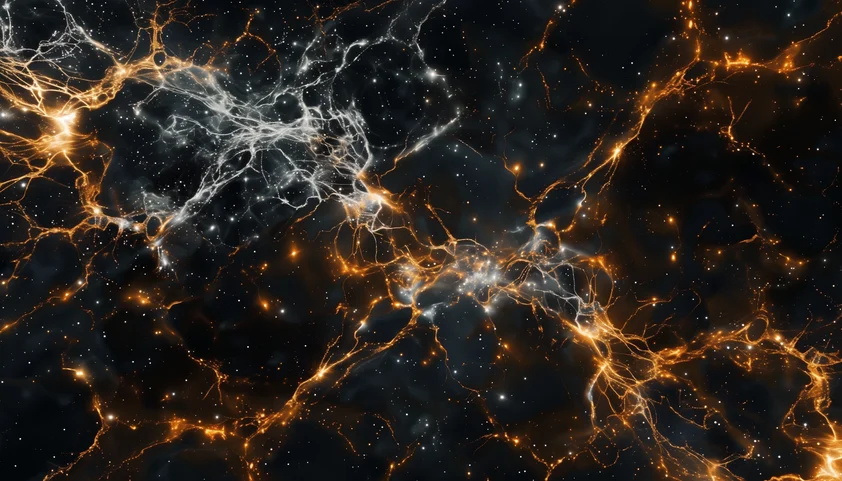
The quest to identify the elusive substance known as dark matter has taken a significant turn as a new study challenges nearly two decades of established cosmological assumptions. For more than fifty years, the scientific community has grappled with the reality that approximately 85% of the matter in the universe is invisible, detectable only through its gravitational influence on visible stars and galaxies. Among the leading candidates for this mysterious substance is the "dark photon," a theoretical particle that acts as a bridge between the visible world and the "dark sector." However, a collaborative research effort between the Maryland Center for Fundamental Physics (MCFP) and the Perimeter Institute for Theoretical Physics (PITP) has revealed that previous models regarding how these particles interacted with the early universe were fundamentally incomplete. By correcting a long-standing error in how dark photons are thought to convert into ordinary energy, the team has reopened a massive window of discovery, suggesting that dark matter could be hiding in "parameter spaces" previously dismissed as impossible.
The Invisible Foundation of the Cosmos
To understand the significance of this new study, one must look at the broader context of dark matter research. The concept of dark matter was first proposed in the 1930s by Swiss astronomer Fritz Zwicky, who observed that the mass of all the stars in the Coma cluster of galaxies was insufficient to provide the gravitational pull required to hold the cluster together. Decades later, in the 1970s, astronomers Vera Rubin and Kent Ford provided more definitive evidence through the study of galactic rotation curves. They found that stars at the edges of galaxies were moving just as fast as those near the center, a phenomenon that could only be explained if a massive, invisible "halo" of matter surrounded every galaxy.
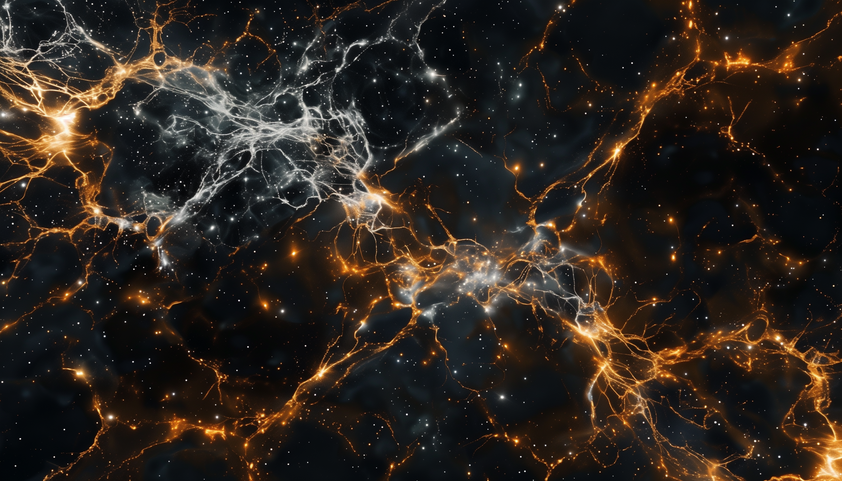
Since then, dark matter has become a cornerstone of the Lambda Cold Dark Matter (ΛCDM) model, the current standard in cosmology. While it does not emit, absorb, or reflect light, its presence is inferred through gravitational lensing—where the gravity of dark matter bends the light from distant stars—and its role in the formation of the cosmic web, the large-scale structure of the universe. Despite this indirect evidence, the actual particle that constitutes dark matter remains undiscovered. Candidates have ranged from Weakly Interacting Massive Particles (WIMPs) and axions to primordial black holes (PBHs). Among these, the dark photon has emerged as a particularly compelling candidate because it provides a mechanism for "dark" forces to interact with the Standard Model of physics.
The Dark Photon and the Portal Hypothesis
The dark photon is theorized as a "portal" particle. Much like the ordinary photon is the force carrier for electromagnetism, the dark photon would be the force carrier for a hidden "dark electromagnetism." If dark photons exist, they could occasionally "mix" with ordinary photons through a process called kinetic mixing. This mixing would allow dark matter to interact very weakly with ordinary matter, potentially explaining how the early universe was heated and how matter eventually coalesced into the stars and galaxies we see today.
For the past 15 years, the prevailing scientific consensus was built on a "linear" model of energy conversion. This model suggested that in the hot, dense plasma of the early universe, dark photons would have converted into ordinary photons (light) at a steady, predictable rate. If this were true, the conversion process would have dumped massive amounts of energy into the surrounding hydrogen gas, heating the universe to a degree that would be detectable today in the Cosmic Microwave Background (CMB) or through the observations of the "Dark Ages" of the cosmos. Because scientists did not see this extreme heating in their data, they concluded that dark photons could not exist within a specific range of masses and strengths. This effectively "locked the door" on a vast portion of the potential search area, known as the parameter space.
A Breakthrough in Plasma Physics
The new study, published in the prestigious journal Physical Review Letters, suggests that the door was never actually locked. The research team, led by Professor Anson Hook of the University of Maryland and featuring Junwu Huang and Mohamad Shalaby from the Perimeter Institute, utilized advanced simulations to re-examine the physics of the early universe. Their primary finding was that the previous 15 years of research had relied on a linear approximation that failed to account for the chaotic, non-linear nature of plasma.
In physics, a linear system is one where the output is directly proportional to the input—predictable and steady. However, the early universe was anything but steady. As the team’s simulations demonstrated, the moment dark photons begin to convert into ordinary energy within a plasma, the system becomes "violently non-linear."
"The treatment for the last 15 years is a linear treatment," explained Junwu Huang in a statement released by the Perimeter Institute. "If you use that approximation, you can compute the amount of energy transfer, and it’s very large. And I realized it’s not possible."
The researchers discovered that as the energy from dark photons enters the plasma, the plasma itself reacts defensively. The sudden influx of energy causes the plasma to become turbulent, creating non-linearities that effectively "shut off" the conversion process before a significant amount of energy can be transferred. This means that even if dark photons were present in the early universe, they would not have heated the gas nearly as much as previously thought.
Reclaiming Ten Orders of Magnitude
The implications of this "non-linear shutdown" are staggering for the field of particle physics. By proving that the heating process was self-limiting, the team has invalidated the constraints that had previously ruled out dark photons across roughly ten orders of magnitude.
Specifically, the study focuses on dark photons with frequencies ranging from approximately $10^-15$ electron volts (eV) to $10^-9$ eV. In practical terms, these frequencies correspond to the kilohertz and gigahertz parts of the radio spectrum. Previously, cosmological models suggested that dark photons in this range would have over-heated the universe, and therefore, they were excluded from experimental searches.
"These exclusions were saying the strength of dark matter had to be $10^8$ [times] weaker than it actually can be," noted Professor Anson Hook. "This paper opens up a lot of new possibilities to look for dark matter."
By expanding the searchable parameter space by a factor of 100 million, the study provides a new roadmap for experimentalists. It suggests that dark photons could be much more "active" or "stronger" than scientists dared to hope, and that they may be hiding in the very radio frequencies that modern telescopes and detectors are designed to monitor.
Interdisciplinary Collaboration and Experimental Impact
The success of this research highlights the growing importance of interdisciplinary work in solving the mysteries of the universe. The team combined expertise in high-energy particle physics with deep insights into plasma physics—a field often more associated with nuclear fusion and stellar dynamics than with the birth of the cosmos.
Mohamad Shalaby, a specialist in plasma physics at the Perimeter Institute, emphasized that this bridge between disciplines was the key to their discovery. "By calculating the early universe plasma correctly, experiments will probe new parameter spaces and potentially actually see something," Shalaby said. "It’s truly interdisciplinary. It’s the interaction between plasma physics and particle physics. And this will directly impact people who do experiments."
The findings are expected to have an immediate ripple effect on several major experimental projects. For instance, experiments like the Axion Dark Matter Experiment (ADMX) and various radio-frequency cavity searches may now need to recalibrate their targets. If dark photons are indeed hiding in the kilohertz-to-gigahertz range, researchers may already have the tools necessary to detect them, provided they look in the right places.
Broader Implications for the Search for Dark Matter
Beyond the specific case of dark photons, this study serves as a cautionary tale for the broader scientific community regarding the use of linear approximations in complex systems. The researchers pointed out that similar linear treatments have been used to model other astrophysical environments, such as the magnetospheres of neutron stars and white dwarfs.
"A lot of astrophysical systems have also been used to look for similar effects, and we need to rethink all of them," warned Huang. "Linear approximation, which is easy to compute, might have nothing to do with how a neutron star magnetosphere actually behaves."
As the scientific community digests these findings, the focus will likely shift toward more sophisticated, non-linear modeling of the early universe. The study reinforces the idea that the "dark sector" of physics may be far more complex and interactive than the simple, "cold" models of the past have suggested.
Conclusion
The search for dark matter remains one of the greatest challenges in modern science, representing the "final frontier" of our understanding of the physical world. While the existence of dark matter is supported by a mountain of indirect evidence, the failure to detect a particle has led some to question the validity of our current models. However, the work of Hook, Huang, and Shalaby suggests that the problem may not be the existence of the particles themselves, but rather the mathematical assumptions used to hunt for them.
By demonstrating that the early universe was a much more resilient environment than previously modeled, the team has effectively "reset" the search for dark photons. As radio telescopes and particle detectors around the world begin to scan the newly opened parameter spaces, the possibility of a direct detection of dark matter feels closer than it has in decades. Whether the dark photon is the final answer or merely a piece of a larger puzzle, this study has ensured that the hunt continues with renewed vigor and a much wider field of vision.