Lina Irawan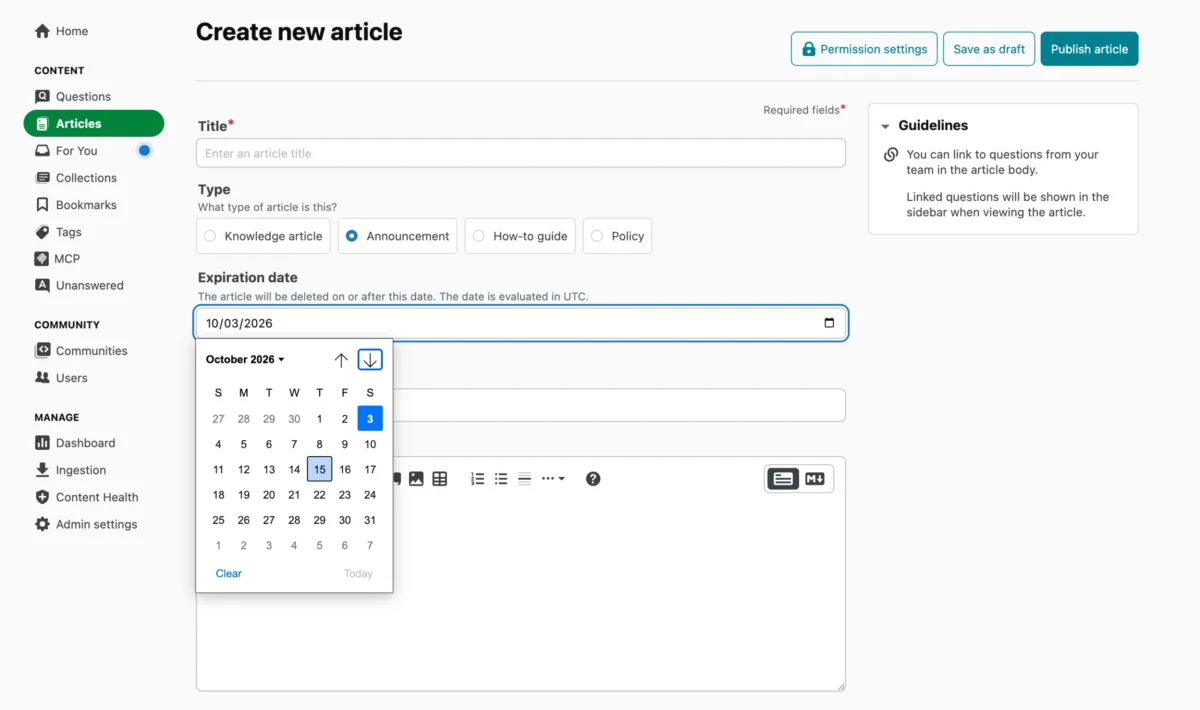
The global landscape of enterprise software development has reached a critical inflection point where the efficacy of artificial intelligence is no longer determined solely by the sophistication of the underlying models, but by the quality and accessibility of the data they consume. In response to this shift, the release of version 2026.6 of Stack Overflow for Teams, often referred to as Stack Internal, marks a significant milestone in the evolution of "organizational memory." This update introduces a comprehensive suite of enhancements designed to ensure that the knowledge layer powering both human engineers and AI agents remains fresh, secure, and seamlessly integrated into the modern developer workflow. As organizations transition from experimental AI implementations to scaled, production-grade systems, the 2026.6 release addresses the foundational requirements of administrative security, programmatic API control, and platform-wide accessibility.
The Evolution of Organizational Memory in the AI Era
To understand the significance of the 2026.6 release, it is necessary to examine the broader context of technical knowledge management. For decades, institutional knowledge was often siloed in disparate documents, chat logs, and the individual memories of senior engineers. The rise of Stack Overflow for Teams transformed this by providing a centralized, searchable repository of verified technical solutions. However, with the advent of Large Language Models (LLMs) and generative AI, the role of this repository has shifted. It is no longer just a destination for humans; it is the primary source of truth for AI agents performing Retrieval-Augmented Generation (RAG).
In a RAG-based architecture, an AI agent queries an internal database to provide contextually accurate answers to developer queries. If the underlying data is stale, insecure, or poorly structured, the AI inevitably produces "hallucinations" or outdated advice, leading to technical debt and security vulnerabilities. The 2026.6 release is specifically engineered to mitigate these risks by transforming Stack Internal into a "decision-grade" knowledge layer—a trusted foundation where every piece of information is verified and every access point is governed.
Strengthening the Security Perimeter and Governance
As enterprise teams expand API access to feed internal AI tooling and automated workflows, the attack surface for sensitive corporate data increases. Security in the 2026.6 release is not merely an incremental update but a structural reorganization of how administrative controls are handled. The center of this update is a new, dedicated Security settings page within the Admin console. This centralized hub is designed to unify session management and request governance, providing administrators with a granular view of how data is being accessed across the organization.
The need for such robust governance is supported by industry data. According to the 2025 Global Cybersecurity Outlook, unauthorized API access has become a leading vector for data breaches in the tech sector, with a 35% increase in incidents involving internal knowledge leakages over the past 24 months. By consolidating security settings, Stack Overflow for Teams allows enterprises to implement strict "least privilege" access models. This ensures that while AI agents have the data they need to function, they do not inadvertently expose sensitive proprietary logic or credentials to unauthorized users or external environments.
Combating Knowledge Decay with Automated Health Capabilities
One of the most persistent challenges in software documentation is "content rot"—the phenomenon where once-accurate information becomes obsolete as codebases and libraries evolve. For human developers, stale content is a nuisance; for AI agents, it is a critical failure point. The 2026.6 release introduces advanced automated knowledge-health capabilities directly into the Stack Internal platform. These tools are designed to identify and flag content that may no longer be relevant based on usage patterns, age, and feedback loops.
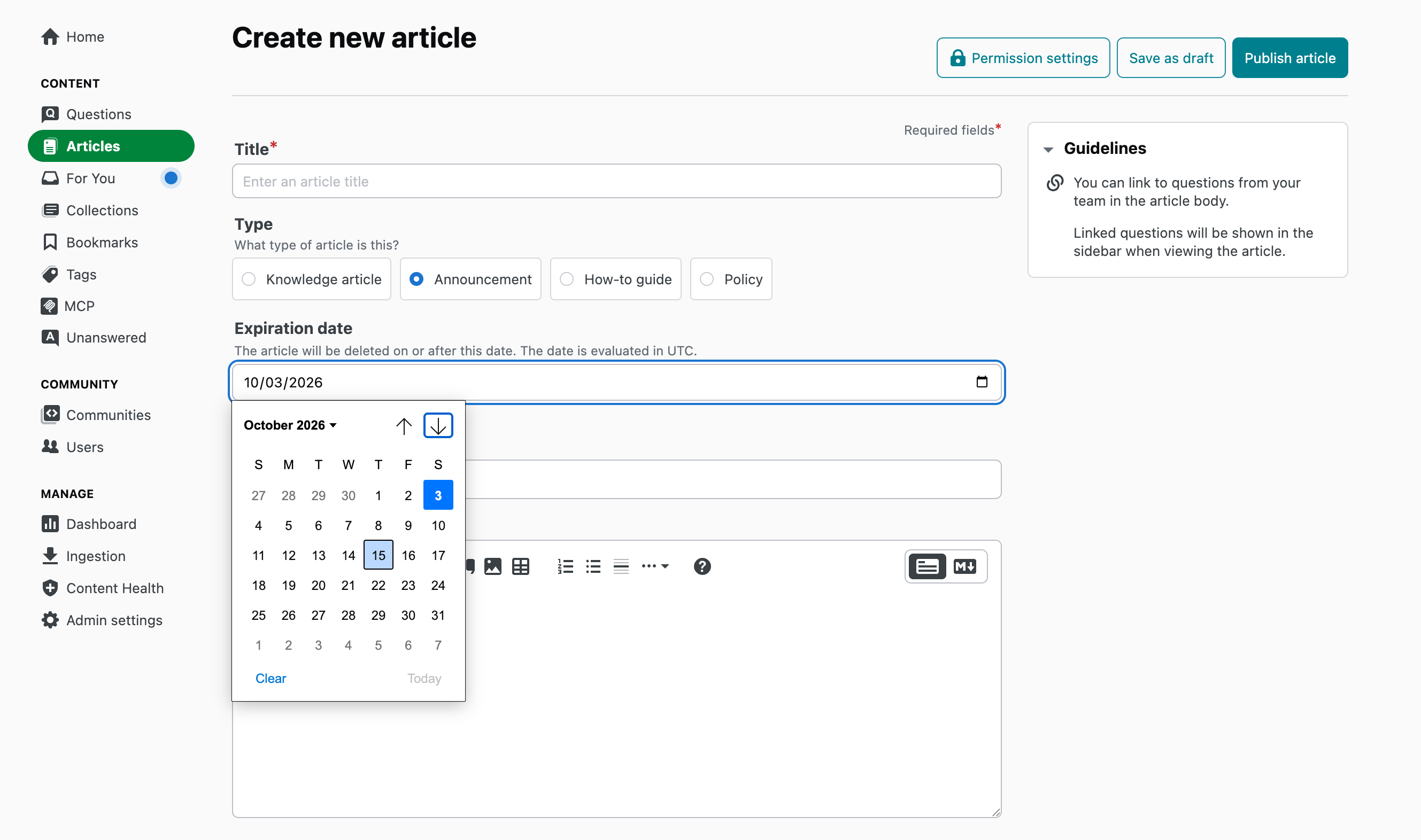
The impact of "decision-grade" knowledge on productivity is measurable. Internal studies and industry benchmarks suggest that developers spend upwards of 20% of their time searching for information or verifying the accuracy of existing documentation. By automating the "gardening" of the knowledge base, the 2026.6 release reduces the cognitive load on human moderators. The system now proactively prompts experts to review or archive aging content, ensuring that the repository remains a high-fidelity source for both the current workforce and the AI models being trained on its data.
Programmatic Integration and the Developer Ecosystem
A key theme of the 2026.6 update is the move toward a "headless" or integrated knowledge experience. While the Stack Overflow interface remains a primary touchpoint, many modern engineering teams operate within a fragmented ecosystem of IDEs, CI/CD pipelines, and internal developer portals. The 2026.6 release makes it easier to embed Stack Internal context programmatically into these existing systems.
Through enhanced API controls and new developer portal integrations, organizations can now surface verified Q&A directly within the tools where developers spend the majority of their time. For example, an engineer working on a specific microservice in their IDE can receive "just-in-time" knowledge snippets pulled from Stack Internal, powered by the new programmatic hooks. This reduces "context switching"—a known productivity killer—and ensures that the organizational memory is present at the point of creation and troubleshooting.
Accessibility and Inclusive Knowledge Sharing
The 2026.6 release also reflects a growing industry commitment to accessibility. As technical roles become more diverse, the tools used to manage knowledge must be inclusive of all users, including those with visual, auditory, or motor impairments. The update includes significant accessibility improvements across user, moderator, and admin workflows, aligning with WCAG (Web Content Accessibility Guidelines) standards.
These updates ensure that the process of contributing to and managing the organizational memory is not restricted by physical or technical barriers. In a professional environment, accessibility is not just a matter of compliance; it is a matter of ensuring that the best ideas and most accurate solutions can be contributed by anyone, regardless of how they interact with the platform. This democratization of knowledge production is essential for maintaining a comprehensive and robust internal database.
Technical Refinement and Performance
Beyond the major feature additions, the 2026.6 release includes over a dozen targeted bug fixes that address long-standing friction points in the user experience. Key among these are improvements to tag edit validations and the suggested edit review queues. These refinements are critical for maintaining the taxonomic integrity of the knowledge base. Without accurate tagging, the discoverability of information—both by humans and by AI search algorithms—is severely compromised.
Furthermore, updates to the Slack integration rendering ensure that knowledge shared via chat platforms maintains its formatting and clarity. As Slack and Microsoft Teams remain the primary communication hubs for many engineering departments, the seamless transition of information from a chat thread to a permanent knowledge asset is vital for capturing "transient knowledge" that would otherwise be lost.
Analysis of Implications: The Future of Technical Work
The release of 2026.6 signals a broader shift in how enterprises view their intellectual property. In the pre-AI era, a company’s value was often tied to its proprietary code. In the AI era, value is increasingly tied to the context surrounding that code—the "why" behind architectural decisions, the history of bug fixes, and the collective expertise of the engineering team.
By treating this context as a "knowledge layer" that requires its own security, health, and integration strategy, Stack Overflow for Teams is positioning itself as the central nervous system of the enterprise. The implications for AI strategy are clear: companies that invest in a high-quality, verified knowledge base will see significantly higher returns on their AI investments. Conversely, those that rely on fragmented or unverified data will struggle with AI implementations that are unreliable or even hazardous to their operations.
Market Context and Chronology of Innovation
The 2026.6 release follows a series of aggressive updates by Stack Overflow aimed at integrating generative AI into its core offering. Following the 2023 launch of OverflowAI and subsequent iterations in 2024 and 2025, the 2026.6 version represents the "maturity phase" of these technologies.
- 2023-2024: Focus on search and retrieval (incorporating semantic search).
- 2025: Focus on the "Human-in-the-loop" (ensuring AI-generated content is vetted).
- 2026.6 (Current): Focus on the infrastructure of knowledge (security, API governance, and programmatic scale).
This trajectory mirrors the broader market’s move from "AI hype" to "AI utility." As organizations move beyond the initial excitement of chatbots, they are realizing that the "garbage in, garbage out" rule applies more than ever. The 2026.6 release is a direct response to this realization, providing the "clean" data pipeline necessary for the next generation of automated engineering.
Conclusion: A Foundation for the Autonomous Enterprise
The Stack Overflow for Teams 2026.6 release is a comprehensive overhaul that addresses the most pressing challenges of the modern technical organization. By focusing on the intersection of security, health, and accessibility, the platform provides a blueprint for how companies can scale their AI strategies without sacrificing the integrity of their data.
As engineers and AI agents continue to work in closer collaboration, the need for a "single source of truth" has never been more urgent. With the enhancements in version 2026.6, Stack Internal offers more than just a place to ask questions; it provides a secure, programmatic, and accessible foundation for the collective intelligence of the enterprise. Teams are encouraged to begin exploring the updates immediately to ensure their knowledge infrastructure is prepared for the demands of the coming year.