Garick Elordi
Valve Corporation has officially announced the Steam Frame, its second in-house virtual reality (VR) headset and the long-awaited successor to the 2019 Valve Index. Representing a significant shift in the company’s hardware strategy, the Steam Frame transitions from a strictly tethered PC-VR experience to a hybrid model capable of functioning as a standalone device while maintaining a high-performance link to the Steam library. The device features a substantially reduced weight profile, upgraded optics, and a sophisticated streaming solution designed to bridge the gap between mobile processing and high-fidelity PC gaming.
The Steam Frame arrives at a pivotal moment for the VR industry, which has seen a bifurcation between the mass-market accessibility of Meta’s Quest lineup and the enthusiast-grade, tethered performance of devices like the Bigscreen Beyond. Valve’s entry aims to occupy a middle ground, offering premium specifications and a modular design that caters to both casual users and the dedicated PC-VR community.
Technical Specifications and Hardware Advancements
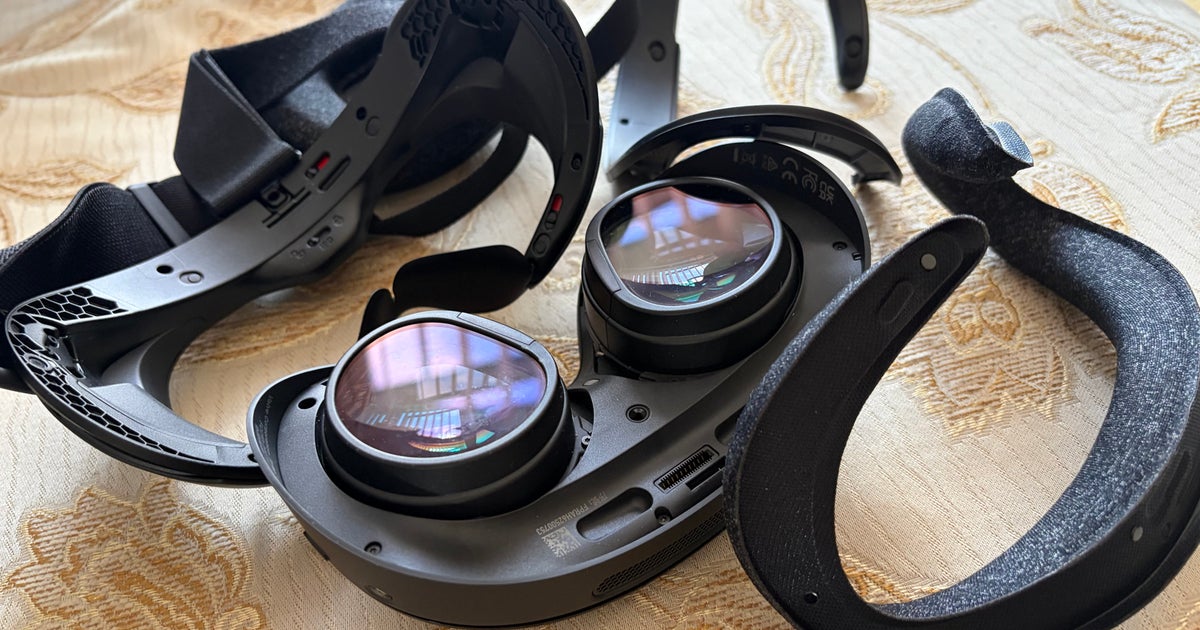
The Steam Frame represents a total overhaul of the architecture established by the Valve Index. One of the most immediate improvements is the device’s physical footprint. The headset weighs 440g, a nearly 45% reduction from the 800g Index. This weight reduction is achieved through the implementation of pancake lenses, which replace the bulky Fresnel lenses found in previous generations. Pancake optics allow for a thinner optical stack and significantly improved edge-to-edge clarity, reducing the "god rays" and blurring that plagued earlier VR displays.
The display technology has also seen a marked upgrade. The Steam Frame features dual LCD panels with a resolution of 2160×2160 per eye, surpassing the Index’s 1440×1600 and the Meta Quest 3’s 2064×2208. While it lacks the OLED technology found in Sony’s PlayStation VR2, the Frame offers a refresh rate ranging from 72Hz to 144Hz, providing a smooth experience across various software types.
Under the hood, the Steam Frame is powered by the Qualcomm Snapdragon 8 Gen 3 chipset, supported by 16GB of internal memory. This processor is roughly 30% more powerful than the Snapdragon XR2 Gen 2 found in the Quest 3. This performance overhead is critical for Valve’s "Steam Frame Verified" system, as it allows the device to run both native VR titles and traditional flatscreen games via the Proton compatibility layer—the same technology that powers the Steam Deck.

Pricing Tiers and Modular Ecosystem
Valve has positioned the Steam Frame as a premium product, with pricing that reflects its high-end components and lack of hardware subsidies. The base 256GB model is priced at £889, while the 1TB version reaches £1,089. This pricing strategy places the Frame significantly above the Meta Quest 3, which retails for approximately £549 for its 512GB variant.
The standard package includes:
- The Steam Frame headset with a rear-mounted, swappable battery pack.
- Two six-degree-of-freedom (6DoF) controllers.
- A 6GHz wireless streaming dongle for PC connectivity.
- A USB-C charging cable and a glasses spacer.
Valve has emphasized a modular approach to the Frame’s hardware. The headset is designed to be easily disassembled for upgrades or repairs. For example, Valve has partnered with Zenni Optical to provide snap-in prescription lenses for $70. Additionally, a third-party full-color camera upgrade from Arcturus is available for £129, addressing the fact that the Frame ships with monochrome passthrough cameras as standard. This modularity extends to an "Ergonomic Accessories Kit" (£59), which adds headstraps and controller grips that allow for open-palmed use, similar to the "knuckle" controllers of the Valve Index.

The Standalone Experience and Software Verification
The most ambitious aspect of the Steam Frame is its ability to operate without a PC. By utilizing a Linux-based operating system and the Proton compatibility layer, the Frame can run a wide array of games from the existing Steam library. However, the transition to standalone play is not without challenges.
Valve has introduced a "Verified" program to help users identify which games perform optimally on the Frame’s mobile hardware. To earn a "Great on Frame" rating, VR titles must maintain a minimum of 72 frames per second (fps) at a resolution of 1728×1728, while flatscreen games must hit at least 720p at 30fps. At launch, approximately 130 titles are expected to be verified.
Early testing indicates that while low-poly VR games like Walkabout Mini Golf and Pistol Whip run flawlessly, more demanding 3D titles often require significant graphical compromises. Furthermore, the standalone battery life is currently limited to approximately one hour of play, though Valve has suggested that swappable batteries and an upcoming "premium" audio and power solution may mitigate this in the future.

PC-VR Connectivity and Foveated Streaming
While the standalone capabilities are a major marketing focus, industry analysts suggest the Steam Frame’s true strength lies in its PC-to-headset streaming. Included with every unit is a proprietary 6GHz wireless adapter. This dongle creates a dedicated high-bandwidth link between the user’s PC and the headset, bypassing the common latency and interference issues associated with standard home Wi-Fi networks.
A key technological breakthrough in this system is "foveated streaming." Using the headset’s internal eye-tracking sensors, the system identifies exactly where the user is looking and prioritizes network bandwidth to that specific area. This allows for higher resolutions and bitrates in the center of the user’s vision while reducing data usage in the periphery. The result is a wire-free PC-VR experience that maintains the visual fidelity of a tethered connection, allowing users to play demanding titles like Half-Life: Alyx without the physical constraints of a cable.
Chronology of Valve’s VR Development
The release of the Steam Frame is the culmination of over a decade of research and development within Valve’s hardware division.

- 2014: Valve partners with HTC to develop the Vive, introducing the "Lighthouse" base station tracking system.
- 2016: The HTC Vive launches, establishing SteamVR as a primary platform for PC virtual reality.
- 2019: Valve releases the Index, its first fully in-house headset, featuring industry-leading audio and "knuckle" controllers.
- 2022: The launch of the Steam Deck proves Valve’s ability to create a successful mobile gaming ecosystem using Linux and Proton.
- 2023: Rumors of "Project Deckard" (the internal codename for Frame) begin to circulate as patent filings reveal a standalone headset design.
- 2024: Valve officially unveils the Steam Frame, moving away from base station tracking in favor of internal "inside-out" camera tracking.
Market Context and Economic Considerations
The Steam Frame enters a market currently dominated by Meta, which holds over 70% of the VR hardware market share. Unlike Meta, which heavily subsidizes its hardware to build a massive user base for its "metaverse" ecosystem, Valve’s business model remains focused on high-quality hardware sales and software royalties through the Steam store.
The £889 entry price reflects the current "AI-fuelled component crisis," which has driven up the cost of high-performance RAM and mobile processors. By including 16GB of RAM and the Snapdragon 8 Gen 3, Valve is future-proofing the Frame, but at a cost that may alienate the average consumer. However, for users who wish to avoid the data-privacy concerns associated with Meta’s ecosystem, the Steam Frame offers a compelling, albeit expensive, alternative.
Broader Impact and Industry Implications
The launch of the Steam Frame suggests a long-term shift in how VR content will be consumed. By integrating flatscreen Steam games into the VR environment, Valve is attempting to solve the "content drought" that often affects new hardware. If a user can seamlessly switch from a VR title like The Room VR to a 2D experience like Hades or Silksong on a virtual cinema screen, the value proposition of the headset increases significantly.

Furthermore, the Frame’s modularity may set a new standard for consumer electronics in the VR space. As the technology matures, the ability to swap out batteries, cameras, and audio solutions could extend the lifespan of the device, countering the rapid obsolescence seen in mobile-based VR hardware.
While the Steam Frame’s standalone performance currently faces hurdles—specifically regarding battery life and the number of verified titles—its innovations in wireless streaming and ergonomic design represent a significant leap forward. For Valve, the Frame is more than just a headset; it is a mobile extension of the Steam ecosystem, designed to ensure that the future of PC gaming remains untethered, high-fidelity, and deeply integrated into the company’s software platform. As the verification library grows and third-party developers optimize for the Snapdragon 8 Gen 3, the Steam Frame is poised to become the definitive tool for the modern VR enthusiast.