Evan Lee Salim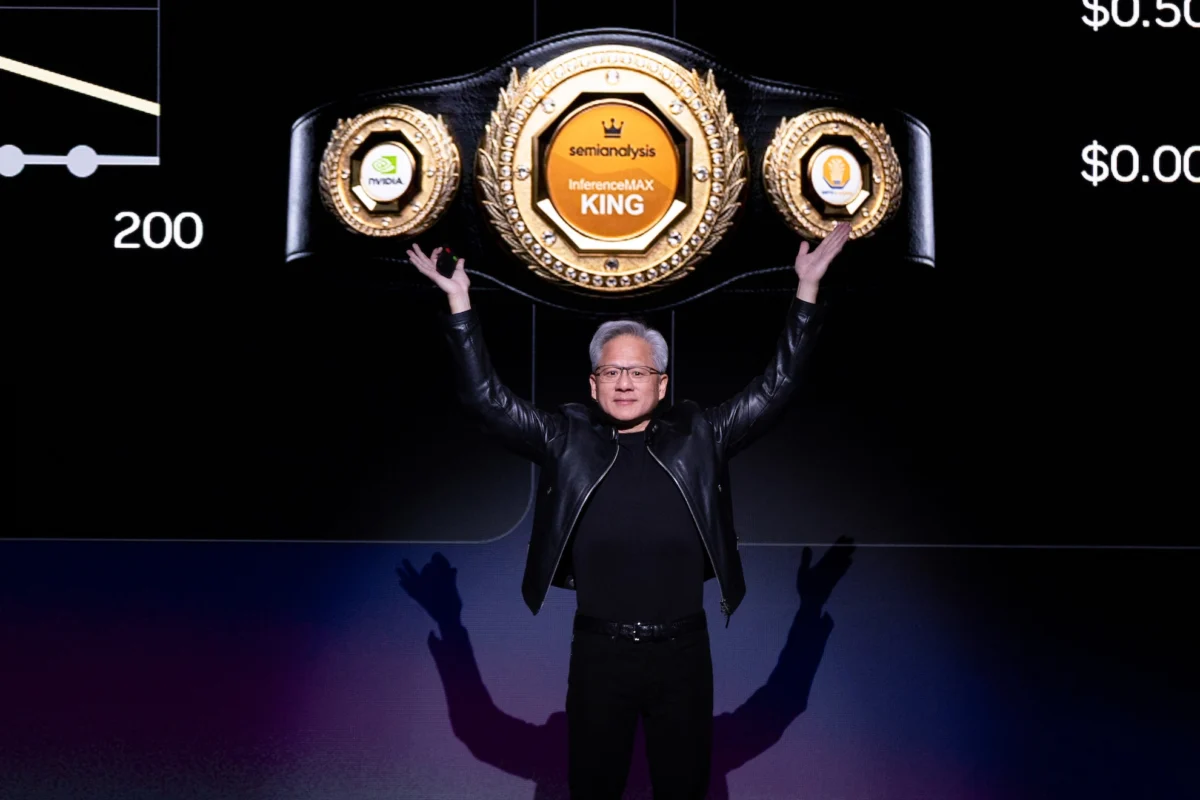
When Nvidia CEO Jensen Huang took the stage for his eagerly anticipated annual GTC keynote on Monday, March 16, 2026, the tech world held its breath. However, despite a torrent of groundbreaking announcements and ambitious financial projections from the leather-jacket-clad founder, the $4-trillion-dollar company’s stock began to dip. Wall Street investors, it appears, remained largely unmoved by the bullish, 2.5-hour address, instead placing greater weight on the uncertain future of artificial intelligence and growing fears of an impending market bubble. This palpable nervousness from the financial sector stands in stark contrast to the almost universally buzzy atmosphere prevalent in Silicon Valley, where confidence in AI’s transformative power, rather than uncertainty, abounds.
The GTC 2026 Showcase: A Glimpse into the AI Future
Nvidia’s GPU Technology Conference (GTC) has long been established as a pivotal event in the tech calendar, serving as a bellwether for advancements in AI, high-performance computing, and graphics. Jensen Huang’s keynotes, in particular, are renowned for unveiling the company’s strategic direction and next-generation technologies. The 2026 edition proved no exception, with Huang dedicating over two hours to detailing Nvidia’s latest innovations, underscoring the company’s expansive reach across diverse sectors.
Among the key highlights were significant advancements in video game graphics technology, specifically mentioning the evolution of DLSS (Deep Learning Super Sampling) to its fifth iteration, DLSS 5. This new version leverages generative AI to push the boundaries of photo-realism in video games, with Huang hinting at ambitions for its application far beyond the gaming industry. Complementing these graphical leaps, Nvidia also unveiled updated networking infrastructure designed to support the escalating data demands of AI workloads, solidifying its position not just as a chipmaker, but as a full-stack AI platform provider.
Further expanding its ecosystem, the keynote touched upon strategic deals in the burgeoning autonomous vehicle sector, a testament to Nvidia’s Drive platform continuing to gain traction among leading automotive manufacturers. Perhaps most notably for the AI hardware landscape, Huang announced a new collaborative chip design with Groq, specifically engineered to accelerate AI inference within the sophisticated Vera Rubin system. This partnership highlights Nvidia’s proactive approach to optimizing every facet of the AI compute pipeline.
Beyond technological revelations, Huang punctuated his address with staggering financial figures, painting a picture of an AI-driven future where Nvidia plays an indispensable role. He boldly declared the AI agent ecosystem a colossal $35 trillion market, and the physical AI and robotics industry an even more astounding $50 trillion market. These projections, while audacious, reflect Nvidia’s deep conviction in the pervasive economic impact of AI. Furthermore, Huang expressed an expectation to see $1 trillion worth of purchase orders for the company’s Blackwell and Vera Rubin chips – just two of Nvidia’s extensive product lines – by the end of 2027. This specific forecast, if realized, would signify an unprecedented demand for high-end AI compute infrastructure.
Wall Street’s Jitters: The Specter of an AI Bubble
Given such seemingly robust forecasts and continuous innovation, the immediate investor reaction might seem counterintuitive. One would expect such declarations to ignite fervent excitement and drive stock prices upwards. However, the market’s muted response, culminating in a stock drop for the $4 trillion behemoth, is not entirely surprising to industry observers like Daniel Neuman, CEO of Futurum.
"The markets hate uncertainty," Neuman explained to TechCrunch, articulating a sentiment shared by many financial analysts. "AI is so good, so transformational, and moving so fast that we don’t actually understand what it’s going to mean for all the things that are the societal constructs that we’ve come to understand. The speed of innovation has actually created a great new uncertainty that I think most people never expected." This "great new uncertainty" manifests as a profound disconnect between the rapid technological advancements witnessed in Silicon Valley and the cautious, often risk-averse, calculus of traditional finance. Investors, haunted by historical precedents like the dot-com bubble of the late 1990s, are increasingly scrutinizing the sustainability of current AI valuations and the long-term profitability of these nascent technologies. The fear is that the euphoria around AI might be leading to speculative overvaluation, creating a bubble poised to burst.
Adding to this uncertainty, Neuman pointed to what he perceives as misleading information circulating within the market regarding enterprise AI adoption. While some headlines suggest a slow uptake of AI within businesses, Neuman argues that these reports often fail to paint the full picture. "Enterprise AI adoption is going to hit inflection and scale very quickly," he asserted. "I actually think it’s happening. When you say it’s not, I think what you’re probably saying is the [return on investment] and the receipts are still a little bit undefined and companies are citing the surveys and the reports that are largely six-month-old data. It just takes months to aggregate data." This lag in data aggregation and the difficulty in quantifying immediate ROI contribute to Wall Street’s skepticism, as traditional metrics struggle to keep pace with the exponential growth of AI capabilities and deployment.
Nvidia’s Unyielding Momentum: Beyond Market Sentiment
Despite the immediate market reaction to Huang’s keynote, Nvidia’s recent financial performance offers a compelling counter-narrative to the prevailing uncertainty. The company has consistently not only met its own ambitious targets and analysts’ quarterly estimates but has frequently surpassed them with remarkable margins. In the last reported quarter, Nvidia’s revenue surged by an impressive 73% year-over-year, a testament to the surging demand for its AI-enabling technologies. This robust growth trajectory suggests that while the market grapples with the abstract implications of AI, companies on the ground are demonstrably investing heavily in Nvidia’s hardware.
Further solidifying this trend, just days after the GTC keynote, Nvidia confirmed a significant deal with Amazon. On March 19, 2026, Reuters reported that Amazon had committed to purchasing an astounding 1 million GPUs, along with other critical AI infrastructure, by the end of 2027 for its Amazon Web Services (AWS) cloud platform. This colossal order from one of the world’s largest cloud providers is a clear indicator of the massive, ongoing build-out of AI infrastructure, signaling a foundational shift in how enterprises are preparing for the AI era. Such large-scale commitments underscore that while the ROI might still be "undefined" in some aggregate reports, major players are making definitive, multi-billion dollar bets on AI.
Kevin Cook, a senior equity strategist at Zacks Investment Research, echoed Neuman’s perspective, albeit with a touch of humor regarding investor sentiment. Cook remarked to TechCrunch that while investors might not always appear happy, the broader stock market’s performance is, to a significant extent, propped up by Nvidia. This is because Nvidia’s technology effectively serves as the foundational "rails" upon which many of these businesses operate.
The Global Economic Orbit Around AI Infrastructure
"The economy is sort of orbiting around Nvidia," Cook stated, encapsulating the company’s pivotal role. "It’s building this necessary infrastructure. All these different companies in hardware and software and physical AI – even Caterpillar is now physical AI – that are building off of these platforms." This statement highlights Nvidia’s transformation from a mere chip manufacturer into an indispensable platform provider, creating the very bedrock for the emerging AI-driven economy. From advanced robotics in manufacturing to sophisticated AI models powering financial services, and even the integration of AI into traditional heavy industries like construction (as evidenced by Caterpillar’s evolving role), Nvidia’s influence permeates across a vast spectrum of global industries.
Jensen Huang himself underscored this pervasive reach in his GTC keynote, emphasizing Nvidia’s platform approach. "Nvidia, as you know, is a platform company," he declared. "We have technology. We have our platforms. We have a rich ecosystem, and today there are probably 100% of the $100 trillion dollars of industry here." While a hyperbolic statement, it powerfully conveys Nvidia’s ambition and its perceived centrality to the global economy’s future. The company isn’t just selling chips; it’s selling the foundational technology, the software stack, and the ecosystem that enables nearly every sector to harness the power of AI.
Navigating the Paradox: Innovation vs. Valuation
The paradox of Nvidia’s GTC 2026 keynote is clear: a company at the forefront of a technological revolution, unveiling innovations and projecting unprecedented growth, yet met with immediate market skepticism regarding its valuation. This doesn’t inherently negate the possibility of an "AI bubble" forming or bursting in the future. The rapid ascent of valuations across the AI sector warrants careful consideration. However, the current broad uncertainty among investors does not appear to stem from a fundamental flaw in Nvidia’s strategy or execution.
Instead, it reflects a broader market apprehension about the sheer speed of AI innovation and the challenges of accurately pricing its long-term economic impact. While GTC 2026 may not have provided an immediate boon for Nvidia’s stock price, the company is unequivocally barreling full steam ahead. Its relentless pace of innovation, coupled with tangible evidence of massive infrastructure investment from global titans like Amazon, suggests that Nvidia is not merely participating in the AI revolution – it is actively building its very foundation, bringing seemingly the entire global economy right alongside it into an AI-powered future. The ultimate resolution of Wall Street’s jitters versus Silicon Valley’s confidence will likely depend on the tangible, widespread realization of AI’s promised economic returns, a process that is undoubtedly still in its early, albeit rapidly accelerating, stages.