Sisilia Frederika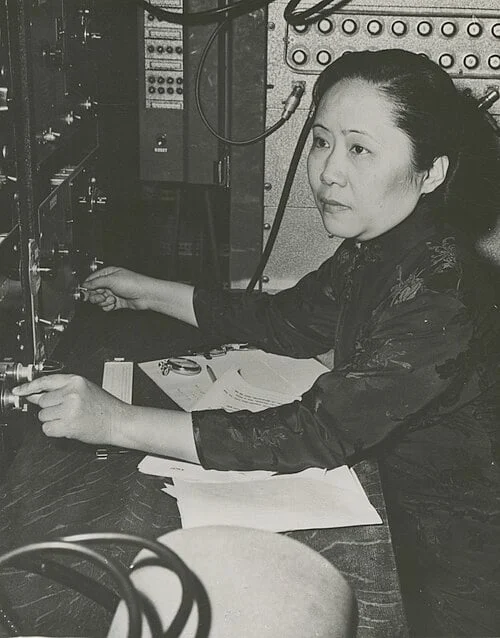
The fundamental architecture of the universe is built upon symmetries that dictate how matter and energy interact across vast scales. For the majority of the fundamental forces—gravity, electromagnetism, and the strong nuclear force—the spatial orientation of a particle, often referred to as its "handedness" or chirality, is a matter of indifference. Whether a particle possesses a left-handed or right-handed spin relative to its momentum, the laws governing its gravitational pull, its electromagnetic charge, and its color charge remain identical. This symmetry, known in physics as parity, suggests a universe that does not distinguish between an object and its mirror image. However, the weak nuclear force, the mechanism responsible for radioactive decay and the fusion processes powering stars, serves as a startling exception to this rule. This force exhibits a total preference for left-handed particles, a phenomenon that has left physicists grappling with the nature of neutrinos—mysterious, nearly massless particles that appear to defy the standard behavior of all other known matter.
The Mechanism of Chirality and the Standard Model
In the quantum realm, chirality is a fundamental property of particles. It is often visualized through the analogy of a screw: a right-handed particle spins in a direction consistent with its forward motion in a manner similar to a standard screw being tightened, while a left-handed particle spins in the opposite direction. For most particles, such as electrons, chirality is not a fixed state. Because electrons possess mass, they travel at speeds lower than the speed of light. This allows for a change in the observer’s frame of reference; an observer moving faster than the electron would see its direction of motion reversed, effectively flipping its perceived handedness.
The Standard Model of particle physics describes an electron as a combination of two massless "Weyl fermions"—one left-handed and one right-handed. These two identities oscillate back and forth, coupled together by the Higgs field to create the massive particle we recognize. When an electron interacts via electromagnetism or gravity, both identities participate equally. However, the weak nuclear force operates under a different set of rules. It is "chiral," meaning it selectively interacts only with the left-handed components of matter particles. This discovery, which upended the mid-20th-century understanding of physics, remains one of the most profound asymmetries in the natural world.
The Wu Experiment and the Collapse of Parity
The realization that the universe possesses a "preferred" handedness was not reached without significant scientific resistance. In the early 1950s, the principle of parity conservation—the idea that the laws of physics are the same for a particle and its mirror image—was considered an inviolable truth. Famed theoretical physicist Wolfgang Pauli was a staunch defender of this symmetry, famously remarking that he could not believe the fundamental laws of nature would distinguish between left and right.
This consensus was shattered in 1956 by Chien-Shiung Wu, a Chinese-American experimental physicist often referred to as "Madame Wu." Working with ultra-cold Cobalt-60 atoms at the National Bureau of Standards, Wu observed the beta decay process, a manifestation of the weak nuclear force. She aligned the spins of the cobalt nuclei using a powerful magnetic field and monitored the direction in which the resulting electrons were emitted. If parity were conserved, the electrons should have been emitted in equal numbers in both directions. Instead, Wu’s data showed a clear preference: the electrons were overwhelmingly emitted in a direction opposite to the nuclear spin.
The results of the Wu experiment confirmed that the weak force violates parity. It showed that the weak force only "sees" and interacts with left-handed particles and right-handed antiparticles. This discovery was so revolutionary that it led to the 1957 Nobel Prize in Physics for Tsung-Dao Lee and Chen Ning Yang, who had proposed the theory, though Wu herself was controversially excluded from the honor. The discovery forced the scientific community to accept that at the subatomic level, the universe is inherently "left-handed."
The Neutrino Anomaly: A Particle with No Mirror
While electrons and quarks possess both left- and right-handed states, allowing the weak force to simply "wait" for a left-handed state to manifest before interacting, neutrinos present a far more complex problem. Neutrinos are nearly massless, electrically neutral particles that rarely interact with matter. They are produced in immense quantities by the sun and other cosmic events, passing through solid objects—including the human body—by the trillions every second without effect.
The profound anomaly of the neutrino lies in its observed chirality. Every neutrino ever detected in a laboratory setting has been left-handed. Conversely, every antineutrino detected has been right-handed. Unlike electrons, which flip between states, neutrinos appear to be "locked" into a single orientation. For decades, this was explained by the assumption that neutrinos were entirely massless. According to Einstein’s theory of special relativity, a massless particle must travel at the speed of light. At light speed, no observer can ever overtake the particle to see its motion reversed; therefore, its handedness is an immutable property.
Under this assumption, the absence of right-handed neutrinos was not a flaw in the theory, but a logical consequence of their masslessness. The universe simply did not require a right-handed neutrino because the weak force would have no use for it, and without mass, the particle had no way to transition into such a state.
The 1998 Breakthrough: Discovery of Neutrino Mass
The tidy explanation of the "massless, left-handed neutrino" was dismantled in 1998 by the Super-Kamiokande observatory in Japan. By studying neutrinos generated in Earth’s atmosphere, researchers discovered the phenomenon of neutrino oscillation. This process involves a neutrino changing its "flavor"—transforming from an electron neutrino to a muon or tau neutrino—as it travels.
The laws of quantum mechanics dictate that for a particle to oscillate between flavors, it must possess mass. While the mass is incredibly small—at least a million times lighter than an electron—it is undeniably non-zero. This discovery, which earned the 2015 Nobel Prize in Physics, created a massive theoretical crisis. If neutrinos have mass, they cannot travel at the speed of light. If they travel slower than light, it must be possible, in theory, to overtake them and observe a right-handed neutrino.
The fact that experimentalists have still never observed a right-handed neutrino despite knowing that neutrinos possess mass suggests one of two things: either right-handed neutrinos are so rare or "sterile" that they do not interact via any known force except gravity, or the neutrino is a fundamentally different type of particle than any other matter we have encountered.
Analysis of Implications: Sterile Neutrinos and Majorana Fermions
The absence of right-handed neutrinos in the face of confirmed neutrino mass has led to several high-stakes hypotheses in modern cosmology. One prominent theory is the existence of "sterile neutrinos." These hypothetical particles would be right-handed versions of the neutrino that do not feel the weak nuclear force at all. Because they would only interact via gravity, they are a leading candidate for dark matter—the invisible substance that makes up roughly 27% of the universe’s energy density.
Another possibility involves the Majorana fermion hypothesis. Proposed by Ettore Majorana in 1937, this theory suggests that the neutrino may be its own antiparticle. In this scenario, the "right-handed antineutrino" we observe is actually just the right-handed state of the neutrino itself. If neutrinos are Majorana particles, it would explain why we see only one handedness for the particle and the opposite for the antiparticle; they are simply different facets of the same entity.
Conclusion and Future Research
The mystery of neutrino chirality represents more than just a quirk of subatomic physics; it is a gateway to "New Physics" beyond the Standard Model. If the neutrino’s mass and handedness are linked in a way that suggests the existence of sterile neutrinos or Majorana properties, it could explain the matter-antimatter asymmetry of the early universe—essentially answering why anything exists at all.
Current and future experiments, such as the Deep Underground Neutrino Experiment (DUNE) in the United States and the KATRIN experiment in Germany, are designed to measure neutrino mass with unprecedented precision and search for evidence of the elusive right-handed state. As researchers continue to probe the behavior of these "ghost particles," the left-handed bias of the weak force remains a pivotal clue in deciphering the fundamental asymmetry that defines our reality. The neutrino, once thought to be a simple, massless byproduct of decay, has emerged as the most significant challenge to our understanding of the cosmic blueprint.