admin
admin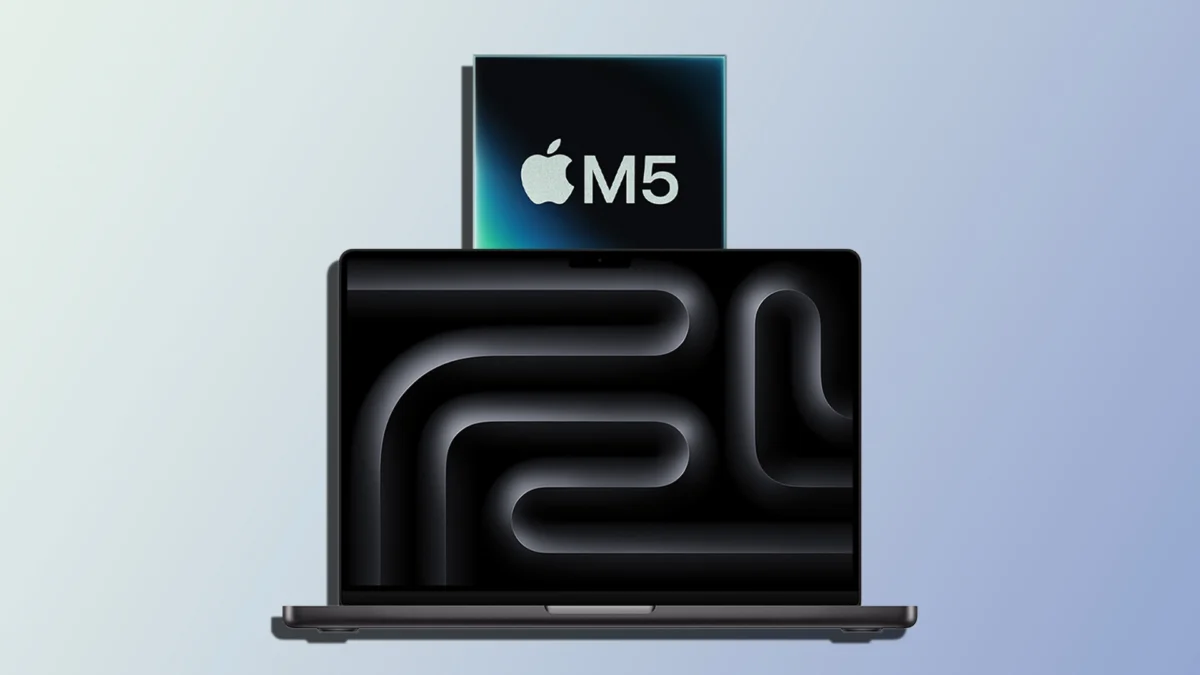
The retail landscape for high-end computing has shifted significantly as Amazon announced a substantial price reduction on the latest 14-inch MacBook Pro equipped with the M5 processor. This strategic discount brings the entry-level professional laptop down to $1,399.99, representing a $200 decrease from its standard MSRP. While the recent debut of the M5 Pro and M5 Max chipsets has captured the attention of power users requiring extreme multithreaded performance, the standard M5 model remains a formidable cornerstone of Apple’s portable lineup. This price adjustment marks one of the most significant valuation shifts for the M5 series since its launch, positioning the device as a highly competitive option for students, creative professionals, and enterprise users who require a balance of portability and sustained performance.
The base configuration currently featured in this promotion includes a 10-core CPU and a 10-core GPU, paired with 16GB of unified memory and a 512GB solid-state drive (SSD) utilizing PCIe NVMe Gen 4 technology. Beyond the base model, Amazon has extended tiered discounts to higher-specification units. For instance, the variant featuring 24GB of unified memory and a 1TB SSD has seen a $100 reduction, bringing the cost to $1,799. These adjustments reflect a broader trend in the consumer electronics market where retailers are increasingly aggressive with pricing on premium hardware to maintain momentum during mid-cycle sales periods.
The Evolution of the M5 Architecture and Silicon Strategy
The transition to the M5 chip represents a refined milestone in the Apple Silicon roadmap. Building upon the foundational success of the M1 through M4 series, the M5 is engineered on an enhanced 3-nanometer process. This architectural choice allows for greater transistor density, which directly translates to improved instructions per clock (IPC) and superior thermal efficiency. Historically, the move from Intel-based architectures to proprietary ARM-based silicon allowed Apple to reclaim control over its hardware-software integration, and the M5 is the latest iteration of this vertical optimization.
The 10-core CPU configuration in the base MacBook Pro is divided between performance cores designed for heavy lifting—such as code compilation and video rendering—and efficiency cores that handle background tasks with minimal power draw. This heterogeneous computing approach is what allows the device to maintain high performance without the aggressive thermal throttling often seen in thinner, Intel-based competitors. Furthermore, the 10-core GPU in the M5 chip supports hardware-accelerated ray tracing and mesh shading, features that were previously reserved for high-end desktop graphics cards. These advancements make the base MacBook Pro a viable machine for entry-level 3D modeling and modern gaming, areas where previous base models often struggled.
Display Excellence: Liquid Retina XDR and ProMotion Technology
One of the primary differentiators that justifies the MacBook Pro’s premium over the MacBook Air is its display technology. The 14-inch M5 MacBook Pro features a Liquid Retina XDR (Extreme Dynamic Range) display, which utilizes a mini-LED backlighting system. This technology employs thousands of local dimming zones, allowing the screen to achieve a 1,000,000:1 contrast ratio. This results in "true blacks" and a peak brightness of up to 1,600 nits for HDR content, making it an essential tool for colorists and photographers who require visual accuracy.
Complementing the XDR capabilities is Apple’s ProMotion technology. This feature enables an adaptive refresh rate of up to 120Hz, which dynamically adjusts based on the content being viewed. For static images or text, the refresh rate drops to conserve energy; during high-motion tasks like scrolling or video editing, it ramps up to provide fluid motion. In a market where many "pro-sumer" laptops still rely on standard 60Hz IPS panels, the inclusion of a 120Hz mini-LED display at the $1,399 price point provides a significant value proposition that is difficult for Windows-based OEMs to match in a similar form factor.
Durability and Industrial Design Standards
The physical construction of the M5 MacBook Pro continues to follow the design language introduced with the 2021 redesign, emphasizing utility and longevity. The chassis is milled from a single block of 100 percent recycled aluminum, providing a rigid frame that protects internal components from external pressure. The durability of this unibody design was recently highlighted in a documented incident where a MacBook Pro survived being accidentally run over by a vehicle, sustaining only minor cosmetic abrasions while remaining fully functional. Such anecdotes, while extreme, underscore the engineering tolerances Apple employs for its professional hardware.
The thermal architecture of the 14-inch model includes an active cooling system with high-efficiency fans. Unlike the fanless MacBook Air, the Pro model is designed for sustained workloads. When the M5 chip is pushed during long rendering sessions or complex simulations, the internal fans engage to dissipate heat, preventing the performance drops associated with thermal saturation. This makes the Pro model the preferred choice for users whose work involves tasks that take more than a few minutes to complete.
Battery Life and the Efficiency Paradigm
The M5 MacBook Pro’s battery performance remains a leading industry benchmark. Equipped with a 72.4-watt-hour lithium-polymer battery, the device is rated for up to 24 hours of video playback and 16 hours of wireless web browsing. These figures are not merely theoretical; in real-world professional environments, users frequently report completing a full eight-hour workday with significant charge remaining.
This efficiency is a direct result of the unified memory architecture (UMA). By placing the memory on the same package as the processor, the M5 chip minimizes the distance data must travel, reducing latency and power consumption. The 16GB of RAM in the base model is "unified," meaning it is accessible by both the CPU and GPU simultaneously. This is more efficient than traditional systems where data must be copied between a system RAM pool and a dedicated VRAM pool. For AI-driven tasks and machine learning workflows—which are increasingly central to macOS Sequoia—the high-bandwidth unified memory allows the M5’s Neural Engine to process large language models and image generation tasks with remarkable speed for a portable device.
Market Context and Competitive Analysis
At the discounted price of $1,399, the M5 MacBook Pro enters a highly contested segment of the market. Its primary competitors include the Dell XPS 13/14, the Microsoft Surface Laptop 7, and various high-end offerings from ASUS and Lenovo. While Windows-based machines often offer higher raw storage or RAM for the same price, they frequently lag behind in areas of display quality, trackpad precision, and power efficiency when disconnected from a wall outlet.
Industry analysts suggest that Apple’s decision to allow such significant discounts through third-party retailers like Amazon is a tactical move to capture the "pro-sumer" market that may be hesitant to spend nearly $2,000 on a laptop. By lowering the barrier to entry for the Pro line, Apple increases the adoption of its ecosystem services and ensures that more users are equipped with hardware capable of running the latest "Apple Intelligence" features. These AI-driven tools require the robust NPU (Neural Processing Unit) found in the M5 to function locally on the device, ensuring user privacy and low latency.
Implications for Future Purchasing Cycles
The current $200 discount serves as a pivotal moment for potential buyers who have been operating on older Intel-based MacBooks or early M1 models. The leap in performance from an Intel i7 or even a base M1 chip to the M5 is substantial, particularly regarding GPU tasks and AI processing. For those considering the MacBook Air vs. the MacBook Pro, the current pricing narrows the gap significantly. When a well-spec’d MacBook Air M5 approaches the $1,200 range, the additional $200 for the Pro model grants the user a significantly better screen, better speakers, more ports (including HDMI and an SD card slot), and active cooling.
As the fiscal year progresses, it is expected that Apple will continue to lean on the M5 series as its volume driver in the premium segment. The MacBook Pro remains the "gold standard" for mobile workstations, and with Amazon’s current pricing, the value-to-performance ratio has reached an all-time high for this generation. Prospective buyers are encouraged to evaluate their storage and memory needs, as the non-upgradeable nature of Apple Silicon makes the initial configuration choice critical for the device’s five-to-seven-year expected lifespan. With the 16GB/512GB model now at $1,399, the professional-grade computing experience has become more accessible to a broader demographic of users than ever before.