Garick Elordi

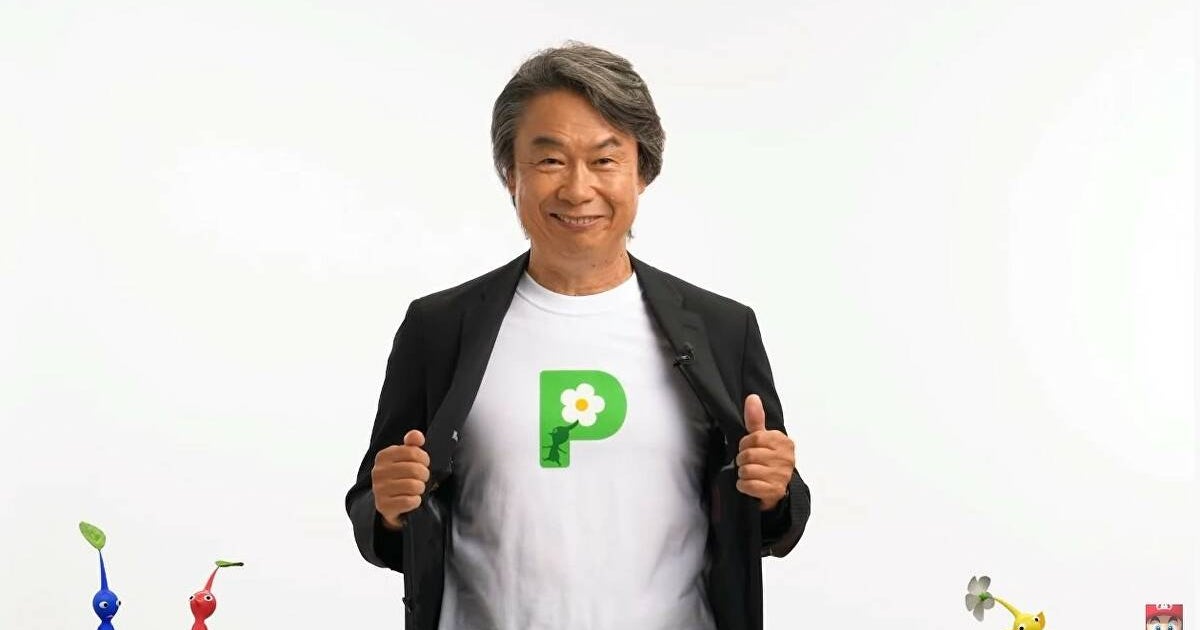
Shigeru Miyamoto, the visionary behind some of the most influential franchises in interactive entertainment, including Super Mario, The Legend of Zelda, and Pikmin, has formally addressed the rising prominence of generative artificial intelligence within the video game industry. Speaking during a press conference ahead of his induction into the Order of Culture—a prestigious recognition bestowed by the Emperor of Japan—Miyamoto argued that while AI technology represents a significant shift in production capabilities, it is unlikely to render human creativity or individual design intention obsolete. His remarks come at a pivotal moment for the global technology sector, as major studios increasingly weigh the efficiency of automated tools against the traditional craftsmanship of human developers.
The Evolution of Tools and the Philosophy of Creation
During his address, Miyamoto drew a historical parallel between the current emergence of generative AI and the rapid technological transitions he witnessed throughout his five-decade career at Nintendo. He noted that his generation lived through a period where tools were in a state of constant flux, moving from manual typewriters to electronic word processors and eventually to sophisticated digital workstations. In Miyamoto’s view, each technological leap initially appeared to automate the creative process, but ultimately served to highlight the unique capabilities of the human designer.
Miyamoto suggested that as technology advances to handle more of the "labor"—the repetitive, mechanical tasks associated with production—the true essence of design is forced to the foreground. However, he issued a cautionary note regarding the psychological impact of these tools on creators. He observed a "danger" in the modern development landscape where an individual might find satisfaction in the sheer efficiency of the labor itself, mistakenly believing that the output of an automated process constitutes a high-quality or meaningful piece of work.
"Because the process relies on an individual’s intent, with the computer serving as an assistant for the labor, I believe that even as technology continues to evolve, and even if AI were to eventually handle everything, there will always be a role left for us to play," Miyamoto stated. He emphasized that designs created through mere "copying and pasting"—or, by extension, algorithmic generation without human curation—rarely stand the test of time because they lack a specific, intentional core.
A Career Defined by Innovation and Cultural Recognition
Miyamoto’s perspective carries significant weight due to his status as the first video game developer to receive the Order of Culture. Established in 1937, the award is one of Japan’s highest honors, typically reserved for individuals who have made exceptional contributions to mainstream art, literature, or science. His recognition signals a formal acknowledgement of video games as a vital pillar of contemporary Japanese culture, on par with traditional art forms.
Throughout his career, Miyamoto has been known for prioritizing "play" over "technology." During the development of Super Mario 64, he focused on the tactile feel of movement in a 3D space before finalizing the game’s graphical fidelity. Similarly, with The Legend of Zelda: Ocarina of Time, his team pioneered the "Z-targeting" system, a solution to the mechanical problem of 3D combat that remains a standard in the industry today. This history of solving creative problems through human-centric design informs his skepticism of a purely AI-driven future.
Diverging Perspectives Within the Industry
Miyamoto’s measured optimism contrasts with the more critical views of other prominent Japanese developers. Masahiro Sakurai, the creator of the Kirby series and director of Super Smash Bros., recently expressed concerns that the proliferation of generative AI could lead to a saturated market of unoriginal and unprofitable titles. Sakurai argued that while AI can replicate existing patterns, it lacks the spark of genuine innovation required to create something truly new. He warned that if developers rely too heavily on AI to generate concepts, the industry risks losing its artistic soul to a sea of derivative content.
The broader industry, however, appears to be moving toward aggressive integration. In a New Year’s letter, Square Enix CEO Takashi Kiryu stated that the company intended to be "aggressive in applying AI and other cutting-edge technologies" to both content creation and marketing. Similarly, Microsoft’s Xbox division recently announced a partnership with Inworld AI to develop tools that assist in narrative design and NPC (non-player character) dialogue generation.
Ubisoft has also experimented with "Ghostwriter," an AI tool designed to help narrative designers generate barks—the short phrases NPCs say during gameplay. While these companies frame AI as a productivity enhancer, the trend has sparked significant debate regarding job security and the potential "homogenization" of game aesthetics.
Data and Trends: The Rise of AI in Game Development
The shift toward AI is reflected in industry data. According to the 2024 State of the Game Industry report by the Game Developers Conference (GDC), approximately 31% of developers surveyed stated they already use generative AI in their workflow, while an additional 18% expressed a strong interest in doing so. The most common applications cited were for coding assistance, asset generation, and brainstorming.
Despite this trend, the report also highlighted significant apprehension. Over 80% of developers expressed concerns about the ethical implications of AI, specifically regarding copyright infringement and the potential for large-scale layoffs. Nintendo’s current position reflects a middle ground in this landscape. While the company has not categorically rejected AI, its leadership has consistently emphasized the importance of the "human touch."
Doug Bowser, President of Nintendo of America, reiterated this sentiment in late 2023, stating that Nintendo’s competitive advantage lies in the artistic capabilities and insights of its developers. By focusing on how people play rather than just how games are built, Nintendo aims to maintain a distinction between its products and those generated by predictive algorithms.
Chronology of Nintendo’s Technological Philosophy
To understand Miyamoto’s stance, it is necessary to look at the timeline of Nintendo’s approach to technological disruption:
- The 1980s (The NES Era): While competitors focused on raw processing power, Miyamoto and Nintendo focused on "Lateral Thinking with Withered Technology"—a philosophy championed by Gunpei Yokoi. This involved using mature, inexpensive technology in radical new ways.
- The 1990s (The 3D Revolution): As the industry moved to 32-bit and 64-bit systems, Miyamoto focused on the "feel" of 3D, creating the analog stick control scheme that prioritized human intuition over technical complexity.
- The 2000s (The Blue Ocean Strategy): With the Wii and DS, Nintendo ignored the "graphics arms race" in favor of touch and motion controls, proving that human engagement was more important than technical specifications.
- The 2020s (The AI Influx): As generative AI becomes a standard tool for competitors, Nintendo maintains a conservative R&D approach, focusing on proprietary hardware-software integration that emphasizes unique, authored experiences.
Implications for the Future of Game Design
Miyamoto’s comments suggest that the value of human developers will increasingly shift from "production" to "direction." If AI can generate a thousand variations of a landscape or a character model in seconds, the role of the human designer becomes one of curation and intentionality—choosing the one variation that serves the emotional and mechanical goals of the game.
The risk, as Miyamoto noted, is the loss of "design intention." In a market where AI can lower the barrier to entry for game creation, there is a possibility of an "asset flip" crisis, where stores are flooded with technically competent but creatively hollow games. For a company like Nintendo, which relies on the strength of its intellectual property and the high perceived value of its brand, maintaining the "human touch" is not just an artistic choice but a strategic necessity.
As the industry continues to navigate the complexities of automation, Miyamoto’s perspective serves as a reminder that tools, no matter how sophisticated, are secondary to the vision of the person using them. Whether AI serves as a "labor assistant" or a creative crutch will likely depend on the willingness of the next generation of developers to heed Miyamoto’s advice and prioritize individual intent over the ease of the process.
The formal ceremony for the Order of Culture will take place next month, where Miyamoto will be officially recognized for his contributions. While his awards celebrate his past achievements, his recent comments ensure that his influence will continue to shape the dialogue surrounding the future of the medium he helped build.