Sonny Valindra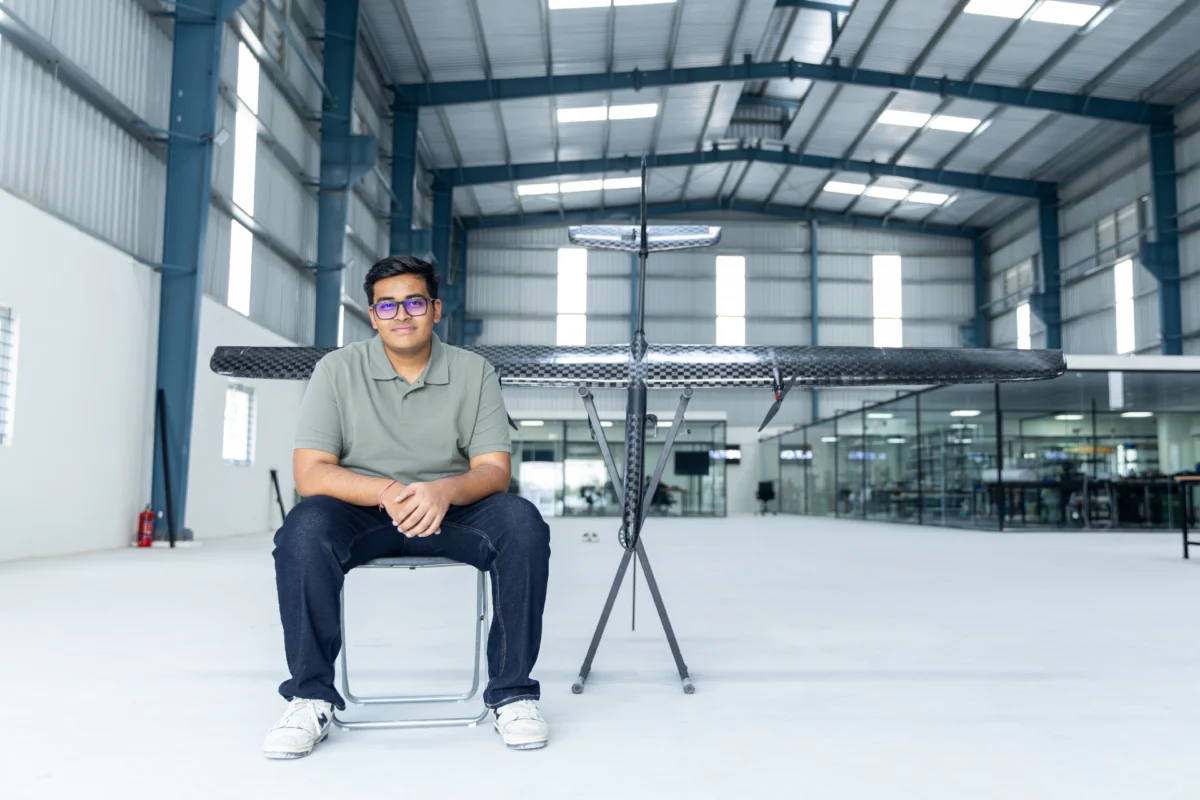
Bengaluru-based aerospace startup Alteon has secured $2.5 million in pre-seed funding, led by prominent solo investor Lachy Groom, to develop autonomous aircraft capable of staying airborne for over a year by harnessing energy from ocean winds. The ambitious project, spearheaded by 20-year-old founder Samay Sanghvi, draws inspiration from the dynamic soaring technique employed by albatrosses, which allows them to extract energy from wind shear. This funding round, with participation from Together Fund, marks a significant step towards realizing a paradigm shift in aerial endurance and opens up a vast array of potential applications.
The Vision: Uninterrupted Aerial Presence
Alteon’s core innovation lies in challenging the fundamental limitation of conventional aircraft: the need to carry fuel or battery power for sustained flight. The startup is designing small, fixed-wing autonomous aircraft that can achieve unprecedented endurance by exploiting the natural energy gradients present in the atmosphere above oceans. The principle of dynamic soaring involves an aircraft repeatedly moving between layers of air with differing wind speeds. By skillfully navigating these gradients, the aircraft can gain altitude and speed, effectively creating a self-sustaining flight profile.
"Once you build airplanes that can stay in the air for more than a year, there are millions of things you can do with them," Sanghvi told TechCrunch. The immediate envisioned application for Alteon’s technology is maritime surveillance. Such aircraft could provide governments with continuous, real-time visibility into activities within their territorial waters, enhancing national security, aiding in environmental monitoring, and supporting search and rescue operations. The ability to maintain a persistent aerial presence without frequent refueling or battery replacements would be a game-changer for these critical functions.
The Technology: Mimicking Nature’s Masters
The initial design of Alteon’s aircraft features a wingspan of approximately three meters. The operational concept involves flying close to the ocean’s surface, where wind speeds can vary significantly with altitude. The aircraft will then ascend into faster-moving air, gain energy, and descend, repeating this cycle to continuously harvest kinetic energy from the wind. As the technology matures, Alteon plans to integrate a system where the aircraft’s propellers can function as turbines. These turbines would convert a portion of the harvested wind energy into electricity, which would then be used to recharge onboard batteries, further extending flight duration and operational flexibility.
Early Progress and Technical Hurdles
While the concept is compelling, Alteon has yet to definitively demonstrate sustained flight powered solely by harvested energy. However, the company has achieved a significant milestone with a recent test flight over the Bay of Bengal. During this trial, the autonomous aircraft successfully completed seven "O-shaped" cycles at speeds exceeding 62 miles per hour, maintaining an altitude of within one meter of the water’s surface. This demonstration validates the aircraft’s autonomous flight control system and its ability to operate in close proximity to the ocean, a crucial element for dynamic soaring.
The next major objective for Alteon is what Sanghvi terms "energy-neutral dynamic soaring." This phase aims to prove that the aircraft can fly continuously with its propulsion system largely disengaged, drawing enough energy from the wind to overcome aerodynamic drag and maintain altitude. Achieving this state would represent a monumental leap forward, validating the core premise of the technology.

Aerospace and robotics engineer Dr. Gabriel Bousquet, who has researched dynamic soaring, described Alteon’s low-altitude flight over water as a "promising first result." However, he cautioned that the more significant challenge lies in proving the aircraft’s capability to reliably extract sufficient energy from real-world wind conditions for extended durations. Bousquet highlighted the inherent difficulties of flying at such low altitudes over the ocean, where aircraft must contend with a complex array of environmental factors including turbulence, wave action, sea spray, rain, and fluctuating light conditions, all while constantly sensing and responding to the dynamic ocean surface.
Dr. Bharath Swaminathan, who holds a PhD from IIT Madras for his work on the stability of dynamic soaring, acknowledged that the fundamental physics behind the technique are well-established and praised Alteon’s endeavor as "commendable." He stated that achieving sustained flight for several days using dynamic soaring would itself be "a very big step, and a big achievement." Swaminathan further noted that while large-scale wind patterns might be predictable, localized wind shear and turbulence can exhibit substantial variability, posing complications for an aircraft’s consistent energy extraction capabilities. He suggested that some of these challenges might only become apparent through extensive real-world flight testing.
Investor Confidence Amidst Ambitious Goals
Lachy Groom, known for his early investments in successful tech ventures, expressed strong conviction in Alteon’s potential. "Ambitious problems are always going to come with risks," he remarked to TechCrunch. "For me, it came down to believing Samay and the Alteon team are the ones to figure them out." This endorsement from a seasoned investor underscores the perceived strength of the founding team and their vision, even in the face of significant technical challenges.
The journey for Samay Sanghvi began shortly after high school in 2023. He dedicated himself to learning aircraft construction through hands-on experience, which initially involved building and, inevitably, crashing radio-controlled models. This iterative process of experimentation and learning laid the foundation for developing early prototypes. Alteon was formally established in 2025, garnering early support from Emergent Ventures and 1517, further validating the nascent concept.
Growth and Operational Capacity
Alteon has rapidly scaled its operations. The company now boasts a team of 20 professionals based in Bengaluru and operates from a 10,000-square-foot facility. This expanded infrastructure allows for the simultaneous development and testing of multiple aircraft. To accelerate its learning and development cycle, Alteon is currently producing four to five aircraft per week for rigorous testing. In the past 30 days alone, the startup has conducted over 200 test flights, a testament to its commitment to rapid iteration and data-driven improvement. This intense testing regime is crucial for gathering the empirical data needed to refine the dynamic soaring algorithms and validate the aircraft’s performance under diverse conditions.
Broader Implications and Future Potential
The success of Alteon’s dynamic soaring technology could usher in a new era of long-endurance autonomous systems. Beyond maritime surveillance, the implications are far-reaching:
- Environmental Monitoring: Persistent aerial platforms could provide continuous data on oceanographic conditions, climate change indicators, and pollution levels over vast oceanic expanses.
- Search and Rescue: Extended flight times would significantly enhance the ability of aircraft to cover large search areas, improving the chances of locating individuals in distress at sea.
- Communications Relays: These aircraft could serve as airborne communication hubs, providing internet or mobile connectivity to remote or disaster-stricken areas.
- Scientific Research: Long-duration flights would enable unprecedented opportunities for atmospheric and oceanic research, allowing for continuous data collection over extended periods.
- Logistics and Delivery: While a more distant prospect, the ability to stay airborne indefinitely could revolutionize certain niche logistics applications.
The validation of dynamic soaring for sustained flight also represents a significant contribution to the field of bio-inspired engineering. By emulating the efficiency of natural systems, Alteon is pushing the boundaries of what is technologically feasible. The $2.5 million pre-seed funding provides the necessary capital to move beyond theoretical validation and into the complex, real-world engineering challenges that lie ahead. The commitment from investors like Lachy Groom signifies a belief not just in the technology, but in the team’s capacity to overcome the substantial hurdles inherent in such an audacious undertaking. The coming years will be critical in determining whether Alteon can indeed transform the dream of year-long aerial endurance into a tangible reality.