Garick Elordi
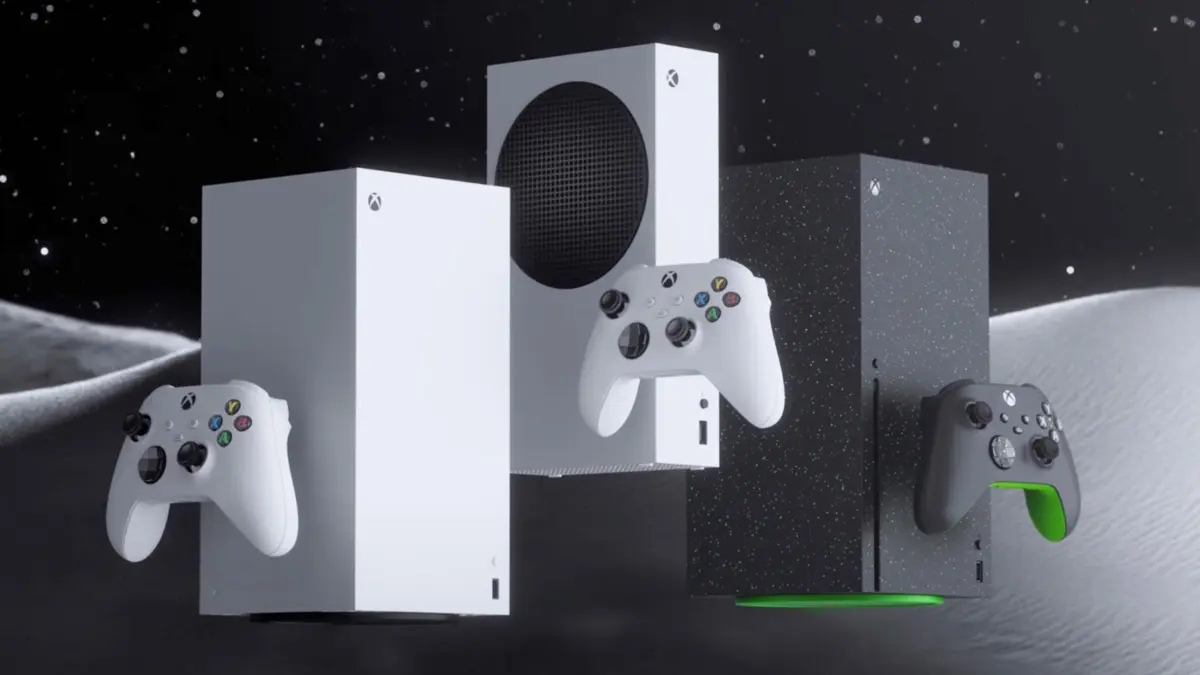
Advanced Micro Devices (AMD) has officially confirmed the deployment of FidelityFX Super Resolution (FSR) 4.1, the latest iteration of its artificial intelligence-driven image upscaling technology, to the Xbox Series X and Series S console family. In a move that significantly bolsters the competitive landscape of gaming hardware, the technology will also be extended to high-performance handheld devices, specifically the ASUS ROG Ally and the recently released ROG Ally X. This update marks a pivotal shift in AMD’s approach to upscaling, transitioning from traditional temporal algorithms to a sophisticated machine learning-based architecture designed to maximize performance on aging or power-constrained hardware.
The integration of FSR 4.1 represents a strategic response to the evolving demands of the gaming industry, where visual fidelity and high frame rates are increasingly difficult to maintain on static hardware configurations. By leveraging AI-driven reconstruction, Microsoft and AMD aim to extend the lifecycle of the current Xbox generation while providing developers with more efficient tools to bridge the gap between native resolution and high-definition output.
The Evolution of FidelityFX Super Resolution: A Shift Toward AI
Since its inception, AMD’s FSR technology has served as an open-source alternative to NVIDIA’s Deep Learning Super Sampling (DLSS). While early versions—FSR 1.0 and 2.0—relied on spatial and temporal upscaling techniques respectively, they lacked the dedicated hardware-accelerated machine learning components that defined NVIDIA’s success. FSR 3.0 introduced frame generation, but image stability remained a point of contention among enthusiasts.
FSR 4.1 represents a foundational shift. For the first time, AMD is placing a heavy emphasis on AI-driven algorithms to handle image reconstruction. This version of the technology renders games at a significantly lower internal resolution, reducing the computational load on the Graphics Processing Unit (GPU). The AI then analyzes previous frames, motion vectors, and depth buffers to "hallucinate" or reconstruct the missing pixels, resulting in a final image that often rivals or exceeds the quality of a native high-resolution render.
For the Xbox Series S, which has often struggled to maintain 1440p or even 1080p targets in modern "triple-A" titles, FSR 4.1 could prove transformative. By offloading the burden of high-resolution rendering to an AI-upscaling pass, the console can allocate more of its limited system resources to complex lighting, physics, and geometry, effectively allowing the $299 machine to punch well above its weight class.
Competitive Positioning: Xbox FSR 4.1 vs. PlayStation PSSR and QSSR
The timing of the FSR 4.1 announcement is inextricably linked to recent developments from Sony Interactive Entertainment. With the launch of the PlayStation 5 Pro, Sony introduced PlayStation Spectral Super Resolution (PSSR), a proprietary AI upscaler that utilizes dedicated hardware on the Pro’s upgraded GPU. For standard PlayStation 5 users, Sony also unveiled QSSR, a less intensive machine learning solution designed for the base console’s architecture.
Microsoft’s adoption of FSR 4.1 serves as a direct counter-maneuver. Unlike PSSR, which is locked behind the premium $699 price tag of the PS5 Pro, FSR 4.1 is being implemented across the entire Xbox ecosystem. This ensures that even the entry-level Series S benefits from modern AI reconstruction.
"We’ve worked very closely with AMD to optimize this technology, giving developers another powerful tool for great performance and visual quality for players," stated Scott Van Vliet, Chief Technology Officer at Xbox. Van Vliet’s comments highlight a collaborative effort to ensure that the software-level implementation of FSR 4.1 is deeply integrated with the Xbox hardware abstraction layer, minimizing latency and maximizing the efficiency of the RDNA 2-based chipsets found in the consoles.
Implications for Handheld Gaming: ROG Ally and Ally X
The inclusion of the ROG Ally and ROG Ally X in this rollout underscores the growing importance of the handheld PC market. These devices, powered by AMD’s Ryzen Z1 and Z1 Extreme processors, face significant thermal and battery constraints. Running a modern game at a native 1080p resolution on a handheld can drain the battery in less than 90 minutes while causing the device to throttle due to heat.
FSR 4.1 allows these handhelds to render games internally at 720p or even 540p while outputting a clean, sharp 1080p image. This reduction in rendering resolution leads to:
- Increased Battery Life: The GPU performs less work per frame, drawing less power.
- Higher Frame Rates: Games that previously struggled to hit 30 FPS can now target a stable 60 FPS.
- Improved Thermal Management: Lower power draw results in less heat, preventing performance dips during long gaming sessions.
Following the successful implementation of FSR 4.1 on the Steam Deck and Steam Machine earlier this year, its arrival on Windows-based handhelds like the ROG Ally is expected to set a new standard for portable performance.
Chronology of Upscaling Technology and Recent Developments
The journey to AI-driven upscaling on consoles has been a multi-year progression defined by the "pixel wars" of the mid-2020s:
- June 2021: AMD launches FSR 1.0, a spatial upscaler that works on almost any GPU but suffers from shimmering and blurriness.
- May 2022: FSR 2.0 is released, introducing temporal upscaling. It significantly improves image quality but requires more integration effort from developers.
- September 2023: AMD announces FSR 3.0 with "Fluid Motion Frames" (frame generation), attempting to match NVIDIA’s DLSS 3.
- Summer 2024: FSR 4.1 makes its debut on Valve’s Steam Deck, proving that AI-driven reconstruction can work effectively on mobile APUs.
- Late 2024: Sony reveals PSSR for the PS5 Pro, prompting Microsoft to solidify its AI roadmap.
- Present: AMD and Microsoft announce the broad rollout of FSR 4.1 for Xbox and ROG Ally.
This timeline demonstrates a clear industry-wide pivot. Native resolution is no longer the primary goal for hardware manufacturers; instead, "reconstructed resolution" has become the metric of success.
Project Helix: The Shadow of the Next Generation
Perhaps the most intriguing aspect of the announcement was Van Vliet’s mention of "Project Helix." Recent industry reports and leaks have suggested that Microsoft is already deep in development for its next-generation hardware. Rumors have circulated that a high-end SKU within the Project Helix family could carry a retail price exceeding $1,800, positioning it as a "prosumer" device or a hybrid between a console and a high-end gaming PC.
Van Vliet teased a future technology known as "FSR Diamond," which is reportedly being developed specifically for Project Helix. While details remain scarce, FSR Diamond is rumored to be a hardware-software hybrid upscaler that uses dedicated AI tensors—similar to NVIDIA’s Tensor cores—to achieve near-perfect image reconstruction with zero latency.
The high projected cost of next-gen hardware suggests that Microsoft may be moving toward a tiered ecosystem where software-based AI (FSR 4.1) maintains the current consoles, while premium hardware (Project Helix) utilizes FSR Diamond to push the boundaries of 8K gaming or high-refresh-rate path tracing.
Technical Analysis and Developer Adoption
For FSR 4.1 to be successful, developer adoption is critical. Unlike previous versions, FSR 4.1 is designed to be more "plug-and-play" within major engines like Unreal Engine 5 and Unity. By providing a streamlined API through the Xbox Game Development Kit (GDK), Microsoft is making it easier for studios to implement AI upscaling without having to rewrite their entire rendering pipeline.
Supporting data from early FSR 4.1 tests on PC platforms suggests that the technology can offer a performance boost of up to 40% in "Quality" mode and over 100% in "Performance" mode, depending on the game’s bottleneck. In titles where the CPU is the limiting factor, the gains are less pronounced, but for GPU-bound titles—which include most modern cinematic games—the impact is immediate.
Furthermore, FSR 4.1 addresses "ghosting"—a common artifact in temporal upscaling where moving objects leave a trail. By using AI to better predict object movement between frames, FSR 4.1 significantly reduces these visual glitches, making it a more viable option for fast-paced competitive shooters and racing games.
Conclusion: A New Era of Software-Defined Hardware
The arrival of FSR 4.1 on Xbox and ROG Ally signals the end of the era where hardware specs alone defined a console’s capability. We are now firmly in the era of software-defined hardware. Through continuous updates to AI algorithms, AMD and Microsoft are proving that a console purchased in 2020 can continue to evolve and meet the graphical standards of 2025 and beyond.
As the industry awaits a formal release date for the update, the focus shifts to the developers. The true test of FSR 4.1 will lie in its implementation in upcoming blockbuster titles. If it can deliver a visual experience that rivals the PlayStation 5 Pro’s PSSR without requiring a $700 hardware investment, Microsoft may find itself in a very strong position as the current console generation enters its twilight years and the road to Project Helix begins.