Clarissa Hana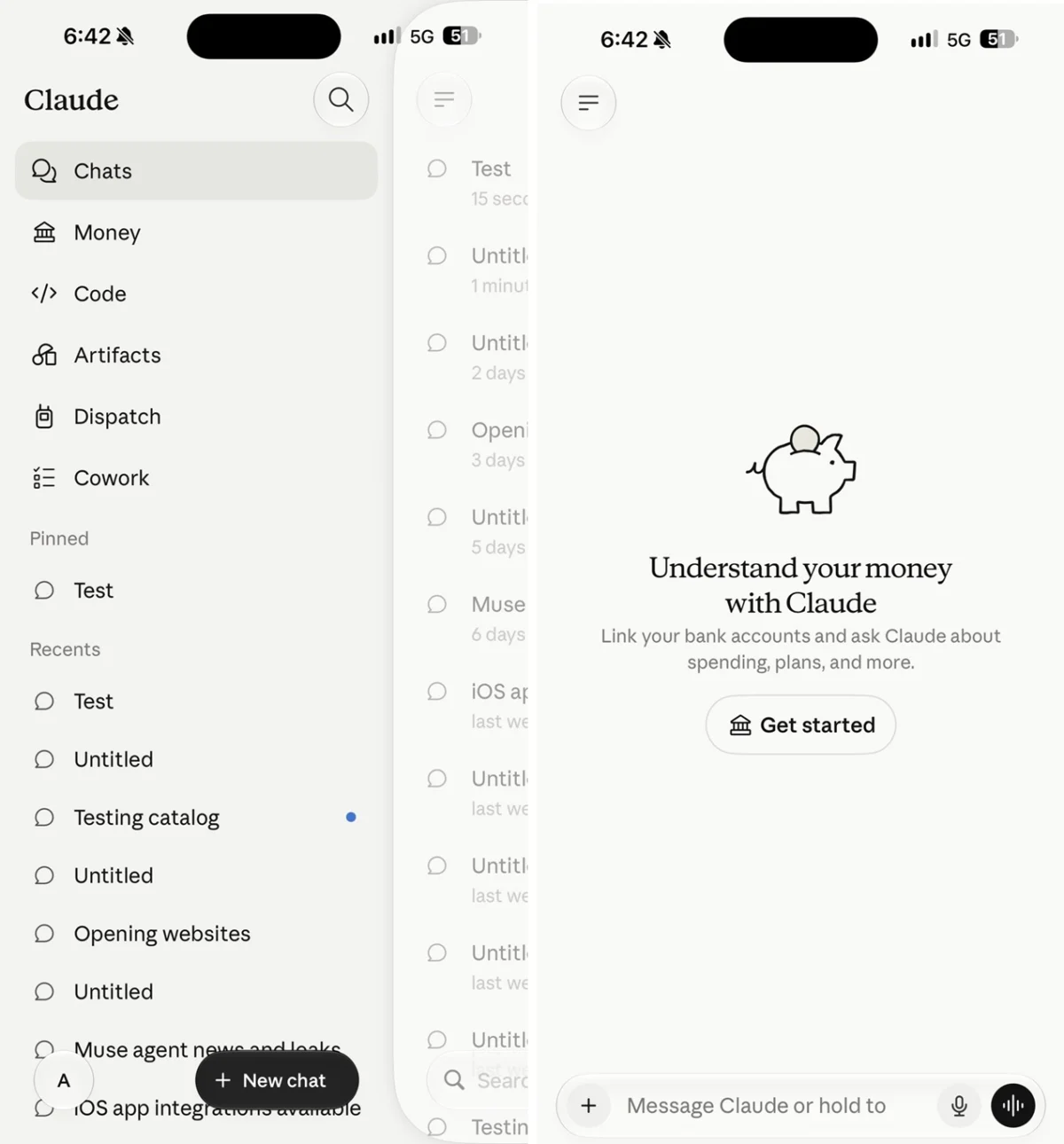
Anthropic, a prominent artificial intelligence research and deployment company, is reportedly in the early stages of testing a new feature dubbed "Claude Money." This innovative functionality, designed to integrate directly with the Claude AI assistant, aims to provide users with a deeper understanding of their personal finances by enabling them to securely connect their bank accounts. The move signifies a significant step for Anthropic in the increasingly competitive landscape of AI-powered personal assistance, directly challenging established players like OpenAI.
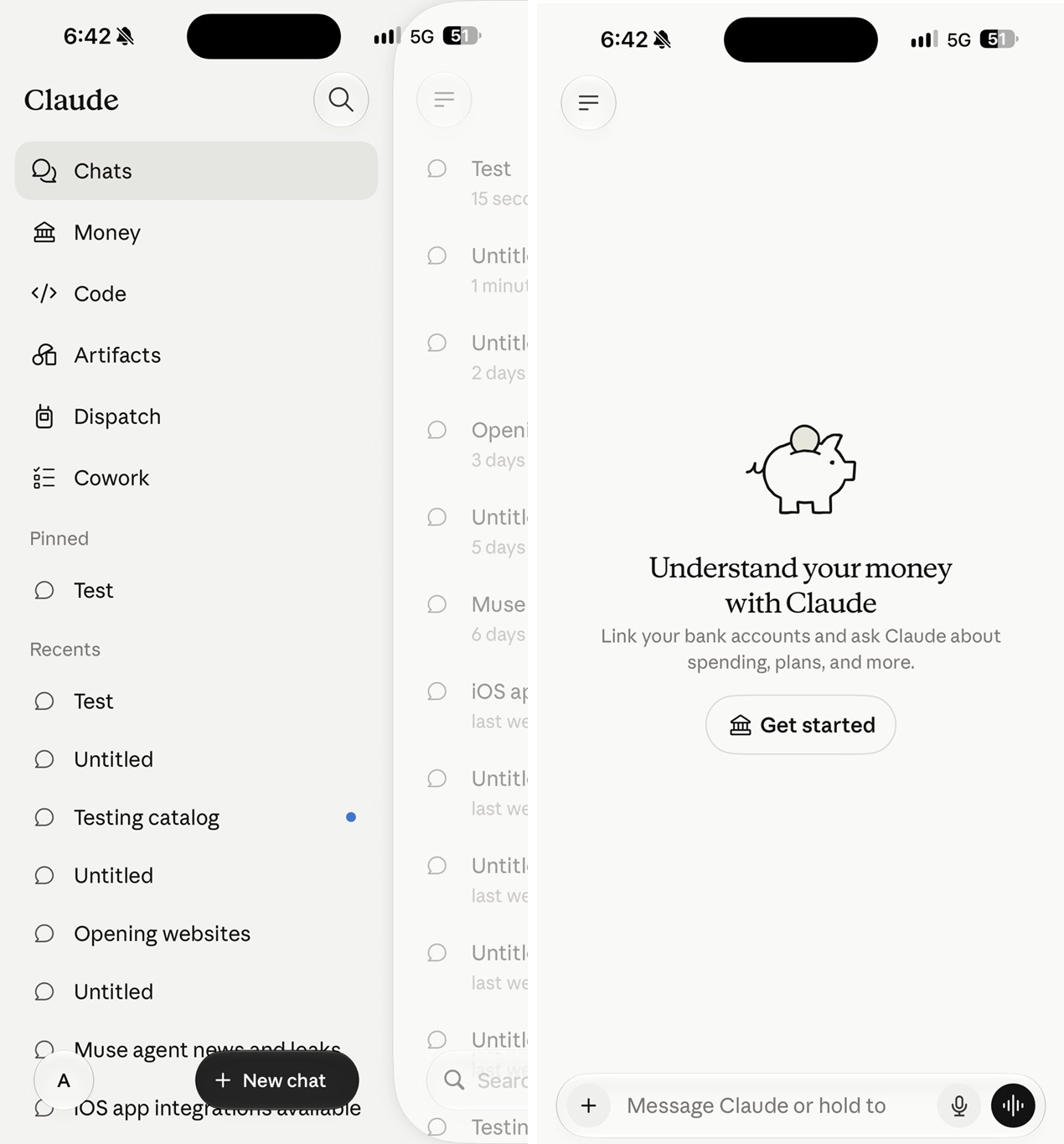
The discovery of "Claude Money" was first reported by TestingCatalog on the social media platform X, formerly Twitter. According to their findings, the feature has appeared within the Claude app on iOS, subtly integrated into the user interface. A new "Money" section has been observed alongside existing categories such as Chats, Code, Artifacts, Dispatch, and Cowork, suggesting a planned expansion of Claude’s capabilities beyond general conversational AI and specialized tasks. A brief description on the observed interface states, "Understand your money with Claude. Link your bank accounts and ask Claude about spending, plans, and more." A "Get started" button is also visible, indicating the intended pathway for users to activate the feature by connecting their financial institutions. However, it is crucial to note that the feature is currently in an experimental phase and does not appear to be widely available to the general user base.
This early appearance of "Claude Money" in the app ahead of any official announcement has limited the available details regarding its full scope and functionality. Key questions remain unanswered, including the specific financial institutions that will be supported, the precise method of account aggregation, and whether the feature will initially be restricted to specific geographic regions, such as the United States, or potentially broader international markets. The integration of financial data is a sensitive area, and Anthropic’s approach to security, privacy, and regulatory compliance will be paramount to its success.
Anthropic’s foray into personal finance management with "Claude Money" mirrors a similar development from OpenAI, the creators of ChatGPT. OpenAI launched its "Finances" feature within ChatGPT, which also allows users to link various financial accounts. This integration is facilitated through Plaid, a financial technology company specializing in secure data aggregation. Through ChatGPT’s "Finances," users can connect bank accounts, credit cards, brokerage accounts, and other financial instruments. Once linked, the AI can then analyze this data to provide insights into spending habits, upcoming bills, subscription services, savings goals, net worth, and investment portfolios.
OpenAI has publicly stated that it does not use personal financial data for training its AI models. Furthermore, their "Finances" feature boasts support for over 12,000 financial institutions within the United States, underscoring the robust infrastructure required for such an undertaking. The widespread adoption and success of OpenAI’s offering may serve as a benchmark and a point of reference for Anthropic as they develop and refine "Claude Money."
The introduction of AI-powered financial tools raises several important considerations for consumers and the broader financial industry. One of the primary benefits envisioned for "Claude Money," and indeed for similar features, is the potential to democratize financial literacy and planning. By providing users with an accessible and intuitive interface to understand their financial landscape, AI assistants can empower individuals to make more informed decisions about their money. This could include identifying areas of overspending, optimizing savings strategies, managing debt more effectively, and even gaining a clearer picture of their investment performance.
However, the integration of sensitive financial data also brings inherent risks and challenges. Consumers will need to be assured of the security measures in place to protect their information from unauthorized access and potential breaches. The transparency of how this data is used, stored, and protected will be critical in building user trust. Furthermore, regulatory frameworks surrounding data privacy and financial services will play a significant role in shaping the rollout and capabilities of features like "Claude Money," particularly in different jurisdictions. For instance, the General Data Protection Regulation (GDPR) in Europe imposes stringent requirements on data handling, which could necessitate a more cautious or localized approach to deployment in those regions.
The competitive dynamic between AI companies venturing into personal finance is likely to accelerate innovation in this sector. As more companies offer these capabilities, users can expect to see a continuous improvement in the accuracy, personalization, and breadth of insights provided. This could lead to a future where AI assistants become indispensable tools for holistic personal financial management, akin to how smartphones have revolutionized communication and information access.
Background Context: The Rise of AI in Personal Finance
The emergence of AI-powered personal finance features is not an isolated event but rather a natural progression of artificial intelligence’s increasing integration into various aspects of daily life. For years, financial institutions have been leveraging AI and machine learning for fraud detection, risk assessment, and personalized product recommendations. However, the direct-to-consumer application of AI for managing personal finances is a more recent development, gaining traction as AI models become more sophisticated and accessible.
Companies like Mint, Personal Capital (now Empower Personal Dashboard), and YNAB (You Need A Budget) have long offered digital tools for budgeting and financial tracking. These platforms typically aggregate financial data through direct user input or by connecting to financial institutions via secure APIs, often using services like Plaid. The innovation introduced by AI assistants like ChatGPT and potentially Claude is the conversational interface, allowing users to query their financial data in natural language. Instead of navigating complex dashboards, users can simply ask, "How much did I spend on dining out last month?" or "What are my upcoming subscription renewals?"
The underlying technology enabling these features involves natural language processing (NLP) to understand user queries, sophisticated algorithms to analyze financial data, and secure data aggregation protocols to connect with various financial accounts. The potential for AI to sift through vast amounts of transactional data and identify patterns, anomalies, and opportunities that might be missed by manual review is a significant driver behind this trend.
Timeline and Evolution of AI Financial Tools
While the specifics of "Claude Money" are still emerging, the general trajectory of AI in personal finance can be observed:
- Early 2000s: Emergence of personal finance software and early online banking tools that allowed for basic transaction tracking and budgeting.
- Mid-2010s: Rise of aggregation services like Plaid, enabling third-party apps to securely connect to user bank accounts, leading to more sophisticated budgeting and financial aggregation platforms.
- Late 2010s – Early 2020s: Advancements in machine learning and AI lead to more personalized insights, automated financial advice, and enhanced fraud detection within traditional financial apps.
- 2023-2024: Introduction of conversational AI assistants (like ChatGPT and potentially Claude) with the explicit capability to integrate and analyze personal financial data, offering a more intuitive and interactive user experience. OpenAI’s "Finances" feature in ChatGPT, launched in early 2024, marks a significant milestone in this evolution. Anthropic’s "Claude Money" appears to be a direct response and further development in this rapidly advancing field.
Supporting Data and Market Trends
The increasing reliance on digital financial tools is evident in market data. A 2023 report by Statista indicated that the global digital banking market size was valued at approximately $18.7 trillion in 2023 and is projected to grow significantly in the coming years. This underscores a growing comfort level among consumers with managing their finances through digital platforms.
Furthermore, consumer interest in AI-driven insights is on the rise. A survey by Deloitte in 2023 found that a majority of consumers are open to using AI for personalized recommendations and assistance, including in financial matters. This sentiment suggests a receptive market for features like "Claude Money" and "ChatGPT Finances."
The financial aggregation market itself is also substantial. Plaid, the company facilitating OpenAI’s feature, reported in early 2024 that it connects to over 12,000 financial institutions in the U.S. and Canada, serving millions of consumers and thousands of businesses. This indicates a mature ecosystem and established infrastructure for secure financial data sharing.
Potential Implications and Broader Impact
The widespread adoption of AI-powered personal finance features like "Claude Money" could have several significant implications:
- Enhanced Financial Literacy: By making complex financial data more accessible and understandable, these tools could empower a broader segment of the population to engage more actively with their finances, potentially leading to improved financial well-being.
- Increased Competition in Fintech: The entry of major AI players into the personal finance space will likely intensify competition with existing fintech companies, potentially driving further innovation and better service offerings for consumers.
- Data Privacy and Security Concerns: The aggregation of sensitive financial data will continue to be a critical area of focus. Robust security protocols, transparent data usage policies, and strong regulatory oversight will be essential to maintain user trust and prevent misuse.
- Evolution of Financial Advice: AI assistants could evolve from simple data analyzers to sophisticated financial advisors, offering personalized recommendations for budgeting, saving, investing, and debt management. This could democratize access to financial advice that was previously only available to those who could afford professional services.
- Regulatory Scrutiny: As AI systems become more integrated into critical areas like finance, regulatory bodies will likely increase their scrutiny to ensure consumer protection, market fairness, and financial stability. The potential for algorithmic bias or unintended consequences will also be a key area of concern.
Anthropic’s "Claude Money" represents another step in this evolving landscape. While the full capabilities and rollout plans remain under wraps, its existence signals a clear direction for AI assistants – to become comprehensive partners in managing various aspects of users’ lives, including their financial health. The company’s approach to security, user privacy, and the breadth of its financial institution partnerships will be key determinants of its success in this burgeoning market. As the feature moves from testing to potential public release, consumers and industry watchers will be closely observing its development and impact.