
 George Chandra Eka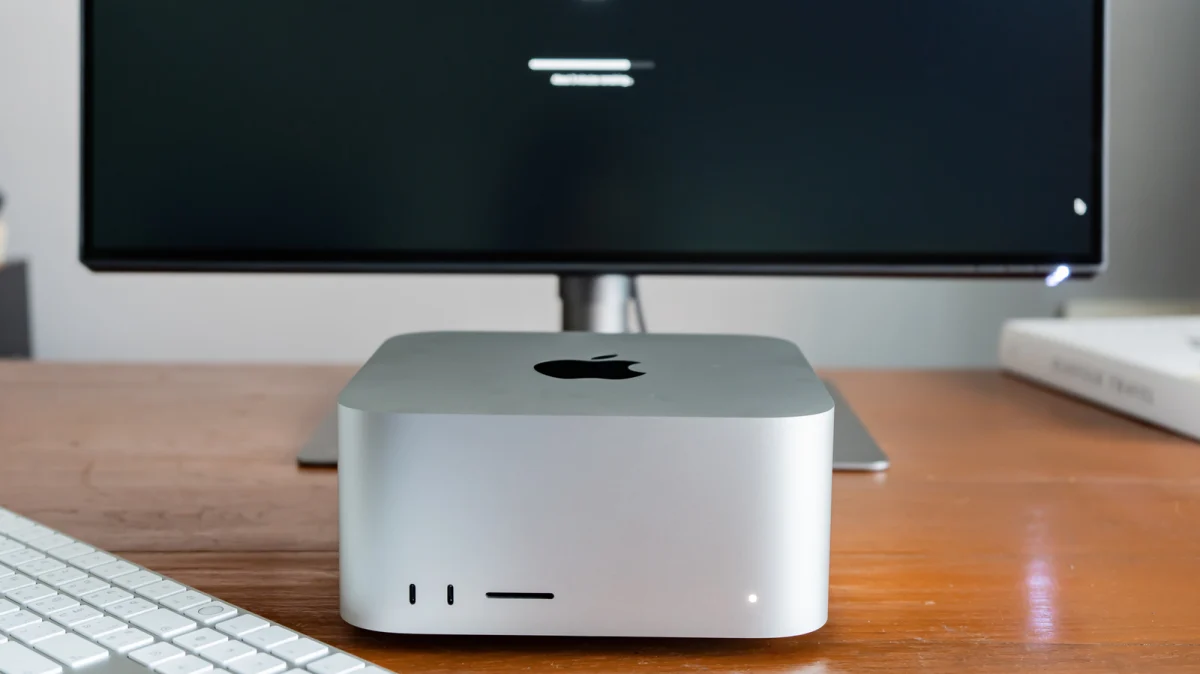
The Apple Mac Studio, a desktop powerhouse designed to bridge the gap between the compact Mac mini and the erstwhile Mac Pro, has undergone a remarkable internal transformation since its inception in March 2022, all while maintaining an almost identical external façade. From its initial M1 Ultra configuration to the latest M5 Ultra, the device has seen four distinct generations of Apple Silicon integrated into its familiar 7.7-inch square, 3.7-inch tall aluminum chassis. This paradoxical evolution – static design housing dynamic technological leaps – underscores Apple’s commitment to its proprietary silicon roadmap and its strategic positioning in the high-end computing market, culminating in the discontinuation of the Mac Pro and the Studio’s ascent as Apple’s most powerful offering.
The Genesis: 2022 and the M1 Era
The Mac Studio made its debut in March 2022, positioned as a formidable solution for professional creatives and developers who demanded more power than the Mac mini but sought a more compact and cost-effective alternative to the then-current Intel-based Mac Pro. Its launch marked a significant milestone in Apple’s transition away from Intel processors, showcasing the burgeoning capabilities of its in-house Apple Silicon.
At its core, the first-generation Mac Studio introduced two groundbreaking chip variants: the M1 Max and the M1 Ultra. The M1 Max, serving as the entry point, featured a robust 10-core CPU, up to a 32-core GPU, and 32GB of unified memory, alongside a 512GB SSD, with a starting price of $1,999. However, it was the M1 Ultra that truly captured headlines. Apple ingeniously fused two M1 Max dies together using a proprietary interconnect technology dubbed "UltraFusion." This innovative architecture allowed the two chips to behave as a single, unified processor, boasting an astonishing 114 billion transistors. The M1 Ultra configuration started at an eye-watering $3,999, offering a 20-core CPU, up to a 64-core GPU, and a minimum of 64GB of unified memory, configurable up to 128GB. This unprecedented integration delivered performance metrics that rivaled and, in many professional benchmarks, surpassed high-end desktop workstations running traditional x86 architectures.
The external design, which has remained untouched since, was meticulously crafted for thermal efficiency and connectivity. The rear panel housed a comprehensive array of ports, including four Thunderbolt ports, 10Gb Ethernet for high-speed networking, an HDMI port for external displays, two USB-A ports, two additional USB-C ports on the front for convenient access, and an SD card slot. This generous port selection catered directly to the needs of its target professional audience, eliminating the need for numerous dongles and hubs. The immediate market reception was largely positive, with reviewers praising its compact form factor, quiet operation, and astounding performance-per-watt, solidifying its place as a serious contender for demanding workflows.
The First Iteration: 2023 and the M2 Enhancements
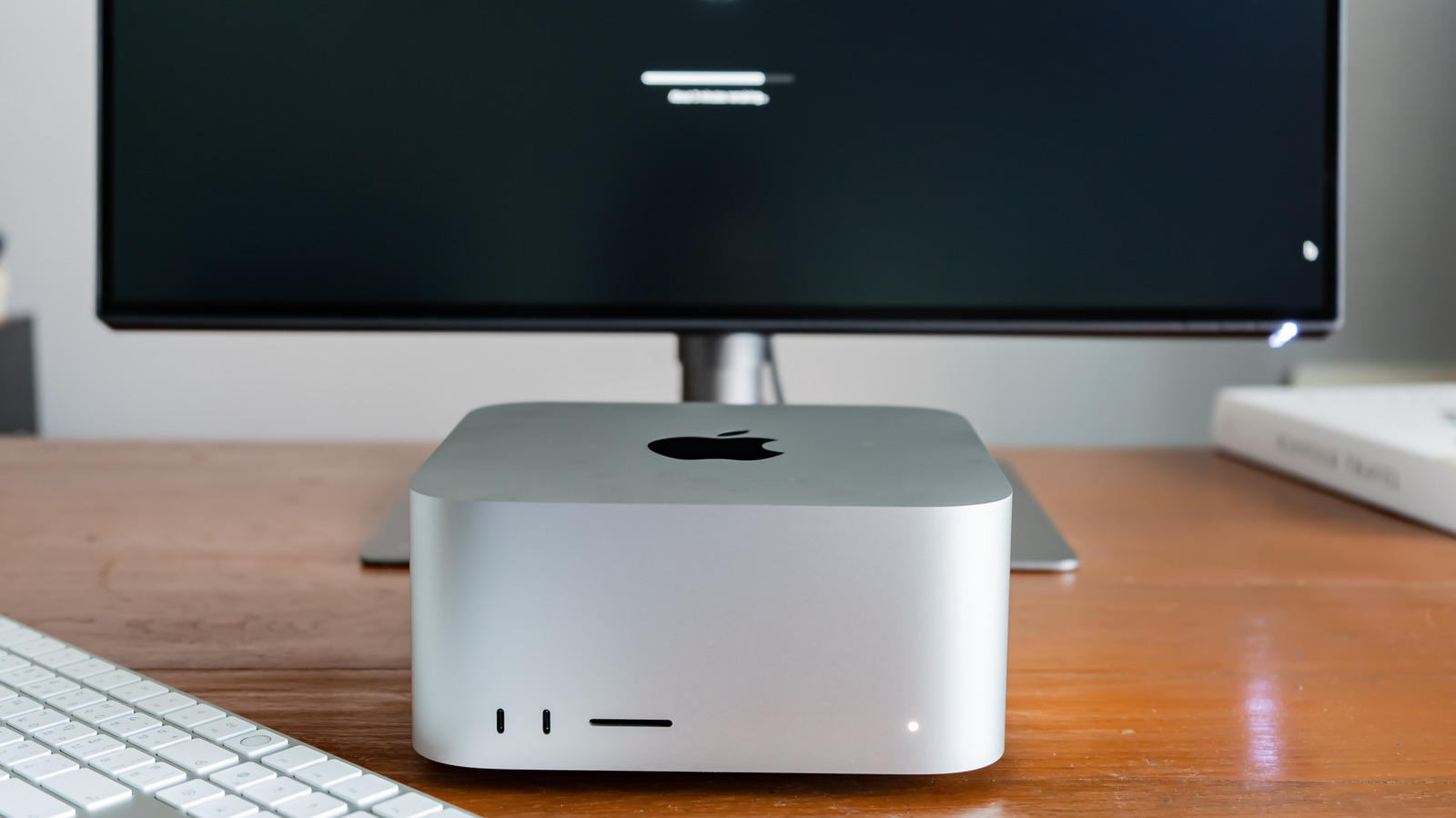
Just over a year after its initial launch, Apple unveiled the second-generation Mac Studio lineup at its Worldwide Developers Conference (WWDC) in June 2023. True to its established design philosophy, the external enclosure remained untouched, neither gaining nor losing a single port. The significant advancements were once again confined to the internals, with the introduction of the M2 Max and M2 Ultra chips.
The M2 Max chip saw an increase in core counts, featuring a 12-core CPU, up to a 38-core GPU, and support for up to 96GB of unified memory. Building on the UltraFusion architecture, the M2 Ultra effectively doubled these specifications, presenting a 24-core CPU, a formidable 76-core GPU, and an impressive 192GB of unified memory, all operating with an enhanced memory bandwidth of 800GB/s. The M2 Ultra boasted over 134 billion transistors, further pushing the boundaries of integrated silicon performance.
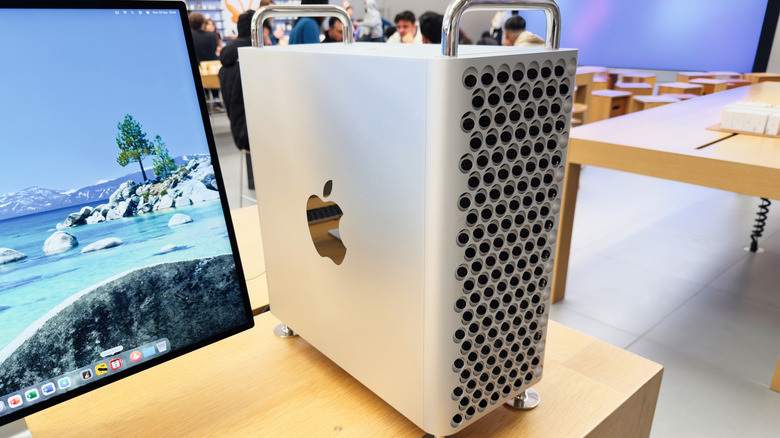
Interestingly, Apple concurrently announced the Apple Silicon Mac Pro during the same event. This new Mac Pro also featured the M2 Ultra chip, sharing the same 192GB memory capacity. However, its starting price of $6,999 raised questions about its positioning relative to the Mac Studio. While the Mac Pro offered PCIe expansion slots—a critical feature for specific professional workflows requiring dedicated accelerator cards or extensive storage—the raw compute power of the M2 Ultra was equally accessible in the significantly more affordable and compact Mac Studio. This created an awkward overlap, leading many industry analysts to question the value proposition of the Mac Pro for a broad segment of its traditional user base, particularly those who prioritized raw chip performance over internal expandability. The M2 generation solidified the Mac Studio’s reputation for delivering workstation-class performance in a desktop footprint.
A Period of Transition: 2025’s Mismatched Chips and Price Shock
Following the 2023 refresh, the Mac Studio lineup experienced a longer hiatus, with nearly two years passing before its next update in March 2025. This particular generation proved to be a pivotal, and somewhat unusual, chapter in the Mac Studio’s history, characterized by a unique chip pairing and unprecedented market pressures.
For the first time, Apple released a Mac Studio lineup featuring chips from two different generations of Apple Silicon. The entry-level model was equipped with the newer M4 Max chip, while the higher-end configuration incorporated the M3 Ultra. This strategic decision, potentially influenced by manufacturing schedules, supply chain dynamics, or a desire to optimize performance-per-dollar for different tiers, saw the M3 Ultra offering a formidable 32-core CPU, an 80-core GPU, support for up to 512GB of unified memory, and up to 16TB of internal storage. Both models also benefited from the inclusion of Thunderbolt 5, providing an impressive 120Gb/s bandwidth, a significant leap forward for external connectivity and data transfer speeds.
However, the most impactful development of this period was a dramatic shift in pricing. Twelve months after this update, in March 2026, Apple made the significant announcement that it was discontinuing the Mac Pro, signaling that there were no plans for a successor. This left the Mac Studio, the "odd little square," as Apple’s flagship desktop for sheer processing power. This strategic repositioning coincided with a global "AI-fueled memory shortage" that severely impacted component costs across the tech industry. In response, Apple hiked the prices for its Mac Studio models, a move that reverberated throughout the market. The entry-level M4 Max Mac Studio, which had started at $1,999, saw its price jump to $2,499. The M3 Ultra configuration experienced an even steeper increase, climbing from $3,999 to an unprecedented $5,299.
Apple publicly addressed these price adjustments, with representatives telling the Wall Street Journal that the company had "never seen a component price rise this much, this quickly." This was, and remains, the steepest price increase for any Mac in history, reflecting the intense supply chain pressures and soaring demand for high-bandwidth memory crucial for AI workloads. The discontinuation of the Mac Pro, coupled with these significant price hikes, fundamentally reshaped Apple’s high-end desktop strategy, firmly establishing the Mac Studio as the undisputed leader in its professional desktop lineup.
The AI-Driven Apex: 2026 and the M5 Era
The latest iteration, the fourth-generation Mac Studio, arrived with an unexpected August 2026 announcement, a departure from Apple’s typical product launch cycles. Reports from publications like The Information suggested that this accelerated release was driven by pressing demand from enterprise customers requiring more capable machines for running increasingly complex local AI models.
For the first time since 2023, both the Max and Ultra variants of the Mac Studio shared the same generation of Apple Silicon: the M5. The M5 Max chip featured an 18-core CPU, a 32- or 40-core GPU, and a key innovation: a dedicated Neural Accelerator embedded within every core, supporting up to 128GB of unified memory. This configuration started at $2,499. The M5 Ultra, building on this foundation, offered a massive 36 CPU cores, an 80-core GPU, and an astounding 512GB of unified memory, starting from $5,499 (with the full build available in late October).
Apple’s marketing for the M5 Ultra heavily emphasized its AI capabilities, touting up to 4.3 times the AI performance compared to the M3 Ultra. Beyond AI, the M5 Ultra delivered 1.8 times the graphics performance and 1.3 times the CPU performance, alongside storage speeds up to twice as fast and the integration of Wi-Fi 7, powered by Apple’s new N1 networking chip. The chip architecture itself saw a notable evolution, moving beyond the traditional performance-efficiency core split to introduce "super" cores running alongside dedicated performance cores, indicating a sophisticated approach to workload management and power efficiency.
This M5 generation definitively positions the Mac Studio as a leading platform for machine learning, generative AI, and other data-intensive computational tasks. The strategic decision to prioritize AI capabilities and respond swiftly to enterprise demand highlights Apple’s adaptation to the evolving technological landscape.
Broader Implications and Apple’s Silicon Strategy
The journey of the Mac Studio, from its 2022 introduction to its 2026 M5 iteration, serves as a microcosm of Apple’s broader strategic shift and the undeniable success of its Apple Silicon initiative. The unchanging external design, a hallmark of Apple’s aesthetic consistency, belies the profound technological advancements occurring within. This consistency simplifies manufacturing, reduces design costs, and provides users with a familiar form factor, while internal innovation drives performance.
The Mac Studio effectively killed the Mac Pro, not through direct competition in form factor, but by outperforming it in its core function for a significant portion of its target demographic. The M-series chips, with their unified memory architecture and highly optimized integration of CPU, GPU, and Neural Engine, demonstrated that raw power could be delivered in a much more efficient and compact package than traditional tower workstations requiring discrete components and extensive expandability. The discontinuation of the Mac Pro was a clear statement: Apple’s future for high-end professional computing is firmly rooted in its integrated silicon ecosystem, with the Mac Studio leading the charge.
The escalating prices, particularly those driven by the AI memory shortage in 2025-2026, also highlight the economic realities of cutting-edge technology. While initially criticized, Apple’s transparency regarding component costs provided a rare glimpse into the pressures facing the tech industry. This era also cemented Apple’s commitment to responding to market demands, particularly in the burgeoning field of artificial intelligence, by rapidly deploying more capable hardware.
Ultimately, the Mac Studio has not just evolved; it has redefined Apple’s professional desktop landscape. It stands as a testament to the power and potential of Apple Silicon, offering a compelling blend of compact design, immense processing power, and a future-forward focus on AI capabilities. Its continued evolution, especially with the introduction of "super" cores and dedicated Neural Accelerators, ensures its pole position as Apple’s most powerful and strategically significant computer for the demanding professional user. The question now is not whether the Mac Studio will continue to evolve, but how its internal architecture will continue to adapt to the relentless pace of technological advancement, especially in the realm of artificial intelligence, while maintaining its iconic, unchanging exterior.







