Chandra Wibowo
Bitcoin (BTC) experienced a cooling-off period on Thursday, mirroring a broader trend seen in U.S. stock markets. While recent lower-than-expected inflation data had initially buoyed risk assets, a significant sell-off in technology stocks on Wednesday and Thursday exerted downward pressure on Bitcoin, tempering its recent gains. The flagship cryptocurrency was observed trading around the $64,500 mark, a notable retreat of 1.5% from its three-week highs reached the preceding day, according to data from TradingView.
This price action occurred in the wake of two consecutive days of encouraging U.S. inflation figures. Both the Consumer Price Index (CPI) and the Producer Price Index (PPI) for June came in below consensus estimates, sparking initial optimism across financial markets. Historically, periods of lower inflation can be conducive to riskier assets like cryptocurrencies and technology stocks, as they reduce the perceived need for central banks to aggressively raise interest rates, which can stifle growth.
However, the market’s reaction proved to be a complex interplay of factors. While the inflation data provided a reprieve from concerns about runaway price increases, the technology sector, a significant driver of broader market sentiment, faced considerable headwinds.
Tech Sector Sell-Off Casts Shadow Over Risk Assets
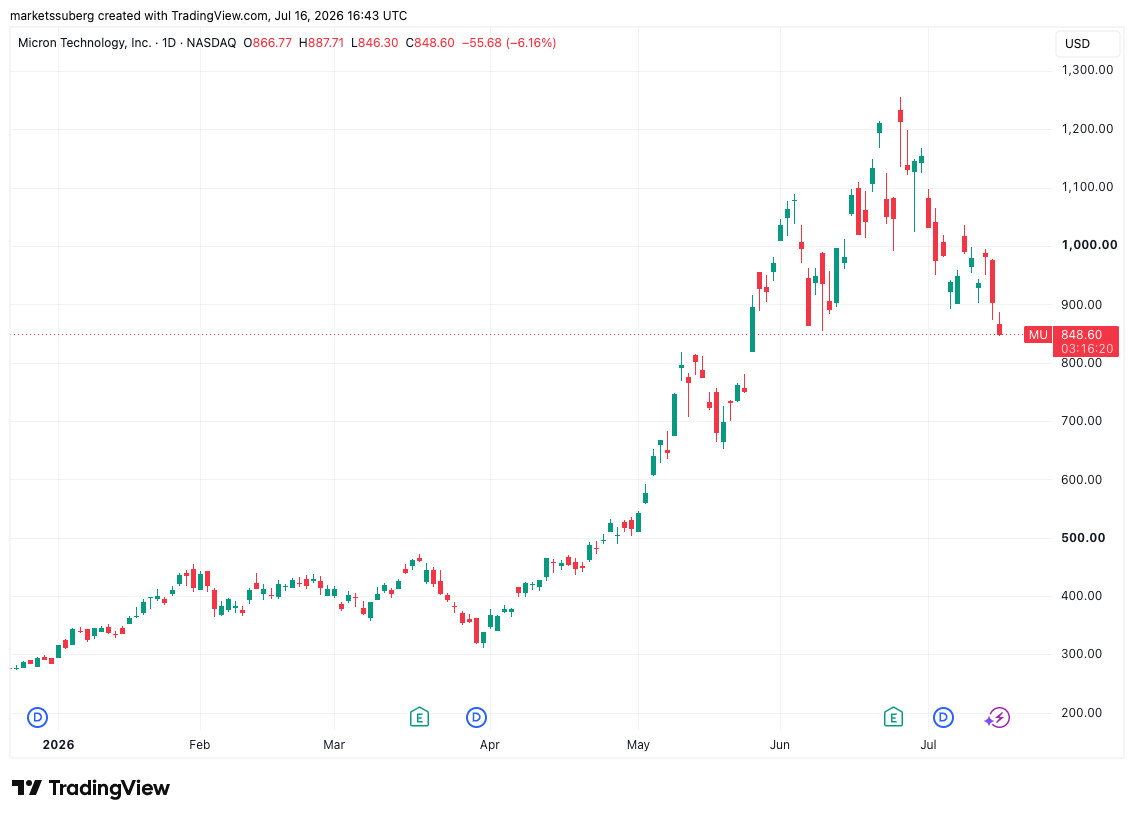
The technology sector’s downturn was particularly pronounced, with key players experiencing substantial declines. Micron Technologies, a semiconductor giant whose stock performance is often seen as a bellwether for the broader tech industry, saw its shares plummet by approximately 15% on Thursday. This sharp decline followed a period of strong performance, with Micron having reached a record high just weeks prior on June 22nd. Trading resource The Kobeissi Letter highlighted this significant shift, noting on the social media platform X that Micron’s stock had fallen over 30% from its recent peak.

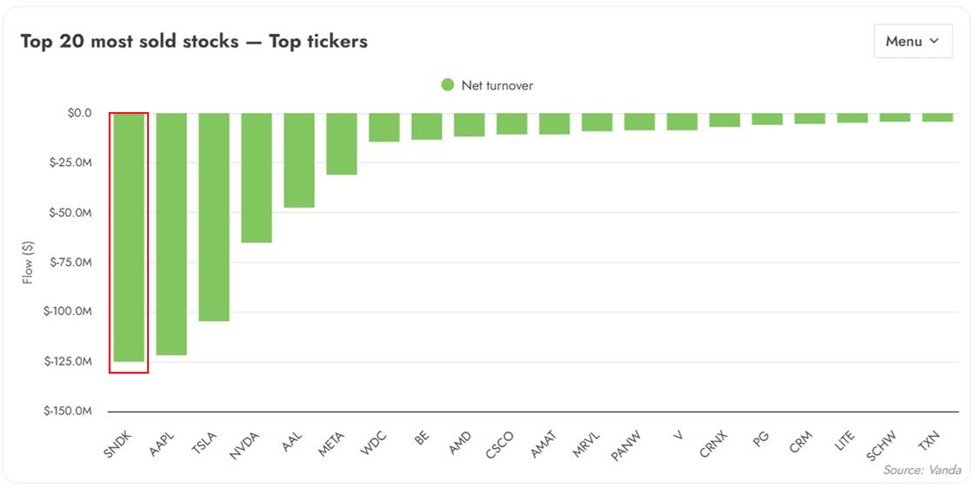
The sell-off in tech stocks was not confined to a single entity. Analysis from The Kobeissi Letter indicated a broader trend of profit-taking among retail investors in prominent technology stocks. The report detailed that sales of shares in companies like Tesla and Apple had collectively reached $200 million over the preceding two weeks. This trend suggested that individual investors, having participated in a significant tech rally, were now moving to lock in their profits.
This observation was further substantiated by data showing a notable increase in overall retail investor activity in single stocks. The Kobeissi Letter reported that total retail turnover in individual stocks had surged to a record $370 billion, a substantial increase from the $220 billion recorded at the beginning of 2026. This surge in activity, coupled with the identified profit-taking, pointed towards a strategic shift by retail participants seeking to capitalize on recent market appreciation.
The implications of this tech sector weakness extend beyond individual stock performance. Given the significant weighting of technology companies in major stock indices such as the Nasdaq Composite, a broad-based sell-off in this sector can create a ripple effect, influencing overall market sentiment and investor appetite for risk. Cryptocurrencies, often treated as high-risk, high-reward assets, can be particularly sensitive to such shifts in broader market psychology.
Bitcoin’s Price Action and Technical Indicators
In light of these market dynamics, Bitcoin’s price trajectory became a focal point for traders and analysts. The prevailing sentiment among market participants on Thursday leaned towards caution. The term "rejection" began to emerge as a key keyword in discussions surrounding BTC price action, indicating a potential resistance to further upward movement.
One notable technical analysis came from commentator Exitpump, who focused on the anchored volume-weighted average price (AVWAP). This metric, calculated from Bitcoin’s ascent to $82,000 in early May, was identified as a critical level that could potentially cap the current rebound. Exitpump suggested that a retest of this AVWAP level was anticipated and that such a retest was likely to result in a "stronger rejection," thereby limiting upside potential for BTC. The analyst shared this view with followers on X, accompanied by a four-hour BTC/USD chart illustrating the confluence of price action with this key technical indicator.
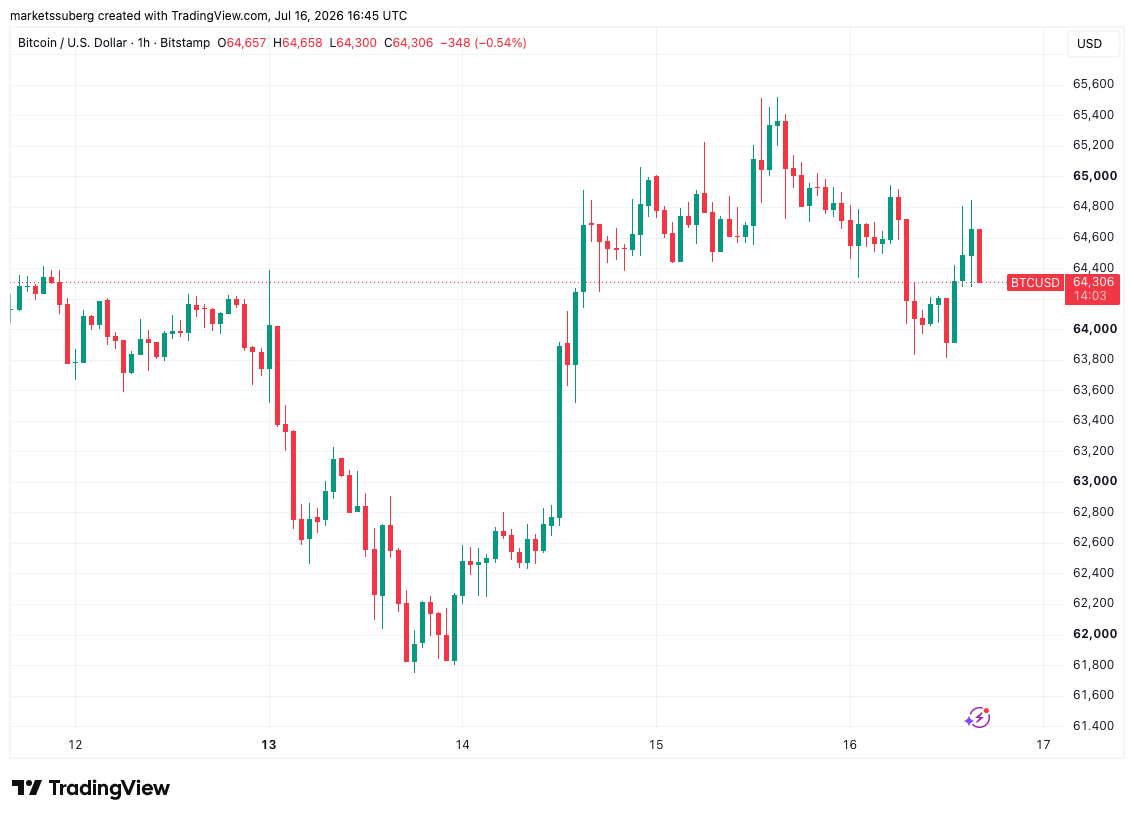
Adding to the cautious outlook, trader and analyst Rekt Capital observed that Bitcoin was exhibiting "initial signs of rejection" from its 50-month exponential moving average (EMA). This significant technical level was positioned at approximately $65,900. The 50-month EMA is a long-term moving average that can indicate the broader trend and potential support or resistance zones for an asset. A rejection from such a prominent long-term indicator can signal a potential shift in momentum.
Rekt Capital further drew parallels between Bitcoin’s current price behavior and the dynamics observed during the 2022 bear market. This comparison suggested that the cryptocurrency might be following a similar pattern of price consolidation and potential downturns, even amidst periods of short-term gains. The analyst had previously cautioned that the next significant macro bottom for Bitcoin was not expected until later in the current year, implying that the recent upward movements might be temporary rather than indicative of a sustained bull run.
Broader Economic Context and Inflation Data
The recent inflation data, which initially provided a boost to risk assets, represented a significant development in the ongoing economic landscape. The Consumer Price Index (CPI) measures the average change over time in the prices paid by urban consumers for a market basket of consumer goods and services. A lower-than-expected CPI reading suggests that the rate of inflation is decelerating, which can be positive for consumer purchasing power and economic growth.
Similarly, the Producer Price Index (PPI) measures the average change over time in the selling prices received by domestic producers for their output. A decrease or slowdown in PPI can indicate that inflationary pressures are easing at the wholesale level, which often translates to lower consumer prices in the future.
These favorable inflation reports had fueled hopes that the U.S. Federal Reserve might reconsider its monetary policy stance. A sustained period of low inflation could potentially lead to a pause or even a reduction in interest rates, which would generally be seen as a positive catalyst for both traditional financial markets and the cryptocurrency space. Lower interest rates reduce the cost of borrowing, encourage investment, and can make riskier assets more attractive relative to safer, interest-bearing investments.
However, the market’s immediate reaction to the inflation data was nuanced. While there was an initial surge in optimism, the subsequent performance of technology stocks highlighted the complexity of market drivers. The tech sector, in particular, has been sensitive to changes in interest rate expectations and investor sentiment regarding future economic growth. High-growth technology companies often rely on access to capital and are more susceptible to economic downturns.
Implications for Bitcoin and Digital Assets
The interplay between inflation data, tech stock performance, and Bitcoin’s price action underscores the interconnectedness of global financial markets. As a relatively nascent and volatile asset class, Bitcoin often exhibits a high correlation with risk assets, particularly technology stocks. When sentiment shifts towards risk aversion in broader markets, cryptocurrencies can experience significant price corrections.
The observed profit-taking by retail investors in tech stocks also suggests a broader caution among a significant segment of the market. This could indicate a desire to de-risk portfolios in anticipation of potential economic uncertainties or simply to realize gains after a prolonged period of market appreciation. For Bitcoin, this could translate into reduced inflow of new capital or increased selling pressure as investors reallocate their assets.
The technical indicators, such as the AVWAP and the 50-month EMA, provide further insights into potential resistance levels for Bitcoin. The "rejection" signals observed by analysts suggest that the cryptocurrency may face challenges in breaking through these key price points without renewed fundamental catalysts or a significant shift in overall market sentiment.
Looking ahead, investors will be closely monitoring several key factors. Continued inflation data releases will be crucial in shaping expectations for Federal Reserve policy. The performance of the technology sector will also remain a significant indicator of broader market risk appetite. Furthermore, developments within the cryptocurrency ecosystem itself, such as regulatory news, institutional adoption, and significant project updates, will play a vital role in influencing Bitcoin’s trajectory.
The current market environment, characterized by a cooling-off period for risk assets following a period of optimism, highlights the importance of a diversified investment approach and a thorough understanding of the various factors influencing asset prices. While the low inflation data offered a brief moment of relief, the underlying market dynamics, particularly within the influential technology sector, suggest that a period of consolidation and potential volatility may persist for Bitcoin and other digital assets.
The initial enthusiasm generated by the softer inflation readings was quickly overshadowed by a renewed focus on the resilience of the tech sector and the potential for profit-taking among investors who had ridden the wave of recent market highs. This dynamic has led to a more conservative stance in the trading of Bitcoin, with analysts closely watching key technical levels for signs of continued resistance. The broader economic narrative remains one of careful navigation, with inflation data providing a temporary reprieve but broader market sentiment and sector-specific performance dictating the immediate path forward for risk assets.