Evan Lee Salim
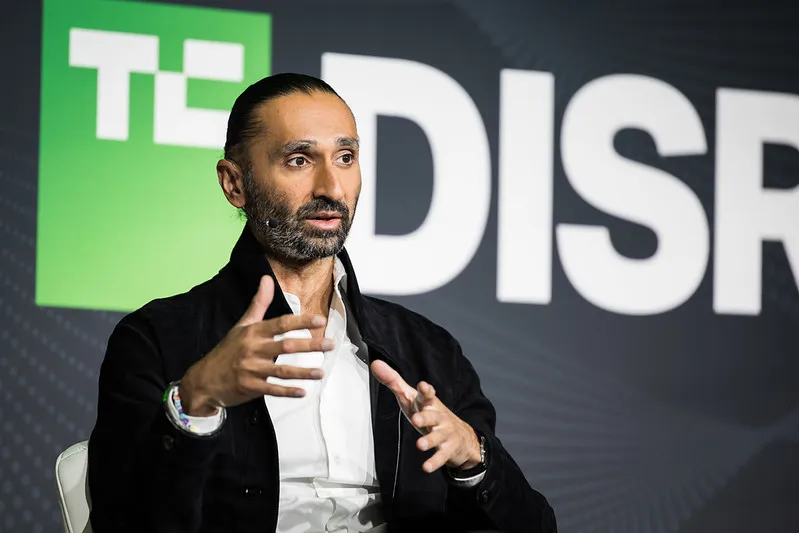
Private equity behemoth Blackstone, managing an colossal $1.3 trillion in assets, is strategically embedding itself at the very core of the artificial intelligence (AI) boom, a pivotal shift articulated by firm veteran Jas Khaira last week on stage at TechCrunch Disrupt. The firm’s multi-faceted approach involves deploying substantial capital across the AI value chain, from providing massive loans for critical data center infrastructure to making equity investments in cutting-edge AI models and applications. This proactive stance underscores Blackstone’s conviction that the current technological transition demands unprecedented levels of investment, a need that perfectly aligns with its formidable financial capacity and flexible capital structures.
Earlier this year, Blackstone solidified its commitment by launching Blackstone N1 (BXN1), a dedicated San Francisco-based hub designed to centralize and accelerate its AI initiatives. This specialized group is spearheaded by Khaira, who strategically relocated from New York to immerse himself in the vibrant ecosystem of the AI epicenter. The establishment of BXN1 signals a deliberate move to be on the ground where innovation is happening, fostering closer ties with startups and leveraging real-time market insights.
The Unprecedented Capital Demands of the AI Era
Khaira highlighted a fundamental difference between the current AI wave and preceding tech cycles, such as the rise of mobile computing or Software-as-a-Service (SaaS). While earlier paradigms allowed companies to achieve significant scale with relatively moderate capital outlays, the transition to AI necessitates staggering amounts of investment. This capital intensity stems from several factors: the exorbitant cost of specialized hardware, particularly Graphics Processing Units (GPUs) like those from Nvidia; the vast energy requirements for training complex models; and the substantial infrastructure buildout needed for data centers and cooling systems. It is precisely this insatiable demand for capital that positions Blackstone, with its immense financial firepower, to play an indispensable role in shaping the trajectory of this transformative technological shift.
Unlike traditional venture capital firms that primarily focus on equity investments in early-stage companies, Blackstone distinguishes itself through its comprehensive approach, particularly its emphasis on compute financing and its capacity to offer highly flexible capital structures, spanning both debt and equity. This adaptability allows Blackstone to tailor financing solutions to the unique needs of AI companies, which often require significant upfront investment in hardware before generating substantial revenue. The firm has been aggressively pursuing these investment opportunities, quickly becoming a dominant force in the AI infrastructure landscape.
Khaira unequivocally stated, "We’re the largest owner of compute outside of the hyperscalers today, whether it’s investments in neo clouds, investments in data centers, and being able to use that compute strategically to support companies." This assertion underscores Blackstone’s strategic intent to control a significant portion of the underlying computational power essential for AI development, positioning itself as a critical enabler for the entire industry.
Pioneering the Neocloud Financing Model: The CoreWeave Case Study
A prime example of Blackstone’s innovative approach is its involvement in the burgeoning "neocloud" sector. Neoclouds are specialized cloud providers that lease out high-performance AI GPU infrastructure, filling a critical gap left by hyperscalers, who often face immense demand for their own internal AI projects. BXN1 has been instrumental in several compute-related deals, including a landmark commitment of $5 billion as an investor in Crux AI. Crux AI is a neocloud launched in partnership with Google, specifically designed to commercialize Google’s custom Tensor Processing Units (TPUs) at an industrial scale. This investment highlights Blackstone’s willingness to back diverse compute architectures beyond just Nvidia GPUs. The firm also backed four-year-old Etched, a chip startup whose rapid development in specialized AI hardware has garnered significant investor attention, demonstrating Blackstone’s interest in foundational AI technologies.
Blackstone pioneered a groundbreaking financing structure that enabled it to lend massive sums to venture-backed neoclouds. This model ingeniously leverages both committed customer contracts and the physical GPUs themselves as collateral, offering a novel way to de-risk substantial loans in a capital-intensive, high-growth sector.
The firm’s first such deal, which would quickly become a blueprint for subsequent transactions, materialized in 2023 with CoreWeave. This occurred shortly after CoreWeave experienced an explosion in demand for its GPU infrastructure following the public launch of OpenAI’s ChatGPT, which ignited a global race for AI development. Despite CoreWeave having only "30 million of revenue and minimal profitability" at that time, according to Khaira, the neocloud approached Blackstone for a staggering $2.3 billion loan. The attractiveness of the deal lay in CoreWeave’s considerable inventory of Nvidia GPUs, which held significant resale value, and the fact that Nvidia itself was also an investor, signaling confidence in CoreWeave’s technology and market position. Furthermore, Blackstone gained comfort from CoreWeave’s robust contracts with blue-chip customers like Microsoft, effectively guaranteeing future revenue streams and mitigating default risk.
This innovative transaction rapidly evolved into the de facto financing model for how Blackstone and other credit institutions subsequently provided billions in follow-on debt to CoreWeave and its growing cohort of rival neoclouds. Khaira elaborated on the underwriting process, stating, "One of the primary things that we’re looking to is the nature of the customer. And if the customer is an investment-grade customer – let’s say it’s Microsoft or let’s say it’s Meta – the risk gets priced relative to that customer." This focus on the creditworthiness of the end-user customer became a cornerstone of their lending strategy, allowing them to provide capital at scale. Building on this success, Blackstone orchestrated other significant neocloud financing deals, including co-leading, alongside Coatue, a formidable $10 billion credit facility for Australian GPU provider Firmus earlier this year, further cementing its position as a leading financier in the space.
Navigating Headwinds: Rising Interest Rates and Market Jitters
However, the rapid accumulation of debt by these infrastructure providers has not been without its challenges. In recent weeks, concerns about the sustainability of these large debt burdens have begun to raise red flags across the market. CoreWeave’s debt, for instance, has reportedly ballooned to approximately $50 billion, prompting notable market observers like Altimeter Capital founder Brad Gerstner to voice caution. In a recent CNBC interview, Gerstner remarked, "The collateral that CoreWeave is putting up which is really only GPUs is not good enough anymore. They used that in the past to get cheap debt." This statement reflects a growing apprehension that the rapidly appreciating value of GPUs, while a strong asset, might not be sufficient to fully secure increasingly massive debt facilities in a shifting economic landscape.
Khaira acknowledged these market jitters, attributing them to a confluence of factors. Interest rates, after a period of historic lows, have been steadily ticking upwards, with September seeing further increases. Hotter-than-expected inflation signals suggest that borrowing costs may continue their upward trajectory, directly impacting the cost of capital for highly leveraged companies. Furthermore, the sheer volume of AI infrastructure debt offerings flooding the market is contributing to a re-evaluation of risk.
"We’re also seeing higher credit spreads," Khaira explained, detailing how lenders are now demanding higher premiums on top of already elevated base interest rates to finance the extensive AI buildout. This tightening of credit conditions extends even to the most financially robust entities. "The cost of capital to price in debt for a Meta or a Microsoft has widened out," he added, underscoring that even tech giants with massive balance sheets and solid earnings are now facing higher borrowing costs.
These concerns regarding the rising cost of debt have inevitably spilled into the public markets. Shares of CoreWeave, which is privately held but frequently valued, reportedly dropped over 20% in recent days, reflecting investor anxiety. In a more direct impact, Firmus, the Australian GPU provider that secured a $10 billion credit facility from Blackstone, notably scrapped its planned IPO on the Australian Securities Exchange. The offering had targeted a valuation of roughly $30 billion, but the market’s reception proved to be less enthusiastic than anticipated. "Ultimately, the market wasn’t there at that valuation, and so I think as a result, that deal didn’t get done," Khaira confirmed regarding Firmus’s cancelled listing. This incident serves as a clear indicator that market sentiment is recalibrating, scrutinizing valuations and debt levels with renewed rigor. Khaira succinctly summarized the prevailing market sentiment: "The market is thinking what is the right price for neoclouds, what is the right price for these businesses in this moment when interest rates are moving up."
Blackstone’s Perspective on Risk and Resilience
Despite these pressures on some infrastructure providers, the fundamental demand for AI compute remains insatiable. AI companies, from research labs to application developers, simply cannot acquire enough computational power to train and deploy their increasingly complex models. This voracious appetite continues to fuel the relentless buildout of data centers and the expansion of neocloud capabilities. The global AI market, valued at approximately $200 billion in 2023, is projected to grow exponentially, potentially exceeding $1.8 trillion by 2030, according to various market research reports. This projected growth underpins the long-term investment thesis for AI infrastructure.
Khaira, however, remained sanguine, downplaying worries from "doom-mongers" who suggest that the massive accumulation of AI infrastructure debt could precipitate a widespread credit crisis or, worse, destabilize the broader economy. He drew a clear distinction between the current situation and previous financial calamities. "This doesn’t feel like something where you’ve got 2008 banks that are shaky credits," he asserted, referencing the systemic risks posed by subprime mortgages and insolvent financial institutions during the global financial crisis.
Instead, Khaira emphasized that the vast majority of data centers and AI infrastructure are ultimately built for, or backed by, hyperscalers like Amazon Web Services (AWS), Microsoft Azure, and Google Cloud Platform (GCP). Consequently, the debt financing these massive projects is, in his view, ultimately backed by "the most creditworthy companies in the world." This perspective suggests that while individual neoclouds might face valuation adjustments or financing challenges, the foundational demand and the credit quality of the ultimate beneficiaries provide a strong underlying floor for the market.
Beyond Infrastructure: Investing in AI Adoption and Implementation
Blackstone’s strategic engagement with AI extends beyond just financing physical compute infrastructure. The firm is also actively investing in accelerating the adoption and implementation of AI technologies within enterprises. A notable initiative in this regard is "Ode with Anthropic," a $1.5 billion joint venture formed earlier this year alongside leading AI research company Anthropic and private equity firm Hellman & Friedman. Ode’s mission is to supply forward-deployed engineers and AI specialists to help companies seamlessly adopt AI and integrate it into their existing operations. The initiative is strategically starting with Blackstone’s expansive portfolio of 280 companies, providing a built-in proving ground and a significant client base to demonstrate tangible value. This venture addresses a critical bottleneck in the AI adoption curve: the gap between developing powerful AI models and effectively deploying them within complex business environments.
When questioned about the tangible gains Blackstone-owned companies are realizing from their AI investments, Khaira offered a nuanced perspective. He conceded that "there is definitely ROI, but it is uneven." This honesty reflects the inherent challenges and complexities of integrating nascent technologies into diverse operational contexts. He described technology adoption as something that often moves in a "sawtooth-type pattern," characterized by periods of rapid investment and infrastructure buildout followed by a phase where adoption catches up, potentially making the initial investment appear like an oversupply of compute to skeptics. This pattern is not uncommon in transformative technological shifts, where the capacity to innovate often outpaces the immediate ability of businesses to fully harness new capabilities.
Broader Implications for the AI Ecosystem
Blackstone’s multifaceted strategy underscores a fundamental truth about the current AI revolution: it is not merely a technological phenomenon but an economic one, profoundly shaped by the availability and deployment of capital. The firm’s willingness to provide flexible, large-scale financing for AI infrastructure has been critical in enabling the rapid expansion of compute power necessary to fuel the development of increasingly sophisticated AI models. Without such significant capital inflows, the pace of AI innovation would undoubtedly be constrained.
The market’s recent recalibration, driven by rising interest rates and a more cautious approach to debt-fueled growth, highlights the inherent risks in any rapidly expanding sector. While Khaira dismisses parallels to the 2008 financial crisis, the increased scrutiny on collateral, customer contracts, and valuations suggests a maturation of the AI infrastructure financing market. Lenders and investors are demanding greater transparency and more robust financial metrics, pushing companies to demonstrate sustainable business models beyond just the promise of future AI demand.
Ultimately, Blackstone’s central role in the AI boom illustrates the critical interplay between financial innovation and technological advancement. By pioneering new financing structures and deploying vast sums across the AI value chain, Blackstone is not just investing in the future of AI; it is actively shaping its very foundation, even as the market learns to navigate the complexities and challenges of unprecedented capital requirements and evolving economic conditions. The journey ahead for AI is undoubtedly capital-intensive, and firms like Blackstone will continue to be indispensable architects of its progression.