Clarissa Hana

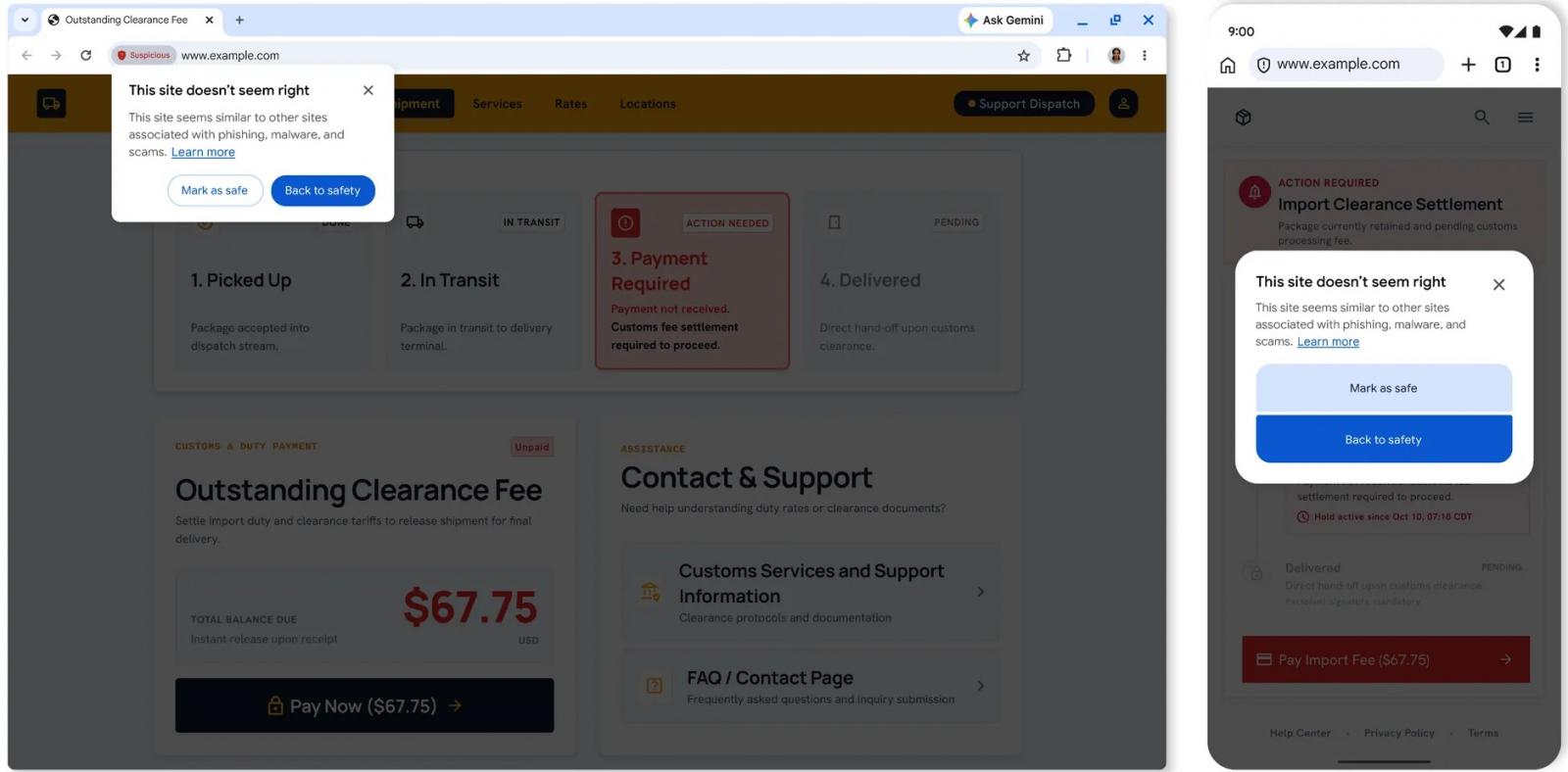
Google is significantly upgrading its security measures within the Chrome browser, introducing a suite of advanced scam protections powered by its Gemini AI model. These enhancements, integrated into the browser’s Enhanced Safe Browsing feature, aim to provide users with a tenfold increase in protection against a broad spectrum of online threats, including sophisticated phishing attempts, social engineering tactics, and malicious notification abuse. The update also introduces a new "suspicious site" warning layer, designed to flag deceptive web pages that may not yet warrant a full-page alert, thereby expanding Chrome’s protective umbrella.
The core of these new protections lies in the evolution of Gemini’s role in scam detection. Previously, Chrome utilized an on-device Gemini model primarily for identifying tech support scams. However, the latest iteration shifts this capability to a more potent server-side model for users who opt into Enhanced Protection. This move signifies a strategic leveraging of cloud-based computational power to analyze a wider array of signals and deliver more robust, real-time threat assessments.
Gemini’s Server-Side Evolution: A Deeper Dive into Scam Detection
The transition to a server-side Gemini model marks a pivotal advancement in how Chrome combats online deception. Google has elaborated that this sophisticated AI now scrutinizes multiple facets of a webpage to ascertain its legitimacy. Key signals under examination include the brand identity purportedly represented on the site, the underlying intent of the page, and a probabilistic assessment of its likelihood to be a scam. This AI-driven analysis is then synergistically combined with Safe Browsing’s existing infrastructure, which incorporates domain reputation data and a multitude of other established security indicators.
This more powerful analytical framework allows Gemini to identify subtle and evolving scam methodologies that might elude traditional signature-based detection methods. By examining the context and content of a webpage in conjunction with its historical security profile, Chrome can proactively identify potential threats before they can fully materialize and exploit users.
Google has emphasized its commitment to user privacy throughout this process. The company stated that the amount of data transmitted to their servers is minimized. Page text is only analyzed when a site exhibits high-confidence indicators of being a scam. Furthermore, any page content that is sent from the user’s device is processed "ephemerally," meaning it is never logged, retained, or used for model training. This ephemeral processing ensures that sensitive user data remains confidential and is immediately discarded after analysis.
Introducing "Suspicious Site" Warnings: A Proactive Layer of Defense
Complementing the advanced AI-driven detection is the introduction of a new "suspicious site" warning. This feature is designed to bridge a critical gap in Chrome’s existing security framework. Previously, users were primarily alerted through a full-page red warning when a site was definitively identified as malicious. However, many websites exhibit deceptive patterns that, while not meeting the threshold for a full-blown red warning, still pose a risk to unsuspecting users.
The "suspicious site" warning addresses this by notifying users when a page displays patterns commonly associated with known malicious sites, even if the confidence level for a definitive red warning has not been reached. This proactive approach allows Chrome to expand its coverage and provide protective warnings for a larger volume of potentially harmful web encounters.
According to Google’s official explanation, "Suspicious site warnings notify users when a page exhibits deceptive patterns commonly associated with known malicious sites." By implementing this graduated warning system, Chrome can effectively intervene earlier in the user’s interaction with a potentially deceptive website. This offers users an opportunity to reconsider their actions and avoid potential harm. The tailored user interface for these warnings is designed to be informative without being overly alarming, empowering users with the knowledge to make informed decisions.
Combating ClickFix Attacks: Safeguarding Against Malicious Command Execution

Another significant enhancement within Chrome’s Enhanced Protection is its newfound ability to detect and mitigate "ClickFix" attacks. These insidious scams typically lure users into executing malicious PowerShell or Command Prompt commands by tricking them into copying and pasting commands from a compromised website. Once executed, these commands can grant attackers unauthorized access to a user’s system, leading to data theft, ransomware deployment, or other severe consequences.
Chrome’s new defense mechanism works by monitoring the clipboard for suspicious command patterns. When a user attempts to copy what Chrome identifies as a potential ClickFix script, the browser intervenes. It first sanitizes the clipboard payload by removing any personally identifiable information (PII) that might have been inadvertently included. This is a crucial step in preventing the leakage of sensitive data.
Following this sanitization, the cleaned payload is securely transmitted to Safe Browsing for in-depth analysis. If Safe Browsing’s systems confirm that the command is indeed dangerous, Chrome will then display a warning to the user before they proceed with pasting and executing the command. This multi-layered approach ensures that users are not only alerted to the potential danger but also that their sensitive information is protected during the detection process.
This specific protection is particularly vital given the increasing sophistication of social engineering attacks that leverage the ubiquity of command-line tools for malicious purposes. By intercepting these commands, Chrome is effectively preventing a common vector for malware deployment and system compromise.
The Broader Context: The Evolving Landscape of Online Threats
The introduction of these advanced scam protections by Google is a response to the ever-evolving and increasingly sophisticated nature of cyber threats. In recent years, the digital landscape has been inundated with a variety of scams, ranging from elaborate phishing campaigns designed to steal login credentials to deceptive websites that mimic legitimate services to defraud users of money or personal information.
Phishing, in particular, has seen a surge in complexity, with attackers employing advanced social engineering tactics to bypass traditional security filters. These attacks often leverage urgency, fear, or compelling offers to manipulate individuals into divulging sensitive information or clicking on malicious links. According to industry reports, phishing remains one of the most prevalent cyber threats, with millions of attacks occurring annually, leading to billions of dollars in financial losses. For instance, the FBI’s Internet Crime Complaint Center (IC3) has consistently reported phishing and related scams as top cybercrimes in terms of reported incidents and financial losses.
Social engineering, a broader category that encompasses phishing, involves psychological manipulation to trick individuals into performing actions or divulging confidential information. This can range from impersonating trusted entities like banks or government agencies to using pretexting to build rapport and gain trust before exploiting it.
Notification abuse, another area targeted by Chrome’s enhanced protections, refers to the malicious use of browser notifications. Scammers can trick users into subscribing to notifications from seemingly legitimate websites, which then bombard them with misleading advertisements, phishing attempts, or links to malicious content. These notifications can be persistent and difficult to disable, making them an effective tool for persistent harassment and deception.
The introduction of ClickFix attacks highlights a growing trend of attackers leveraging legitimate system tools for malicious ends. By tricking users into executing commands, attackers can bypass some security measures that might otherwise block direct malware execution. This approach requires a deeper understanding of system processes and a more nuanced detection mechanism, which the new Chrome features aim to provide.
The Significance of Enhanced Safe Browsing
Google’s Safe Browsing initiative has been a cornerstone of Chrome’s security for years, providing a crucial layer of defense against malicious websites. The distinction between Standard Protection and Enhanced Protection is significant. Standard Protection relies on a combination of real-time checks and a curated list of known malicious sites. While effective against many common threats, it may not be as robust against novel or highly sophisticated attacks.
Enhanced Protection, on the other hand, leverages more advanced machine learning models, including the server-side Gemini integration, and provides more frequent and comprehensive checks. Google’s claim that Enhanced Protection makes users "ten times safer" is a bold statement that underscores the substantial increase in security offered by these advanced features. This level of protection is particularly valuable for users who are more frequently targeted or who engage in sensitive online activities.
The concept of "ten times safer" can be interpreted through various metrics, such as a reduction in the probability of encountering a malicious site, a decrease in the success rate of phishing attempts, or a lower incidence of malware infections originating from web browsing. While specific proprietary data supporting this precise multiplier is not publicly detailed, it reflects Google’s confidence in the efficacy of their AI-powered threat detection systems. Industry research consistently shows that layered security approaches, incorporating AI and real-time analysis, significantly outperform static or signature-based methods in combating evolving threats.
Implications for Users and the Wider Digital Ecosystem
The enhanced security features in Chrome have several important implications for users. Firstly, they offer a greater sense of security and peace of mind when browsing the web, particularly for individuals who may not have extensive technical knowledge of cybersecurity. The proactive nature of these warnings means users are less likely to fall victim to scams they might not even recognize as suspicious.
Secondly, the shift towards more powerful, server-side AI models for Enhanced Protection raises important considerations about data privacy. Google’s explicit assurances regarding ephemeral processing and minimal data sharing are crucial for building user trust. As AI becomes more integral to online security, transparency and robust privacy safeguards will be paramount.
For the broader digital ecosystem, these advancements signal a continuous arms race between security providers and cybercriminals. As defensive technologies become more sophisticated, attackers will inevitably seek new and innovative ways to circumvent them. This necessitates ongoing research and development in cybersecurity, with a particular focus on AI-driven threat detection and proactive defense strategies.
The inclusion of ClickFix attack mitigation also points to a growing need for users to be educated about the potential dangers of executing commands from untrusted sources, even when they appear to be part of a legitimate troubleshooting process.
Looking Ahead: Continuous Improvement and User Empowerment
Google’s commitment to enhancing Chrome’s security is an ongoing process. The introduction of Gemini-powered scam protections and the "suspicious site" warnings are significant steps, but the threat landscape will continue to evolve. Users are encouraged to keep their Chrome browsers updated to benefit from the latest security patches and features.
Furthermore, while technological solutions are vital, user education remains a critical component of cybersecurity. Understanding common scam tactics, practicing safe browsing habits, and being vigilant about suspicious online activity are all essential for a secure online experience. By combining advanced technological defenses with user awareness, the digital world can become a safer place for everyone. The continued investment in AI and sophisticated threat intelligence by companies like Google is a positive indicator for the future of web security, aiming to keep users one step ahead of the ever-present threats lurking online.