George Chandra Eka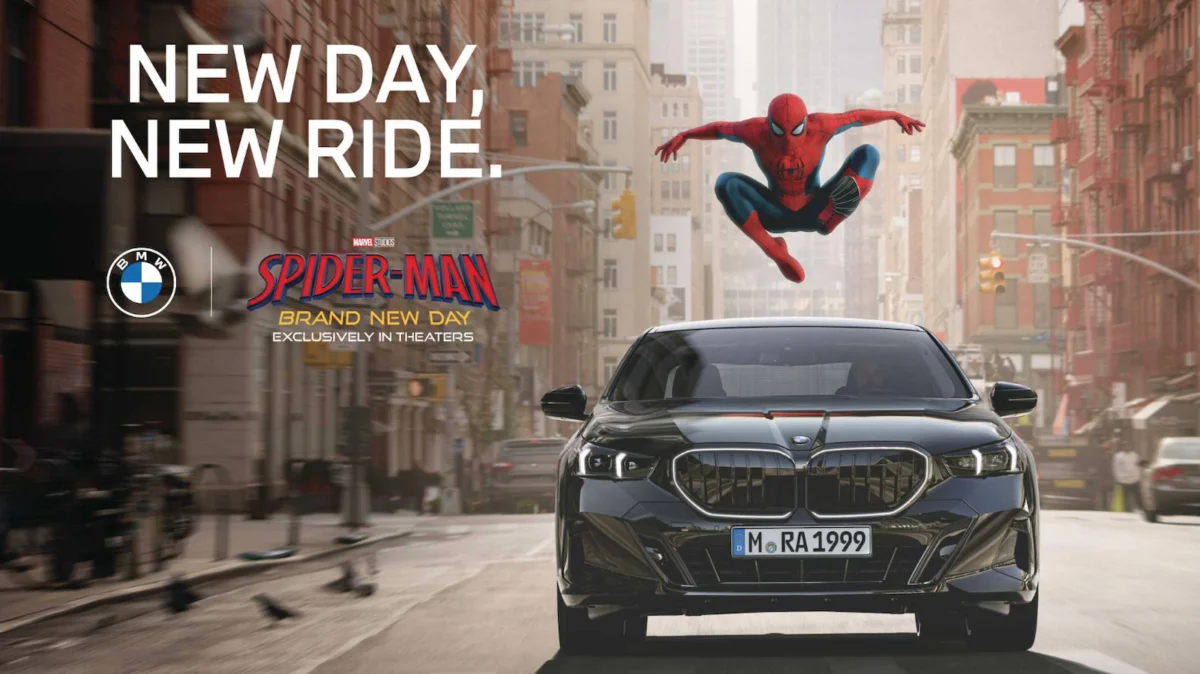
BMW, a marque synonymous with luxury, performance, and refined driving experiences, is currently facing significant public backlash following its decision to integrate a prominent advertisement for the upcoming Sony Pictures film, Spider-Man: Brand New Day, directly onto the display dashboards of many of its vehicles. This unexpected cross-promotional campaign, which BMW initially described as a "special surprise" and a "festive animation" for consumers, has instead ignited a firestorm of criticism across social media platforms and automotive enthusiast forums worldwide, raising pertinent questions about brand integrity, customer expectations, and the evolving landscape of in-car monetization.
The Genesis of the "Surprise" Promotion
The contentious advertising campaign commenced on July 27 and is slated to run globally across more than 70 countries until August 10. Upon starting their vehicle, drivers are presented with a Spider-Man-themed banner on their infotainment screen. Tapping this banner reportedly triggers an immersive animation that leverages the vehicle’s in-built audio system and ambient lighting, depicting the iconic web-slinger interacting with a BMW iX3 SUV. This elaborate sequence serves a dual purpose: to promote Spider-Man: Brand New Day and to highlight a related concept vehicle, the BMW iX3 Flow – Spider-Man Brand New Day. This specially developed concept car, a product of "close collaboration with Sony/Marvel," notably features the company’s proprietary e-ink vehicle exterior technology, allowing its exterior color to change dynamically.
The integration of such a high-profile, animated advertisement into a premium vehicle’s primary interface marks a significant departure from traditional automotive marketing strategies. While brand partnerships and product placements in films are common, bringing a full-scale, animated commercial directly into the driver’s cabin, particularly without explicit prior consent or an opt-out mechanism, has proven to be a deeply polarizing move. For many BMW owners, the dashboard display is a functional interface, a command center, and an extension of the luxury experience they paid a premium for, not a canvas for third-party advertisements.
A Chronology of Discontent and Contradiction
The immediate and widespread negative sentiment can be understood in the context of several factors. Firstly, the financial investment in a BMW vehicle represents a substantial commitment for most consumers. The BMW iX3 SUV, featured in the animation, for instance, starts at approximately $61,500. Owners of such high-value assets generally expect an unblemished, premium experience, free from the kind of intrusive advertising typically associated with lower-cost consumer electronics or free-to-use digital services. The comparison frequently drawn by irate customers is to "getting a cheaper Kindle with lockscreen ads," highlighting the perceived incongruity of paying tens of thousands of dollars for a luxury item only to be subjected to forced advertising.
Adding fuel to the fire is a previous statement made in 2023 by Stephan Durach, Senior Vice President for Connected Company Development at BMW. Durach had vociferously pushed back against the notion of BMW monetizing its in-car screens for advertising purposes. According to a transcription by BMW Blog, he stated, "To say I’m selling the screen to play a commercial – I don’t see it. It’s a private space." This categorical denial, barely three years prior to the current campaign, has led many customers to accuse BMW of a significant policy reversal, if not outright hypocrisy, further eroding trust and fostering a sense of betrayal among its loyal customer base.
The campaign’s global reach, spanning over 70 countries, also means the discontent is not isolated but a worldwide phenomenon. Social media platforms, particularly X (formerly Twitter) and Reddit, have become virtual public forums where BMW owners share their frustration, post videos of the offending banner, and question the company’s judgment. Tweets like one from Sheel Mohnot, stating, "seems crazy. The movie Spider-Man: Brand New Day paid BMW to take over the display of every BMW made after 2020… Really cheapens BMW imo," encapsulate the prevailing sentiment.
BMW’s Response and the "Proactive" Debate
In response to the mounting consumer outrage, BMW issued a statement attempting to mitigate the damage. The company asserted that the campaign is merely "part of a much broader brand partnership" and crucially claimed that the animation is "only visible to drivers who proactively initiate it on their vehicle’s touch screen." While technically true that the full animation requires a tap, numerous drivers have reported that the initial Spider-Man-themed banner, which serves as the gateway to the "surprise," appears automatically upon vehicle startup. This automatic display of the banner, regardless of whether the driver chooses to interact with it, is precisely what many find objectionable, perceiving it as an uninvited intrusion and a gateway ad that diminishes the luxury experience.
This distinction between a "proactive initiation" of an animation and the automatic display of an initiating banner highlights a critical disconnect between the company’s perception of the user experience and the reality perceived by its customers. For many, the mere presence of an unskippable or automatically appearing promotional graphic, however brief, on a system they paid a premium for, constitutes an unwanted advertisement.
A Pattern of Monetization Controversies
This is not an isolated incident of BMW facing public backlash over attempts to extract additional revenue from its existing customer base. The company garnered significant negative publicity in 2022 when it introduced a monthly subscription service to activate heated seats in vehicles where the necessary hardware was already installed. Customers were asked to pay a recurring fee to use a feature that was physically present in their car. This move, widely criticized as exploitative and nickel-and-diming, was met with widespread derision and prompted accusations of "pay-to-win" features in the automotive world. The public outcry was so intense and sustained that BMW was forced to reverse course on the heated seats subscription model in several key markets by early 2023, discontinuing the offering after heaps of bad press.
The repetition of such controversies suggests a broader internal struggle within BMW regarding its monetization strategies for connected vehicles. While the automotive industry is grappling with new revenue streams in an era of declining traditional vehicle sales and increasing software integration, these incidents indicate a potential misjudgment of customer tolerance, particularly within the luxury segment.
The Broader Landscape of In-Car Advertising and Connected Cars
The BMW Spider-Man controversy is indicative of a larger trend in the automotive industry towards the "software-defined vehicle" and the quest for new revenue streams beyond the initial vehicle purchase. As cars become more connected, feature larger infotainment screens, and offer over-the-air (OTA) updates, manufacturers see unprecedented opportunities for subscription services, personalized content, and, inevitably, advertising. Industry analysts project that the global market for in-car advertising could reach billions of dollars within the next decade, driven by increased screen real estate, advanced telematics, and personalized data.
However, this potential goldmine is fraught with challenges. Consumer research consistently shows a high level of skepticism and resistance to in-car advertising, especially among luxury vehicle owners who prioritize privacy, control, and an uncompromised experience. Surveys by organizations like J.D. Power and Associates often highlight that while consumers might accept ads in exchange for free services (e.g., ad-supported streaming), they are far less tolerant when they have already paid a premium for the product or service. The unique context of a vehicle, often considered a "private space" or a "third place" (after home and work), further complicates the ethical considerations of advertising integration.
The technical capabilities for delivering targeted ads are also rapidly advancing. Modern infotainment systems can track driving habits, frequently visited locations, and even user preferences based on in-car app usage. This raises significant privacy concerns, as the line between personalized service and intrusive data harvesting becomes increasingly blurred. While BMW’s current campaign appears to be a broad, untargeted promotion, it sets a precedent for future, potentially more personalized, advertising integrations.
Implications for Brand Equity and Customer Loyalty
The long-term implications for BMW’s brand equity are a critical consideration. A brand like BMW thrives on its reputation for engineering excellence, driving pleasure, and an exclusive, premium image. Repeated instances of perceived "cheapening" or "nickel-and-diming" through controversial monetization schemes risk eroding this carefully cultivated image. Customer loyalty, especially in the luxury segment, is often built on trust, consistent quality, and an understanding of value. When customers feel that the brand is prioritizing short-term advertising revenue over their driving experience and expectations, that loyalty can quickly diminish.
Competitors in the luxury automotive space, such as Mercedes-Benz, Audi, and Lexus, are undoubtedly observing BMW’s struggles closely. Their reactions, or lack thereof, to similar in-car advertising models will be telling. While all manufacturers are exploring new revenue streams, the delicate balance between innovation and customer satisfaction remains paramount. A misstep in this area can lead to significant brand damage that takes years, if not decades, to repair.
For Sony/Marvel, the association with a luxury automotive brand like BMW generally represents a positive brand extension, reaching an affluent demographic. However, if the promotional tie-in itself generates widespread negative sentiment, it risks creating an unintended association for the film brand as well. While the primary target audience for Spider-Man: Brand New Day might not be exclusively BMW owners, the controversy could still create a ripple effect, linking the movie to an intrusive and unwanted advertising experience.
The Shifting Paradigm of Automotive Ownership
The BMW Spider-Man dashboard controversy underscores a fundamental tension in the evolving automotive industry: the shift from a purely transactional ownership model to a more service-oriented, software-driven ecosystem. As vehicles become sophisticated computing platforms on wheels, manufacturers are eager to unlock recurring revenue streams to bolster profitability and fund ongoing software development. However, this ambition must be carefully balanced with consumer expectations, particularly in the luxury sector where a premium price tag inherently implies an uncompromised experience.
The challenge for BMW, and indeed for the entire automotive industry, is to innovate and monetize without alienating the very customers who drive their business. Transparent communication, opt-in models for non-essential services, and a clear understanding of what constitutes a "premium" experience in the digital age will be crucial for navigating this complex landscape. The current "special surprise" from BMW has instead served as a stark reminder that in the quest for new revenue, the customer experience, and brand integrity, must always remain in the driver’s seat.