Evan Lee Salim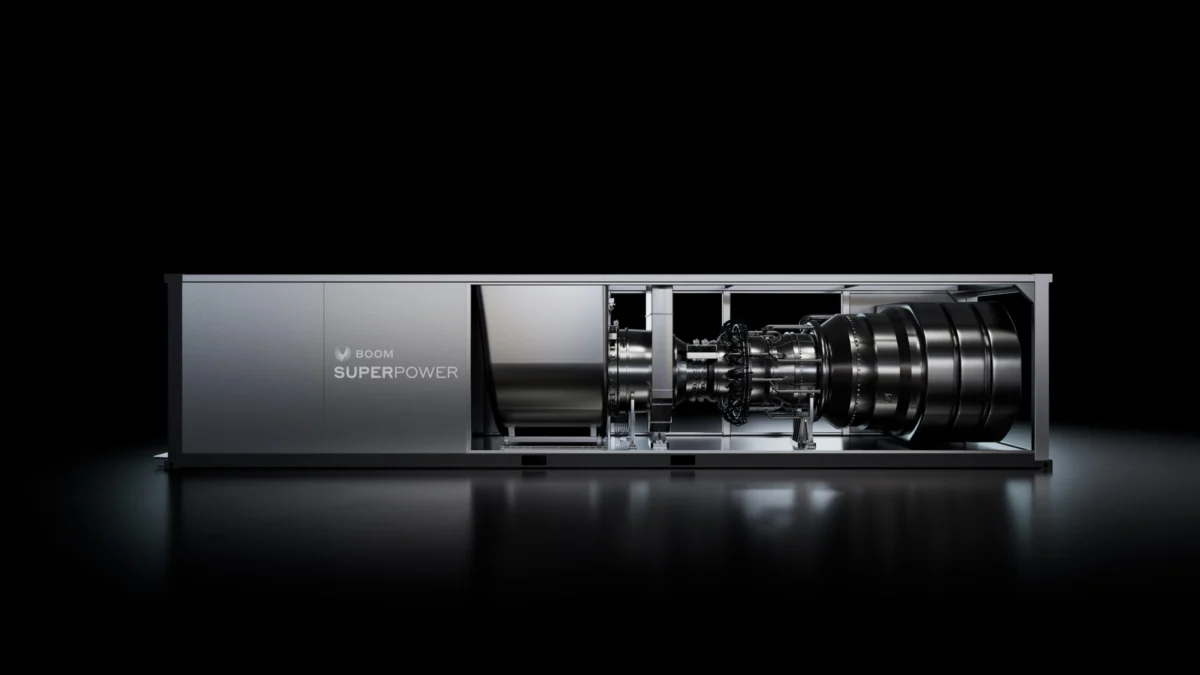
Denver-based AI data center giant Crusoe, fresh off a monumental $3.9 billion funding round, has announced the termination of its substantial $1.25 billion agreement with fellow Denver company Boom Supersonic. The deal, which would have seen Crusoe become the inaugural customer for Boom’s new line of stationary power plants, marks a significant strategic pivot for the rapidly expanding AI infrastructure provider and presents a notable challenge for Boom’s ambitious diversification efforts.
The original agreement, forged in a climate of escalating demand for reliable and scalable energy solutions for AI data centers, involved Crusoe purchasing 29 of Boom’s 42-megawatt Superpower turbines. These natural gas-fired turbines were designed to share approximately 80% of their components with Boom’s Symphony engine, currently under development for its Overture supersonic passenger jet. Deliveries were initially slated to commence in 2027, promising a substantial revenue stream for Boom’s nascent power generation division. However, as confirmed by Boom Supersonic CEO Blake Scholl and subsequently by Crusoe, the partnership has been dissolved.
The Core Disengagement: A Formal Announcement
The unraveling of the high-profile collaboration came to light through a post on X (formerly Twitter) by Boom Supersonic CEO Blake Scholl. On Friday, Scholl congratulated Crusoe founders Cully Cavness and Chase Lochmiller on their company’s recent capital injection before diplomatically stating, "The TL/DR is that turbines are no longer part of Crusoe’s near term primary power mix at Abilene/etc., so a launch partnership just didn’t make sense." He added that while the immediate partnership had concluded, Boom would be delivering approximately 250MW of Superpower turbines to other sites next year, targeting 1GW in 2028, and expressed hope for future collaboration with Crusoe should their energy needs realign.
Crusoe subsequently confirmed the disengagement to TechCrunch, with spokesperson Andrew Schmitt emphasizing the company’s flexible and evolving energy strategy. "We build AI factories from the power up, and we’re bringing new campuses online across the country, powered by innovative energy sources," Schmitt stated via email. "As our portfolio grows, we stay flexible, choosing the energy solutions that are right for each site as its needs evolve – including turbines, along with wind, solar, batteries and the grid. While Boom has been a great partner, the partnership isn’t the right fit today. We wish them well." This statement underscores Crusoe’s commitment to optimizing its power mix on a site-by-site basis, adapting to technological advancements, economic factors, and supply chain realities.
Crusoe’s Rapid Ascent in AI Infrastructure
Crusoe’s journey from an innovative bitcoin miner to a formidable player in the AI data center space is a testament to its adaptability and foresight. Founded in 2018, the company initially gained prominence by utilizing excess natural gas from oil fields – often flared as waste – to power its cryptocurrency mining operations. This pioneering approach addressed both an environmental concern (reducing methane emissions) and an energy challenge (accessing stranded power).
As the demand for artificial intelligence exploded, requiring unprecedented levels of computational power, Crusoe strategically pivoted. Leveraging its expertise in building energy-efficient, scalable data centers in unconventional locations, it transitioned its focus to providing AI computing infrastructure. This strategic shift proved incredibly prescient, positioning Crusoe at the forefront of a booming market. The company has since become one of the largest builders of AI data centers, including a colossal campus in Abilene, Texas, which provides crucial computing power to OpenAI, a leader in generative AI. Furthermore, Crusoe is developing a 900-megawatt data center in Abilene specifically for Microsoft, another titan in the AI race.
The recent $3.9 billion capital raise highlights investor confidence in Crusoe’s vision and execution. This substantial funding round provides Crusoe with significant resources to accelerate its expansion, build new "AI factories" across the country, and continue investing in diverse energy solutions. The company’s unique "power-up" philosophy, where it designs and builds data centers with integrated power generation, has proven attractive in an era where energy costs and availability are critical bottlenecks for AI development.
Powering the AI Revolution
The energy demands of modern AI data centers are staggering and continuously escalating. Training complex large language models (LLMs) like those developed by OpenAI can consume as much electricity as small cities. Estimates suggest that AI data centers could account for a significant portion of global electricity consumption in the coming years. This immense power requirement has pushed companies like Crusoe to explore a wide array of energy sources, from traditional grid connections to renewable energy, batteries, and on-site generation. The search for reliable, affordable, and sustainable power has become a defining characteristic of the AI infrastructure industry.
Boom Supersonic’s Diversification Strategy: From Supersonic Jets to Stationary Power
Boom Supersonic’s primary mission has always been the ambitious development of Overture, a supersonic passenger jet designed to revive commercial supersonic travel. The company envisions a future where air travel is significantly faster, cutting trans-oceanic flight times by half. Developing such cutting-edge aerospace technology requires immense capital, and Boom, like many innovators, sought creative ways to fund its moonshot project.
This financial imperative led to the launch of Boom’s Superpower division last year. The strategic rationale was elegant: leverage the advanced engineering developed for the Symphony jet engine – specifically its high efficiency, reliability, and modularity – and adapt it for stationary power generation. By commercializing these natural gas-fired turbines, Boom aimed to create a robust, recurring revenue stream that could help offset the colossal research and development costs associated with Overture. The $300 million funding round Boom secured last year was largely dedicated to jumpstarting this new business venture, with Crusoe as its cornerstone launch customer. The synergy seemed promising: Boom needed capital, and Crusoe needed power.

Technical Commonality and Financial Strategy
The Superpower turbine was designed to share a significant proportion of its parts (approximately 80%) with the Symphony engine. This commonality offered potential benefits in terms of manufacturing efficiency, supply chain optimization, and accelerated development cycles. Boom’s strategy was not merely to sell power plants but to create a symbiotic relationship where its aerospace innovations could directly fuel its energy diversification, and vice versa. The loss of Crusoe as the launch customer, therefore, represents not just a lost sale but a significant disruption to this carefully constructed financial and operational strategy.
A Chronology of Collaboration and Departure
- 2018: Crusoe is founded, initially focusing on bitcoin mining using flared natural gas.
- Early 2020s: Crusoe pivots towards AI data center development, recognizing the immense power demands of AI.
- ~2024-2025: Boom Supersonic launches its Superpower stationary turbine business, seeking to leverage its jet engine technology for energy generation.
- ~2025 (Pre-Boom’s $300M raise): Crusoe signs on as the launch customer for Boom’s Superpower turbines, agreeing to a $1.25 billion deal for 29 units, with deliveries expected by 2027. This partnership is publicly announced.
- 2025: Boom Supersonic raises $300 million, largely earmarked for the commercialization of its Superpower business, bolstered by the Crusoe deal.
- September 2026 (approx.): Crusoe raises a staggering $3.9 billion in a funding round, signifying its rapid growth and investor confidence in its AI infrastructure play.
- Friday, September 2026 (specific date in article’s context): Boom CEO Blake Scholl announces on X that Crusoe is no longer moving forward with the turbine launch partnership.
- Shortly after: Crusoe confirms the termination of the deal, citing evolving energy needs and flexibility in its portfolio.
Implications for Boom Supersonic
The termination of the $1.25 billion deal with Crusoe is undoubtedly a setback for Boom Supersonic. As its launch customer, Crusoe provided critical validation for the Superpower business, acting as a foundational contract that could have attracted further investment and customers. The loss of this anchor client could impact investor confidence in the Superpower division and potentially complicate future fundraising efforts.
While Scholl’s statement mentions other customers in the pipeline and ambitious targets of 250MW in 2027 and 1GW in 2028 from these new clients, the path to achieving these goals without the initial boost from Crusoe may be steeper. The capital generated by Superpower was intended to directly fund the development of Overture, making this revenue stream crucial. Any delay or reduction in anticipated profits from the Superpower division could, in turn, affect the timeline or financial stability of the Overture program. Boom will now need to aggressively pursue new partnerships and demonstrate the viability of its stationary turbines to a broader market, proving that the technology is attractive beyond its initial, unique tie-up with Crusoe.
Crusoe’s Evolving Energy Landscape
For Crusoe, the decision to pull out of the Boom deal appears to be a calculated move driven by its commitment to an agile and diversified energy strategy. The company’s spokesperson explicitly mentioned "choosing the energy solutions that are right for each site as its needs evolve – including turbines, along with wind, solar, batteries and the grid." This indicates a flexible, site-specific approach rather than a one-size-fits-all solution.
For instance, Crusoe’s initial 1.2-gigawatt data center in Abilene, which serves Oracle and OpenAI, is primarily powered by the grid, with a gas-turbine power plant reserved for backup. In contrast, the 900-megawatt data center for Microsoft in Abilene will be powered by on-site gas turbines. This nuanced approach suggests that Crusoe is not abandoning gas turbines entirely but rather continuously evaluating the optimal energy mix based on local grid conditions, availability of natural gas, renewable energy potential, regulatory environments, and cost efficiencies. The Abilene site’s evolving energy strategy likely played a key role in the decision regarding Boom’s turbines, indicating that the initial fit may no longer align with Crusoe’s immediate, specific requirements for that scale or location. The substantial $3.9 billion raise also provides Crusoe with even greater flexibility to invest in a wider array of energy solutions, potentially enabling it to procure power from alternative suppliers or develop its own bespoke solutions more rapidly.
Broader Industry Context: The Scramble for Power
The cancellation of this major deal highlights a broader trend within the AI infrastructure industry: the intense and often unpredictable scramble for reliable, affordable, and sustainable power. The exponential growth of AI is putting unprecedented strain on existing power grids and infrastructure. Companies are exploring every conceivable option, from constructing their own power plants to investing in renewables, microgrids, and even small modular reactors (SMRs).
The dynamic nature of energy procurement, as exemplified by Crusoe’s decision, reflects a market where technologies, prices, and strategic priorities can shift rapidly. While gas turbines remain a viable option for on-site power generation, especially for large-scale, continuous loads like data centers, companies are increasingly weighing factors such as carbon footprint, fuel price volatility, regulatory pressures, and the pace of renewable energy integration. The ability to pivot quickly and optimize energy sources is becoming a competitive advantage for AI data center operators.
Looking Ahead
The future for both Crusoe and Boom Supersonic remains vibrant, albeit with adjusted trajectories. Crusoe, armed with its massive new funding and a proven track record, will continue its aggressive expansion in the AI data center market, likely accelerating its development of diverse energy solutions to power the next generation of AI. Its commitment to flexibility suggests it will remain a significant player in shaping how AI compute is powered.
For Boom Supersonic, the immediate challenge is to quickly secure new anchor customers for its Superpower division and demonstrate its value proposition beyond the initial Crusoe partnership. The company’s primary focus on Overture remains, and the success of its energy diversification strategy is crucial for its long-term financial health. While the direct collaboration with Crusoe has ceased, the parting statements from both parties suggest an open door for potential future engagement, perhaps when their respective needs and offerings align more perfectly. The saga underscores the highly dynamic and interconnected nature of innovation, finance, and infrastructure in the rapidly evolving landscape of artificial intelligence and advanced aerospace.