admin
admin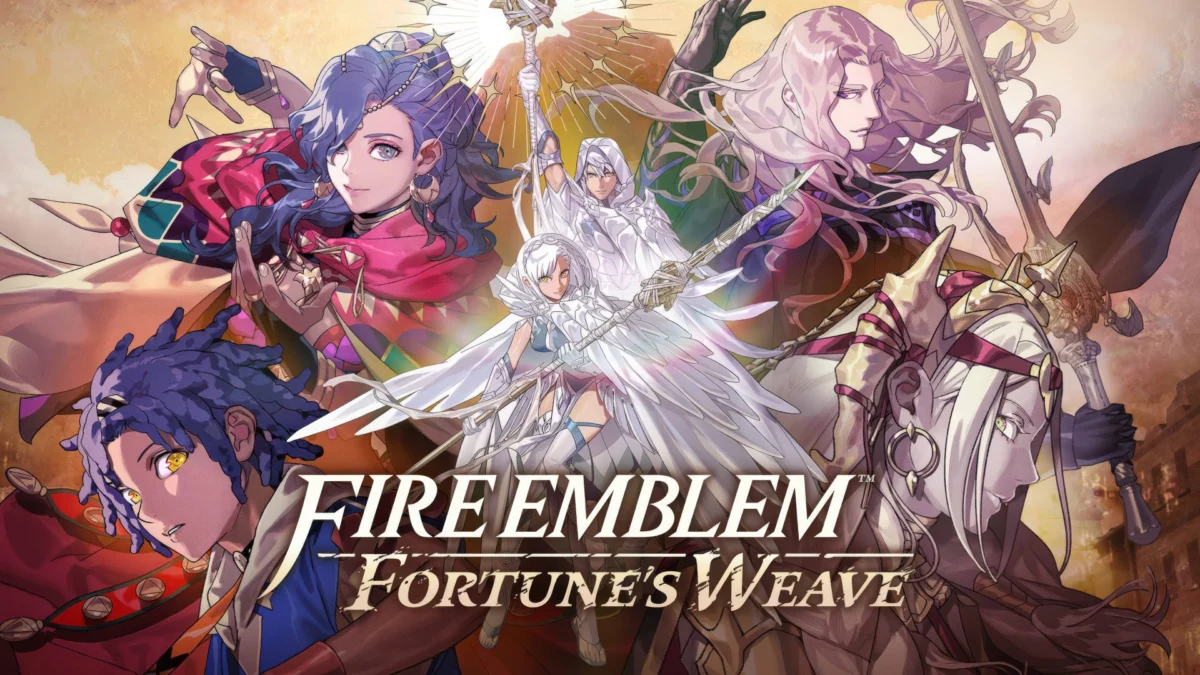
A New Era for the Dagdan Empire
The narrative of Fire Emblem: Fortune’s Weave is centered on the Dagdan Empire, a prosperous and expansive land traditionally ruled by divine figures. The empire’s capital, Dagsion, serves as the heart of the world and the host of the "Heroic Games," a legendary tournament held in honor of the founding king, Dagda. This competition is the primary catalyst for the game’s plot, as the current ruler, Solei, has promised to grant a single wish to the ultimate victor of the games. This promise attracts a diverse array of contenders, each driven by deeply personal motivations that eventually intertwine with the fate of the entire continent.
The story initially follows four primary protagonists: Cai, a young man from the village of Ribeira seeking to liberate his imprisoned father; Dietrich, a survivor of a brutal monster attack looking for purpose; Theodora, a devout warrior fighting to restore the honor of her goddess and protect the region of Saramis; and Leda, a vengeful seeker hunting the individual responsible for her father’s death. While the Heroic Games provide the initial backdrop, the stakes escalate dramatically five years after the tournament’s conclusion. The demon god Balor, an ancient threat long thought suppressed, returns to bring ruin to the empire. In the ensuing chaos, the four heroes vanish, prompting the progenitor god Sothis to intervene. Players are tasked with using the power of the goddess Fortuna to travel back to the era of the Heroic Games, altering the past to prevent the catastrophic future from coming to pass.

Structural Innovations and the Four-Path System
One of the most significant departures from previous entries is the "Fortune’s Weave" narrative structure. Unlike Fire Emblem: Three Houses, which required players to commit to a specific path early on, or Fire Emblem Engage, which followed a more linear progression, Fortune’s Weave allows players to experience the perspectives of all four protagonists dynamically. Nintendo has confirmed that players can select one of the four heroes and follow their specific side of the story, but progress is saved individually for each route. This allows for a non-linear approach where a player might alternate between Cai’s journey and Leda’s campaign without needing to finish one entirely before starting the other.
This structure is supported by a robust world map where time is a tangible resource. Every move made on the map causes time to pass, influencing the availability of certain events, skirmishes, and town-based interactions. This adds a layer of strategic planning outside of combat, as players must decide which quests to prioritize and which regions of Dagda require their immediate attention. Furthermore, each of the four protagonists possesses a unique "field ability" that can be used while exploring the world map or dungeons, providing distinct advantages in gathering resources or avoiding unnecessary conflicts.
Refined Tactical Combat and the Blaze Arts
At its core, Fire Emblem: Fortune’s Weave remains a grid-based, turn-based tactical RPG. The familiar "Player Phase" and "Enemy Phase" structure returns, emphasizing unit positioning, weapon ranges, and the strategic use of terrain. However, the game introduces several new layers to the combat loop. Melee units are now more explicitly vulnerable to ranged harassment, while ranged units face significant penalties when pressured in close quarters, encouraging a more disciplined formation-based approach to battles.

A standout addition to the combat repertoire is the "Blaze Arts." While traditional Combat Arts return—consuming weapon durability to execute powerful strikes—Blaze Arts are high-risk, high-reward maneuvers that consume a portion of the user’s health points. Each protagonist has a signature Blaze Art:
- Cai: Unleashes a massive burst of flame that deals area-of-effect damage.
- Dietrich: Utilizes a mystical cloak to warp across the battlefield, bypassing enemy lines.
- Leda: Uses her vihuela (a stringed instrument) to provide powerful buffs to allies or summon a spectral creature to assist in combat.
To mitigate the series’ inherent difficulty and the permanence of tactical errors, the developers have introduced "Fortuna’s Blessing." This quality-of-life mechanic acts as a sophisticated rewind system, allowing players to scroll back through every individual move in a battle to undo a mistake or save a fallen unit. This system appears to be an evolution of the "Divine Pulse" and "Draconic Time Crystal" seen in recent titles, offering players more flexibility in how they approach challenging encounters.
Class Systems and Certification Exams
The progression system in Fortune’s Weave is built around a tiered class hierarchy: Beginner, Specialty, and Advanced. Each tier offers a variety of roles that define a unit’s utility on the battlefield.

- Beginner Classes: Include versatile roles such as Gladiators, Diviners, and the newly introduced Ornius Riders.
- Specialty Classes: Introduce more tactical complexity with Armored Knights, Wing Soldiers, and Charioteers.
- Advanced Classes: Feature powerful, specialized units like the heavily armored Cataphracts, the magic-wielding Guardians, and the formidable Elephant Riders.
Advancing through these classes is not automatic. Units must sit for "Certification Exams," which require specific skill levels and proficiencies. Interestingly, success in these exams is not guaranteed, adding a layer of management where players must carefully groom their units’ stats to ensure they can promote into the most effective roles for the late-game challenges.
The Hub City: Dagsion and Preparation
Between battles, players spend a significant amount of time in the capital city of Dagsion. This hub serves as the primary location for unit management and preparation. The city is divided into several districts, each offering unique services:
- The Arena: A place for units to train and for players to scout potential rivals in the Heroic Games.
- The Shopping Arcade: The central location for purchasing weapons, tools, and upgrading equipment.
- Temple Row: A religious district where players can volunteer their time to earn "Battle Blessings," which provide temporary stat boosts or damage reduction for the next engagement.
- The Inns: These serve as social hubs where the party can rest, share meals, and build "Support Relationships." In a new twist, resting at an inn also allows for the automatic collection of materials over several turns, simulating the passage of time within the city.
Release Timeline and Product Tiers
The announcement of Fire Emblem: Fortune’s Weave has been met with significant interest, particularly regarding its role as a flagship title for the Nintendo Switch 2. The reveal occurred in September 2025, exactly one year ahead of its planned launch. This long lead time suggests a significant marketing campaign intended to position the game as a primary driver for the new hardware.

Nintendo has established a multi-tiered pricing strategy for the release:
- Digital Edition ($69.99): Available via the Nintendo eShop, representing the new standard pricing for high-budget first-party titles.
- Standard Physical Edition ($79.99): Carrying a $10 premium over the digital version, likely due to the increased costs of the new proprietary cartridge media for the Switch 2.
- Dagdan Collection ($119.99): A premium special edition designed for collectors. It includes the physical game, a SteelBook case, a set of character art cards, a physical cloth map of the Dagdan Empire, and a comprehensive art book detailing the game’s visual development.
Chronology of Development and Reveal
- January 2023: Fire Emblem Engage releases on the original Nintendo Switch.
- Late 2023 – 2024: Internal development at Intelligent Systems shifts focus to the "Next Gen" Fire Emblem project.
- September 2025: Nintendo officially reveals Fire Emblem: Fortune’s Weave during a Nintendo Direct, confirming it as a Switch 2 exclusive.
- August 2026: Detailed gameplay demonstrations showcase the Dagsion hub and the four-path narrative system.
- September 15, 2026: Scheduled "Ask the Developer" session to provide technical insights into the game’s design.
- September 17, 2026: Global release of Fire Emblem: Fortune’s Weave.
Broader Implications and Industry Analysis
The exclusivity of Fire Emblem: Fortune’s Weave to the Nintendo Switch 2 is a clear signal of Nintendo’s strategy to migrate its core fan base to the new platform quickly. By utilizing a beloved franchise known for its deep systems and long playtimes, Nintendo is ensuring that the Switch 2 has a "prestige" RPG in its launch window.
The shift to a $69.99/$79.99 pricing model also reflects broader industry trends, as the cost of developing high-fidelity assets for more powerful hardware continues to rise. Analysts suggest that the $10 physical premium may become a standard for the Switch 2 era, as Nintendo balances the logistics of physical distribution against the convenience of digital storefronts.

Furthermore, the inclusion of explorable dungeons and a more interactive world map suggests that Intelligent Systems is looking to bridge the gap between the traditional "menu-based" strategy of older Fire Emblem titles and the more immersive, exploration-heavy style found in modern RPGs. This evolution could potentially broaden the series’ appeal to fans of open-world titles while retaining the tactical depth that has defined the franchise for over three decades. As the September 2026 release date approaches, the gaming community remains focused on how these new mechanics will harmonize to create the next definitive Fire Emblem experience.