
 George Chandra Eka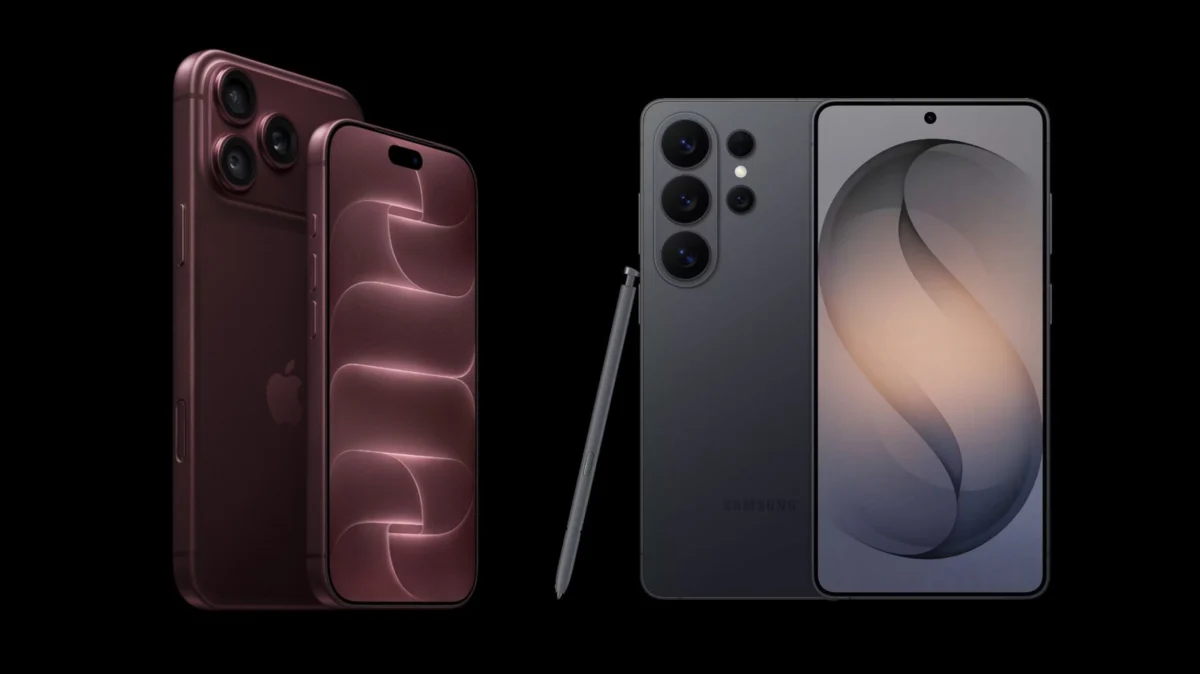
In a fiercely competitive premium smartphone market, two titans consistently vie for supremacy: Apple and Samsung. Their latest non-folding flagships, the iPhone 18 Pro Max and the Samsung Galaxy S26 Ultra, represent the pinnacle of their respective engineering and design philosophies, offering distinct ecosystems built around similarly impressive hardware. This year’s comparison reveals a fascinating convergence in core capabilities alongside persistent, fundamental differences that continue to define the user experience.
While the iPhone 18 Pro Max may not possess the radical form factor innovation seen in Apple’s nascent foldable offerings like the iPhone Duo, it meticulously refines the classic iPhone aesthetic, delivering everything discerning users have come to expect from a top-tier device. Its large, immersive screen and sophisticated multi-camera array check all the boxes for a flagship experience. However, it stands alongside another formidable contender: Samsung’s Galaxy S26 Ultra. A highly capable device in its own right, the S26 Ultra presents an equally compelling proposition, making a direct comparison between these two XL powerhouses not just inevitable, but essential for consumers navigating the high-end smartphone landscape.
Given that these are the most impressive traditional slab phones offered by two of the world’s leading technology companies, the ultimate choice often hinges on nuanced details and deeply ingrained personal preferences. For many, the decision boils down to an allegiance to iOS or a preference for the open flexibility of Android. Aesthetic considerations, such as the iPhone 18 Pro Max’s new dark red finish, or functional advantages like the integrated S Pen on the Galaxy S26 Ultra, also play significant roles. Both devices present a compelling array of pros and cons, yet neither disappoints in delivering a truly premium smartphone experience.
A Legacy of Flagship Innovation: Contextualizing the Battle
The rivalry between Apple’s "Pro Max" series and Samsung’s "Ultra" line has evolved over several generations, shaping the trajectory of premium smartphone development. Apple’s iPhone Pro Max models typically represent the company’s commitment to iterative refinement, focusing on optimizing user experience within a closed, tightly integrated ecosystem. Each generation brings advancements in processing power, camera capabilities, and display technology, often with a strong emphasis on seamless software-hardware integration and long-term support. The "Max" designation itself signals a commitment to larger displays and extended battery life, catering to users who prioritize media consumption and productivity on their mobile devices.
Samsung’s "Ultra" series, on the other hand, has historically pushed the boundaries of raw specifications and feature sets, often serving as a showcase for cutting-edge Android innovations. The integration of the S Pen, inherited from the venerable Galaxy Note series, transformed the Ultra into a productivity powerhouse, distinguishing it from most other flagships. Samsung’s approach often involves equipping the Ultra with the most advanced camera hardware, highest resolution displays, and most powerful processors available, aiming to offer unparalleled versatility and a "no compromises" experience for power users. This year’s S26 Ultra continues this tradition, building on a lineage of devices designed to lead the Android pack in terms of sheer capability.
The release cycles of these devices often set the tone for the entire industry. Apple typically unveils its new iPhones in September, while Samsung”s Galaxy S series launches usually occur in early spring. These staggered releases allow each company to react to, and then attempt to surpass, the innovations of the other, driving a continuous cycle of technological advancement that ultimately benefits consumers. This enduring competition has not only solidified their positions at the top of the market but has also spurred innovation in areas like computational photography, display technology, and mobile chipset architecture.
Design and Displays: Subtle Distinctions in Premium Form Factors
At first glance, both the iPhone 18 Pro Max and the Galaxy S26 Ultra conform to the established archetype of a modern high-end smartphone: sleek, rectangular slabs of glass and metal. Both devices boast expansive 6.9-inch displays, affirming the industry’s trend towards larger screen real estate for enhanced media consumption and multitasking. However, closer inspection reveals nuanced design choices that reflect their brand identities. The iPhone 18 Pro Max retains Apple’s signature slightly rounded corners, contributing to a softer, more organic feel in hand. Its construction typically involves a sophisticated blend of aerospace-grade aluminum and custom-engineered glass for the back panel, often complemented by a Ceramic Shield front cover for enhanced durability.

Samsung’s Galaxy S26 Ultra opts for a more angular, business-like aesthetic with straighter edges, echoing its productivity-focused lineage. Its construction predominantly features an all-glass back, often utilizing the latest generation of Gorilla Glass for robust protection against drops and scratches. While both feel undeniably premium, the S26 Ultra boasts a notable advantage in terms of physical ergonomics: it weighs 214 grams compared to the iPhone 18 Pro Max’s 249 grams. This 35-gram difference, though seemingly minor on paper, can significantly impact long-term comfort during extended usage, especially when holding the device single-handedly. Furthermore, the S26 Ultra is marginally thinner at 7.9 mm, contrasting with the iPhone’s 8.75 mm. These fractional differences, while not immediately obvious, can be appreciated by users who prioritize a lighter, slimmer profile, particularly once a protective case is added.
The display technologies employed by both devices are state-of-the-art, delivering vibrant visuals and fluid interactions. The iPhone 18 Pro Max features a Super Retina XDR OLED panel with a resolution of 2,868 by 1,320 pixels. This resolution provides exceptional sharpness and detail, making text crisp and images vivid. Critically, it offers a 120Hz adaptive refresh rate, ensuring buttery-smooth scrolling and responsive gaming. A standout feature is its peak brightness of 3,000 nits, which is a significant figure for outdoor visibility and HDR content playback, allowing for an incredibly vibrant and clear viewing experience even under direct sunlight.
Samsung’s Galaxy S26 Ultra, not to be outdone, utilizes a Dynamic AMOLED 2X display with a slightly higher resolution of 3,120 by 1,440 pixels. While technically superior in pixel count, the difference in resolution between these two screens is practically imperceptible to the human eye in everyday use. The S26 Ultra also features a 120Hz adaptive refresh rate, matching the iPhone’s fluidity for smooth navigation and content rendering. However, its peak brightness is rated at 2,600 nits, which, while still excellent, falls short of the iPhone’s 3,000 nits. For users who frequently use their phone outdoors or consume a lot of HDR content, the iPhone’s brighter display could offer a noticeable advantage in certain scenarios. Both displays offer exceptional color accuracy, deep blacks, and wide viewing angles, solidifying their status as industry leaders.
A pivotal differentiator for the Galaxy S26 Ultra is the integrated S Pen. This stylus, seamlessly housed within the device, offers a level of precision and functionality unmatched by the iPhone’s traditional interface. For note-taking, sketching, document annotation, or even navigating the UI with greater accuracy, the S Pen provides a distinct advantage. While not every user may leverage its full capabilities, its presence represents a significant value proposition for creative professionals, students, and anyone who appreciates the tactile control a stylus affords. In contrast, the Apple Pencil, Apple’s proprietary stylus, is exclusively compatible with iPads and the more specialized iPhone Duo, meaning traditional iPhone users do not have this integrated input option. This distinction highlights Samsung’s enduring commitment to productivity features in its Ultra line.
The Camera Systems: A Clash of Photographic Philosophies
The camera systems on both the iPhone 18 Pro Max and the Galaxy S26 Ultra represent the cutting edge of mobile photography, albeit through different design philosophies and hardware implementations. These are areas where both brands invest heavily, recognizing that camera capability is a primary purchasing driver for many consumers.
The iPhone 18 Pro Max maintains Apple’s renowned triple-camera setup on the rear: a wide-angle, an ultra-wide-angle, and a telephoto lens. Significantly, all three sensors now boast 48-megapixel resolution, a substantial upgrade that allows for greater detail capture and improved low-light performance across the board. The most groundbreaking innovation this year, however, lies within the main wide-angle sensor: the introduction of a variable aperture. Traditionally, smartphone cameras have utilized a fixed aperture, limiting the control over depth of field and light intake. The iPhone 18 Pro Max’s mechanical variable aperture allows users to adjust the amount of light hitting the sensor and, more importantly, to influence the depth of field in their photographs. This feature, previously almost exclusive to professional-grade dedicated cameras, provides unprecedented artistic control for mobile photographers, enabling them to achieve more pronounced background blur (bokeh) or ensure greater sharpness across an entire scene. This innovation solidifies Apple’s commitment to pushing the boundaries of computational photography alongside hardware advancements. Apple’s software prowess, particularly with features like Smart HDR, Deep Fusion, and Cinematic Mode, continues to optimize image quality and video capabilities, making professional-looking results accessible to the average user.
The Galaxy S26 Ultra approaches mobile photography with a "more is more" philosophy, emphasizing raw sensor power and versatile zoom capabilities. Its main lens features an astounding 200-megapixel sensor. This ultra-high resolution enables several key advantages, including pixel-binning technology, which combines multiple pixels into one larger "super pixel" to dramatically improve low-light performance, and the ability to crop into photos significantly without a noticeable loss in detail. The ultra-wide camera boasts a 50-megapixel sensor, offering a broad field of view comparable to the iPhone’s. However, where the S26 Ultra truly distinguishes itself is in its telephoto capabilities. It is equipped with not one, but two dedicated telephoto lenses: one offering 3x optical zoom and another providing 5x optical zoom. This dual-telephoto setup provides greater flexibility and sharper zoomed-in images across a range of focal lengths, surpassing the iPhone’s single 4x telephoto lens. Samsung’s "Space Zoom" feature, leveraging these lenses with computational enhancements, allows for impressive digital zoom capabilities, although with diminishing returns at extreme magnifications.
In terms of video recording, the iPhone 18 Pro Max continues to offer its industry-leading capabilities, including 4K video recording at up to 120 frames per second, complete with HDR and Dolby Vision support. Apple’s ProRes video format also caters to professional videographers by offering higher fidelity and greater flexibility in post-production. The S26 Ultra, meanwhile, pushes the envelope further by offering 8K video recording. While 8K remains a niche standard without widespread display adoption and creates extremely large file sizes, its inclusion positions the S26 Ultra as a future-proof device for content creators who demand the highest possible resolution. Both phones offer advanced stabilization, slow-motion, and time-lapse features, ensuring a comprehensive video capture experience. The front-facing cameras on both devices also offer high-resolution sensors, advanced portrait modes, and 4K video recording, catering to the booming trend of high-quality selfies and video calls.

Performance, Battery, and Ecosystem: The Core Differentiators
Underneath their polished exteriors, both the iPhone 18 Pro Max and the Galaxy S26 Ultra house the most powerful mobile processors available, designed to handle everything from demanding gaming to complex AI tasks. The S26 Ultra is powered by a 3-nanometer Snapdragon 8 Elite Gen 5 chipset, a formidable piece of silicon engineered for peak performance and efficiency. Early benchmarks suggest this chip offers exceptional multi-core performance and impressive graphics capabilities, often outperforming previous generations and even, in some specific tests, rivaling Apple’s previous A-series chips.
However, the iPhone 18 Pro Max introduces Apple’s cutting-edge A20 Pro chip, marking the company’s first foray into 2-nanometer process technology. In theory, a smaller nanometer process translates to greater transistor density, leading to significantly enhanced speed and power efficiency. While real-world testing is crucial to confirm these theoretical advantages, the A20 Pro is expected to set new benchmarks for mobile performance, particularly in areas like machine learning and demanding computational tasks. The race for smaller process nodes underscores the relentless pursuit of performance and efficiency in the mobile computing sector.
Regarding RAM, Samsung offers more flexibility with the S26 Ultra, providing configurations with either 12GB or a generous 16GB of RAM, depending on the chosen storage option. This ample memory ensures seamless multitasking, efficient management of numerous background applications, and future-proofing for increasingly demanding software. The iPhone 18 Pro Max, in all its configurations, comes with 12GB of RAM. While this is certainly sufficient for the vast majority of user activities and iOS’s efficient memory management, Samsung’s higher-tier offering might appeal to the most extreme power users or those who simply prefer having more headroom.
Battery life is another critical aspect where both phones aim to deliver all-day endurance. Both the iPhone 18 Pro Max and the Galaxy S26 Ultra house large batteries, typically around the 5,000 mAh mark, with minor variations that are often compensated by software optimization. This capacity is generally sufficient to comfortably last a full day of moderate to heavy usage for most users without needing a midday recharge. Fast charging capabilities have also converged significantly. Both devices can achieve a 0 to 50 percent charge in approximately 15 minutes when paired with a compatible 60W charger. This rapid charging ensures minimal downtime, a crucial convenience for today’s always-on lifestyle. Both also support wireless charging and, in the case of the S26 Ultra, reverse wireless charging, allowing it to power other Qi-compatible accessories.
The biometric authentication methods represent a key usability difference. The iPhone 18 Pro Max relies exclusively on Face ID, Apple’s advanced facial recognition system. Face ID offers seamless unlocking, secure payments, and app authentication, working effectively in various lighting conditions. However, it can be less convenient when the phone is lying flat on a desk or when wearing a mask. The Galaxy S26 Ultra, conversely, employs an ultrasonic in-display fingerprint reader. This method allows for quick and secure unlocking by simply placing a thumb on a designated area of the screen, offering an alternative that some users find more versatile, especially in situations where facial recognition might be hindered.
Aesthetics and screen real estate are also impacted by the front-facing camera implementation. iPhones, including the 18 Pro Max, still feature the Dynamic Island, albeit in a more refined and potentially smaller iteration. This dynamic area at the top of the screen cleverly integrates alerts, notifications, and ongoing background activities. While innovative, it still occupies a portion of the display. Samsung, on the other hand, opts for a minimalist punch-hole camera cutout, which consumes less screen space and provides a more uninterrupted viewing experience for many users.
The most profound differentiator, however, remains the underlying operating system and the broader ecosystem it represents. For the iPhone 18 Pro Max, this means deep integration into Apple’s ecosystem, offering seamless interoperability with AirPods, Apple Watch, Mac computers, and iPads. Features like iMessage, FaceTime, AirDrop, and iCloud provide a cohesive and secure user experience across all Apple devices. The App Store’s curated environment is known for its high-quality applications and stringent security.
The Galaxy S26 Ultra, running Android with Samsung’s One UI overlay, offers unparalleled customization, greater openness, and compatibility with a vast array of devices from different manufacturers. Samsung adds significant value with its proprietary features like Samsung DeX, which allows the phone to power a desktop-like experience when connected to an external monitor, and Knox security, providing robust protection for personal and business data. The S Pen, as discussed, is a core component of this productivity ecosystem. For users who value choice, flexibility, and the ability to tailor their device to their exact preferences, Android on the S26 Ultra offers a compelling alternative.

Market Implications and Consumer Choice: Both Great, For Different Users
In a testament to the intense competition at the high end of the smartphone market, both the iPhone 18 Pro Max and the Samsung Galaxy S26 Ultra launch with an identical starting price of $1,299 in the U.S. for their base 256GB storage configurations. This price parity underscores the premium positioning of these devices and the direct head-to-head battle for discerning consumers’ wallets.
The decision between these two exceptional smartphones ultimately comes down to a confluence of personal preferences, existing technological investments, and specific feature priorities. For individuals deeply embedded in the Apple ecosystem—those who own AirPods, an Apple Watch, or other Apple devices—the iPhone 18 Pro Max is often the intuitive and most logical choice. The seamless integration, consistent user experience, and familiar interface provide a frictionless digital life that is hard to replicate outside of the Apple garden. The allure of the new dark red finish or the innovative variable aperture camera may further solidify this choice.
Conversely, the Galaxy S26 Ultra offers a compelling alternative for those seeking advanced features and greater customization. Its superior zoom capabilities, the versatility of the S Pen for productivity and creativity, and the robust customization options offered by Android and Samsung’s One UI are significant draws. For users who value openness, flexibility, and a more feature-packed hardware experience, the S26 Ultra presents a powerful argument. The choice between iOS and Android itself remains a fundamental dividing line, appealing to different user philosophies regarding control, customization, and app ecosystem dynamics.
Industry analysts generally agree that these two flagships will continue to dominate the premium segment, setting benchmarks for performance, camera technology, and user experience. Their competition drives innovation across the entire smartphone market. While other manufacturers like Google, Xiaomi, and OnePlus offer strong contenders, the sheer brand power, marketing reach, and established ecosystems of Apple and Samsung mean they capture the lion’s share of high-end sales.
The broader implications of this ongoing rivalry include a continuous push for higher resolution sensors, more efficient processors, brighter displays, and faster charging technologies. Future innovations are likely to focus on advanced AI integration, further improvements in computational photography, and potentially more sustainable manufacturing practices. For consumers, this intense competition translates into a wealth of choices, ensuring that regardless of their preference, they can acquire a device that is incredibly powerful, refined, and capable of handling virtually any task with ease. In the end, both the iPhone 18 Pro Max and the Galaxy S26 Ultra are phenomenal pieces of engineering, and the "best" phone remains the one that best aligns with an individual’s specific needs and digital lifestyle.







