admin
admin
NVIDIA Corporation has initiated a strategic reduction in the memory specifications for its upcoming Vera Rubin NV72 rack-scale AI systems, a move aimed at navigating a volatile semiconductor landscape defined by skyrocketing prices and persistent supply shortages. According to a detailed market analysis from GF Securities, the technology giant is recalibrating its hardware configurations to maintain a sustainable balance between performance and the total bill of materials (BOM). This shift follows a period in which NVIDIA successfully utilized long-term memory supply agreements to bypass the initial brunt of the global memory crunch, a crisis that has severely hampered production for other major technology firms due to the unprecedented demand for high-bandwidth solutions.
The Vera Rubin platform, representing the pinnacle of NVIDIA’s next-generation AI infrastructure, was designed to push the boundaries of large-scale computing. However, the economic reality of the memory market—specifically regarding LPDDR5X and the forthcoming HBM4 standards—has necessitated a pragmatic approach to hardware assembly. By trimming memory capacity, NVIDIA aims to protect its profit margins while ensuring that the rack-scale systems remain financially viable for hyperscale data center operators.
The Technical Shift: SOCAMM and CPU Memory Adjustments
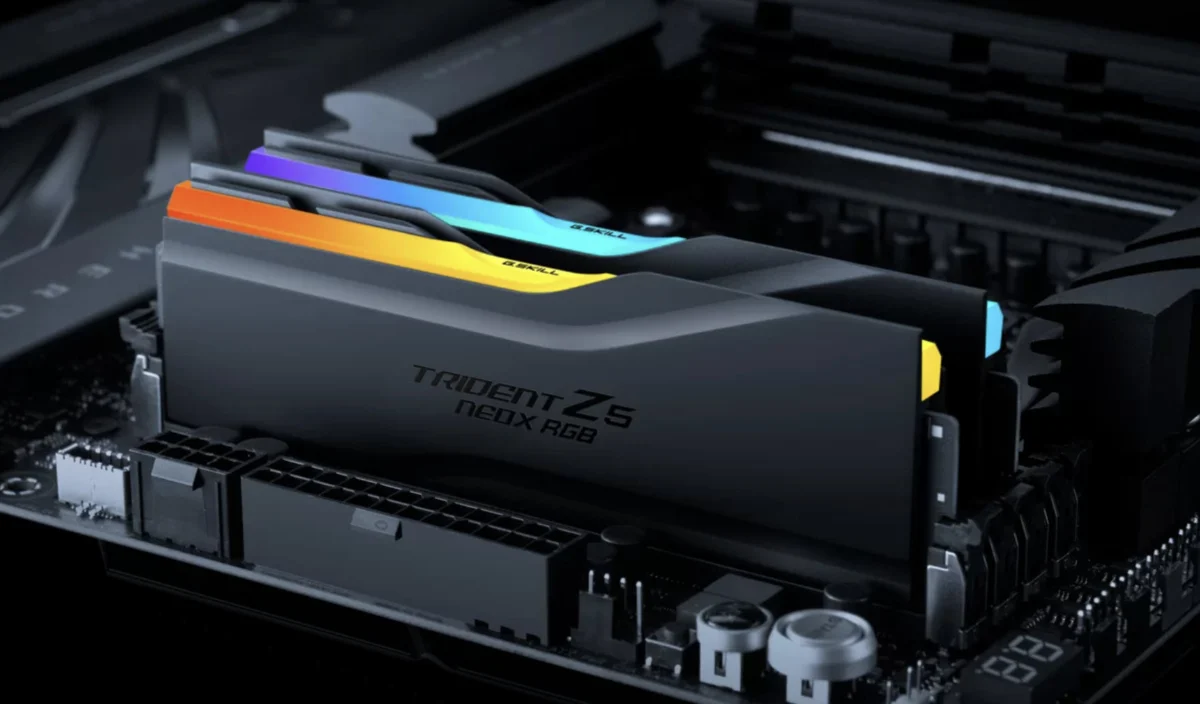
The primary adjustment identified by GF Securities concerns the Small Outline Compression Attached Memory Module (SOCAMM) configurations within the NV72 racks. Originally specified with 192GB SOCAMM modules, the revised plan suggests that NVIDIA will now ship these units with 96GB modules. This 50% reduction in capacity is a direct response to the tightening constraints in the LPDDR5X market, where production yields and surging demand from the mobile and automotive sectors have created a bottleneck for high-capacity modules.
Furthermore, the Vera CPUs—the central processing units tailored for the Rubin architecture—are seeing a significant reduction in their total memory footprint. Initial estimates placed the memory capacity for these CPUs between 54TB and 55TB per rack. The updated specifications indicate a drop to approximately 28TB. While this reduction is substantial, analysts suggest it is a calculated trade-off. By standardizing the 96GB SOCAMM modules across the CPU racks, NVIDIA can streamline its supply chain and reduce the complexity of its manufacturing process.
Despite these cuts to the CPU and system-level memory, the GPU-specific memory remains a priority. The GPUs within the Vera Rubin NV72 rack are expected to continue utilizing 20.7TB of HBM4 (High Bandwidth Memory 4) per rack. This ensures that the core computational tasks—the massive matrix multiplications required for generative AI—still have access to the highest-speed data lanes available, even as the peripheral system memory is scaled back.
Financial Drivers: Navigating the $9.1 Million Rack Price Tag
The financial implications of these design changes are profound. A previous report from Bernstein highlighted the escalating costs of AI infrastructure, noting that a single NVL72 Rubin rack could cost as much as $9.1 million. This figure was a significant upward revision from earlier estimates of $7.8 million, a discrepancy attributed almost entirely to the rising costs of memory. Bernstein’s data suggests that HBM4 memory prices could triple, reaching approximately $53 per gigabyte by 2027.

GF Securities’ analysis provides a breakdown of how the memory reduction impacts the system’s total cost. Without these adjustments, memory costs were projected to account for 29% of the total bill of materials for the VR200 system, amounting to roughly $2.1 million per rack. Industry standards and NVIDIA’s internal targets generally aim for memory costs to remain at or below 20% of the total BOM.
By cutting the LPDDR5X capacity, the costs associated with that specific component can be dramatically reduced. If the capacity is cut to one-fourth of the original vision, costs could drop to as low as $293,000. In the more likely scenario of a 50% reduction, the LPDDR5X costs would sit at approximately $586,000, effectively avoiding the $1.2 million expenditure previously forecasted. This strategic downsizing allows NVIDIA to maintain its premium pricing model for the total rack while absorbing the high costs of the HBM4 components that are non-negotiable for AI performance.
Performance Benchmarks and the Power of Vera Rubin
Despite the reduction in system-level memory, the Vera Rubin NV72 remains a generational leap in AI performance. Earlier this month, CoreWeave, a prominent specialized cloud provider, shared throughput data that underscored the platform’s capabilities. The benchmarks focused on Mixture of Experts (MoE) workloads, which are increasingly common in large language model (LLM) training and inference.
The data revealed that while NVIDIA’s Blackwell-based systems—the current state-of-the-art—deliver a throughput of 80,000 tokens per second at a power consumption of 150 megawatts, the Vera Rubin VR200 NVL72 platform achieves a staggering 800,000 tokens per second. This 10x improvement in throughput per megawatt highlights why the Rubin architecture is so highly anticipated. By focusing on the efficiency of the HBM4-equipped GPUs and the interconnect fabric, NVIDIA is able to deliver massive performance gains even with a leaner system memory configuration.
A Timeline of the Rubin Architecture’s Development
The journey of the Vera Rubin platform reflects the rapid pace of the AI industry. The architecture was first formally announced in January, positioned as the successor to the Blackwell series. Since then, the development cycle has been heavily influenced by the shifting dynamics of the semiconductor supply chain.
- January: NVIDIA announces the Vera Rubin architecture, promising significant improvements in energy efficiency and computational density.
- Early Q2: Reports surface regarding the high cost of HBM4 development and the potential for a global shortage of LPDDR5X.
- June: Preliminary pricing estimates from financial firms suggest the $9 million per rack threshold, prompting concerns regarding the return on investment (ROI) for cloud service providers.
- July: CoreWeave releases performance metrics showing the 10x throughput advantage over Blackwell systems.
- Late July: GF Securities releases its analysis detailing the reduction in SOCAMM and CPU memory capacity as a cost-containment measure.
This chronology illustrates a move from pure performance optimization to a more balanced approach that accounts for the economic realities of large-scale hardware deployment.
Market Context: The HBM4 and LPDDR5X Landscape
The memory industry is currently grappling with a "perfect storm" of high demand and technical complexity. HBM4, which NVIDIA plans to use in the Rubin GPUs, represents a significant departure from previous generations. It requires more complex stacking techniques and through-silicon via (TSV) technology, which has led to lower initial yields at major manufacturers like SK Hynix, Samsung, and Micron.

The LPDDR5X market is similarly strained. As AI capabilities move to the "edge"—incorporating laptops, smartphones, and automotive systems—the demand for low-power, high-speed memory has surged. This has placed NVIDIA in direct competition for supply with consumer electronics giants. By reducing the per-rack requirement for LPDDR5X, NVIDIA not only lowers its costs but also secures its ability to ship units in volume without being throttled by the limited availability of high-density 192GB modules.
Industry Implications and Future Outlook
The decision to scale back memory capacity has broader implications for the AI industry. For hyperscalers like Microsoft, Meta, and Google, the reduction in memory capacity may require adjustments in how they distribute workloads across their clusters. While the raw GPU performance remains intact, the reduction in CPU-accessible memory could impact certain data-intensive preprocessing tasks or the management of massive datasets that reside outside the GPU’s immediate HBM environment.
However, the consensus among analysts is that the trade-off is necessary. If NVIDIA were to maintain the original specifications, the resulting price increase could potentially dampen demand or push customers toward competing solutions from AMD or custom silicon initiatives. By keeping the memory-to-BOM ratio near 20%, NVIDIA ensures that the Rubin NV72 remains the "gold standard" for AI infrastructure without becoming an economic impossibility for its customers.
Looking forward, the semiconductor industry expects memory prices to remain elevated through 2026 and 2027. As AI models continue to grow in size, the pressure on memory bandwidth and capacity will only intensify. NVIDIA’s current strategy suggests a future where hardware efficiency—doing more with less physical memory—becomes as critical as raw transistor counts. The Vera Rubin NV72 serves as a case study in this new era of "frugal power," where the most advanced AI system in the world is defined not just by its peak specifications, but by its ability to navigate the complex economics of a global supply chain.
As NVIDIA prepares for the full-scale rollout of the Rubin platform, the industry will be watching closely to see if other hardware manufacturers follow suit. The move highlights a maturing market where the initial "land grab" for AI performance is being tempered by the long-term requirements of sustainable capital expenditure and supply chain resilience. For now, the Vera Rubin platform stands as a testament to NVIDIA’s ability to pivot its engineering and financial strategies in real-time, ensuring its dominance in the AI sector remains unchallenged despite the mounting costs of innovation.