admin
admin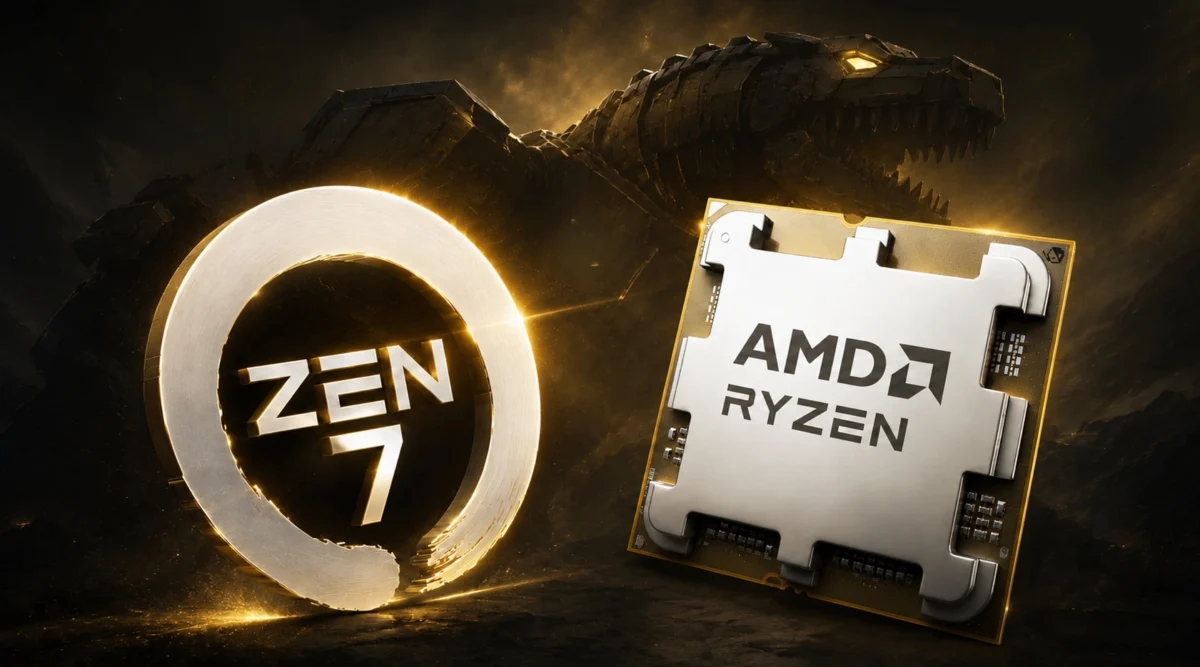
Advanced Micro Devices (AMD) has provided a comprehensive look into its long-term CPU roadmap, signaling a strategic extension for the current AM5 desktop platform while outlining the eventual transition to the next-generation AM6 socket. According to internal projections and recent executive disclosures, the Zen 7 architecture is slated to be the final major family to support the AM5 infrastructure, with the subsequent Zen 8 architecture marking the debut of the AM6 era. This roadmap, revealed during the company’s Advancing AI 2026 event and supplemented by earlier Computex 2026 commitments, underscores AMD’s dedication to platform longevity—a cornerstone of its competitive strategy against rival Intel Corporation.
The AM5 platform, which debuted in 2022 with the Ryzen 7000 "Raphael" series, has already hosted three distinct product generations, including the Ryzen 8000G "Hawk Point" APUs and the high-performance Ryzen 9000 "Granite Ridge" processors. By extending the AM5 lifecycle to 2029 and beyond, AMD is positioning the platform to endure for at least seven years, mirroring the successful trajectory of the preceding AM4 socket. This strategy is designed to provide consumers with a stable upgrade path, reducing the total cost of ownership by allowing users to retain motherboards and DDR5 memory across multiple CPU architectural shifts.
The Evolution of the Zen Roadmap and AM5 Commitments
AMD’s approach to socket longevity has evolved significantly since the launch of the AM5 platform. Initially, the company committed to supporting the socket through 2025. However, as the competitive landscape shifted and the adoption of DDR5 memory matured, AMD progressively pushed this horizon further. At Computex 2024, the company officially extended the window to 2027, and more recent updates have confirmed a "2029+" commitment.

David McAfee, Corporate Vice President and General Manager of the Client Channel Business at AMD, emphasized this stability during recent industry engagements. McAfee noted that the maturity of the DDR5 memory ecosystem and the continued viability of the AM5 power delivery specifications allow the company to bring multiple future architectures to the platform. This means that after the upcoming Zen 6 "Olympic Ridge" family, which is expected to launch for desktops in early 2027, the Zen 7 architecture will likely serve as the "grand finale" for AM5 motherboards.
Zen 7, currently in the advanced stages of development, is expected to utilize next-generation manufacturing processes from TSMC, potentially moving into the 1.4nm or A14/A16 nodes. While the server-side counterparts, codenamed "Florence," will debut first in the EPYC lineup, the consumer-grade Ryzen "Grimlock" chips are anticipated to arrive in 2028 or early 2029. This timeline aligns perfectly with the 2029+ support pledge, ensuring that users who invested in high-end X670 or X870 motherboards will have access to cutting-edge silicon nearly a decade after the socket’s introduction.
Technical Specifications and Comparative Chronology
To understand the scale of AMD’s planned progression, it is essential to examine the technical shifts across the Ryzen generations. The transition from Zen 1 to the projected Zen 8 illustrates a massive leap in transistor density, core efficiency, and I/O capabilities.
| Processor Generation | Architecture | Node | Max Cores/Threads | Socket | Memory Support |
|---|---|---|---|---|---|
| Ryzen 1000 | Zen 1 | 14nm | 8/16 | AM4 | DDR4-2667 |
| Ryzen 3000 | Zen 2 | 7nm | 16/32 | AM4 | DDR4-3200 |
| Ryzen 5000 | Zen 3 | 7nm | 16/32 | AM4 | DDR4-3200 |
| Ryzen 7000 | Zen 4 | 5nm | 16/32 | AM5 | DDR5-5200 |
| Ryzen 9000 | Zen 5 | 4nm | 16/32 | AM5 | DDR5-6000 |
| Ryzen 10K (TBA) | Zen 6 | 2nm | 24/48 (Est.) | AM5 | DDR5 |
| Ryzen 20K (TBA) | Zen 7 | 1.4nm | TBA | AM5 | DDR5 / MRDIMM |
| Ryzen 30K (TBA) | Zen 8 | 1.2nm | TBA | AM6 | DDR6 |
The introduction of Zen 6 "Olympic Ridge" is expected to bring a notable increase in core counts, potentially moving the flagship desktop part from 16 cores to 24 cores. This shift is necessitated by the increasing multi-threaded demands of AI-driven applications and high-end content creation. Zen 6 will also likely refine the I/O die to improve power efficiency and support faster DDR5 modules, potentially reaching native speeds well beyond the current 6000 MT/s sweet spot.

Zen 7 represents a more radical architectural shift. Internal data suggests that Zen 7 will incorporate AI Compute Extensions (ACE), further integrating neural processing capabilities directly into the CPU core. While Zen 7 will remain on the AM5 platform, it is expected to push the limits of the socket’s 1718-pin Land Grid Array (LGA) design. To maintain compatibility with existing motherboards, Zen 7 will likely utilize a sophisticated Integrated Memory Controller (IMC) capable of handling both standard DDR5 and higher-bandwidth solutions like MRDIMMs (Multi-Ranked Dual In-line Memory Modules), which are already gaining traction in the enterprise sector.
The Transition to AM6 and Zen 8
As the industry looks toward 2030, the limitations of the AM5 platform will eventually necessitate a move to a new physical interface. The Zen 8 architecture, codenamed "Ravenna" in its EPYC iteration, is designated as the pioneer for the AM6 platform. This transition will be driven primarily by the arrival of DDR6 memory and the native implementation of PCIe 6.0 and 7.0 standards.
The move to AM6 is not merely about a new physical socket; it represents a paradigm shift in how data moves within the system. DDR6 is expected to double the bandwidth of DDR5, with base speeds starting at approximately 8,800 MT/s and reaching up to 17,600 MT/s in high-performance configurations. Such speeds require a complete redesign of the motherboard’s signal integrity layers and the CPU’s pinout, making a new socket unavoidable.
PCIe 6.0, while already being integrated into high-end server platforms, will find its way into the consumer mainstream with Zen 8. With a raw data rate of 64 GT/s per lane, PCIe 6.0 will enable next-generation NVMe SSDs to exceed 28 GB/s transfer speeds. While the current PCIe 5.0 standard remains underutilized by most consumers, AMD’s forward-looking approach ensures that the AM6 platform will be prepared for the data-intensive workloads of the 2030s, including real-time 8K video processing and localized Large Language Model (LLM) execution.

Industry Implications and Market Reaction
AMD’s commitment to a 2029+ timeline for AM5 has been met with approval from both consumers and motherboard manufacturers. For manufacturers like ASUS, MSI, and Gigabyte, a stable socket allows for more iterative and refined motherboard designs. Instead of reinventing the wheel every two years, these companies can focus on improving power delivery (VRMs), thermal management, and aesthetic features.
Industry analysts suggest that AMD’s strategy serves as a significant differentiator against Intel’s LGA 1700 and the newer LGA 1851 platforms. Intel has historically maintained a two-generation cadence for its sockets, often forcing users to purchase new motherboards when upgrading their CPUs. By contrast, an AMD user who purchased a high-end B650 or X670 motherboard in 2022 could theoretically install a Zen 7 processor in 2029, representing a massive return on investment.
However, the transition to Zen 7 on AM5 does present engineering challenges. As process nodes shrink to 1.4nm and below, power density becomes a critical concern. AMD will need to balance the increased performance of Zen 7 with the thermal and electrical constraints of the AM5 socket, which was originally designed for a maximum TDP of 170W (230W peak power tracking).
Conclusion: A Decadal Legacy for AM5
The roadmap from Zen 5 through Zen 8 illustrates AMD’s clear vision for the next decade of computing. By utilizing Zen 6 and Zen 7 to exhaust the potential of the AM5 platform, AMD is honoring its promise to the enthusiast community while building a bridge to the future.

The eventual arrival of Zen 8 on the AM6 platform will mark the beginning of a new era, likely characterized by DDR6 memory, PCIe 6.0, and even deeper AI integration. Until then, the AM5 platform remains the most stable and future-proof choice for desktop users. As Zen 7 prepares to take its place as the pinnacle of the AM5 era, the hardware industry remains focused on AMD’s ability to deliver consistent architectural gains without the frequent platform upheavals that have historically plagued the PC market. This multi-year support strategy not only benefits the consumer’s wallet but also fosters a more sustainable hardware ecosystem by reducing electronic waste associated with frequent motherboard replacements.