admin
admin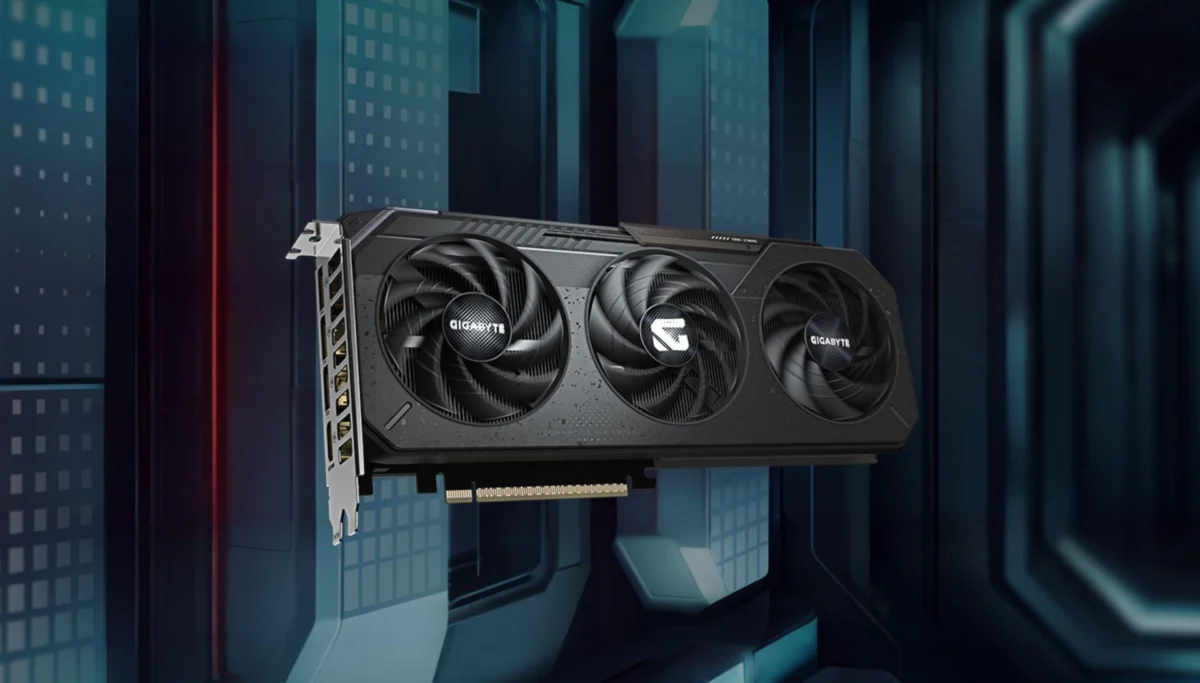
The Immediate Impact on the Chinese Retail Market
In the last 72 hours, market analysts and hardware trackers have observed a dramatic shift in the pricing structure of the RTX 5060 lineup in mainland China. According to data aggregated from major e-commerce platforms and verified by industry insiders, the GIGABYTE RTX 5060 Eagle OC SFF 8GB has seen its listing price climb by approximately 16% in a matter of days. Historically, the RTX 5060 has maintained a price floor between 2,600 and 2,700 Yuan, which converts to approximately $400 USD. However, new listings for the GIGABYTE model have reached 3,215 Yuan, or roughly $475 USD.
This $75 increase represents the highest retail price for the RTX 5060 since its launch, effectively pushing a card designed for budget-conscious 1080p and 1440p gaming into a price bracket formerly occupied by mid-to-high-tier offerings. While this trend is currently most visible in China—a region often serving as a bellwether for global hardware pricing due to its proximity to the supply chain—industry experts warn that a similar upward trajectory is inevitable for the North American and European markets. Currently, the RTX 5060 remains available in the United States for approximately $350, but as existing inventories are depleted and replaced by stock purchased under NVIDIA’s new kit pricing, those figures are expected to rise.
The Root Cause: NVIDIA’s Memory Kit Strategy
The primary driver behind this sudden inflationary trend is NVIDIA’s decision to increase the costs of its GPU and VRAM bundles. Unlike some previous generations where board partners (AIBs) such as GIGABYTE, ASUS, or MSI might source memory independently, NVIDIA frequently sells "kits" that include the GPU silicon paired with the necessary GDDR6 or GDDR7 memory modules. This ensures quality control and performance stability but also gives NVIDIA significant leverage over the final Bill of Materials (BoM) for its partners.

The current increase in memory kit prices is attributed to several converging factors in the semiconductor industry. First, the transition from GDDR6 to GDDR7 has created a manufacturing bottleneck as foundries retool their lines. Second, the explosive growth of the artificial intelligence (AI) sector has redirected the production of high-performance memory toward HBM3e and other enterprise-grade solutions, leaving the consumer DRAM market with tighter supply margins. When supply tightens, the cost of the raw memory chips increases, and NVIDIA, as the middleman in the kit process, has passed these costs onto the manufacturers.
A Chronology of the "RAMpocalypse"
To understand the current price hike, one must look at the timeline of the 2024–2025 GPU market:
- Q3 2024: The Early Warnings. Supply chain reports began indicating that DRAM manufacturers (Samsung, SK Hynix, and Micron) were shifting their focus toward AI-specific memory to capitalize on higher profit margins.
- Q4 2024: High-End Volatility. Prices for the RTX 5090 and 5080 series began to fluctuate wildly. Premium cards saw price tags 20% above MSRP as demand for VRAM-heavy cards surged among both gamers and professional AI developers.
- Q1 2025: Official Partner Notification. NVIDIA formally notified its Add-in Card (AIC) partners that the cost of GDDR6 and GDDR7 kits would be increasing. This notification served as a directive for manufacturers to adjust their MSRPs for upcoming shipments.
- July 2025: The Retail Surge. The first wave of these price adjustments hit the retail sector. The GIGABYTE RTX 5060 hike in China serves as the first major confirmation that the budget sector is no longer insulated from memory cost increases.
Technical Specifications and the Value Proposition
The GIGABYTE RTX 5060 Eagle OC SFF 8GB is a particularly sensitive indicator for market health because of its "Small Form Factor" (SFF) design and its targeting of the mass market. The card features a dual-fan cooling system and is marketed with a focus on AI computational power, boasting 614 TOPS (Tera Operations Per Second) and support for DLSS 4.5.
For many users, the primary appeal of the RTX 5060 is its efficiency and the inclusion of modern features like DLSS Frame Generation and Ray Reconstruction. However, at a $475 price point, the value proposition begins to erode. At nearly $500, consumers traditionally expect 12GB or 16GB of VRAM, whereas the RTX 5060 remains capped at 8GB. This creates a psychological and technical barrier for consumers who are increasingly wary of VRAM limitations in modern AAA gaming titles.

Broader Industry Implications: Beyond GPUs
The "RAMpocalypse" is not an isolated event affecting only graphics cards. The surge in memory pricing is a systemic issue affecting the entire PC hardware ecosystem. For instance, Framework recently reported that sourcing LPCAMM2 memory for its Laptop 13 Pro has become significantly more expensive, with 64GB configurations nearly doubling in price to $1,600 in some regions.
Laptops, pre-built desktops, and even gaming consoles are expected to feel the pressure. Because memory is a fundamental component of almost every modern computing device, the price hike initiated by NVIDIA is likely just one chapter in a larger story of hardware inflation. As manufacturers struggle to maintain profit margins against rising component costs, the era of "budget-friendly" PC building appears to be under threat.
Market Reaction and Expert Analysis
Industry analysts suggest that NVIDIA’s move may be a strategic attempt to manage supply and demand while maintaining record-breaking profit margins. By raising the cost of memory kits, NVIDIA ensures that its bottom line remains robust even if unit volume slightly decreases due to higher retail prices.
Board partners, meanwhile, are in a difficult position. Companies like GIGABYTE operate on relatively thin margins for their entry-level "Eagle" and "Windforce" series. When the cost of the GPU+VRAM kit rises, they have little choice but to pass that cost directly to the consumer. Some partners may attempt to mitigate the hike by reducing the quality of other components—such as using cheaper heatsinks or simpler PCB designs—but for a card like the Eagle OC SFF, which is already optimized for cost, there is little room left to cut.

Consumer reaction on social media platforms like X (formerly Twitter) and Weibo has been predictably negative. Users have pointed out that the RTX 5060 was intended to be the "everyman’s card," and a $75 jump represents a significant portion of a total system build budget for many. If this trend continues, there is a risk that a segment of the PC gaming audience may migrate toward consoles or cloud gaming services, where hardware costs are either subsidized or abstracted.
Future Outlook: Will Prices Stabilize?
The critical question for the second half of 2025 is whether these prices will stabilize or if this is merely the first of several hikes. Much depends on the production capacity of the "Big Three" memory manufacturers. If Samsung and Micron can successfully ramp up GDDR7 production without further sacrificing GDDR6 yields, the supply constraints may ease by the end of the year.
However, the insatiable demand for AI hardware remains a wildcard. As long as VRAM components are competing for the same silicon wafers as high-margin AI chips, consumer hardware will likely remain expensive. For now, prospective builders are advised to monitor local listings closely. The current $350 pricing in the US market may represent a "last call" for the RTX 5060 before the ripples of the Chinese price hike reach Western shores.
In conclusion, the $75 surge for the GIGABYTE RTX 5060 in China is a stark reminder of the fragility of the global supply chain. As NVIDIA recalibrates its pricing to account for the rising costs of memory, the burden of the "RAMpocalypse" is being shifted onto the shoulders of the consumer. Whether the market can sustain these prices—or if it will lead to a cooling of the DIY PC sector—remains to be seen. For the time being, the "budget" GPU is becoming a luxury of the past.