
 Galang Taruna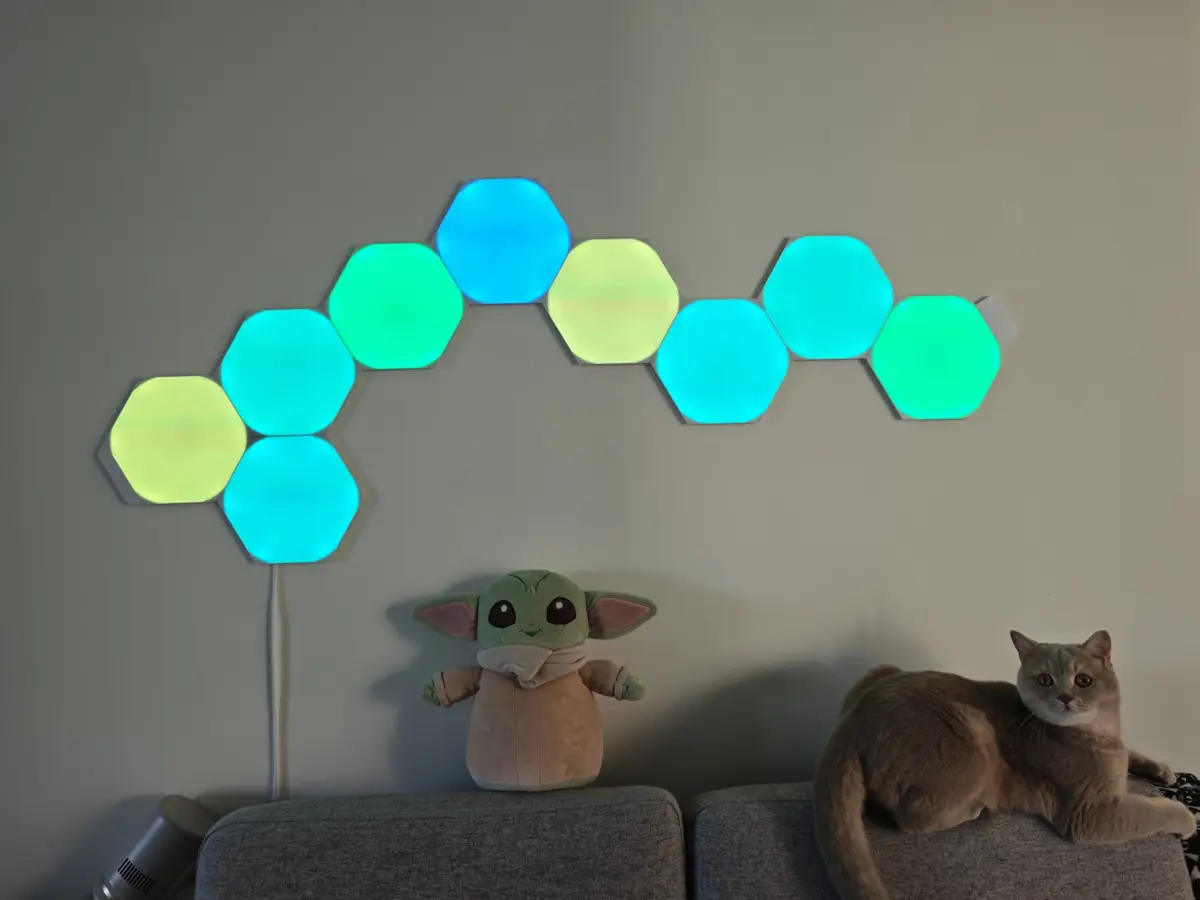
The smart home landscape continues its rapid evolution, marked by increasing interoperability and strategic collaborations designed to offer consumers more cohesive control over their connected devices. A significant development in this arena is the recent partnership between Philips Hue, a leading name in smart lighting under the Signify umbrella, and Nanoleaf, the innovative Canadian company renowned for its distinctive modular light panels. This collaboration introduces a new bundled kit, available since September 3rd, which allows users to integrate Nanoleaf’s popular hexagonal light panels directly into the Philips Hue ecosystem, controllable via the familiar Hue application. Priced at 239.98 euros for a kit comprising nine hexagonal panels and the new Philips Hue wall light module, this offering aims to streamline the smart lighting experience for consumers who might previously have managed devices from both brands through separate applications. However, this integration comes with a notable caveat: once the Hue module is activated, the traditional Nanoleaf controller becomes redundant, signaling a shift in control exclusivity.
The Convergence of Smart Lighting Giants: Background and Context
For years, users of smart lighting solutions often found themselves navigating fragmented ecosystems. Philips Hue, a pioneer in the smart bulb market, has built a robust and extensive system known for its reliability, broad product range, and comprehensive app control, often serving as a central hub for many smart homes. Its parent company, Signify, has consistently pushed the boundaries of ambient and functional smart lighting. On the other hand, Nanoleaf carved out a unique niche with its visually striking, customizable modular light panels. Launched in 2012, Nanoleaf celebrated its tenth anniversary in 2022, establishing itself as a specialist in creating dynamic, artistic lighting installations that double as interactive decor. These panels were already compatible with major smart home platforms such as Apple Home, Google Home, and Amazon Alexa, and since 2021, many Nanoleaf products have also functioned as Thread border routers, enhancing their role in the broader connected home ecosystem.
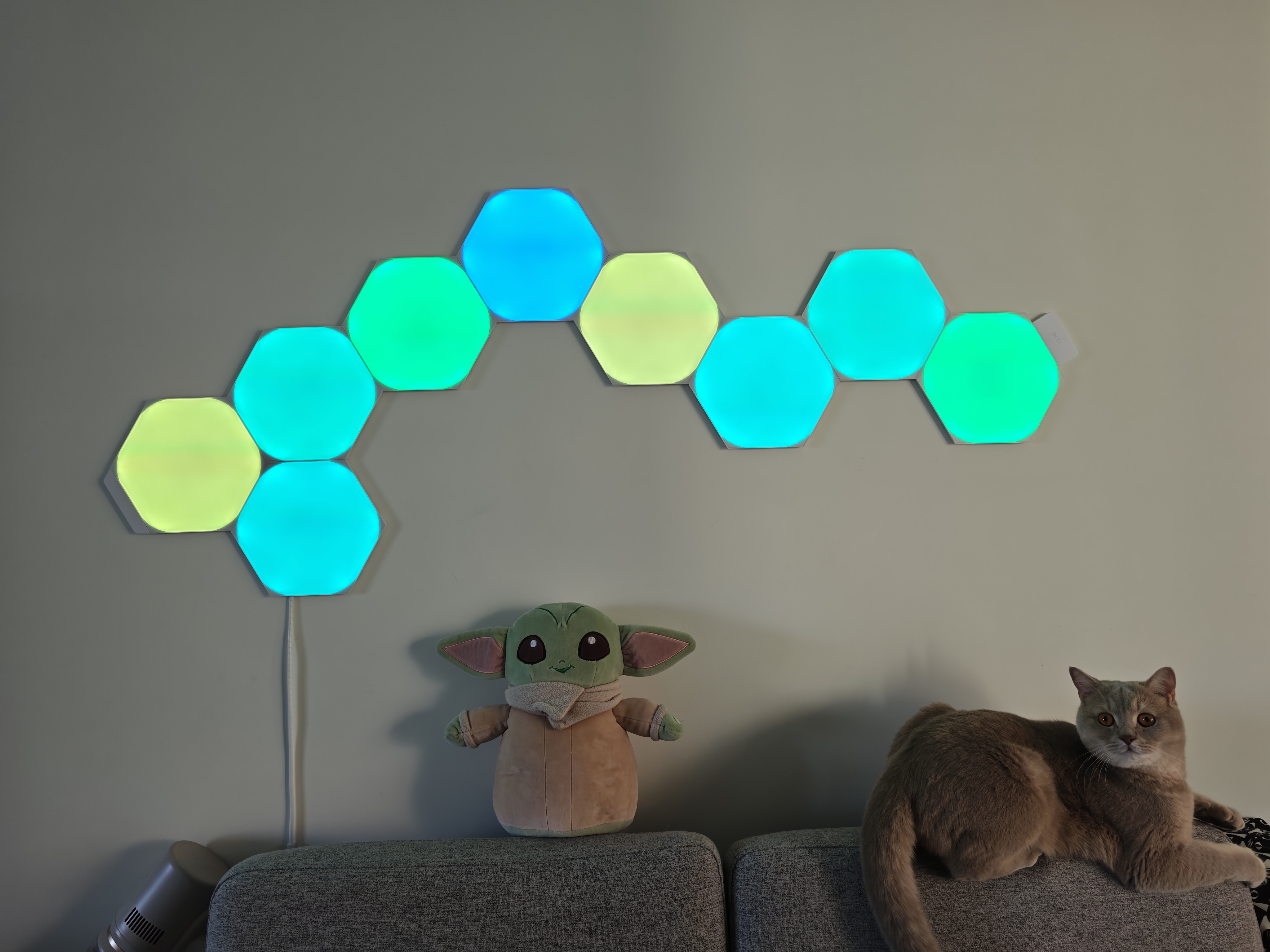
The absence of proprietary wall-mounted light panels in the Philips Hue portfolio had long been noted by enthusiasts. While earlier speculation, fueled by hexagonal icons appearing in the Hue app, hinted at an in-house Philips Hue panel, Signify ultimately opted for a strategic alliance. This partnership was officially unveiled during the IFA Berlin trade show, a prominent global event for consumer electronics and home appliances, signaling a significant move towards expanding the Hue ecosystem through external innovation rather than direct competition. This decision highlights a growing trend in the smart home industry where collaboration is often prioritized over proprietary development, aiming to provide a more comprehensive and user-friendly experience by leveraging existing strengths from different market leaders.
The New Philips Hue + Nanoleaf Kit: What’s Included and Compatibility
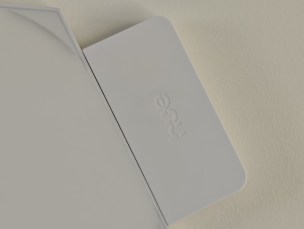
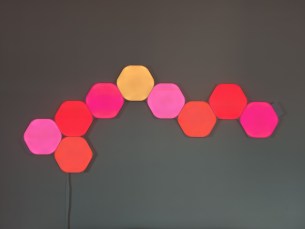
The newly launched kit is meticulously designed to provide a seamless entry point into this integrated lighting experience. Inside the box, consumers will find nine Nanoleaf Shapes Hexagon panels, the standard Nanoleaf controller, the necessary power supply, and the pivotal component: the Philips Hue wall light module. This compact white module is designed to connect directly to one of the Nanoleaf panels, acting as the bridge to the Philips Hue system. According to Philips Hue’s official support documentation, this module is capable of controlling an impressive array of up to 100 Nanoleaf panels, offering considerable scalability for larger installations.
It is crucial to note the specific compatibility of this integration. The Hue module exclusively recognizes Nanoleaf Shapes Hexagons, Shapes Triangles, and Shapes Mini Triangles. This means that older Nanoleaf product lines, such as the original Aurora panels (now known as Light Panels), or the aesthetically distinct Elements hexagones with their wood-look finish, are not supported by this new integration. This specificity ensures optimal performance and feature compatibility within the designated Shapes ecosystem.
An added convenience is that the Philips Hue wall light module can connect via Bluetooth, meaning a Philips Hue Bridge, the central hub for many Hue installations, is not strictly mandatory for basic control. However, for users seeking advanced functionalities, such as remote control outside the home network, complex automations, and crucially, compatibility with the emerging Matter smart home standard, integrating a Hue Bridge remains highly recommended. This dual connectivity option caters to both new users and those already deeply invested in the Philips Hue ecosystem.
Interestingly, there’s a slight discrepancy in the stated panel capacity between the two brands. While Philips Hue documentation asserts control over up to 100 panels, Nanoleaf’s dedicated integration page suggests compatibility with up to 120 panels and specifies the requirement of either a Hue Bridge or a Hue Bridge Pro. In such cases, it is generally advisable for consumers to rely on the specifications provided by Philips Hue, as they are the manufacturer of the integration module itself.
Installation and User Experience: A Practical Review
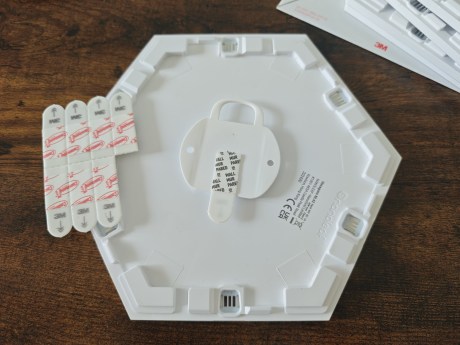
The physical installation of Nanoleaf panels, while generally straightforward, requires careful planning to achieve the desired aesthetic and ensure functional integrity. The kit provides double-sided adhesives for mounting the panels. In a recent test, an evaluation unit with worn adhesives necessitated a replacement with 3M Command strips, known for their strong hold and residue-free removal, akin to hanging picture frames. This highlights the importance of fresh adhesives for a secure installation.
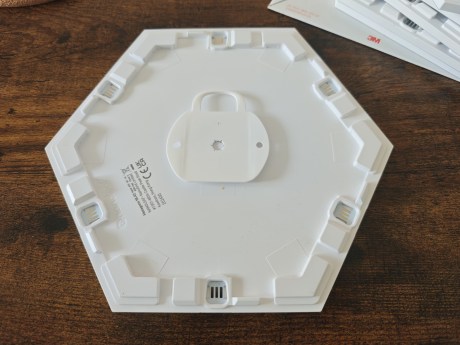
Before permanently affixing any panel, Philips Hue strongly recommends laying out the desired pattern on a flat surface to test the arrangement. This pre-planning is vital, as the hexagonal panels connect via small linkers, and forgetting to insert one before mounting can necessitate detaching and re-attaching panels, potentially wasting adhesives.
A critical step before final module installation is to photograph the back of the Hue wall light module. This reveals a QR code and a six-digit pairing code, both essential for the subsequent setup process within the Philips Hue application. Once these preparatory steps are complete, the Hue app provides clear, step-by-step guidance for the pairing process, and during testing, the connection proved to be robust and trouble-free.
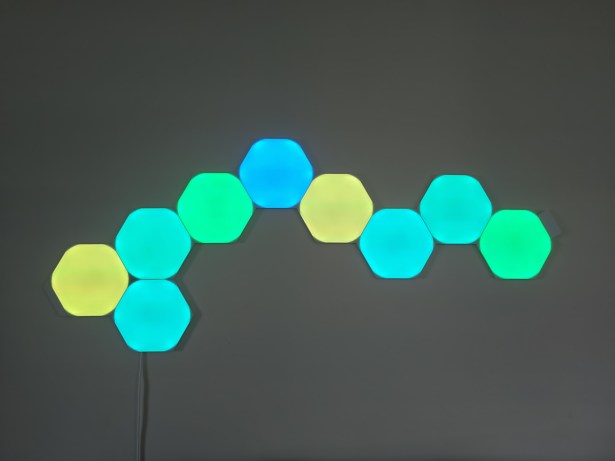
Once integrated, the Nanoleaf panels transform within the Hue app, behaving much like a Philips Hue Lightstrip Gradient. Users can select from various lighting styles such as "Linear," "Reproduced," "Scattered," or "Segmented," allowing for up to five colors to be distributed across the wall installation. The app also offers dozens of pre-configured scenes, providing a rich palette of lighting ambiances to explore.
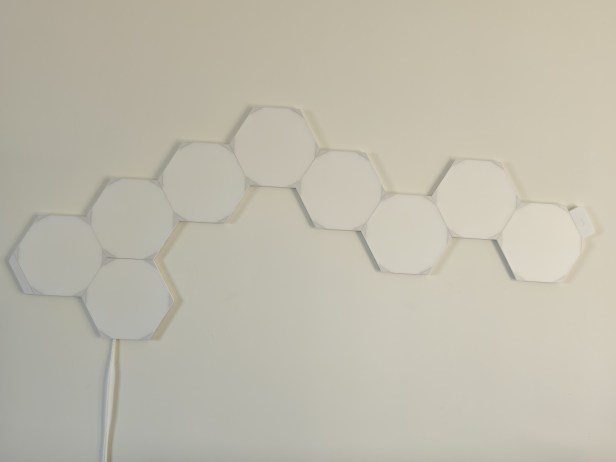
In terms of illumination, each individual Nanoleaf Hexagon panel boasts an output of up to 100 lumens. Therefore, a nine-panel setup, as included in the base kit, can collectively achieve approximately 900 lumens in bright white light, which is comparable to a traditional 60-watt incandescent bulb. It’s important to note that highly saturated colors will typically result in a perceived decrease in overall brightness. The white light spectrum is highly adjustable, ranging from a very warm, amber-toned 1,200K to a crisp, daylight-like 6,500K, offering versatility for different moods and functional needs.
Furthermore, the integration extends to Philips Hue accessories. Users can easily configure Hue switches to cycle through different scenes with multiple presses, offering a convenient physical control option. During testing, the panels demonstrated quick responsiveness and excellent stability, reinforcing the reliability characteristic of the Philips Hue ecosystem.
The Crucial Limitation: A Tale of Two Controllers
While the integration offers significant convenience, it comes with a critical functional trade-off. During the pairing process, the Philips Hue app explicitly warns users to "remove the Nanoleaf controller" for wall light applications. Indeed, testing confirmed that when the Hue module is active, it assumes complete control, rendering the physical buttons on the original Nanoleaf controller unresponsive. All operations, from power toggling to scene changes, must then be managed exclusively through the Philips Hue application.
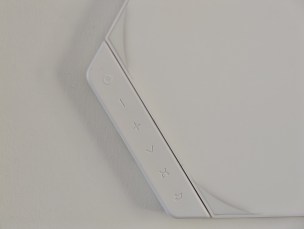
This exclusivity means that users sacrifice several unique features inherent to the Nanoleaf ecosystem. Functions such as animated scenes, synchronization with music, and the interactive touch gestures on the panels—all hallmarks of the Nanoleaf experience—are not accessible when controlled via the Hue app. While it is possible to revert to the Nanoleaf app by disconnecting the Hue module, doing so severs the integration with Philips Hue.
This limitation has been a point of discussion among early reviewers, including the specialized blog Hueblog, which conducted its own review of the module on September 17th. According to Hueblog, Philips Hue is actively working with Nanoleaf to enable simultaneous functionality for both controllers, allowing users to leverage the best of both worlds. However, no specific timeline for this anticipated update has been announced, despite initial launch documentation having reportedly promised this dual functionality from the outset. This suggests an ongoing development effort to enhance the integration beyond its current capabilities.
Another feature currently missing is the ability to customize the direction of color gradients on the wall. Philips Hue has communicated that a software update addressing this functionality is in preparation and is expected to roll out by the end of the year, further expanding the creative control available to users.
Broader Implications for the Smart Home Landscape
This partnership between Philips Hue and Nanoleaf carries significant implications for the broader smart home market. For Philips Hue, it represents a strategic expansion of its ecosystem into decorative, modular wall lighting without the need for costly in-house research and development. By integrating a popular, established brand like Nanoleaf, Signify can offer a more complete smart lighting solution, catering to a wider range of aesthetic preferences and functional requirements. This approach aligns with a trend of platform providers opening up their ecosystems to third-party hardware, fostering greater choice and flexibility for consumers.
For Nanoleaf, the integration provides access to Philips Hue’s extensive user base, potentially broadening its market reach and reinforcing its position as a key player in the smart home lighting segment. The brand’s existing compatibility with major voice assistants and its role as a Thread router already showcased its commitment to interoperability. Adding Philips Hue, a market leader, further solidifies this position.
The move also subtly addresses the ongoing push for interoperability standards like Matter. While the Hue module offers Bluetooth control, the full potential, including Matter compatibility, is unlocked with a Hue Bridge. This positions the integrated solution as forward-compatible with the evolving smart home landscape, promising greater seamlessness in the future.
The pricing strategy, starting at 239.98 euros for the nine-panel kit, positions the product in the premium segment, consistent with both brands’ market positioning. Expansion beyond the initial kit requires purchasing additional panels directly from Nanoleaf’s store, as Philips does not offer standalone extension packs. This pricing structure highlights the value placed on both the innovative design and the integrated smart features. It also brings to mind past attempts by other brands, such as Xiaomi in 2020, to offer similar modular lighting concepts at significantly lower price points, underscoring the competitive pressures in this niche.
Market Reception and Future Outlook
Initial market reception, particularly from existing Philips Hue users, is likely to be positive, given the convenience of managing both traditional smart bulbs and decorative panels within a single, familiar application. This unification simplifies scene creation and automation, enhancing the overall smart home experience. However, the loss of Nanoleaf’s unique interactive features, such as music synchronization and touch control, presents a clear trade-off. This might deter some long-standing Nanoleaf enthusiasts who value these distinct functionalities.
The promise of future software updates, particularly the ability to orient color gradients and the ongoing work towards simultaneous controller operation, indicates a commitment from Philips Hue to refine and enhance the integration. These updates will be crucial in addressing current limitations and maximizing the value proposition for users.
Ultimately, this kit is primarily aimed at individuals who are already invested in the Philips Hue ecosystem and are looking to expand their smart lighting setup with visually dynamic wall panels. It offers a sophisticated, albeit somewhat constrained, solution for integrating a unique aesthetic element into a well-established smart home framework. While the current limitations regarding simultaneous controller functionality and the absence of Nanoleaf’s unique features are noteworthy, the core offering of unified control under the Hue app is a compelling draw for many. The availability of the module as a standalone purchase for 39.99 euros also provides an economical upgrade path for existing Nanoleaf Shapes owners.
In conclusion, the Philips Hue and Nanoleaf partnership marks a significant step towards greater integration and convenience in the smart lighting sector. While the current iteration presents a choice between the comprehensive Hue ecosystem control and Nanoleaf’s unique interactive features, it lays the groundwork for a more unified and feature-rich smart home experience as software capabilities evolve. This collaboration reflects the ongoing efforts within the smart home industry to break down silos and create more intuitive, interconnected living environments.








