Sisilia Frederika
Geologists and planetary scientists have unveiled a groundbreaking method for identifying subsurface water ice on the Moon, utilizing seismic waves generated by moonquakes to act as natural sonar. This innovative approach, developed through a collaborative effort between the University of Maryland (UMD), Lawrence Berkeley National Laboratory, and the University of Hawai’i, addresses one of the most significant hurdles in long-term space exploration: the precise mapping of lunar resources. As international space agencies, including NASA and the China National Space Administration (CNSA), prepare for sustained human presence on the lunar surface, the ability to locate and quantify water reserves has transitioned from a matter of scientific curiosity to a critical operational requirement.
The research, recently published in the journal Science Advances, details how mechanical waves traveling through the Moon’s crust can reveal the presence of hidden ice deposits. Because ice is significantly more rigid and dense than the loose, powdery lunar soil known as regolith, seismic waves accelerate dramatically when passing through icy regions. This disparity provides scientists with a "seismic signature" that can be used to distinguish between dry dust and potentially life-sustaining ice caches.
The Strategic Importance of Lunar Water Ice
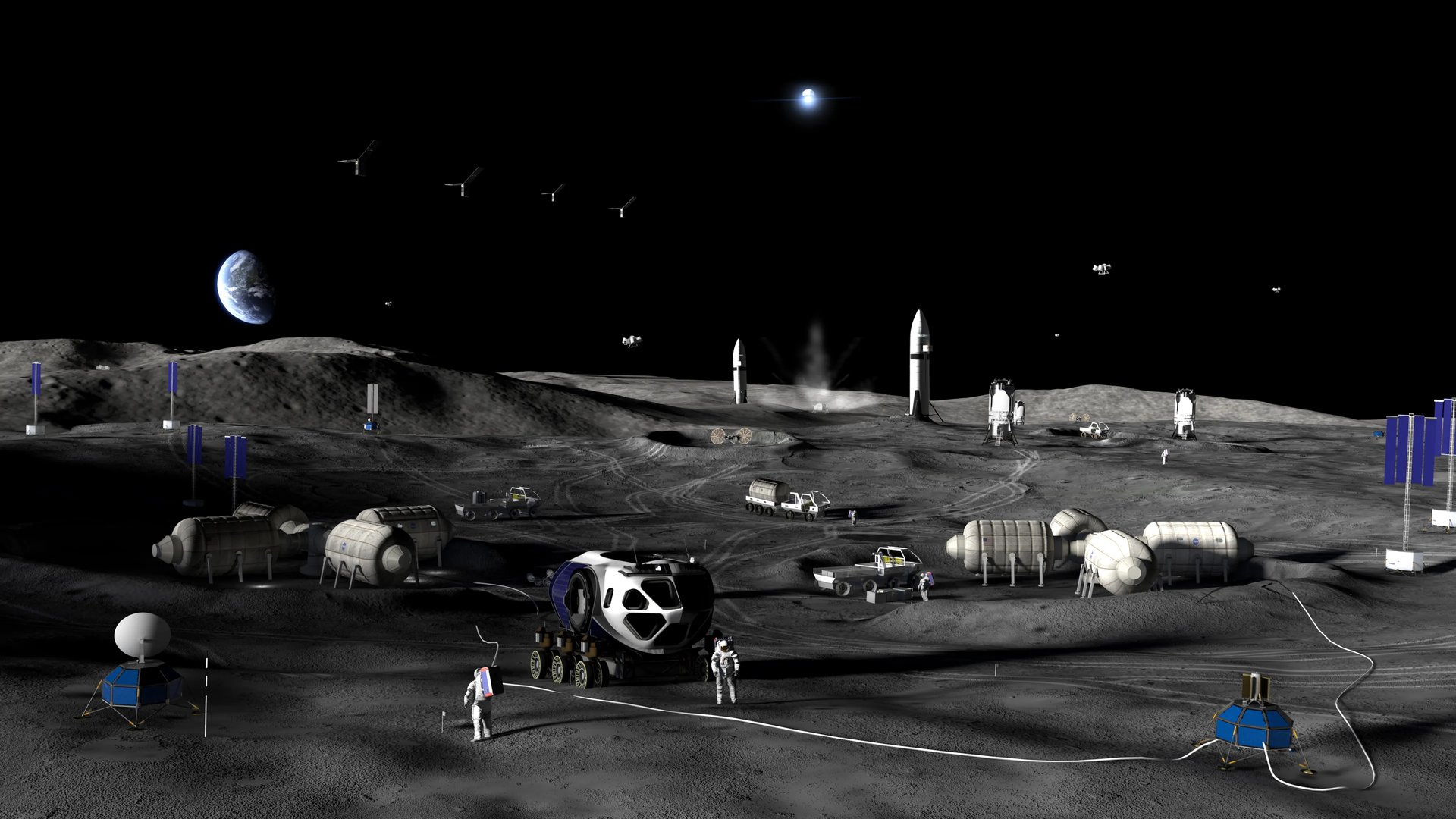
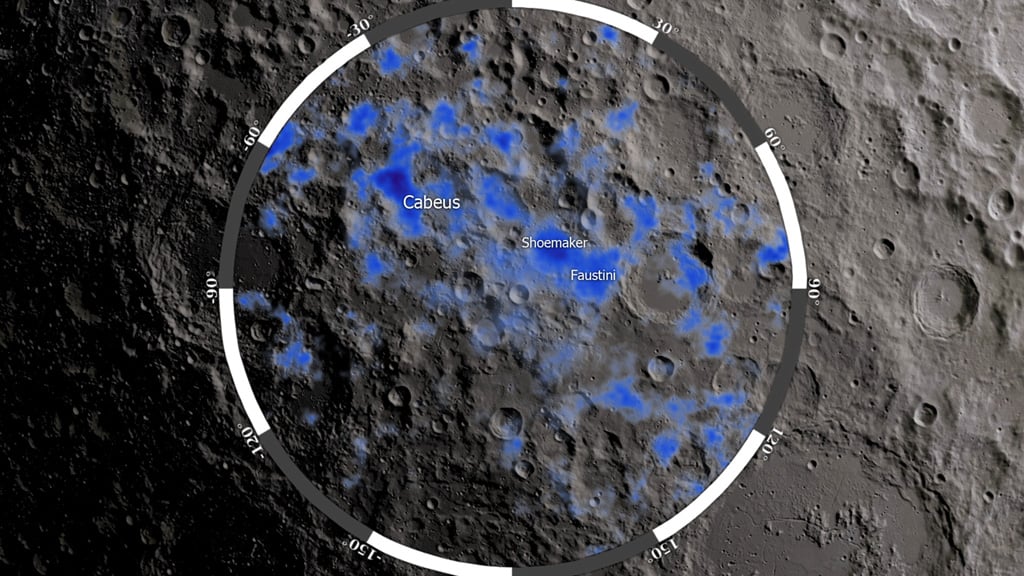
The identification of water on the Moon is the cornerstone of the "live off the land" philosophy, formally known as In-Situ Resource Utilization (ISRU). For decades, the Moon was perceived as a desolate, bone-dry wasteland. However, data from missions over the last twenty years have confirmed that the lunar poles, particularly in Permanently Shadowed Regions (PSRs), harbor significant quantities of water ice.
The value of this ice extends far beyond basic hydration for astronauts. Water (H2O) can be electrolyzed into hydrogen and oxygen. The oxygen provides breathable air for lunar habitats, while the hydrogen and oxygen combination serves as high-efficiency rocket propellant. By harvesting these materials on the Moon, space agencies can bypass the prohibitive costs of launching heavy water and fuel supplies from Earth’s deep gravity well. According to current aerospace estimates, launching a single kilogram of material into space costs thousands of dollars; producing resources on-site is the only viable path for the industrialization of the Moon and eventual missions to Mars.
Nicholas Schmerr, an associate professor of geology at UMD and a co-author of the study, emphasized the necessity of these resources for the upcoming Artemis missions. "It’s crucial to identify any materials on the moon that an astronaut can make use of while they’re up there," Schmerr stated. "Since they will be limited by the few resources they brought from Earth, anything they find on the moon will help them basically live off the land, especially for longer-term missions or outposts."
A Chronology of Discovery: From Apollo to Artemis
The understanding of lunar water has evolved through several distinct phases of exploration:
- The Apollo Era (1969–1972): Initial analysis of returned samples suggested the Moon was entirely devoid of water. The samples were bone-dry, and the scientific consensus remained largely unchanged for decades.
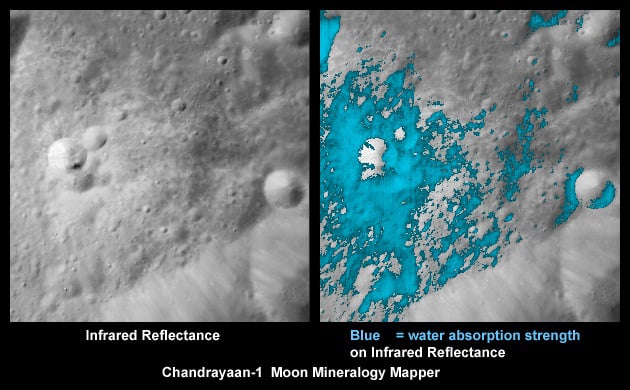
- The Orbital Revolution (1990s–2000s): Missions like Lunar Prospector and Clementine began to find hints of hydrogen enrichment at the poles. In 2008, India’s Chandrayaan-1 mission, carrying NASA’s Moon Mineralogy Mapper, provided the first definitive evidence of water molecules on the lunar surface.
- The Impact Confirmation (2009): NASA’s LCROSS mission intentionally crashed a kinetic impactor into the Cabeus crater near the south pole, kicking up a plume of debris that contained roughly 155 kilograms of water vapor and ice.
- Modern Mapping (2020–Present): NASA’s SOFIA (Stratospheric Observatory for Infrared Astronomy) confirmed the presence of molecular water on sunlit surfaces, suggesting water might be more widespread than previously thought.
Despite these discoveries, orbital mapping has limitations. Satellites can detect surface frost or hydrogen signatures in the top few millimeters of soil, but they cannot effectively "see" deep into the subsurface to determine the volume or purity of the ice. This is where seismic analysis becomes essential.
The Mechanics of Seismic Detection
Seismic waves are mechanical vibrations that travel through a planetary body. On Earth, geologists use these waves—often generated by earthquakes or controlled explosions—to map oil and gas reserves, as well as the planet’s internal structure. The Moon experiences its own "moonquakes," caused by the gravitational pull of Earth (tidal forces), thermal expansion and contraction of the crust, and meteorite impacts.
The speed at which these waves travel is dictated by the density and elasticity of the material they traverse. In the loose, uncompacted regolith of the Moon, seismic waves travel relatively slowly. However, the study led by Harrison Lisabeth of Lawrence Berkeley National Laboratory found that if that regolith is impregnated with ice, the waves travel two to three times faster.
The ice acts as a "cement," filling the pore spaces between dust grains and significantly increasing the stiffness of the material. Furthermore, the boundary between dry regolith and a dense ice deposit causes a "bounce back" effect—a seismic reflection—that allows researchers to determine the depth and thickness of the ice layer.
"We can use seismic waves to not just see whether ice is present but also roughly how much of it there is," Schmerr explained. This quantitative data is vital for mission planners who must decide where to deploy expensive mining and processing equipment.
Laboratory Simulations and X-Ray Tomography
To validate their theories, the research team conducted a three-part experimental process to simulate lunar conditions. Since actual lunar regolith is a precious resource kept in high-security vaults, the team used a terrestrial analog: crushed volcanic rock from Arizona that mimics the chemical and physical properties of lunar dust.
In the first phase, the team created mixtures of this analog soil with varying amounts of water and froze them to cryogenic temperatures. Using advanced X-ray tomography, they observed the "microstructures" of the ice. The scans revealed that the ice does not just sit between the grains; it bonds them together into a rigid matrix.
In the second phase, the team integrated these physical findings into thermal models of the lunar south pole. These models account for the extreme cold of the PSRs, where temperatures can drop to -250 degrees Celsius (-418 degrees Fahrenheit), allowing ice to remain stable for billions of years.
Finally, the team ran sophisticated computer simulations of moonquakes. By injecting virtual seismic waves into models of the Moon’s crust containing various ice configurations, they were able to predict the exact data patterns that future lunar seismometers should look for. The results were definitive: the presence of ice creates a distinct, unmistakable "speed boost" and reflection pattern in the seismic data.
Origins and Scientific Significance
Beyond its utility as a resource, lunar ice is a "time capsule" of the solar system’s history. Scientists believe the water arrived on the Moon through several mechanisms:
- Cometary and Asteroid Impacts: Over billions of years, water-rich celestial bodies crashed into the Moon, depositing ice that migrated to the cold traps at the poles.
- Solar Wind: Protons from the sun interact with oxygen-rich minerals in the lunar soil to create hydroxyl (OH) and water molecules.
- Volcanic Outgassing: During the Moon’s early, more geologically active history, water may have been released from the interior during volcanic eruptions.
"The moon witnessed some of the most critical parts of the early solar system, including how water was delivered," Schmerr noted. "Studying the ice deposited there could reveal how water spread and ultimately how Earth’s oceans formed." By analyzing the isotopic composition of the ice found via seismic mapping, scientists could determine exactly where Earth’s own water came from.
Future Missions and Implementation
The transition from theoretical modeling to practical application is already underway. Several upcoming missions are slated to carry seismometers to the lunar surface to put these methods to the test.
The Chinese Chang’e-7 mission, scheduled for launch in the mid-2020s, is designed to explore the lunar south pole near the Shackleton Crater. It will deploy a suite of instruments, including a seismometer specifically intended to probe for subsurface ice.
Similarly, NASA’s Artemis program includes plans for the Lunar Environmental Monitoring Station (LEMS). Expected to be deployed by astronauts or robotic landers around 2028, LEMS will be a long-term seismic station designed to monitor moonquakes and provide the high-resolution data needed to map the Moon’s interior.
The implications of this research are profound. If seismic mapping confirms large, accessible deposits of water ice, the Moon could become a "gas station in the sky," facilitating deeper exploration of the solar system. It would transform the Moon from a destination for short-term visits into a permanent outpost for humanity, marking the beginning of a new era in space industrialization.
As the hunt for lunar ice intensifies, the combination of terrestrial geophysics and planetary science is providing the tools necessary to unlock the Moon’s most valuable secret, turning a bleak and forbidding landscape into a reservoir of potential for the future of humankind.