
 Vera Intan Clara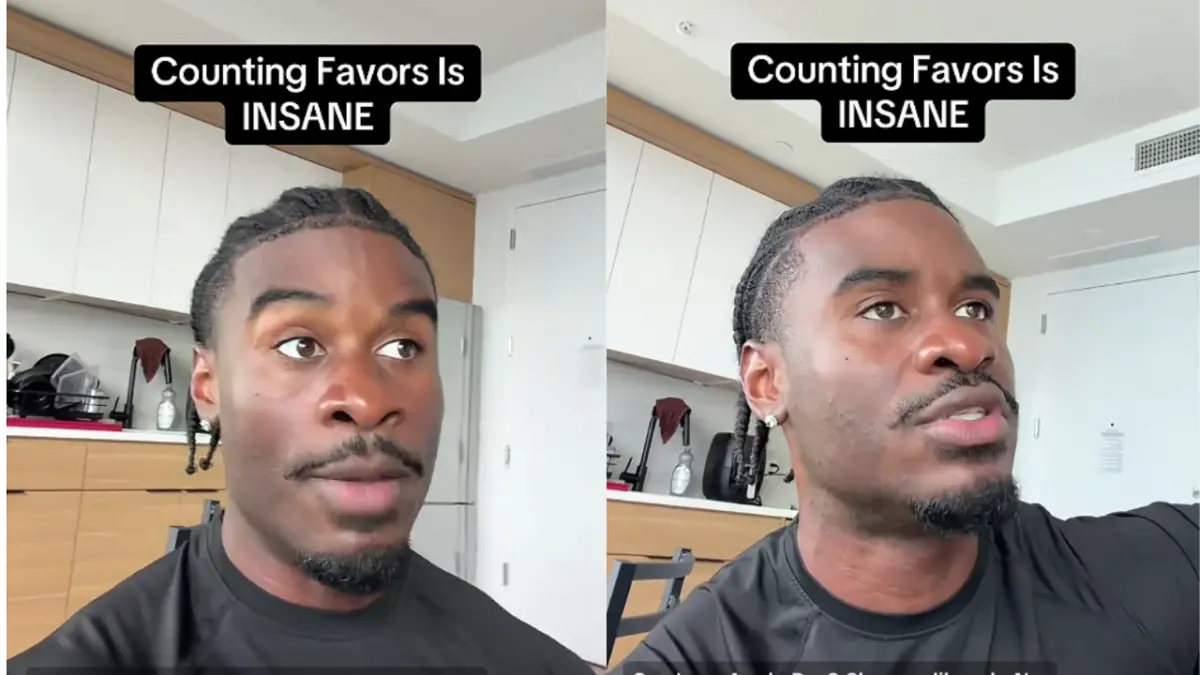
A recent video shared by TikTok creator @maxwellvision has ignited a widespread discussion on the often-unspoken rules governing financial transactions and favors within friendships. The incident, involving a friend who initially offered to cover a meal with "no strings attached" only to demand repayment weeks later, has resonated with millions, accumulating 1.7 million views and over 1,192 comments, highlighting a common interpersonal dilemma in modern social dynamics. Maxwell’s candid recounting of the experience has prompted a collective introspection into the delicate balance of generosity, expectation, and communication in platonic relationships, especially in an era increasingly reliant on digital payment methods and social media transparency. The narrative underscores the potential for miscommunication to strain even the strongest bonds when financial matters are handled informally and without explicit clarity.
The Genesis of the Dilemma: A Birthday Dinner and a Forgotten Wallet
The incident unfolded during what began as a convivial birthday celebration for a mutual female friend. A group of friends had gathered, enjoying the festive atmosphere, until the moment the bills arrived. It was then that Maxwell encountered a common, albeit inconvenient, predicament: he realized he had inadvertently left his wallet at home. This oversight set in motion a chain of events that would later spark a significant debate about friendship etiquette and financial transparency.
A Detailed Chronology of the Evening:
The evening commenced with anticipation and good cheer. As the birthday girl’s best friend informed the waitress that she would be settling her own meal, the rest of the table requested separate bills, a common practice to avoid complications in group dining. Maxwell’s bill amounted to $65, a sum he deemed accurate for his food and beverages. His initial attempt to locate his wallet proved fruitless, leading him to retrace his mental steps and conclude it was either in the Uber he had taken to the restaurant or, more fortunately, safely at his residence.
Utilizing an AirTag linked to his wallet, Maxwell confirmed its presence at home, alleviating immediate panic regarding its loss. However, this confirmation did not solve the immediate problem of payment; without physical cash or cards, he was unable to settle his tab. Reluctant to impose on his friends, Maxwell first explored alternative payment options. He inquired with the waitress about Apple Pay, a ubiquitous digital payment solution. Unfortunately, the restaurant’s Apple Pay system was reportedly out of service, further narrowing his options.
It was at this juncture that Maxwell recalled the existence of peer-to-peer payment applications like Zelle and PayPal, which offered a potential workaround. He decided to approach a friend, identified as Jack, with a proposition: Jack would cover his meal, and Maxwell would immediately transfer the $65 back via Zelle. To Maxwell’s surprise, Jack not only declined the offer of immediate reimbursement but explicitly stated, "Zelle me the money? You good . . . You don’t gotta Zelle me nothing. How much is it? $65.00 . . . Bro, you good."
Maxwell interpreted Jack’s unequivocal refusal of repayment as a clear indication that the gesture was a favor, a genuine act of friendship with no expectation of being paid back. In his mind, the implicit understanding was that he would reciprocate in kind at a future date, perhaps by covering Jack’s meal or drinks during their next outing. This reciprocal dynamic, Maxwell believed, was a fundamental aspect of how close friends operated, fostering a sense of mutual support and generosity. The evening concluded on what Maxwell perceived to be a positive and amicable note, a testament to the strength of their friendship.
The Nuances of Friendship and Financial Favors: Differing Interpretations
The core of Maxwell’s viral narrative lies in the stark contrast between his interpretation of Jack’s offer and Jack’s subsequent actions. Maxwell’s viewpoint aligns with a commonly held social convention that a freely offered financial gesture among friends, especially when repayment is explicitly declined, constitutes a favor or a gift rather than a loan. This distinction is crucial because it dictates the recipient’s perceived obligation and the future dynamics of the relationship.
Maxwell articulated this perspective in his video, stating, "If I never asked you to do it. . . You’re offering to buy me something, that’s already put in the back of my mind that you don’t wanna get paid back. You’re like, doing me a favor. But when you ask me to pay you back, it seems like you’re counting favors. Are we homies?" This rhetorical question encapsulates the perceived breach of trust and the shift from an act of camaraderie to a transactional ledger.
From Maxwell’s perspective, the explicit denial of repayment transforms a potential debt into a gesture of goodwill. The expectation, then, shifts from direct monetary reimbursement to an unquantified, future reciprocation of kindness or generosity, characteristic of deep friendships. This unwritten social contract relies heavily on trust and an understanding that favors will balance out over time, without the need for meticulous accounting.
Conversely, Jack’s later revelation suggests an underlying expectation of repayment, despite his initial words. This discrepancy highlights a critical communication gap. Jack’s statement, "I only said that to be nice," reveals a common social politeness that can inadvertently lead to misunderstanding and resentment. Many individuals, when offering to cover a friend’s expense, might utter similar phrases out of social grace, not intending them to be taken as a definitive waiver of repayment. However, for the recipient, such statements are often taken at face value, leading to differing perceptions of the situation. This situation underscores the importance of direct and unambiguous communication, particularly when financial matters are involved, even within the context of close friendships.
The Confrontation: Two Weeks Later and a Shift in Tone
The perceived harmony of the situation shattered approximately two weeks after the birthday dinner, during a seemingly innocuous gathering at a gym. Maxwell had been invited by another friend, Jay, to play basketball, with the understanding that Jack and other mutual friends would also be present. This casual setting would become the unlikely stage for the confrontation that brought the unresolved financial expectation to the forefront.
After several games, the group was understandably tired and thirsty. One friend, Eric, expressed a desire for a Gatorade from a vending machine that, inconveniently, only accepted cash. Maxwell, possessing a modest amount of approximately $4 in cash, readily offered it to Eric. This seemingly minor act of generosity, witnessed by Jack, unexpectedly triggered the latent tension.
Jack’s immediate reaction was one of incredulity and thinly veiled accusation. He looked at Maxwell and stated, "For real, bro? That’s crazy . . . That’s wild." Puzzled by the sudden shift in atmosphere, Maxwell inquired about the problem. Jack’s response was direct and accusatory: "Bro, you don’t think it’s weird that you’re giving other people money when you owe me money? I paid for your dinner, you said you would pay me back."
This statement directly contradicted Maxwell’s understanding of their prior exchange. Maxwell immediately reminded Jack of his explicit refusal of repayment on the night of the dinner, reiterating that he had offered to Zelle the money instantly, an offer Jack had unequivocally declined. Jack’s subsequent explanation provided a critical insight into his internal rationale: he admitted that his initial "you don’t gotta Zelle me nothing" was merely a polite gesture, and he had, in fact, expected reimbursement. He further added, perhaps to soften the blow, that he would "understand" if Maxwell couldn’t pay him back, a comment Maxwell interpreted as an insinuation that he lacked the means to do so.
Feeling cornered and affronted by the implication, Maxwell promptly retrieved his phone and transferred the $65 to Jack via Zelle. His swift action was not merely about settling a debt; it was about severing the invisible thread of obligation he felt Jack had attempted to weave into their friendship. For Maxwell, the incident fundamentally altered his perception of Jack’s character, transforming a spontaneous act of kindness into a meticulously "counted favor." He conveyed that he wanted the $65 payment to be an unambiguous resolution, preventing it from lingering as an unspoken tension or a potential source of future resentment between them.
Digital Transactions and Social Etiquette: The Modern Dilemma
The MaxwellVision incident is particularly relevant in the contemporary landscape dominated by digital payment platforms. Apps like Zelle, PayPal, Venmo, and Cash App have revolutionized personal finance, making it incredibly easy to transfer money instantly between individuals. According to Early Warning Services, the network operator of Zelle, the platform processed a staggering $629 billion across 2.9 billion transactions in 2023 alone, underscoring its widespread adoption and integral role in everyday financial interactions. While these tools offer unparalleled convenience for splitting bills, reimbursing expenses, or sending gifts, they also introduce new complexities to social etiquette.
The ease of instant transfer means that the traditional "I’ll get you next time" informal agreement can now be immediately concretized. This shift places a greater onus on clear communication. When an offer to pay is made, and the recipient offers immediate digital repayment, the subsequent refusal carries significant weight. As Maxwell experienced, such a refusal can be definitively interpreted as a waiver of debt, transforming a potential loan into a favor. If the intent is genuinely to be repaid, the expectation must be explicitly stated, even if it feels less "polite" in the moment. The ambiguity created by polite refusal, followed by a later demand, can be deeply damaging to trust, as it suggests a hidden agenda or a retroactive redefinition of terms.
The incident highlights a growing tension between traditional social graces, which often favor understated generosity, and the modern imperative for financial clarity, facilitated by digital tools. In a world where money can be moved with a few taps, the unspoken rules of informal lending and borrowing among friends require a re-evaluation to prevent misunderstandings that can erode personal relationships.
The Viral Reaction: Public Discourse on Friendship and Finance
The sheer volume of views and comments on Maxwell’s TikTok video attests to the universality of his experience. The comments section quickly became a forum for individuals to share their own similar encounters and to weigh in on the etiquette of financial favors among friends. A significant majority of commenters sided with Maxwell, reinforcing the sentiment that a favor, once explicitly offered without expectation of repayment, should remain just that.
One commenter articulated a common friendship dynamic, stating, "Me and my buddies don’t pay each other back, we just take turns buying stuff for everyone." This reflects a reciprocal model of friendship where generosity is implicitly understood to balance out over time, without the need for itemized accounting. This approach fosters a sense of mutual support and avoids the transactional feeling that can undermine platonic bonds.
Another user echoed the call for clarity, writing, "He should’ve been straight forward with his intentions. Also, if you don’t rock with him like that, you could’ve sent him the money right away to avoid this." This comment underscores two crucial points: the responsibility of the benefactor to communicate their expectations clearly and the recipient’s option to preempt potential misunderstandings by insisting on immediate repayment if they sense any ambiguity or distrust.
The public reaction suggests a broad consensus that honesty and directness are paramount in financial dealings between friends. While social politeness is valued, it should not supersede the need for clear communication, especially when it pertains to money. The internet, through platforms like TikTok, has provided a space for these nuanced social dilemmas to be openly discussed, allowing collective wisdom and shared experiences to shape evolving norms of interpersonal conduct.
Broader Implications: Trust, Communication, and Modern Relationships
The MaxwellVision incident, while seemingly minor in its financial scope, carries significant implications for understanding the dynamics of trust and communication in modern relationships. It serves as a potent case study illustrating how differing interpretations of social cues, particularly concerning money, can lead to resentment and the erosion of trust between friends.
Impact on Trust: When one party feels a gesture of kindness has been retroactively redefined as a debt, it can deeply damage trust. The expectation of reciprocity is inherent in many friendships, but it operates on an informal, unquantified basis. When a "favor" is later "counted," it transforms the relationship from one based on mutual goodwill to one with a transactional undertone, akin to a ledger. This shift can make future acts of generosity feel less genuine and more like calculated exchanges, diminishing the spontaneity and warmth characteristic of close friendships.
Importance of Clear Communication: The incident underscores the critical importance of explicit communication, especially in sensitive areas like finances. While it may feel awkward to be overly direct, particularly when offering help, ambiguity can be far more damaging in the long run. If Jack genuinely expected repayment, he should have accepted Maxwell’s immediate Zelle offer or stated clearly, "I’ll cover you now, but please Zelle me back when you get home." Such directness, while potentially less "polite" in the moment, would have prevented the misunderstanding and subsequent confrontation. This applies to both parties: if Maxwell had any lingering doubt, he could have insisted on repayment, or sought further clarification.
The Role of Social Media: TikTok, by providing a platform for personal anecdotes to go viral, amplifies these interpersonal dilemmas into public discourse. This can be a double-edged sword. On one hand, it allows for a collective sounding board, validating individual experiences and fostering a sense of shared understanding regarding social norms. On the other hand, it publicizes private conflicts, potentially exacerbating personal relationships by turning them into fodder for public judgment. However, the educational value of such viral content lies in its ability to highlight common pitfalls and encourage a more conscious approach to social interactions and financial etiquette.
In conclusion, Maxwell’s story is a microcosm of a larger societal challenge: navigating the complexities of informal agreements in an increasingly transparent and digitally connected world. It serves as a poignant reminder that while money can be a powerful tool for generosity and support within friendships, it also possesses the potential to introduce friction and undermine the very bonds it seeks to strengthen, absent clear communication and a shared understanding of expectations. The lessons from this viral incident extend beyond a $65 meal; they speak to the fundamental principles of respect, honesty, and the delicate art of maintaining genuine connections in an evolving social landscape.








