admin
admin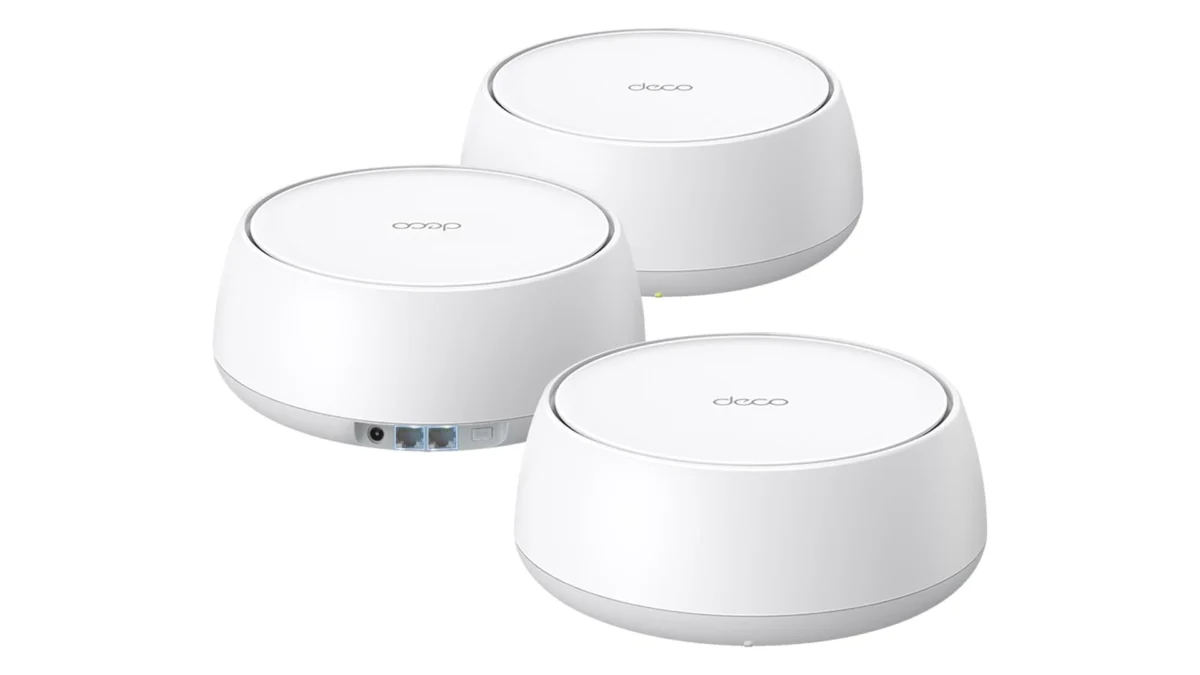
The consumer networking landscape is undergoing a significant transition as Wi-Fi 7 technology moves from enthusiast-level hardware into the mainstream market. Leading this charge is the TP-Link Deco 7 BE25, a 3-pack mesh system that has recently secured a position as one of the top-selling items in Amazon’s "Computers & Accessories" category. In a move that signals increasing price competition in the next-generation networking sector, Amazon has applied a 19 percent discount to the system, lowering the entry price to $201.45. This pricing strategy places a Wi-Fi 7-capable mesh network within the same price bracket previously reserved for mid-to-high-end Wi-Fi 6 and 6E systems, effectively lowering the barrier for households looking to future-proof their digital infrastructure.
Technical Evolution and Bandwidth Capabilities
The Deco 7 BE25 represents a strategic entry for TP-Link, designed to provide the benefits of the 802.11be standard—commonly known as Wi-Fi 7—without the prohibitive costs associated with quad-band or high-end tri-band flagship models. As a dual-band system, it focuses on optimizing the 5GHz and 2.4GHz frequencies. While it omits the 6GHz band found in more expensive "BE" series routers, it utilizes Wi-Fi 7’s advanced modulation and protocol enhancements to squeeze unprecedented performance out of existing spectrums.
The system offers a combined theoretical throughput of up to 5Gbps. Specifically, the 5GHz band delivers 4,324Mbps, while the 2.4GHz band provides 688Mbps. This performance is bolstered by Multi-Link Operation (MLO), a cornerstone feature of Wi-Fi 7. MLO allows compatible devices to send and receive data across different frequency bands and channels simultaneously. In traditional mesh systems, a device would switch between 2.4GHz and 5GHz based on signal strength; with MLO, the Deco 7 BE25 can aggregate these bands to increase throughput, reduce latency, and improve reliability in environments with high interference. Furthermore, the inclusion of 240MHz channel widths—double the standard width of many Wi-Fi 6 systems—allows for a wider "data highway," significantly reducing congestion during high-bandwidth activities.
Comprehensive Coverage and Mesh Architecture
One of the primary challenges in modern residential architecture is the "dead zone"—areas where signal degradation occurs due to distance, wall thickness, or electronic interference. The Deco 7 BE25 3-pack is engineered to address this by covering up to 6,600 square feet. By deploying three separate nodes throughout a home or small office, the system creates a unified "fabric" of connectivity.
Unlike traditional range extenders, which often create secondary networks that require manual switching, the Deco system utilizes a single Service Set Identifier (SSID). This allows for seamless roaming; as a user moves from the living room to an upstairs bedroom, their device is handed off from one node to the next without a connection drop. This process is managed by TP-Link’s proprietary AI-assisted roaming algorithms. These algorithms analyze the network environment and client behavior in real-time to determine the optimal node for each device, ensuring that bandwidth-intensive tasks like video conferencing or cloud gaming remain uninterrupted during physical movement.
Hardware Infrastructure and Wired Connectivity
While wireless performance is the headline feature, the Deco 7 BE25 does not neglect the importance of wired infrastructure. Each node in the 3-pack is equipped with dual 2.5Gbps WAN/LAN ports. This is a critical inclusion for modern homes, as many Internet Service Providers (ISPs) now offer "Multi-Gig" fiber plans exceeding 1Gbps. Standard Gigabit ports on older routers often act as a bottleneck, preventing users from accessing the full speed they pay for. With 2.5Gbps ports, the Deco 7 BE25 ensures that the "wired backbone" of the house can support high-speed NAS (Network Attached Storage) units, gaming PCs, and high-definition media servers.
The system is rated to handle over 150 simultaneous device connections. This capacity is essential in the era of the Internet of Things (IoT), where a single household may have dozens of smart bulbs, security cameras, thermostats, and appliances competing for airtime alongside smartphones, tablets, and 8K-capable streaming devices. By utilizing Wi-Fi 7’s improved efficiency in handling multiple data streams, the Deco 7 BE25 maintains low latency even when the network is under heavy load.
Security, Software, and User Management
As cyber threats become more sophisticated, the role of the router as a hardware firewall has intensified. TP-Link integrates its HomeShield security suite into the Deco 7 BE25, providing a layer of protection that operates at the network level. HomeShield includes real-time IoT protection, which identifies and isolates potentially compromised smart devices, and robust parental controls that allow administrators to manage screen time and filter content for different user profiles.

For users requiring privacy for remote work or sensitive data transmission, the system features a built-in VPN client. This allows the router to establish a secure connection at the source, protecting all devices connected to the network without requiring individual VPN software on every smartphone or laptop. Management of these features is handled via the Deco app, which provides a streamlined interface for setup, network health monitoring, and speed testing.
Market Context and the Shift to Wi-Fi 7
The current discount on Amazon reflects a broader trend in the networking industry. Historically, new Wi-Fi standards remain in the "early adopter" phase for several years due to high hardware costs. However, the rollout of Wi-Fi 7 has been uncharacteristically rapid. Major smartphone manufacturers, including Apple with the iPhone 16 series and Samsung with the Galaxy S24 Ultra, have already integrated Wi-Fi 7 support.
Industry analysts suggest that the aggressive pricing of the Deco 7 BE25 is a move by TP-Link to capture the mid-market segment before competitors can establish a foothold. At approximately $67 per node, the BE25 is currently one of the most cost-effective ways to deploy a multi-node Wi-Fi 7 network. This price point is particularly disruptive because it challenges the value proposition of older Wi-Fi 6E systems, which often retail for similar or higher prices despite lacking the MLO and efficiency benefits of the newer standard.
Chronology of TP-Link’s Wi-Fi 7 Rollout
The release of the Deco 7 BE25 follows a series of high-end launches by TP-Link earlier in the year. The company initially focused on the flagship Deco BE85 and BE95 models, which feature tri-band and quad-band configurations with speeds reaching up to 33Gbps. While those models received critical acclaim for their performance, their price points—often exceeding $1,000 for a 3-pack—kept them out of reach for the average consumer.
The introduction of the BE25 series in late 2023 and early 2024 represented the second phase of TP-Link’s strategy: democratization. By stripping away the expensive 6GHz radio and focusing on optimizing the 2.4GHz and 5GHz bands with Wi-Fi 7 protocols, TP-Link created a product that offers the stability and latency benefits of the new standard at a fraction of the cost. The current Amazon deal marks the lowest price point recorded for this specific 3-pack since its inception.
Implications for Future-Proofing
Investing in a Wi-Fi 7 mesh system at this juncture is less about the speeds available today and more about the requirements of tomorrow. As 4K streaming becomes the baseline and 8K content begins to emerge, and as Augmented Reality (AR) and Virtual Reality (VR) applications require lower latency for "tetherless" operation, the bandwidth demands on home networks will continue to scale exponentially.
The Deco 7 BE25’s ability to manage 150 devices and provide 5Gbps of aggregate bandwidth ensures that it will remain relevant for the next five to seven years. For consumers currently experiencing "buffering" during peak hours or signal drops in distant rooms, the transition to a Wi-Fi 7 mesh system offers a definitive solution. The combination of high-speed 2.5Gbps wired ports and AI-driven wireless roaming makes it a versatile hub for both work-from-home professionals and high-density "smart" households.
In summary, the TP-Link Deco 7 BE25 at $201.45 represents a significant shift in the value-to-performance ratio of home networking. By providing the essential features of the Wi-Fi 7 standard—MLO, 240MHz channels, and improved efficiency—in an affordable, high-coverage package, TP-Link and Amazon are accelerating the adoption of next-generation connectivity for the general public. As more Wi-Fi 7-compatible client devices hit the market, systems like the BE25 are poised to become the new standard for reliable, high-speed residential internet.