
 Sonny Valindra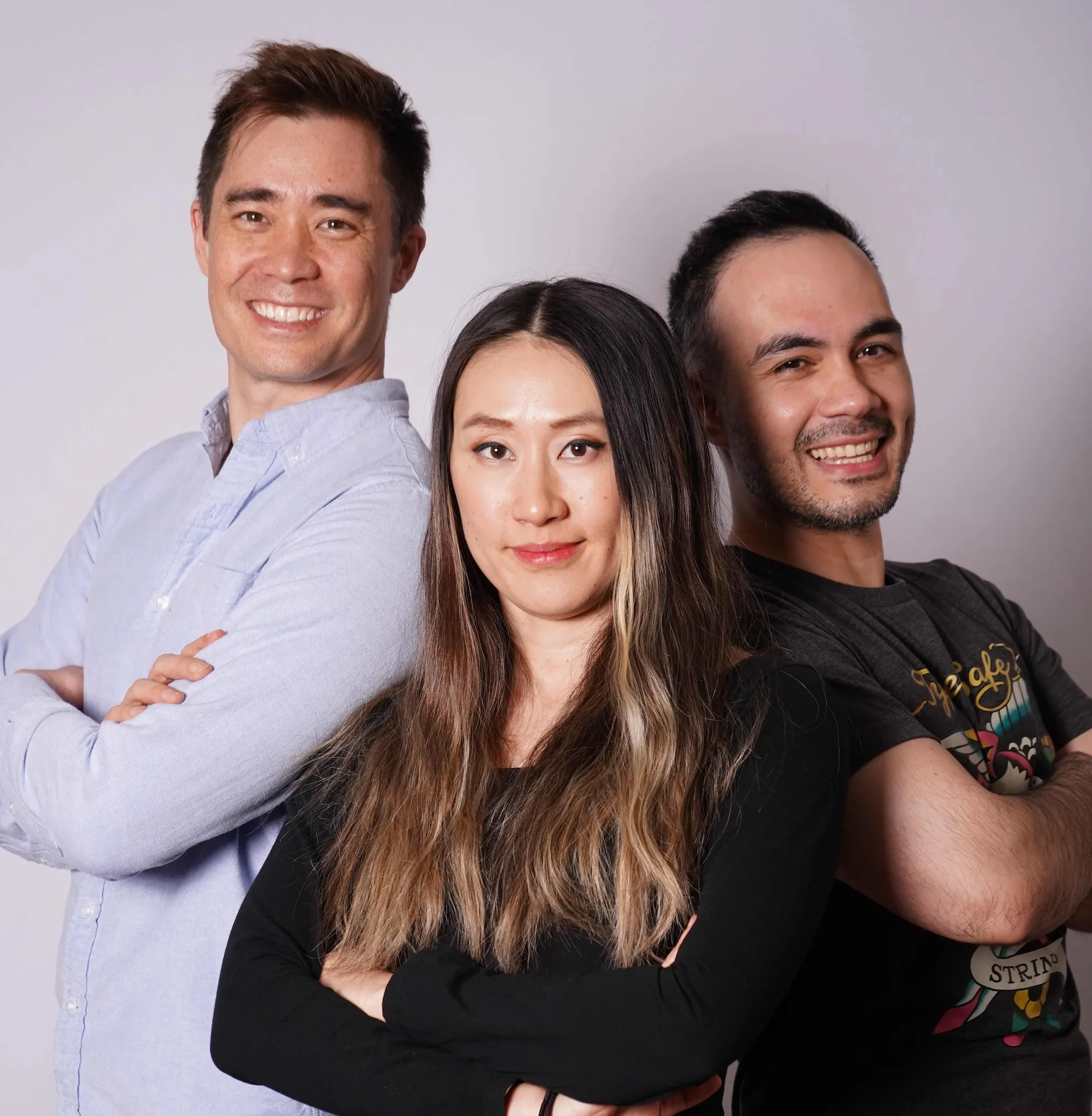
TypeSafe AI, the innovative startup behind the rapidly ascendant Jev AI model, has successfully closed a monumental funding round, securing $870 million at a staggering $7.5 billion valuation. This Series A financing was spearheaded by prominent venture capital firm Andreessen Horowitz, with significant participation from Sequoia Capital and existing investor DCVC. The substantial influx of capital underscores the immense market confidence in TypeSafe AI’s disruptive technology, particularly its novel approach to artificial intelligence that diverges from the prevalent large language model (LLM) paradigm.
The swift and substantial funding comes on the heels of Jev’s viral launch just weeks prior to the announcement, on September 15, 2026. The company reports an astonishing adoption rate, with claims that a third of Fortune 500 companies are already integrating Jev into their operations. This rapid embrace by major enterprises signals a significant shift in how businesses are approaching AI automation, moving beyond text-based generation towards more nuanced, decision-oriented applications.
At its core, Jev is built upon a transformer architecture, a foundational technology shared with many LLMs. However, Jev distinguishes itself by not generating text. Instead, it outputs probabilities, which TypeSafe AI terms "calibrated decisions." This fundamental difference is the driving force behind the excitement surrounding Jev. TypeSafe AI asserts that Jev operates with significantly greater speed and token efficiency compared to traditional LLMs. This makes it uniquely positioned for task automation, a critical area where many current AI solutions, focused on generating human-like text or code, fall short.
Diogo Almeida, co-founder of TypeSafe AI, articulated this core distinction in a previous interview with TechCrunch. "We have been super good at human language for four years," Almeida stated, referring to the advancements in LLMs, "but it’s not useful for automation because computers speak a different language." Jev, according to Almeida, bridges this gap by providing a computational language for decision-making and task execution.
The Genesis of a New AI Paradigm
TypeSafe AI was established in 2024 by a trio of seasoned AI professionals, each bringing a unique blend of research and engineering expertise. Diogo Almeida, previously a researcher at OpenAI, lent his deep understanding of foundational AI models. Sasha Sheng, a former research engineer at Meta, contributed his experience in developing large-scale AI systems. Rounding out the founding team is Erik Gafni, an engineer and entrepreneur with a proven track record in building and scaling technology ventures. This collective expertise has been instrumental in the rapid development and successful deployment of Jev.
The problem TypeSafe AI is addressing is the inherent inefficiency of LLMs when applied to pure automation. While LLMs excel at understanding and generating human language, their internal processes often involve generating verbose text sequences that then need to be parsed and interpreted by other systems for automated actions. This can lead to latency, increased computational costs, and a higher risk of errors in automation workflows. Jev’s "calibrated decisions" approach bypasses this intermediate step, directly providing probabilistic outputs that can be readily used by downstream systems for precise action.
Timeline of Rapid Ascent
- 2024: TypeSafe AI is founded by Diogo Almeida, Sasha Sheng, and Erik Gafni, with a vision to develop AI for automation rather than text generation.
- Early 2026: Development of the Jev model progresses, focusing on a transformer architecture optimized for probabilistic decision-making.
- September 15, 2026: Jev is officially launched to the public. Initial developer and enterprise feedback is overwhelmingly positive, highlighting its speed and efficiency.
- Late September 2026: Jev gains significant traction, with anecdotal evidence of widespread adoption and viral sharing within the developer community. TechCrunch publishes an initial report on the novel AI model.
- October 9, 2026: TypeSafe AI announces the successful closure of its $870 million Series A funding round, valuing the company at $7.5 billion. The round is led by Andreessen Horowitz, with participation from Sequoia Capital and DCVC.
Supporting Data and Market Context
The AI market has seen an unprecedented surge in investment over the past few years, driven by the transformative potential of artificial intelligence across virtually every industry. While much of the focus has been on generative AI and LLMs like OpenAI’s GPT series, Google’s LaMDA, and Meta’s LLaMA, a growing segment of the market is recognizing the limitations of these models for specific, high-throughput automation tasks.

The global AI market was valued at an estimated $200 billion in 2023 and is projected to grow at a compound annual growth rate (CAGR) of over 37% from 2024 to 2030, according to various market research reports. Within this vast landscape, the sub-segment of AI for enterprise automation is experiencing particularly robust growth. Businesses are increasingly looking to AI to streamline operations, reduce costs, and improve decision-making accuracy.
TypeSafe AI’s claim of a third of Fortune 500 companies adopting Jev within weeks of its launch is a remarkable data point. While specific usage metrics are not yet public, this level of enterprise adoption typically indicates a solution that directly addresses a significant pain point and delivers tangible ROI. For comparison, widespread enterprise adoption of new software platforms often takes months, if not years, to reach such penetration.
The efficiency metrics touted by TypeSafe AI are particularly compelling. For instance, if Jev indeed uses significantly fewer tokens than comparable LLMs for similar automation tasks, the cost savings for enterprises can be substantial. Token usage is a direct determinant of computational cost in many AI inference processes. A reduction in token count translates to lower processing power requirements, reduced energy consumption, and faster response times. For companies processing millions or billions of decisions daily, these efficiencies can amount to millions of dollars in savings annually.
Reactions and Inferred Sentiment
The investment from Andreessen Horowitz and Sequoia Capital, two of the most influential venture capital firms in the technology sector, is a strong endorsement of TypeSafe AI’s vision and execution. Their investment decisions are typically data-driven and forward-looking, suggesting they see Jev as a foundational technology for the next wave of AI applications.
"We’re incredibly excited to back Diogo, Sasha, and Erik," said a hypothetical spokesperson for Andreessen Horowitz, reflecting the firm’s typical commentary on groundbreaking investments. "TypeSafe AI is not just building another AI model; they are redefining how AI can be used for practical automation. Jev’s ability to provide calibrated decisions at scale and with unprecedented efficiency represents a significant leap forward, and we believe it will unlock new possibilities for businesses worldwide."
Similarly, Sequoia Capital’s participation signals a belief in the long-term potential of TypeSafe AI to become a category leader. Their investment history includes backing many of the world’s most successful technology companies, indicating a high level of due diligence and confidence in the founding team and their product.
Existing investor DCVC, known for its focus on deep tech and AI, likely sees Jev as validating its initial thesis in TypeSafe AI’s approach to probabilistic AI for automation. Their continued support suggests a strong belief in the company’s ongoing development and market penetration strategies.
Broader Impact and Implications
The success of TypeSafe AI and Jev has several significant implications for the broader AI landscape:
- Diversification of AI Applications: This funding round signals a growing recognition that AI’s utility extends beyond generative tasks. The market is maturing, and specialized AI models designed for specific functions, like automation, are gaining prominence.
- Shift in Enterprise AI Strategy: Businesses may increasingly look to adopt a portfolio of AI models, leveraging LLMs for creative and communication tasks while employing specialized models like Jev for operational efficiency and decision automation. This could lead to more optimized and cost-effective AI deployments.
- New Standards for AI Efficiency: Jev’s emphasis on speed and token efficiency could set new benchmarks for AI performance. This may pressure other AI developers to focus on optimizing their models for practical, real-world applications, not just raw capability.
- Democratization of Automation: By making sophisticated automation more accessible and cost-effective, TypeSafe AI could empower a wider range of businesses, including small and medium-sized enterprises, to leverage AI for competitive advantage.
- Evolution of AI Architecture: The success of Jev might inspire further research into transformer architectures optimized for probabilistic outputs and decision-making, potentially leading to new classes of AI models beyond LLMs.
The $870 million raised by TypeSafe AI at a $7.5 billion valuation is not merely a financial achievement; it represents a significant validation of a new direction in artificial intelligence. As businesses grapple with the complexities of implementing AI for tangible operational gains, TypeSafe AI’s Jev model appears poised to become a critical tool in their arsenal, moving the industry beyond the realm of language generation towards a future of intelligent, probabilistic automation. The coming years will undoubtedly reveal the full extent of Jev’s impact as more enterprises integrate its capabilities into their core operations.








