
 George Chandra Eka
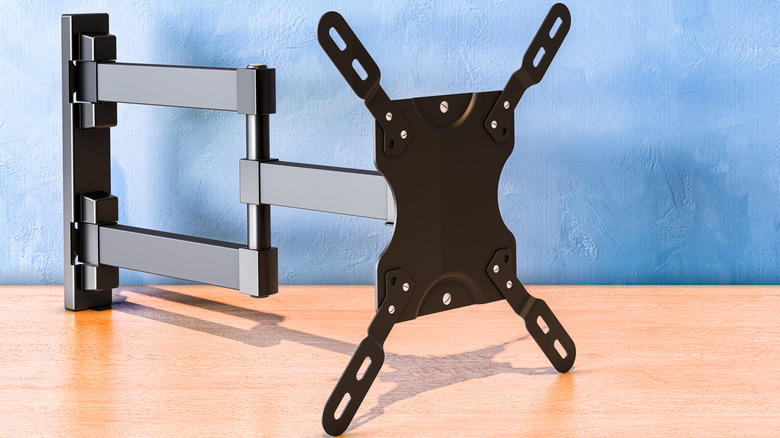
The precise alignment of mounting holes, specified by VESA dimensions, represents a foundational standard for securely attaching televisions and monitors, yet it is merely the initial step in a comprehensive safety and compatibility assessment that must also account for the mount’s weight capacity and appropriate hardware. Far from being another complex display resolution, VESA, which stands for the Video Electronics Standards Association, denotes a globally recognized set of specifications primarily concerning the spacing of mounting holes on the rear of display devices. This standardization, known as the Flat Display Mounting Interface (FDMI), or more commonly, the VESA mount standard, does not refer to a specific type of bracket but rather ensures that a vast array of mounting solutions can universally support various displays, streamlining compatibility and enhancing consumer safety.
The Genesis and Evolution of VESA Standards
The Video Electronics Standards Association was established in 1989 by a consortium of monitor manufacturers with the primary objective of standardizing graphics and display interfaces. Before VESA’s intervention, the display industry was characterized by a fragmented landscape where manufacturers often employed proprietary mounting systems. This lack of uniformity led to significant consumer frustration, limited choice in aftermarket accessories, and often posed safety concerns dueated to ill-fitting or incompatible mounting solutions. The introduction of the VESA FDMI standard was a pivotal moment, providing a universal framework that allowed for seamless integration between displays and mounting hardware from different manufacturers.
Over the years, VESA has expanded its influence far beyond just mounting, developing crucial standards for display interfaces like DisplayPort, Adaptive-Sync technology for variable refresh rates, and various panel specifications. However, its mounting standard remains one of its most widely recognized and impactful contributions to consumer electronics. The FDMI specification defines several Mounting Interface Standard (MIS) categories, such as MIS-D, MIS-E, and MIS-F, which correspond to different display sizes and weight classes, each dictating specific VESA patterns and screw sizes. This structured approach ensures that mounts are not only physically compatible but also engineered to safely support the designated display types.
Decoding VESA Patterns: Horizontal by Vertical Dimensions
At its core, a VESA size, such as "200 x 200" or "400 x 400," describes the precise distance between the threaded mounting holes located on the back of a mountable television or monitor. These measurements are invariably expressed in millimeters, with the first number representing the horizontal distance between the holes (from left to right) and the second number indicating the vertical distance (from top to bottom). For instance, a display featuring a 400 x 200 VESA pattern possesses mounting holes spaced 400mm apart horizontally and 200mm apart vertically. Conversely, a 200 x 200 pattern signifies that the holes are equidistant, 200mm apart in both directions, forming a square configuration.
It is critical to understand that these VESA numbers bear no relation to a television’s screen resolution or its overall physical dimensions. While it is generally true that larger and heavier displays tend to utilize larger VESA patterns (e.g., 600 x 400 or 800 x 400 for large format TVs), relying solely on screen size to deduce the VESA pattern is an unreliable practice. The exact VESA specification can vary significantly even among displays of similar sizes, depending on the manufacturer and model. Therefore, direct verification of the display’s specific model information is paramount for accuracy. Furthermore, modern mounting brackets are frequently designed to be versatile, supporting a multitude of VESA patterns through adjustable arms or multiple sets of mounting holes. This flexibility means that a specific mounting solution does not necessarily need to be exclusively labeled for one exact VESA size; rather, the display’s pattern must simply be listed among the mount’s array of supported configurations.
Methods for Identifying Your Display’s VESA Pattern
Ascertaining a display’s VESA pattern is a straightforward process, with several reliable methods available to consumers. The most recommended and least intrusive approach involves consulting the display’s official documentation. The user manual or the manufacturer’s dedicated support page for the specific model will almost always contain detailed wall-mount or VESA specifications, typically listing the mounting-hole pattern in millimeters. This method offers the highest degree of accuracy and often includes other critical information such as recommended screw types and lengths.
Should the documentation be unavailable or unclear, a manual measurement can be performed directly on the back of the display. This involves carefully measuring the distance between the centers of the threaded mounting holes. Begin by measuring the horizontal distance between the two leftmost and two rightmost holes. Subsequently, measure the vertical distance between the two uppermost and two lowermost holes. It is imperative to perform these measurements in millimeters to ensure direct comparability with mount specifications, which are universally provided in this unit. For example, if the horizontal measurement yields 400mm and the vertical measurement 200mm, the display has a 400 x 200 VESA pattern. This hands-on method, while requiring careful execution, provides a definitive answer when other resources are lacking.
Beyond Pattern Matching: Essential Safety Considerations
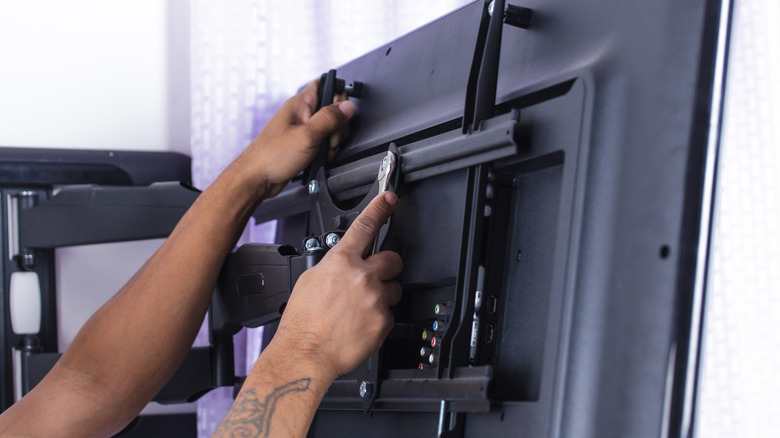
While a matching VESA pattern is a prerequisite for any successful display installation, it signifies only that the mounting bracket can physically align with the display’s attachment points. It provides no guarantee regarding the mount’s structural integrity or its ability to safely support the display’s weight. Consequently, a comprehensive assessment requires meticulous attention to additional critical specifications to prevent potential damage to the display or, more importantly, mitigate safety risks.
The paramount consideration following VESA pattern verification is the mount’s weight limit. Every reputable mounting bracket will have a clearly stated maximum load capacity. It is absolutely essential to compare this figure against the actual weight of the television or monitor. A mount that technically supports the correct VESA pattern but is rated for a lower weight than the display it is intended to hold poses a severe safety hazard. Overloading a mount can lead to structural failure, causing the display to detach from the wall, resulting in significant property damage or personal injury. Therefore, selecting a mount with a weight capacity that comfortably exceeds the display’s weight is a non-negotiable safety requirement.
Furthermore, the type and dimensions of the mounting hardware, particularly the screws, are equally crucial. VESA compatibility standards primarily define the hole patterns and screw thread sizes (e.g., M4, M6, M8), but not necessarily the optimal screw length for every display. Using screws that are too long can penetrate too deeply into the display’s chassis, potentially damaging internal components and rendering the device inoperable. Conversely, screws that are too short may not engage enough threads to provide a secure attachment, risking the display’s detachment. The display manufacturer’s instructions or manual will specify the correct screw type, length, and any required spacers. It is highly recommended to use the screws provided by the display manufacturer or to adhere strictly to their specifications when sourcing replacements.
Finally, the integrity of the wall attachment itself is paramount. VESA compatibility and mount weight limits address the interface between the display and the bracket, but not how the bracket secures to the structural elements of the building. The installation process must meticulously follow the mount manufacturer’s instructions, taking into account the type of wall material (e.g., drywall, plaster, brick, concrete). For drywall installations, locating and securing the mount to wall studs is typically essential to distribute the weight safely. Specialized anchors are required for other wall types, each with its own load-bearing capabilities. For larger, heavier displays, or for individuals uncertain about proper installation techniques, engaging a professional installer is a prudent decision that significantly enhances safety and peace of mind.
Broader Implications and Industry Impact
The standardization provided by VESA has had profound implications across the consumer electronics industry. For consumers, it has demystified the process of selecting compatible mounting solutions, offering a clear, universal language that transcends brand specifics. This ease of selection has fostered innovation among accessory manufacturers, leading to a wider variety of mount styles, from low-profile fixed mounts to highly articulate full-motion arms, catering to diverse aesthetic and functional needs. The enhanced safety standards inherent in VESA compliance have also reduced incidents related to improper mounting, contributing to greater consumer confidence in wall-mounted displays.
For manufacturers, VESA standards have streamlined production processes and reduced the complexities associated with developing proprietary mounting systems. This interoperability allows display manufacturers to focus on core display technologies, knowing that a robust ecosystem of compatible mounting solutions exists. Similarly, mount manufacturers benefit from a predictable market, designing products that serve a broad range of display models without needing to reverse-engineer individual brand specifications. This collaborative adherence to VESA guidelines underscores the success of industry-wide standardization in fostering innovation, ensuring safety, and enhancing the overall user experience. As display technologies continue to evolve, with increasingly thinner profiles and novel form factors, VESA remains at the forefront, adapting its standards to meet future demands, ensuring that the convenience and safety of display mounting endure.







