Vera Intan Clara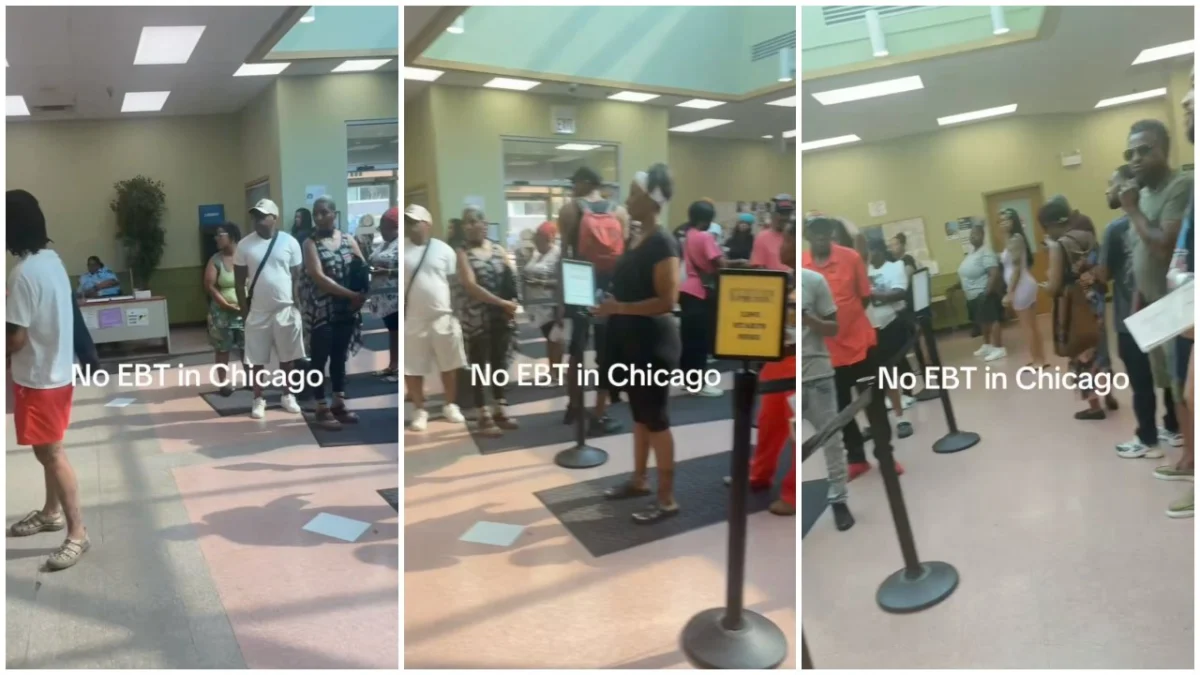
A video shared widely on the social media platform X, formerly Twitter, has ignited a fervent debate across digital spaces, purportedly depicting a substantial queue of individuals inside a public building in Chicago, Illinois. The user who disseminated the clip asserted that those waiting were seeking EBT (Electronic Benefit Transfer) services, a claim that the visual content of the video itself does not independently corroborate, leading to widespread speculation and ideological clashes regarding public assistance programs.
The footage, which rapidly gained traction, prompted immediate questions about its context and veracity. Posted by the X account @WallStreetApes, the video amassed over 240,000 views within a single day of being reposted, quickly becoming a focal point for discussions ranging from economic hardship to the efficacy and perceived abuses of welfare systems. The original poster accompanying the clip stated, "Chicago resident reporting this is the line for EBT services in Chicago, Illinois," further adding a quote attributed to the alleged recorder: "The line was out the door and they just opened." This anecdotal evidence, while compelling to many viewers, remains unverified by independent sources.
The Genesis of the Viral Content and Unverified Claims
The video’s rapid spread highlights the power of social media to disseminate information, or misinformation, instantaneously. The clip, devoid of explicit signage or identifiers confirming the nature of the services sought, shows a long line of people in what appears to be a large, functional public facility. The user @WallStreetApes, however, proceeded to frame the video with strong condemnatory language, asserting, "This is unacceptable. All these people look extremely able-bodied. There has been generational abuse of the Food Stamps and benefits programs. This is where Democrat voters come from, the welfare state." These statements not only claimed the purpose of the line but also introduced a contentious political and socio-economic critique, instantly polarizing the online discourse.
The absence of independent verification for the EBT claim is crucial. EBT is the system by which Supplemental Nutrition Assistance Program (SNAP) benefits, formerly known as food stamps, are delivered to eligible low-income individuals and families. These benefits are designed to supplement household food budgets, allowing them to purchase healthy food. Administered federally by the U.S. Department of Agriculture (USDA) and at the state level by agencies like the Illinois Department of Human Services (IDHS), SNAP is a cornerstone of the nation’s social safety net.
Understanding EBT/SNAP and Eligibility Criteria
To properly contextualize the debate, it is essential to understand the framework of the SNAP program. Eligibility for SNAP benefits is determined by a complex set of federal and state guidelines, primarily focusing on household income, assets, and specific work requirements or exemptions. For instance, in Illinois, a household’s gross monthly income must generally be at or below 130% of the federal poverty level, with net income at or below 100%. Asset limits also apply, though certain assets like a home and most retirement savings are exempt.
The "able-bodied" argument frequently invoked in such debates often overlooks the nuances of SNAP eligibility. Many recipients are, in fact, "able-bodied" but fall into categories such as:
- The Working Poor: Individuals who are employed but earn wages too low to adequately support their families without assistance.
- Underemployed Individuals: Those working part-time or in temporary positions who are actively seeking full-time employment.
- Individuals Facing Temporary Hardship: Those who have recently lost a job, are experiencing a medical crisis, or are transitioning between jobs.
- Parents and Caregivers: Individuals who are primary caregivers for children or disabled family members, which can limit their capacity for full-time employment.
- Students: Certain students may be eligible under specific conditions.
Furthermore, SNAP has specific work requirements for "Able-Bodied Adults Without Dependents" (ABAWDs), typically requiring them to work or participate in a work program for at least 20 hours per week, or participate in a qualifying education and training program, to receive benefits for more than three months in a 36-month period. However, states can waive these requirements in areas with high unemployment, and many individuals are exempt due to age, disability, or caring responsibilities. Therefore, the visual appearance of an individual in a line provides insufficient information to deduce their eligibility status or work ethic.
Socio-Economic Landscape of Chicago and Illinois
Chicago, a major metropolitan hub, grapples with significant socio-economic disparities. According to data from the U.S. Census Bureau, the poverty rate in Chicago has historically been higher than the national average. In 2022, the poverty rate in Chicago was estimated at approximately 16.5%, compared to the national rate of 11.5%. Unemployment rates fluctuate, but economic downturns or structural changes in the job market can lead to increased demand for social services.
The Illinois Department of Human Services (IDHS) oversees the administration of SNAP benefits across the state. In fiscal year 2023, IDHS reported serving over 1.8 million individuals through the SNAP program each month. The total annual federal expenditure for SNAP benefits in Illinois alone often exceeds $3 billion. These figures underscore the critical role SNAP plays in mitigating food insecurity for a substantial portion of the state’s population. Wait times for public services, including SNAP application and recertification processes, can vary significantly depending on caseload volume, staffing levels, and technological infrastructure. Anecdotal evidence, such as the commenter who shared, "The average wait time in Memphis was two and a half hours," suggests that long queues for public assistance are not uncommon across the country, reflecting both demand and administrative challenges.
Official Responses and Administrative Realities (Inferred)
While no specific official statement from the Illinois Department of Human Services (IDHS) or Chicago city officials was available regarding this particular viral video, it is possible to infer the likely nature of any potential response. Public service agencies typically emphasize their commitment to providing essential services to eligible residents in a timely and efficient manner. They often highlight the challenges of managing large caseloads, budgetary constraints, and staffing shortages, especially in high-demand periods.
An IDHS spokesperson, if queried, would likely reiterate the program’s purpose: to provide vital food assistance to low-income families, children, the elderly, and individuals with disabilities. They might also stress the importance of accurate information dissemination and caution against drawing conclusions from unverified social media content. Furthermore, they would likely explain the various channels available for application and assistance, including online portals, phone services, and in-person offices, acknowledging that demand for in-person services can still lead to queues.
Advocacy groups focused on poverty and food insecurity would likely use such an incident to highlight the persistent need for robust social safety nets. Organizations like the Greater Chicago Food Depository or Feeding Illinois often point to data demonstrating the widespread nature of food insecurity and the effectiveness of SNAP benefits in reducing hunger and poverty. They would likely argue against the stigmatization of individuals seeking assistance and emphasize that long lines are often a symptom of systemic issues, such as insufficient funding for administrative staff or an economic climate that forces more people to rely on aid.
The Broader Implications: Political Discourse and Stigmatization
The video and its accompanying commentary quickly morphed into a political football, echoing long-standing debates about welfare reform and the role of government in social provision. The X user’s explicit link between "generational abuse" of benefits and "Democrat voters" illustrates how these discussions often become highly partisan and ideologically charged. This framing taps into historical narratives, sometimes referred to as "welfare queen" stereotypes, which depict recipients as lazy or exploitative, often used to justify cuts to social programs.
This type of online content, even if unverified, plays a significant role in shaping public perception. When a video circulates widely with emotionally charged captions, it can reinforce existing biases or create new ones, regardless of factual accuracy. This phenomenon poses a challenge for informed public discourse and policy-making, which ideally should be based on data and evidence rather than anecdotal or misleading portrayals.
The comments section accompanying the viral post showcased this division vividly. Some viewers staunchly defended those seeking assistance, arguing that economic realities, such as a challenging job market, often leave individuals with few alternatives. One commenter wrote, "With the job market the way it is, it’s not surprising. People that I know want to work. They have hundreds or thousands of applications in, but they haven’t gotten hired," adding, "What is the other option? Not everyone likes to be on welfare, but when you have mouths to feed, it’s a last resort." Another commenter directly challenged the "able-bodied" assumption, stating, "You idiots do realize you can STILL get food stamps WHILE WORKING?!?!" highlighting a common misunderstanding that SNAP is exclusively for the unemployed.
Conversely, others expressed strong opposition to public assistance, with one person advocating for the complete elimination of such programs: "In my opinion, one of the BEST things that could ever happen to this country is if the EBT and ‘Freebie’ programs are 100% eliminated. Cut it all out like the ‘cancer’ it is." This stark divergence of opinions underscores the deep ideological chasm that exists regarding social welfare policy in the United States.
Challenges in Verification and Responsible Reporting
The inability of news outlets, including The Daily Dot, to independently verify the claims made in the X post underscores a critical challenge in the digital age. Social media platforms, while powerful tools for communication, are also fertile ground for the rapid spread of unverified or misleading content. Responsible journalism requires corroboration from multiple, credible sources before reporting claims as fact. In this instance, without direct confirmation from the facility depicted, or from official sources, the exact nature of the line remains speculative.
The incident serves as a potent reminder for both content creators and consumers to approach viral social media posts with a critical eye. The immediate leap from a visual of a line to definitive claims about EBT services, coupled with sweeping generalizations about recipients and political affiliations, exemplifies how narratives can be constructed and amplified without factual underpinning. Moving forward, public discourse on sensitive topics like poverty and social assistance benefits from a commitment to verified information, contextual understanding, and empathy, rather than reliance on uncorroborated viral content. The debate sparked by this video in Chicago is not just about a line of people; it is a microcosm of a larger, ongoing national conversation about economic justice, government responsibility, and societal values.