Vera Intan Clara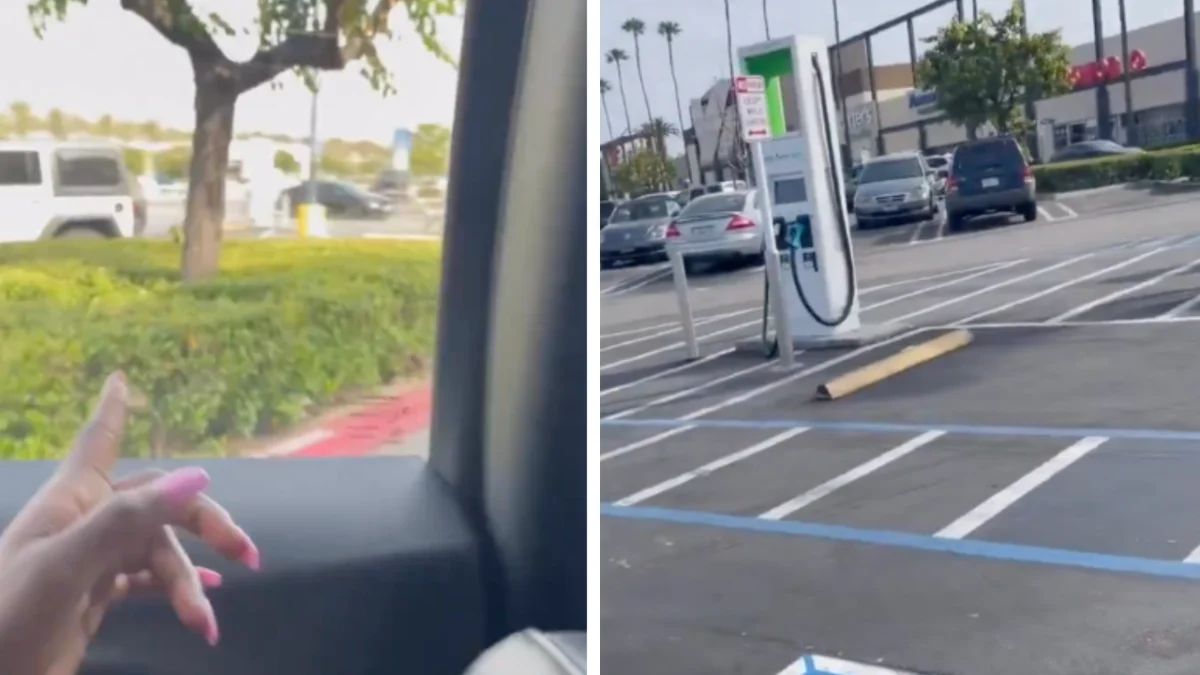
A recent viral video captured a humorous moment in a Walmart parking lot, where a group of women mistook electric vehicle (EV) charging stations for conventional gas pumps, sparking widespread discussion online about technological literacy, visual perception, and the rapid evolution of automotive infrastructure. The incident, filmed from inside their vehicle, quickly gained traction across social media platforms, particularly X (formerly Twitter), drawing a spectrum of reactions from empathetic amusement to critical commentary. The footage provides a unique snapshot of the ongoing societal transition towards electric mobility and the challenges associated with public adaptation to new technologies.
The Incident: A Moment of Misrecognition
The scene unfolded as the women navigated a Walmart parking area, presumably searching for a parking spot. Their attention was drawn to a bank of what appeared to be tall, slender structures, each featuring a hose-like attachment. Two women in the backseat, observing the installations, exclaimed in unison, "Look, they got gas pumps!" and "There are gas pumps on the Walmart." This initial observation suggests a subconscious association with familiar fuel-dispensing equipment, a common sight at gas stations and, less frequently, at some large retail outlets that integrate fuel services.
However, the driver, or another passenger in the front of the vehicle, quickly interjected, clarifying the nature of the structures. "That’s the charging thing for the car," they stated, identifying them correctly as electric vehicle charging stations. The immediate correction suggests that at least one individual in the group possessed a clearer understanding of modern automotive infrastructure. Despite the correction, one of the women who initially mistook the chargers for gas pumps continued, "It’s the charging thing but still, it’s like…" Her trailing thought implied an attempt to articulate the visual similarities, suggesting that from a distance or without prior knowledge, the design of certain EV chargers can indeed bear a resemblance to traditional fuel pumps. This brief exchange, characterized by genuine surprise and a quick realization, resonated with many viewers for its relatable portrayal of a harmless misunderstanding.
The Rise of EV Charging Infrastructure: A Contextual Shift
The incident serves as a poignant reminder of the dramatic transformation underway in automotive infrastructure globally. Just a decade ago, public EV charging stations were a rarity, primarily found in niche urban centers or dedicated dealerships. Today, their presence is rapidly expanding, driven by increasing electric vehicle adoption and governmental initiatives to support sustainable transportation.
According to data from the U.S. Department of Energy’s Alternative Fuels Data Center, the number of public EV charging ports in the United States has grown exponentially. As of late 2023, there were over 160,000 public charging ports across more than 60,000 stations nationwide, a significant increase from just a few thousand a decade prior. Major retailers like Walmart, Target, and various grocery store chains have become key partners in this expansion, installing charging stations to attract EV owners and enhance customer convenience. These charging stations often utilize Level 2 (240-volt) or DC Fast Chargers (DCFC), which are capable of delivering power at much faster rates. The physical design of these units varies widely, from compact wall-mounted boxes to taller, pedestal-style units that, particularly from a distance, can evoke the silhouette of a traditional gas pump. This visual ambiguity is precisely what likely contributed to the women’s initial misidentification.
The placement of these chargers in prime parking spots near store entrances also plays a role. Traditionally, such prominent locations are reserved for convenient parking or sometimes for auxiliary services like air pumps or vacuum stations. The integration of EV chargers into these high-visibility areas, rather than at a separate, dedicated "fueling" island, represents a departure from conventional automotive service layouts, contributing to potential confusion for those unfamiliar with the evolving landscape.
Psychology of Perception and Familiarity Bias
The human brain often relies on heuristics and pattern recognition to interpret the world. When encountering a new object or situation, individuals tend to unconsciously compare it to familiar schemas. In this case, the women’s initial perception was likely influenced by a "familiarity bias," where the general form factor of the EV chargers — a standalone unit with a cable/hose, located in a parking area — triggered an association with the most common automotive service point: a gas pump.
This cognitive shortcut is entirely normal and not indicative of a lack of intelligence. Rather, it highlights the brain’s efficiency in processing information based on prior experiences. The "gas pump" schema is deeply ingrained in the public consciousness due to decades of conventional vehicle dominance. Electric vehicle charging, while growing, is still a relatively new concept for a significant portion of the population, especially those who do not own or frequently interact with EVs. As one commenter on X aptly put it, "In their defense they did realise they were chargers up close! I once thought a phone landline junction box was a trombone someone left off the roadway! I was pretty young at the time and walked all the way over there to check it out." Another related, "I’m Caucasian… had a brain fart… thought they were vacuums." These anecdotes underscore the universal nature of such perceptual misinterpretations.
Furthermore, the distance from which the observation was made is crucial. Details such as specific signage ("EV Charging Only"), brand logos, or the actual charging port type become discernible only upon closer inspection. From afar, the general outline and context (a service unit in a parking lot) can easily lead to a preliminary, albeit incorrect, categorization.
Online Reactions: A Microcosm of Public Discourse
The video’s rapid spread across social media platforms, particularly X, quickly generated a diverse array of reactions, reflecting broader societal attitudes towards technology, humor, and online civility.
Amusement and Relatability: Many viewers found the incident genuinely humorous and relatable. They shared their own experiences of misinterpreting objects or situations, emphasizing the harmless nature of the women’s mistake. Comments like, "This is hilarious, we’ve all had those moments where our brain makes a quick, wrong assumption," were common, fostering a sense of shared human experience and lightheartedness. This segment of the audience appreciated the spontaneous, unscripted humor of the moment, seeing it as a testament to the everyday confusions that arise in a rapidly changing world.
Educational and Informative: Some reactions adopted an educational tone, using the video as an opportunity to explain the differences between gas pumps and EV chargers, or to highlight the growing presence of EV infrastructure. These commenters often pointed out visible cues such as the "EV Charging Only" signage or the distinct design of charging cables versus fuel nozzles. This reflects a desire to inform and educate the public, recognizing that not everyone is equally familiar with the nuances of new technologies.
Critical and Derogatory Commentary: Unfortunately, a significant portion of the online discourse veered into negativity. Some commenters used the incident to make disparaging remarks about the women’s intelligence, often employing harsh and uncharitable language. Phrases like "They have the same IQ as Jasmine Crockett" (referencing a political figure, adding an irrelevant political jab) or direct insults about their cognitive abilities were prevalent. This type of reaction, while common in anonymous online spaces, underscores a troubling trend of leveraging minor human errors to fuel cynicism and personal attacks, rather than engaging with the content constructively or with empathy. This segment of the comments often overlooked the context of a quick, distant observation and focused solely on the "mistake" as evidence of intellectual deficiency.
Skepticism and Accusations of "Ragebait": Another faction of commenters questioned the authenticity of the video, suggesting it might have been staged or created as "ragebait." One commenter wrote, "Don’t you think it’s odd that they recorded it and then posted it? You fell for it you f**ing moron!" This perspective highlights a growing skepticism towards viral content, where users are increasingly aware of the potential for manufactured scenarios designed to provoke strong reactions and generate engagement. While the Daily Dot* noted its inability to independently verify the video’s circumstances, the spontaneous nature of the dialogue in the clip suggests it was a genuine, unscripted moment. However, the suspicion itself is a reflection of contemporary media literacy challenges and the pervasive doubt surrounding online content.
Broader Implications: Public Education and Infrastructure Design
The Walmart incident, though minor, offers several broader implications for public education, infrastructure design, and the nature of online interaction in the age of technological transition.
The Need for Enhanced Public Education: As electric vehicles become more mainstream, there is an increasing need for comprehensive public education campaigns. These campaigns should not only focus on the benefits of EVs but also on practical aspects, such as identifying charging infrastructure, understanding charging etiquette, and differentiating between various types of chargers. Educational efforts could leverage visual aids, public service announcements, and readily accessible online resources to demystify EV technology for a broader audience, including those who may not currently own an EV but will increasingly encounter EV infrastructure in their daily lives.
User-Centric Infrastructure Design: The incident also prompts a reflection on the design of EV charging stations. While functionality and efficiency are paramount, designers could consider how to make these units more intuitively distinguishable from traditional fuel pumps, especially for first-time users or those observing from a distance. Clearer, larger signage, distinct color schemes, or unique architectural forms could help minimize confusion. As the industry matures, standardization in design could also play a crucial role in creating a universally recognizable visual language for EV charging. This includes not just the physical appearance but also the user interface, payment methods, and overall user experience, ensuring accessibility for all demographics.
Fostering Civil Online Discourse: The varied reactions to the video highlight the ongoing challenge of maintaining civility in online spaces. A simple, harmless misunderstanding quickly became a battleground for personal attacks and judgmental commentary. This incident serves as a reminder of the importance of empathy, critical thinking, and media literacy when engaging with viral content. Recognizing that not every online moment is an invitation for harsh judgment, and understanding the potential for staged content, can contribute to a healthier online environment. The impulse to immediately jump to conclusions or to use perceived errors as a basis for broad generalizations often overshadows opportunities for genuine connection or constructive dialogue.
The Pace of Technological Change: Finally, the event encapsulates the rapid pace of technological advancement and the inherent friction that arises as society adapts. What was once futuristic is now commonplace, but not universally understood. The women’s momentary confusion is a natural byproduct of living in an era of accelerated innovation, where infrastructure and societal norms are in a constant state of flux. It underscores that while technology progresses quickly, human understanding and adaptation often follow a more gradual curve.
In conclusion, the amusing misidentification of an EV charger for a gas pump in a Walmart parking lot transcends its immediate comedic value. It functions as a minor but insightful case study into the evolving public perception of electric vehicle technology, the psychological processes involved in visual interpretation, and the dynamic nature of online social discourse. As the world continues its transition towards a more electrified future, such moments serve as valuable reminders of the need for ongoing education, thoughtful design, and a greater degree of empathy in navigating the complexities of technological change.