George Chandra Eka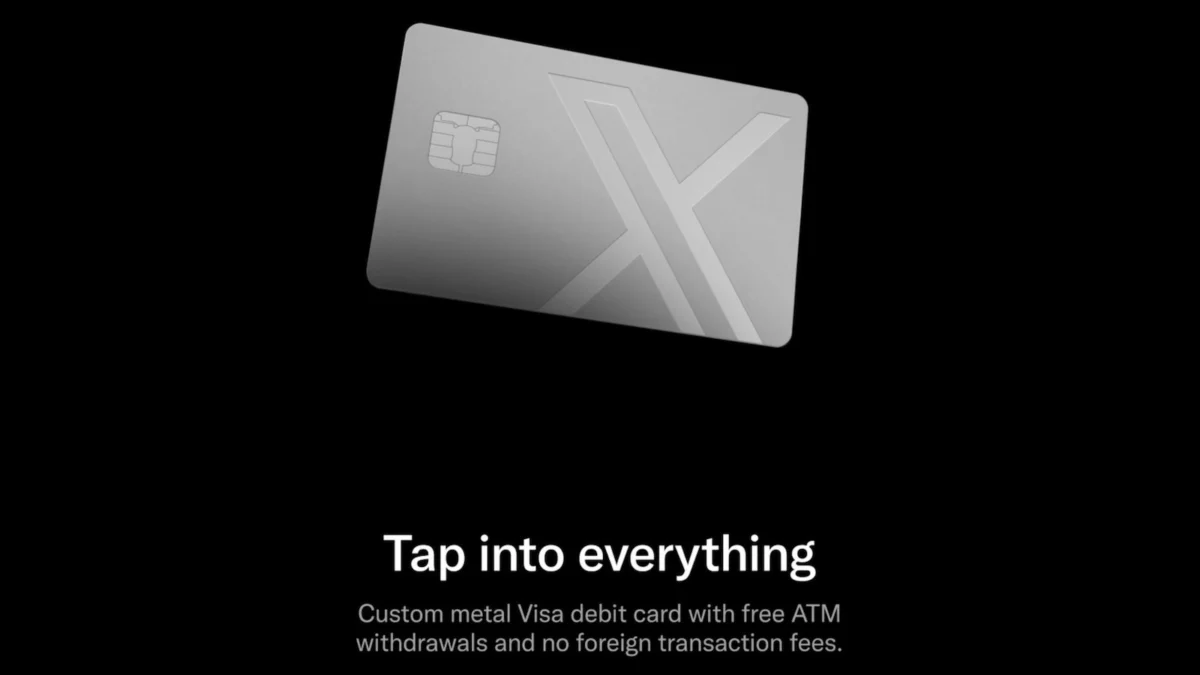
The much-anticipated financial services platform, X Money, has officially commenced its limited rollout in the United States, granting exclusive access to Premium and Premium+ subscribers aged 18 and over. This strategic move, following an invite-only beta phase, represents a pivotal moment in X’s ambitious transformation from a social media network into an "everything app," a vision long championed by its owner, Elon Musk. The platform, introduced on July 27, 2026, offers a suite of integrated financial tools designed to streamline digital transactions and foster a more encompassing user experience within the X ecosystem.
The Genesis of X Money: A Vision Realized
Elon Musk’s aspirations for a comprehensive digital platform that seamlessly integrates communication, commerce, and finance are not new. His early venture, X.com, founded in 1999, was a nascent online financial services company that eventually merged to form PayPal, a testament to his enduring interest in revolutionizing monetary exchanges. When Musk acquired Twitter in late 2022, rebranding it to X, he explicitly articulated his goal of transforming the platform into an "everything app," drawing parallels to successful models like China’s WeChat, which has deeply embedded financial services into daily user interactions. X Money is the most concrete manifestation of this grand vision to date, aiming to bring banking-like services directly to its user base, starting with its most engaged subscribers. The initiative underscores a broader trend in the tech industry where major platforms seek to expand their utility beyond their core offerings, venturing into lucrative financial technology markets.
Key Features and Early Benefits for Premium Subscribers
X Money is not merely a payment gateway; it presents a robust financial toolkit. At its core, the service provides customers with a deposit account, facilitating the management of personal funds directly within the X application. This foundational element is complemented by peer-to-peer (P2P) payment capabilities, enabling swift and convenient money transfers between X users, a feature that could significantly enhance the platform’s utility for individuals and small businesses alike.
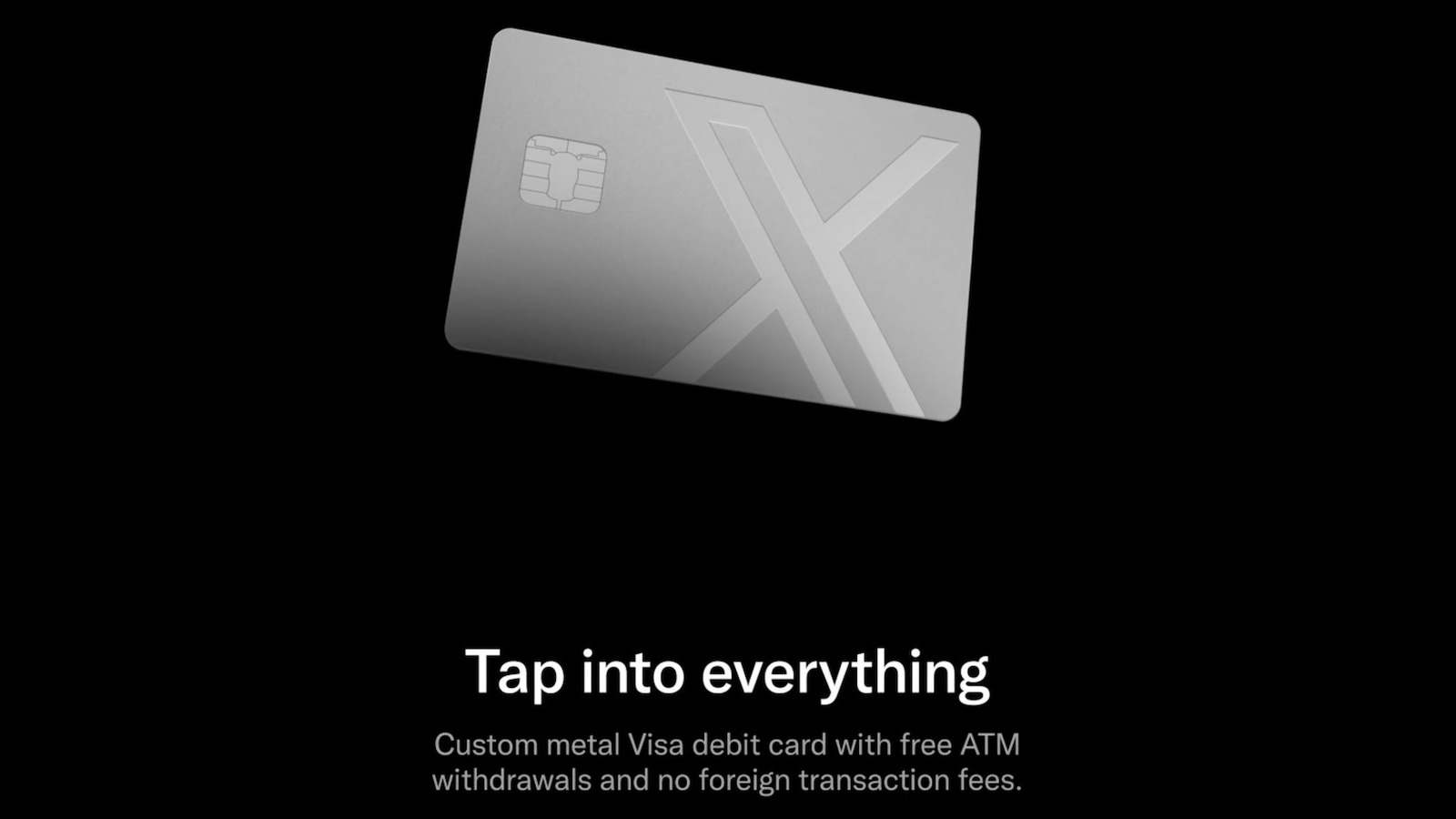
A standout offering is the X Money debit card, available in both digital and physical metal versions. The physical card, a premium offering, can be personalized with the individual’s X handle, adding a unique touch that integrates their social identity with their financial instrument. The platform boasts integrations with major financial networks, including Visa, ensuring broad acceptance, and Apple Wallet, promising seamless mobile payment experiences.
Beyond basic functionality, X Money is designed to attract and retain users through competitive financial incentives. Subscribers can benefit from an attractive Annual Percentage Yield (APY) of up to 6.00% on their deposits. While the exact rate may vary based on factors such as subscription tier and regular deposit activity, this rate is notably competitive in the current financial landscape, often surpassing those offered by traditional banks and even some established online-only institutions. Furthermore, a 3% cashback bonus is available on eligible purchases, though, as with most reward programs, a specific list of services is excluded from this benefit, requiring users to review the terms carefully. The platform also promises "no foreign transaction fees," a significant perk for international travelers or users engaging in cross-border transactions. Early direct deposit, another feature common among modern fintech solutions, allows users to access their paychecks sooner, enhancing financial flexibility.
Crucially, while X Payments LLC operates the service, it is not itself an FDIC-insured bank. To ensure the security and protection of customer funds, deposits are held at Cross River Bank, a Member of the FDIC. This arrangement guarantees that user balances are insured up to the standard maximum deposit insurance amount, providing a critical layer of trust and security that is paramount for any financial service.
A Chronology of X’s Fintech Ambitions
The launch of X Money is the culmination of years of strategic planning and regulatory navigation, building on a history that predates X itself.
- 1999: Elon Musk co-founds X.com, an online financial services and email payment company, a precursor to PayPal. This early venture establishes his interest in digital finance.
- October 2022: Elon Musk completes the acquisition of Twitter for $44 billion. Immediately, he signals his intention to transform the platform into an "everything app," emphasizing payments as a core component.
- November 2022 – Early 2023: Reports surface that X (then still Twitter) begins the arduous process of applying for money transmitter licenses across various U.S. states. This regulatory groundwork is essential for operating a payment service legally.
- Mid-2023: Public speculation intensifies as X reportedly hires key personnel with backgrounds in financial services and payments. Internal communications hint at significant progress in developing a payment infrastructure.
- Late 2023: An invite-only beta program for X Money quietly commences. Selected Premium and Premium+ subscribers begin testing the deposit accounts, P2P transfers, and debit card functionalities, providing crucial feedback for refinement.
- Early 2024: X Payments LLC secures additional state licenses and finalizes partnerships with financial institutions and networks, including Visa and Cross River Bank, laying the final operational groundwork.
- July 27, 2026: X Money officially rolls out to all eligible Premium and Premium+ subscribers in the U.S., marking its public debut as a fully-fledged financial service.
This timeline illustrates a deliberate and methodical approach by X to enter the highly regulated and competitive fintech space, underscoring the strategic importance of X Money to the company’s long-term vision.
Market Context: The Competitive Digital Payments Arena
The U.S. digital payments market is a fiercely contested landscape, dominated by a mix of established players and innovative fintech startups. Giants like PayPal, with its ubiquitous presence and subsidiaries like Venmo, command significant market share in peer-to-peer and online transactions. Cash App, Zelle, and Apple Pay/Google Pay further segment the market, each offering distinct advantages and catering to specific user preferences. Traditional banks have also ramped up their digital offerings, integrating sophisticated mobile banking and payment solutions.
Entering this crowded field, X Money faces the formidable challenge of differentiating itself and attracting users who are already deeply entrenched with existing services. The global digital payments market is projected to exceed several trillion dollars annually, with the U.S. being a significant contributor. To carve out its niche, X Money is banking on several unique selling propositions:
- Integration with a Social Network: Unlike standalone fintech apps, X Money is deeply embedded within the X social media platform. This integration could facilitate novel payment use cases, such as direct tipping for creators, seamless e-commerce within the app, or microtransactions for premium content.
- Attractive Financial Incentives: The high APY and cashback bonuses are aggressive tactics to lure users, particularly those seeking better returns on their savings or looking to maximize rewards on spending.
- "Everything App" Ecosystem: X Money is positioned as a foundational block for a broader suite of services X intends to offer. This ecosystem play aims to create a sticky environment where users conduct multiple aspects of their digital lives within a single platform.
However, the success of these differentiators will heavily depend on X’s ability to overcome inherent skepticism and build trust in a domain where financial security and privacy are paramount.
Industry Reactions and Expert Analysis
The launch of X Money has garnered a mixed but generally cautious reaction from financial analysts, privacy advocates, and competitors.
Financial Analysts have largely viewed X Money as a bold, albeit risky, diversification strategy. "This move is critical for X’s long-term viability," commented Sarah Jenkins, a senior fintech analyst at MarketWatch Insights. "Musk’s vision for an everything app needs a strong financial backbone. If X Money can capture even a fraction of X’s massive user base, it could generate significant revenue streams beyond advertising and subscriptions. However, the path to profitability in fintech is long and capital-intensive, and they’ll need to demonstrate robust user acquisition and retention." Concerns often revolve around the high cost of regulatory compliance across 50 states and the substantial investment required in security infrastructure.
Privacy Advocates have expressed considerable apprehension regarding the convergence of social media and financial data. "Merging a user’s financial transactions with their social graph creates an unprecedented data trove," warned Dr. Lena Hanson of the Digital Privacy Foundation. "The potential for targeted advertising, behavioral analysis, and even surveillance, if not managed with the utmost transparency and stringent safeguards, is deeply concerning. X’s track record on content moderation and data handling, particularly with issues surrounding its AI chatbot Grok and previous data breaches, does not inspire confidence for many privacy-conscious users." The implications of such a vast data repository for user autonomy and digital rights remain a significant point of debate.
Competitors have largely maintained a public stance of cautious observation, emphasizing their own established user bases and robust security protocols. A spokesperson for a leading digital payment platform, who preferred not to be named, stated, "The digital payments space is dynamic, and new entrants are always expected. Our focus remains on providing secure, reliable, and user-friendly services that our millions of customers have come to trust over many years." This suggests that while X Money is noted, existing players are confident in their incumbency and the high switching costs associated with financial services.
Challenges and Opportunities for X Money
The journey for X Money will undoubtedly be fraught with both significant challenges and substantial opportunities.
Challenges:
- Building Trust and Reputation: X’s recent history, marked by rapid policy changes, controversies surrounding content moderation, the stability of the platform, and issues with its AI chatbot, Grok, poses a considerable hurdle. Convincing users to entrust their money to a platform that has, at times, faced criticism for its reliability and ethical considerations will be paramount. Financial services demand an exceptionally high level of trust, which is built slowly and can be lost quickly.
- Regulatory Compliance: Navigating the complex and ever-evolving regulatory landscape of financial services across all U.S. states and potentially internationally is a monumental task. Each state has its own licensing requirements, consumer protection laws, and reporting obligations, demanding continuous legal and operational vigilance.
- User Adoption and Retention: Overcoming user inertia and convincing individuals to switch from deeply ingrained habits with established financial institutions and payment apps will require aggressive marketing, compelling incentives, and a superior user experience.
- Security Infrastructure: Protecting sensitive financial data from sophisticated cyber threats requires continuous investment in cutting-edge security technologies, fraud detection systems, and robust incident response protocols. Any security breach could be catastrophic for X Money’s credibility.
- Profitability Model: While subscriptions and transaction fees are potential revenue streams, the long-term profitability of X Money will depend on scaling its user base and exploring innovative monetization strategies without alienating users or compromising privacy.
Opportunities:
- Leveraging X’s User Base: Despite recent controversies, X still boasts a massive global user base. If even a fraction of these users convert to X Money, it could rapidly scale its operations and achieve critical mass.
- Seamless Integration: The potential to integrate financial transactions directly into social interactions, creator monetization, and future e-commerce functionalities within the "everything app" could create a uniquely sticky user experience.
- Innovation in Social Finance: X Money has the opportunity to pioneer new models of social finance, facilitating micro-payments, crowdfunding, and decentralized financial interactions in ways that standalone apps cannot.
- Global Expansion: While starting in the U.S., the long-term vision likely includes global expansion, tapping into vast underserved markets and facilitating cross-border transactions with greater ease.
- Data-Driven Personalization: With access to both social and financial data (with appropriate safeguards and user consent), X Money could offer highly personalized financial advice, product recommendations, and services tailored to individual user needs, potentially revolutionizing personal finance management.
Data Security, Privacy, and User Trust: The Cornerstone of Success
In the realm of financial services, data security and privacy are not mere features; they are foundational requirements. The success of X Money will hinge critically on its ability to demonstrate unwavering commitment to protecting user funds and sensitive personal information. Given X’s past challenges, including controversies surrounding its AI Grok and general platform stability, rebuilding and maintaining user trust is an uphill battle.
X Money must implement robust encryption protocols, multi-factor authentication, and continuous fraud monitoring to safeguard transactions and accounts. Transparent data privacy policies, clearly outlining how financial and social data are collected, used, and protected, will be essential. Users need assurances that their financial activities will not be exploited for unrelated purposes or exposed to undue risks. The decision to partner with an FDIC-insured bank is a positive step, but X itself must prove its mettle as a responsible custodian of financial data. Any perceived lapse in security or privacy could trigger a mass exodus of users and attract severe regulatory penalties.
Broader Implications for the "Everything App"
The launch of X Money is more than just another fintech product; it is a critical piece of Elon Musk’s grand "everything app" puzzle. For this vision to truly materialize, X needs to move beyond being just a platform for news and social interaction. By embedding financial transactions directly into the app, X aims to become indispensable to users’ daily lives, handling everything from communication and content consumption to payments, shopping, and potentially even future services like ride-sharing or job searching.
This strategy seeks to create a self-contained digital ecosystem where users rarely need to leave the X environment. The implications are far-reaching: it could redefine how digital communities interact with commerce, potentially empowering creators, small businesses, and individuals with new tools for economic activity. However, the concentration of such extensive power and data within a single entity also raises significant questions about market dominance, censorship, and the potential for a single point of failure that could impact millions.
The Road Ahead
The limited U.S. rollout of X Money marks the beginning of a crucial phase for X. The company will be closely monitoring user feedback, adoption rates, and market reception. The success or failure of this venture will not only determine the future trajectory of X as an "everything app" but also provide valuable insights into the evolving landscape of integrated social and financial services. The path forward will require continuous innovation, unyielding commitment to security and privacy, and an agile response to regulatory and competitive pressures. For now, Premium and Premium+ subscribers have the unique privilege of being early adopters in what promises to be one of the most significant experiments in digital platform evolution.