Chandra Wibowo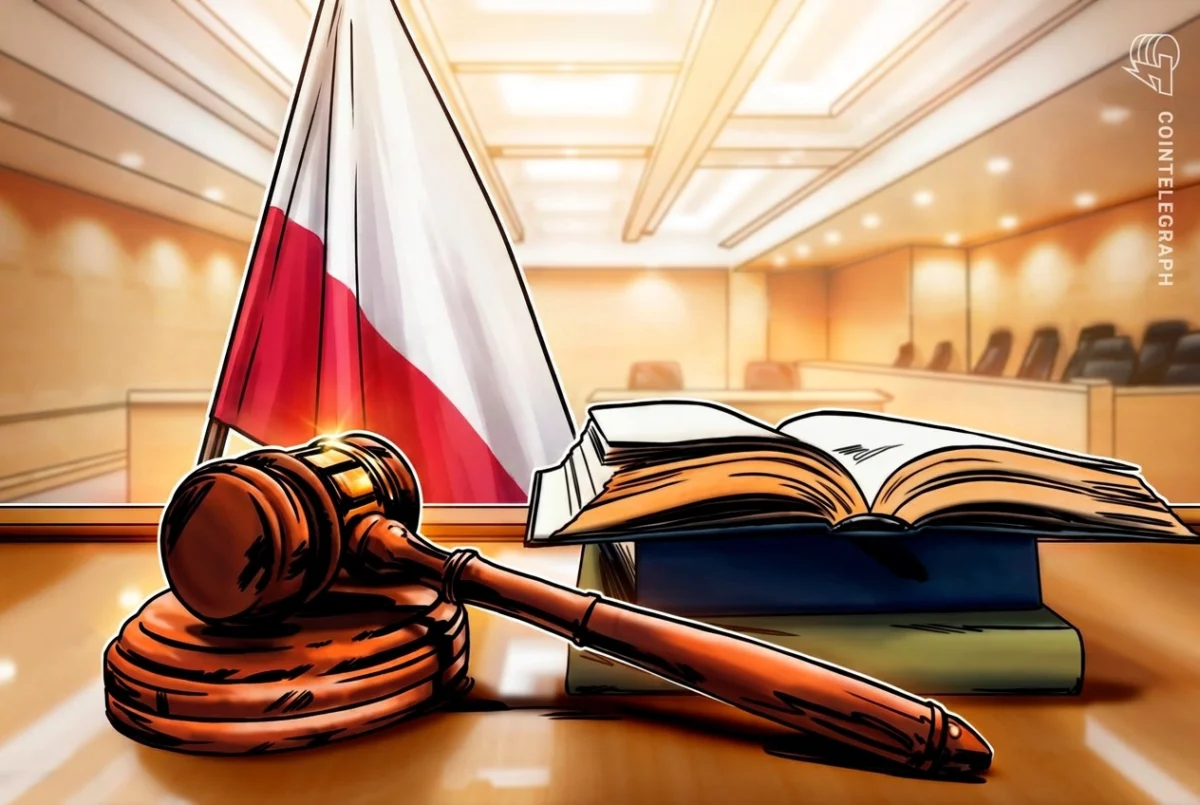
Polish prosecutors have taken a significant step in their ongoing investigation into the cryptocurrency exchange Zondacrypto, formally charging an individual identified as Romana Ż. with participation in an organized criminal group and the alleged misappropriation of 7.8 million Polish zlotys (approximately $2.1 million) in user funds. The charges represent a deepening of the inquiry that has already seen other individuals detained and faces accusations of significant financial impropriety within the digital asset trading platform.
The Katowice-Wschód District Court has been formally requested by prosecutors to impose pretrial detention on the suspect. This request stems from concerns that Romana Ż. could potentially flee the jurisdiction or obstruct the ongoing investigation, according to an official announcement released by Poland’s National Prosecutor’s Office on Monday. The office’s statement detailed the gravity of the allegations and the need for judicial intervention to ensure the integrity of the investigation.
Romana Ż. was initially detained on September 5th, with authorities citing the same concerns of flight risk and potential interference with investigative processes. Following his detention, the suspect was questioned by prosecutors. In a statement provided to the authorities, Romana Ż. has reportedly denied all the charges leveled against him. The National Prosecutor’s Office has confirmed the suspect’s denial and the provision of his statement, marking a crucial point in the legal proceedings where the defense will begin to formulate its response to the prosecution’s case.
The core of the prosecution’s allegations against Romana Ż. centers on his purported role in a scheme to misappropriate funds entrusted to Zondacrypto by its users. Prosecutors allege that Romana Ż., acting in concert with other individuals, engaged in unauthorized alterations of computer records. These alleged digital manipulations, coupled with interference in the processing and transmission of exchange data, are believed to have facilitated the illicit transfer and disappearance of user assets. The nature of these alleged actions points towards a sophisticated and deliberate effort to defraud investors and exploit vulnerabilities within the exchange’s operational framework.
This latest development is not an isolated incident but rather an escalation of an investigation that has been gaining momentum for several months. On September 2nd, three other individuals were detained in connection with the Zondacrypto probe. These individuals have subsequently been formally charged with a range of offenses, including money laundering, misappropriation of company assets, and participation in an organized criminal group. A Polish court, recognizing the severity of these accusations, ordered all three to be held in pretrial detention for a period of up to three months, underscoring the judicial system’s view of the potential threat posed by these individuals to the investigation and public trust.
The scale of the financial irregularities associated with Zondacrypto appears to be substantial, far exceeding the amounts directly linked to the recently charged individual. Previous reports by Cointelegraph indicated that Polish prosecutors had estimated the total losses connected to Zondacrypto to be no less than 350 million Polish zlotys (approximately $95 million). This significantly larger figure suggests that the current investigation is part of a broader pattern of alleged malfeasance with far-reaching financial implications for a considerable number of users.
Further complicating the Zondacrypto narrative is its entanglement with another high-profile case: the 2022 disappearance of Sylwester Suszek, the founder of BitBay, a cryptocurrency exchange that was later rebranded as Zondacrypto. In July, the investigation into Zondacrypto was formally merged with the probe into Suszek’s disappearance. This merger suggests that prosecutors may be exploring potential links between the alleged financial misconduct at Zondacrypto and the unexplained absence of its former leader, hinting at a possible deeper conspiracy or a coordinated effort to conceal illicit activities. The disappearance of a prominent figure in the crypto space adds a layer of intrigue and concern, raising questions about the circumstances surrounding his vanishing and any potential connection to the exchange’s financial woes.
The operational entity behind Zondacrypto, BB Trade Estonia, the exchange’s Estonian operator, has faced significant consequences as a result of the unfolding scandal. In August, the company was declared bankrupt, a move that signifies the financial collapse of the exchange and the inability of its operator to meet its financial obligations. The bankruptcy proceedings have initiated a formal process for creditors to attempt to recover their losses. The first creditors’ meeting has been scheduled for September 17th, where stakeholders will convene to discuss the distribution of any remaining assets and the path forward in the insolvency process. This bankruptcy declaration has significant implications for users who held assets on the Zondacrypto platform, as their ability to recover their funds is now subject to the complexities of bankruptcy law and the availability of assets.
The Zondacrypto scandal has emerged at a time of increased scrutiny and regulatory attention towards the cryptocurrency industry globally. As digital assets continue to gain traction, concerns about investor protection, market manipulation, and illicit financial activities have grown. Regulators and law enforcement agencies worldwide are enhancing their efforts to bring transparency and accountability to the crypto market. In this context, the actions taken by Polish prosecutors against Zondacrypto and its associated individuals reflect a broader trend of intensified enforcement aimed at safeguarding the integrity of financial markets and protecting consumers from fraudulent schemes.
The implications of this ongoing investigation are multifaceted. Firstly, it highlights the inherent risks associated with cryptocurrency exchanges and the critical importance of due diligence for investors. The alleged misappropriation of funds underscores the need for robust security measures, transparent operational practices, and stringent regulatory oversight within the digital asset space. Secondly, the involvement of organized criminal groups in such activities suggests a sophisticated criminal element seeking to exploit the nascent and often less regulated nature of the crypto market for illicit gain. This necessitates a collaborative and coordinated response from law enforcement agencies, both domestically and internationally, to combat these evolving threats.
The financial impact on users who entrusted their assets to Zondacrypto is a primary concern. The bankruptcy of BB Trade Estonia and the alleged misappropriation of funds mean that many individuals may face significant or even total losses of their investments. The legal processes currently underway, including the criminal charges and the bankruptcy proceedings, are crucial steps towards establishing accountability and, potentially, recovering some of the lost assets, though success in such endeavors is often challenging in cases involving large-scale financial fraud.
Furthermore, the merger of the Zondacrypto investigation with the disappearance of Sylwester Suszek could potentially uncover deeper criminal networks or a more intricate web of illicit activities. The resolution of Suszek’s disappearance is as critical as the financial fraud investigation, as it may shed light on the motives and methods of those involved and provide crucial evidence to support the ongoing prosecution. The outcome of these interconnected investigations will undoubtedly have a significant impact on the reputation and future trajectory of the cryptocurrency industry in Poland and potentially beyond.
The legal framework governing cryptocurrencies is still evolving in many jurisdictions, including Poland. Cases like Zondacrypto put pressure on policymakers and regulators to strengthen existing laws and implement more effective supervisory mechanisms. The goal is to foster an environment where innovation can thrive while simultaneously ensuring that consumer rights are protected and that the financial system remains secure from criminal exploitation. The coming months will be critical as the Polish judicial system works to unravel the complexities of the Zondacrypto case, seeking justice for the affected users and reinforcing the principles of accountability in the digital economy. The formal charges against Romana Ż. represent a significant milestone, but the investigation is far from over, with many questions likely to be answered as the legal proceedings unfold. The focus remains on the pursuit of truth, the recovery of assets where possible, and the establishment of clear consequences for those found guilty of financial crimes within the burgeoning cryptocurrency landscape.