Sisilia Frederika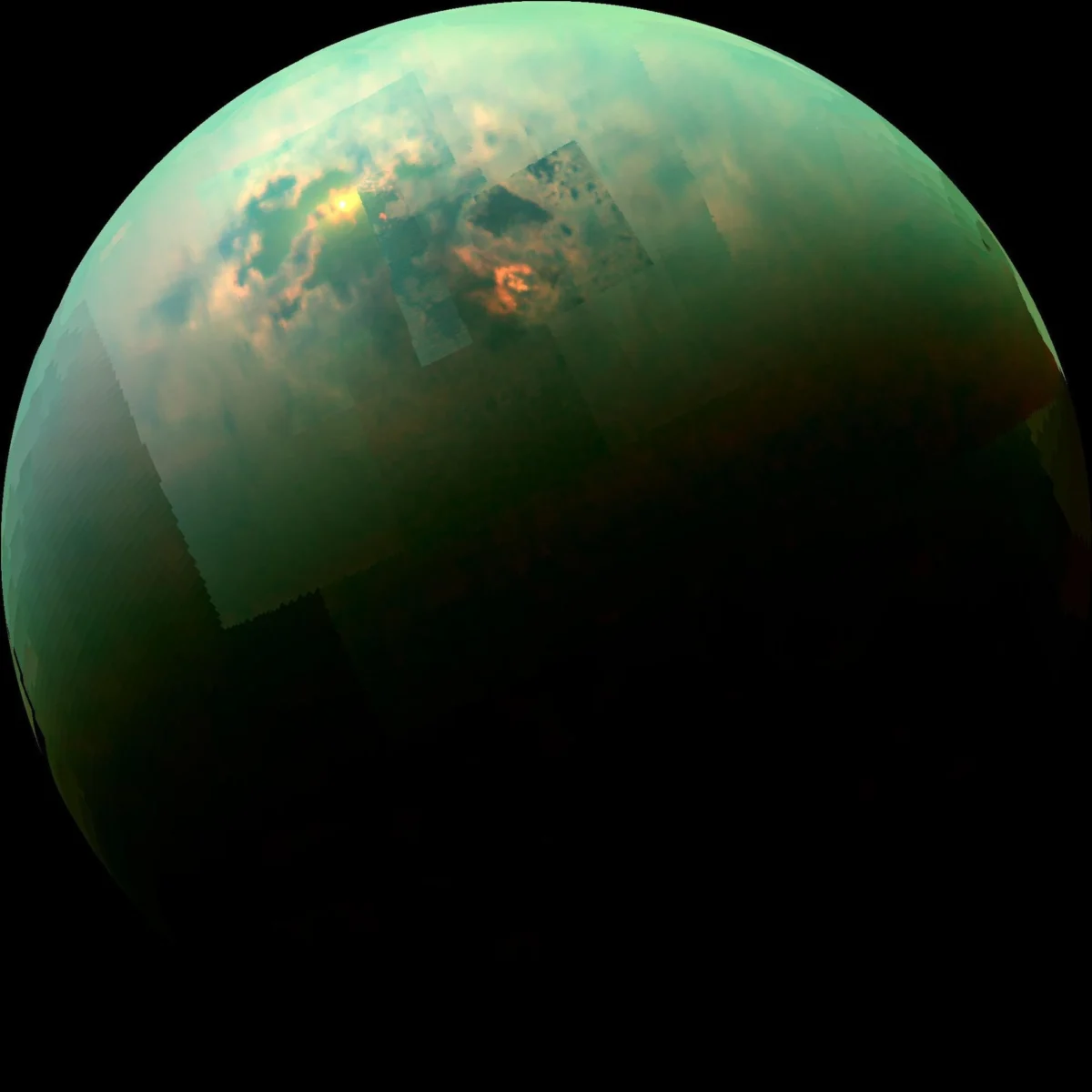
The search for life beyond our solar system has entered a transformative era, defined no longer just by the discovery of new worlds, but by the sophisticated characterization of their surfaces. As of late 2023, astronomers have confirmed the existence of over 5,500 exoplanets, a catalog that includes a diverse array of gas giants, "super-Earths," and rocky terrestrial bodies. Among these, dozens reside within the "habitable zone" of their parent stars—the orbital region where temperatures are theoretically conducive to the presence of liquid water. However, despite these statistical successes, the definitive detection of a liquid ocean on a terrestrial exoplanet remains one of the most elusive goals in modern astrophysics. A new research paper authored by Eleanor Cornish and Tyler Robinson of the University of Arizona, currently available in pre-print on arXiv and submitted to the Astrophysical Journal, proposes a sophisticated method to bridge this gap: the detection of "specular glint."
The Physics of Reflection: Glint vs. Lambertian Surfaces
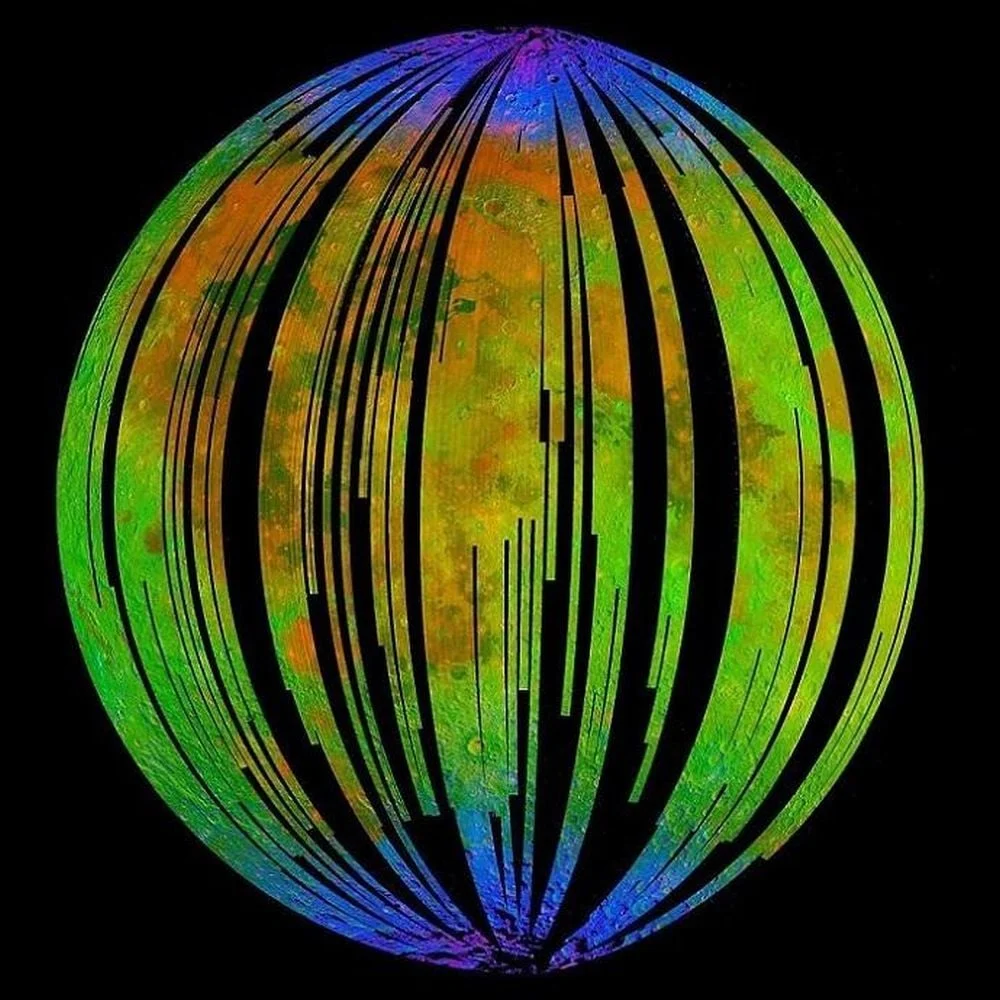
To understand how astronomers might identify an ocean trillions of miles away, one must first understand the fundamental physics of how light interacts with different surfaces. Most planetary surfaces—such as the rugged deserts of Mars, the cratered highlands of the Moon, or the basaltic plains of Mercury—are what physicists describe as Lambertian surfaces. When starlight hits these materials, it is scattered in all directions equally. Regardless of the angle from which an observer views the planet, the brightness remains relatively consistent because the light is diffused by the microscopic irregularities of rock, sand, and soil.
Liquid water, however, behaves fundamentally differently. It acts as a specular reflector, or a mirror. When light hits a calm body of water at a steep, direct angle, much of it is absorbed or reflected weakly back toward the source. But when light strikes the water at a shallow, grazing angle, it undergoes specular reflection—a concentrated "glint" that directs a massive amount of energy in a specific direction. On Earth, this phenomenon is most visible during sunrise or sunset at the coast, when the sun hangs low on the horizon and the water appears to ignite with a brilliant, blinding flash of gold.
For an exoplanet, this "glint" becomes a vital diagnostic tool. Because an ocean is a smooth, liquid interface, it can produce a spike in brightness that is mathematically distinct from the diffuse reflection of a rocky landscape. The researchers argue that if a telescope is positioned at the correct angle relative to the planet and its star, this flash of light could serve as an unambiguous "fingerprint" for a liquid surface.
A Chronology of Glint Detection in the Solar System
The concept of using glint to identify liquids is not merely theoretical; it is a proven technique within our own solar system. The history of this methodology serves as a proof of concept for the Cornish and Robinson study. In the early 1990s, as the Galileo spacecraft performed a gravitational assist flyby of Earth on its way to Jupiter, a team of researchers led by the legendary astronomer Carl Sagan used the opportunity to see if Earth’s life-sustaining features could be detected from space. Among their findings was the detection of specular reflection off Earth’s oceans, proving that a planet’s liquid water could be identified through its reflective properties.
Nearly two decades later, in 2009, the Cassini spacecraft provided the most dramatic evidence of glint outside of Earth. While orbiting Saturn, Cassini’s Visual and Infrared Mapping Spectrometer (VIMS) captured a brilliant flash of infrared light reflecting off the surface of Kraken Mare, a massive lake of liquid methane and ethane on Saturn’s moon, Titan. This observation confirmed that Titan possessed stable bodies of liquid, marking the first time a "glint" had been used to identify a liquid surface on another celestial body.
The challenge now facing the astronomical community is scaling this technique from the moons and planets of our own solar system to exoplanets orbiting stars light-years away. While Cassini and Galileo were relatively close to their targets, future telescopes will have to discern these flashes of light from a tiny dot of light representing an entire world.
The Cox-Munk Model and the rfast Tool
To determine the feasibility of detecting exoplanetary glint, Cornish and Robinson utilized a sophisticated atmospheric modeling tool known as "rfast." This tool is designed to simulate the spectra and brightness of planets under various conditions. For the purposes of this study, the researchers modified rfast to incorporate the Cox-Munk ocean model.
The Cox-Munk model is a staple of terrestrial oceanography. Developed in the 1950s, it provides a mathematical framework for how wind speeds and wave ripples affect the reflection of light off the sea surface. A perfectly still ocean would act as a perfect mirror, but a wind-swept ocean with high waves scatters the glint over a slightly wider area, a phenomenon known as "glint broadening." By integrating this model, the University of Arizona team was able to simulate how a real, dynamic ocean—subject to winds and weather—would appear to a distant telescope.
The simulations yielded a critical finding: the glint signal is most detectable when the planet is in its crescent phase. This occurs when the planet is at a "phase angle" of more than 120 degrees relative to the observer. In this geometry, the telescope is looking mostly at the night side of the planet, with only a thin sliver of the day side visible. It is at this precise angle that the starlight "skims" the surface of the planet’s ocean and reflects directly into the telescope’s aperture. The researchers found that even with significant "noise" in the data, the model could successfully differentiate between a dry, rocky planet and one possessing a liquid ocean.
Rayleigh Scattering and the Reddening Effect
One of the most intriguing aspects of the study is the phenomenon of "glint reddening." At the high phase angles required to see a glint (120 degrees or more), the path that the light must travel through the planet’s atmosphere is significantly lengthened. As the starlight hits the ocean at a shallow angle and reflects toward the telescope, it must pass through a thick cross-section of the planetary atmosphere.
During this passage, the light is subjected to Rayleigh scattering—the same physical process that makes Earth’s sky appear blue. Rayleigh scattering affects shorter wavelengths of light (blue and violet) much more than longer wavelengths (red and orange). By the time the reflected glint reaches a distant telescope, the blue light has been scattered away, leaving a signal that is predominantly red.
This reddening is actually a boon for astronomers. It provides a secondary confirmation: if a telescope detects a sudden brightening of a planet in the crescent phase, and that brightness is concentrated in the redder parts of the spectrum, it serves as a powerful indicator that the light has interacted with both a liquid surface and a substantial atmosphere.
Implications for the Habitable Worlds Observatory
The findings of Cornish and Robinson have immediate implications for the design of the next generation of space telescopes, most notably NASA’s Habitable Worlds Observatory (HWO). Recommended by the 2020 Decadal Survey on Astronomy and Astrophysics, the HWO is a multi-billion-dollar project aimed at directly imaging at least 25 Earth-like planets around sun-like stars.
A primary challenge for the HWO is the use of a coronagraph—a device designed to block out the overwhelming glare of a parent star so that the faint light of a nearby planet can be seen. Historically, theoretical models suggested that ocean glint might only be visible at phase angles of 130 degrees or higher. The closer a planet appears to its star (higher phase angles), the more difficult it is for a coronagraph to suppress the starlight without also blocking the planet.
By demonstrating that glint can be reliably detected at 120 degrees, Cornish and Robinson have effectively given telescope designers more "breathing room." This 10-degree difference significantly lowers the technical requirements for the HWO’s coronagraph, making the mission more feasible and increasing the number of potential targets that can be surveyed for oceans.
Challenges: The Cloud Cover Complication
Despite the promise of the glint technique, the researchers were careful to highlight significant obstacles, the most prominent being cloud cover. In their baseline simulations, the team assumed a 50% cloud cover, which is roughly equivalent to Earth’s average. However, clouds are highly reflective and can interfere with the glint signal in two ways.
First, thick, low-level clouds can simply block the ocean from view, preventing the glint from ever reaching space. Second, high-altitude clouds, such as cirrus clouds composed of ice crystals, can create their own versions of specular reflection. These "ice glints" could potentially mimic the signal of an ocean, leading to a false positive.
To mitigate this, the researchers suggest that future observations will need to look for specific gas and liquid absorption bands in the planet’s spectrum. By combining glint data with spectroscopic analysis of the atmosphere, scientists can determine if the reflection is coming from a liquid water surface or merely ice crystals suspended in the upper atmosphere.
The Path Forward: Earth as a Training Ground
The study concludes with a call for more data closer to home. Surprisingly, astronomers have relatively little data on what Earth itself looks like in its crescent phase from a distance. Collecting "training data" by observing Earth from deep-space probes or lunar outposts will be essential for refining the rfast model and ensuring that when the Habitable Worlds Observatory finally turns its eye toward a distant star, scientists will know exactly what an alien ocean looks like.
The detection of a liquid ocean on an exoplanet would be a landmark moment in human history, providing the strongest evidence yet that a world might be capable of supporting life as we know it. Thanks to the work of Cornish and Robinson, the scientific community now has a clearer roadmap for how to find these "cosmic mirrors," provided they look at the universe from just the right angle.