Sisilia Frederika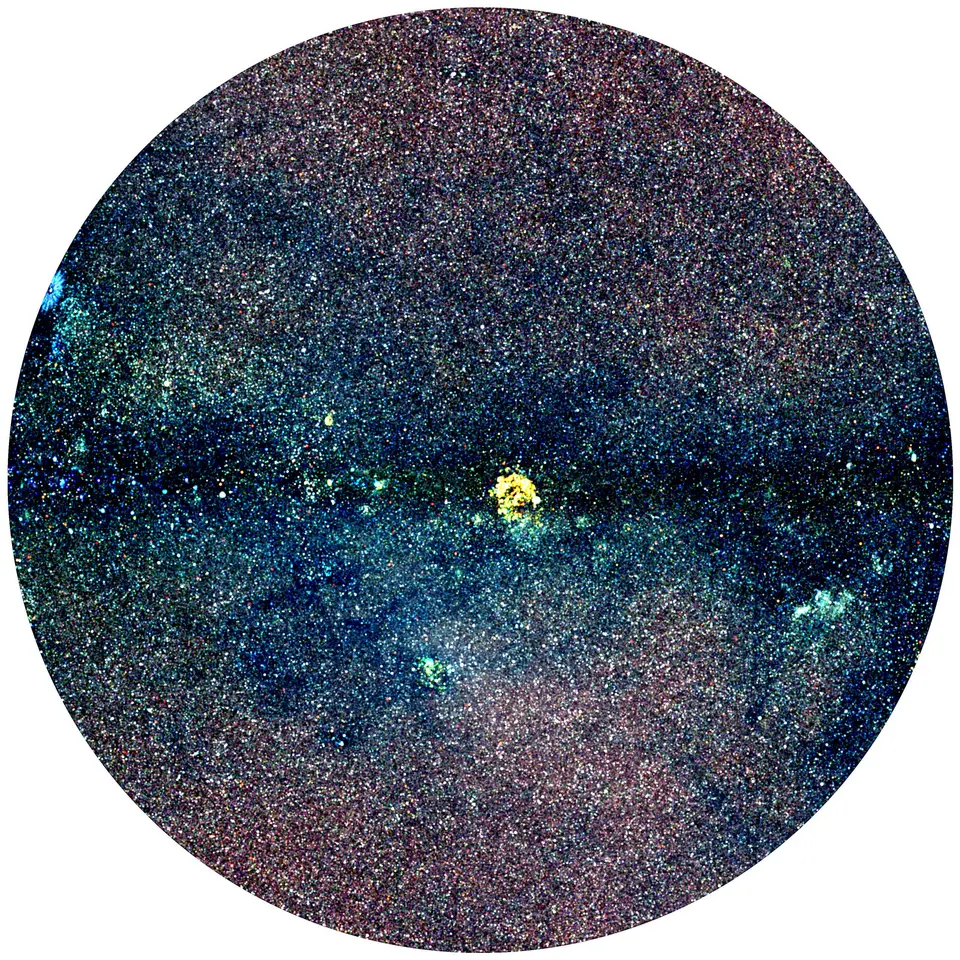
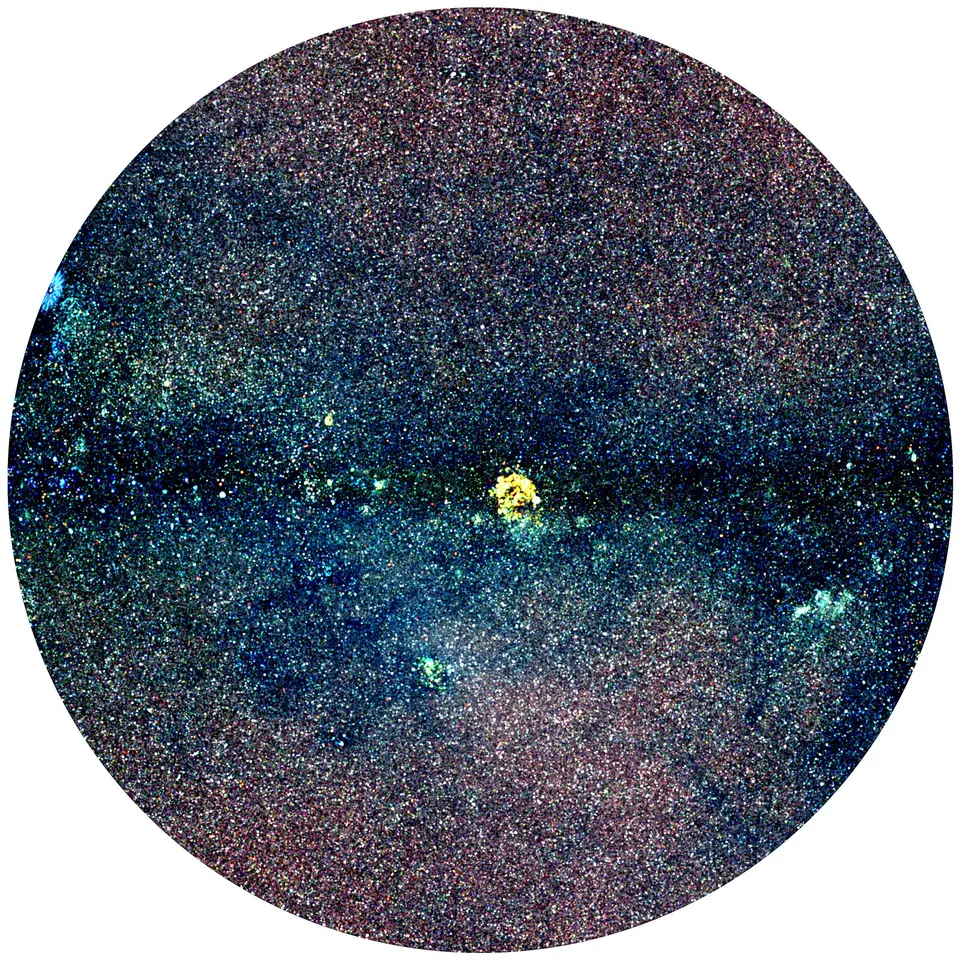
The German eROSITA Consortium has officially published its second major data release (DR2), providing the international scientific community with the most extensive and detailed census of the X-ray universe to date. This milestone, the result of a multi-year effort by the Max Planck Institute for Extraterrestrial Physics (MPE) and its collaborators, offers an unprecedented look at the high-energy phenomena that shape our cosmos. By cataloging nearly two million point-like sources and tens of thousands of extended structures, the eROSITA (extended ROentgen Survey with an Imaging Telescope Array) instrument has effectively doubled the volume of known X-ray sources, providing a transformative resource for astronomers studying everything from local stellar activity to the growth of supermassive black holes in the early universe.
The Scope and Scale of Data Release 2
The DR2 catalog represents the culmination of observations conducted during the first 556 days of the Spektr-RG mission. This period covers the first three of eight planned all-sky surveys (eRASS1, eRASS2, and eRASS3). By "stacking" the data from these consecutive passes, researchers have been able to achieve a level of sensitivity that far exceeds previous X-ray missions, such as the ROSAT satellite, which provided the previous standard for all-sky X-ray maps in the 1990s.
The statistics of the release are formidable. The catalog lists approximately 1.9 million point-like sources, which primarily consist of active galactic nuclei (AGN)—supermassive black holes actively consuming matter—and magnetically active stars within our own Milky Way. Additionally, the release identifies 64,000 extended sources, a category dominated by massive galaxy clusters and the remnants of supernova explosions. This represents a nearly 100% increase in detected objects compared to the first data release, illustrating the exponential gains achieved by repeated sky scans and refined data processing algorithms.
A defining feature of DR2 is its integration of multi-wavelength data. Recognizing that X-ray detections alone provide an incomplete picture, the eROSITA team has cross-referenced their findings with optical and infrared surveys. This allows astronomers to pinpoint the exact location of these high-energy sources within their host galaxies and determine their distance from Earth. According to the team’s analysis, approximately 88% of the identified sources are extragalactic, located millions or billions of light-years away.
Technological Foundation and Mission Chronology
The eROSITA instrument is the primary payload of the Spektr-RG (SRG) space observatory, a joint Russian-German mission launched on July 13, 2019, from the Baikonur Cosmodrome. The observatory is positioned at the second Lagrange point (L2) of the Sun-Earth system, a stable orbital location approximately 1.5 million kilometers from Earth that allows for unobstructed views of the deep sky.
The telescope itself is a marvel of precision engineering, consisting of seven identical mirror modules. Each module contains 54 nested gold-coated mirrors designed to reflect X-ray photons at "grazing incidence" toward a specialized CCD camera. This configuration allows eROSITA to detect "soft" X-rays in the energy range of 0.2 to 8 keV with a wide field of view, making it uniquely suited for surveying large swaths of the sky quickly and deeply.
The mission timeline highlights the rapid progression of the survey:
- July 2019: Launch and transit to L2.
- October 2019: First light and calibration phase.
- December 2019: Commencement of the first All-Sky Survey (eRASS1).
- June 2020: Completion of eRASS1, leading to the eventual Data Release 1.
- 2020–2022: Completion of subsequent scans (eRASS2 through eRASS4).
- February 2022: Scientific operations were placed in "safe mode" following geopolitical shifts, though data processing of existing observations continued.
- Summer 2024: Official release of DR2, covering the first 1.5 years of the mission.
Synergies with the Sloan Digital Sky Survey
The impact of eROSITA’s DR2 is significantly amplified by its synchronization with the twentieth data release (DR20) of the Sloan Digital Sky Survey (SDSS). For nearly a decade, the two projects have collaborated to ensure that the X-ray "eyes" of eROSITA are complemented by the "spectroscopic heart" of SDSS.
While eROSITA detects the high-energy glow of a black hole’s accretion disk, the SDSS provides the spectra—the chemical fingerprint and redshift—of the surrounding galaxy. This combined dataset allows researchers to calculate the mass of the black holes and the rate at which they are growing. The DR20 release includes a vast amount of optical spectroscopy specifically targeted at eROSITA-detected sources, creating a three-dimensional map of the active universe.
This collaboration has proven essential for identifying "high-redshift" objects—those located at the very edge of the observable universe. Because the light from these objects has been traveling for billions of years, they provide a snapshot of the universe in its infancy. William Roster, a lead researcher in the study of these distant sources, noted that the density of rapidly growing black holes in the early universe appears higher than previously predicted by theoretical models. This discovery suggests that the mechanisms driving black hole growth were more efficient or occurred earlier in cosmic history than once thought.
Scientific Analysis: Galaxy Clusters and Dark Energy
Beyond individual black holes, one of the primary scientific drivers for the eROSITA mission is the study of galaxy clusters. These are the largest structures in the universe held together by gravity, containing hundreds or thousands of galaxies embedded in a "halo" of dark matter and hot, X-ray-emitting gas known as the intracluster medium.
By cataloging 64,000 such structures, eROSITA provides a vital tool for cosmologists. The distribution and evolution of galaxy clusters are sensitive to the underlying cosmological parameters, including the density of dark matter and the influence of dark energy—the mysterious force driving the accelerated expansion of the universe. The DR2 data allows for a more precise measurement of the "Large Scale Structure" of the cosmos, helping to test the limits of the Standard Model of Cosmology.
The data release also sheds light on the life cycles of stars within the Milky Way. X-ray emissions from stars are typically linked to magnetic activity in their coronae, similar to the Sun but often much more intense. By studying the hundreds of thousands of stars in the DR2 catalog, astronomers can better understand the relationship between stellar rotation, age, and the high-energy radiation that can strip the atmospheres of orbiting exoplanets.
Official Responses and Global Impact
The release of DR2 has been met with enthusiasm across the global astronomical community. Andrea Merloni, the Principal Investigator for eROSITA, emphasized the democratization of this data. By making the catalog public, the consortium is inviting researchers worldwide to mine the dataset for rare phenomena, such as "tidal disruption events"—where a star is torn apart by a black hole—or to conduct large-scale population studies that require high statistical significance.
Mara Salvato, the eROSITA spokesperson, highlighted the importance of the "follow-up" work. She noted that while the detection of an X-ray source is a critical first step, the true scientific value emerges when that source is linked to its counterparts in other wavelengths. The creation of "clean, well-defined samples" of cosmic objects on this scale is a feat that will likely serve as the foundation for PhD theses and research papers for decades to come.
The institutional commitment from the Max Planck Society and its international partners has been pivotal. Despite the technical and geopolitical challenges that have faced the mission since 2022, the successful processing and release of DR2 demonstrate a resilient dedication to scientific progress. The data processing required sophisticated software to remove instrumental "noise" and account for the complex geometry of the telescope’s scanning pattern, ensuring that the final catalog is as accurate as possible.
Future Implications and the Path Forward
The release of DR2 is not the end of the eROSITA story. Even as scientists begin to digest the 1.9 million sources in this catalog, work continues on the data from subsequent sky passes. Future releases are expected to further increase the depth of the survey, revealing even fainter and more distant objects.
The implications of this work extend into the realm of multi-messenger astronomy. As gravitational wave detectors and neutrino observatories become more sensitive, having a comprehensive and current map of the X-ray sky is essential for identifying the electromagnetic counterparts of cataclysmic cosmic events. eROSITA’s map serves as the "master chart" for the high-energy universe, providing the context needed to understand the most violent and energetic processes in existence.
In conclusion, eROSITA Data Release 2 stands as a monumental achievement in modern astrophysics. It provides a bridge between the local universe and the furthest reaches of space-time, offering a detailed census of the objects that drive cosmic evolution. As the global scientific community begins to explore this vast digital frontier, the discoveries made from DR2 will undoubtedly refine our understanding of how galaxies form, how black holes grow, and ultimately, how the universe itself is structured.