Sisilia Frederika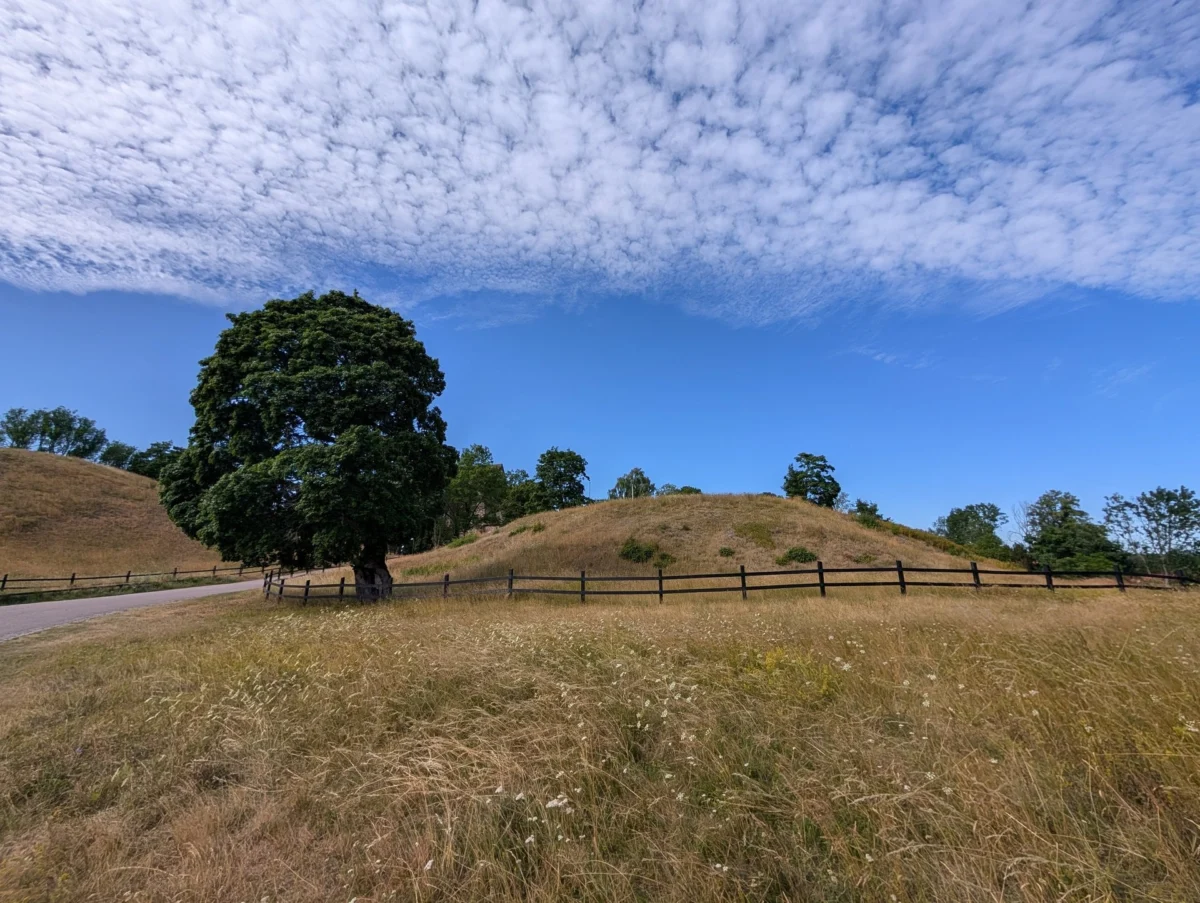
On the expansive, windswept plains situated approximately one hour north of Stockholm, Sweden, a series of monumental burial mounds serves as a silent testament to a civilization that predates the Viking Age by centuries. While popular history often focuses on the Norsemen of the 8th to 11th centuries, these structures belong to an earlier cultural stratum: the northern Germanic Goths. These pagan polytheists, who inhabited the region at least 2,500 years ago, worshipped the ancestral precursors to the well-known deities Odin, Freyr, and Thor. Recent research led by Swedish astrophysicists and archaeologists has revealed that these ancient people possessed a sophisticated understanding of celestial mechanics, utilizing a precision calendar that dictated the timing of gruesome, large-scale ritual sacrifices.
The site, known as Old Uppsala (Gamla Uppsala), has long been recognized as one of the most important archaeological landscapes in Scandinavia. However, new findings have shifted the focus from the aesthetic of the burial mounds to the mathematical and astronomical utility of the surrounding terrain. It appears that the Goths were not merely observing the heavens for agricultural purposes; they were driven by a profound religious obsession to synchronize human activity with the cycles of the Sun and the Moon.
The Discovery of the Sacrificial Calendar
The breakthrough in understanding the site’s astronomical significance came through the work of Goran Henrikson, an astrophysicist and former lecturer at Uppsala University. Henrikson’s research suggests that the Goths developed a calendar of such high precision that it rivaled, and in some aspects surpassed, the calendrical systems used by the Catholic Church hundreds of years later.
In 2013 and 2014, archaeological excavations at Old Uppsala unearthed two extensive rows of wooden poles that had remained hidden for over a millennium. These rows, stretching across the landscape, functioned as a massive sighting instrument. According to Henrikson, these poles were not decorative but were intentionally aligned with specific celestial events. One row, extending approximately 850 meters, was oriented toward the northernmost limit of the rising full Moon during its earliest possible dates in the winter cycle. A second row, roughly 600 meters in length, was aligned with the rising Sun during a specific three-day window in early February.
This alignment allowed the Goths to regulate what was known as the "Great Midwinter Sacrifice," a central pillar of their religious life that occurred every eight years. By combining historical data with modern computational models of lunar phases, Henrikson has been able to pinpoint the exact years of these cycles, including a cycle that began in 852 A.D.
The Mechanics of the Eight-Year Cycle
The eight-year cycle was determined by the interplay between the solar year and the phases of the Moon. This period, often referred to in archaeoastronomy as an "octaeteris," is the time it takes for the phases of the Moon to recur on nearly the same days of the solar year. The Goths demonstrated a level of mathematical proficiency that allowed them to measure these phases to six digits of accuracy.
The starting date for the sacrificial cycle was defined by the appearance of the full Moon between January 28 and February 26 in the modern Gregorian calendar. This precision was necessary because the Goths believed that the cosmic order was fragile. The sacrifices were viewed as a vital negotiation with the gods; if the rites were not performed at the exact astronomical moment every eight years, it was feared that the subsequent eight years would be plagued by environmental catastrophe, famine, or social collapse.
The physical evidence of the pole rows suggests a sophisticated understanding of the horizon. During the midwinter months, the Sun and Moon rise at specific points along the horizon that change slightly each year. By creating long-distance sightlines using poles, the priests or astronomers of Old Uppsala could track these movements with extreme accuracy, ensuring the community remained in harmony with the perceived will of the heavens.
Ritual Barbarism and the Great Midwinter Sacrifice
While the mathematical achievements of the Goths were advanced, the rituals they governed were characterized by intense violence. The Great Midwinter Sacrifice lasted for nine consecutive days, typically reaching its zenith between February 6 and February 8. Historical accounts and archaeological inferences suggest a grim spectacle of mass death.
During the nine-day period, a specific sequence of sacrifices was followed. Reports indicate that one human male and seven male domestic animals were killed each day. By the conclusion of the ceremony, a total of 72 bodies—human and animal—would be suspended upside down from the branches of a "holy tree" within a sacred grove. This tree, likely an evergreen that remained vibrant throughout the harsh Swedish winter, served as a conduit between the earthly realm and the divine.
This practice reflects a worldview where life was the ultimate currency. To the Goths, the preservation of the world required a significant "payment" of blood. The hanging of bodies was a symbolic offering to the gods of the sky and the underworld, intended to ensure the return of the Sun’s warmth and the fertility of the land. Despite the perceived barbarism of these acts, the Goths saw them as an essential, orderly, and scientifically-timed responsibility.
The Royal Mounds and the Evolution of the Landscape
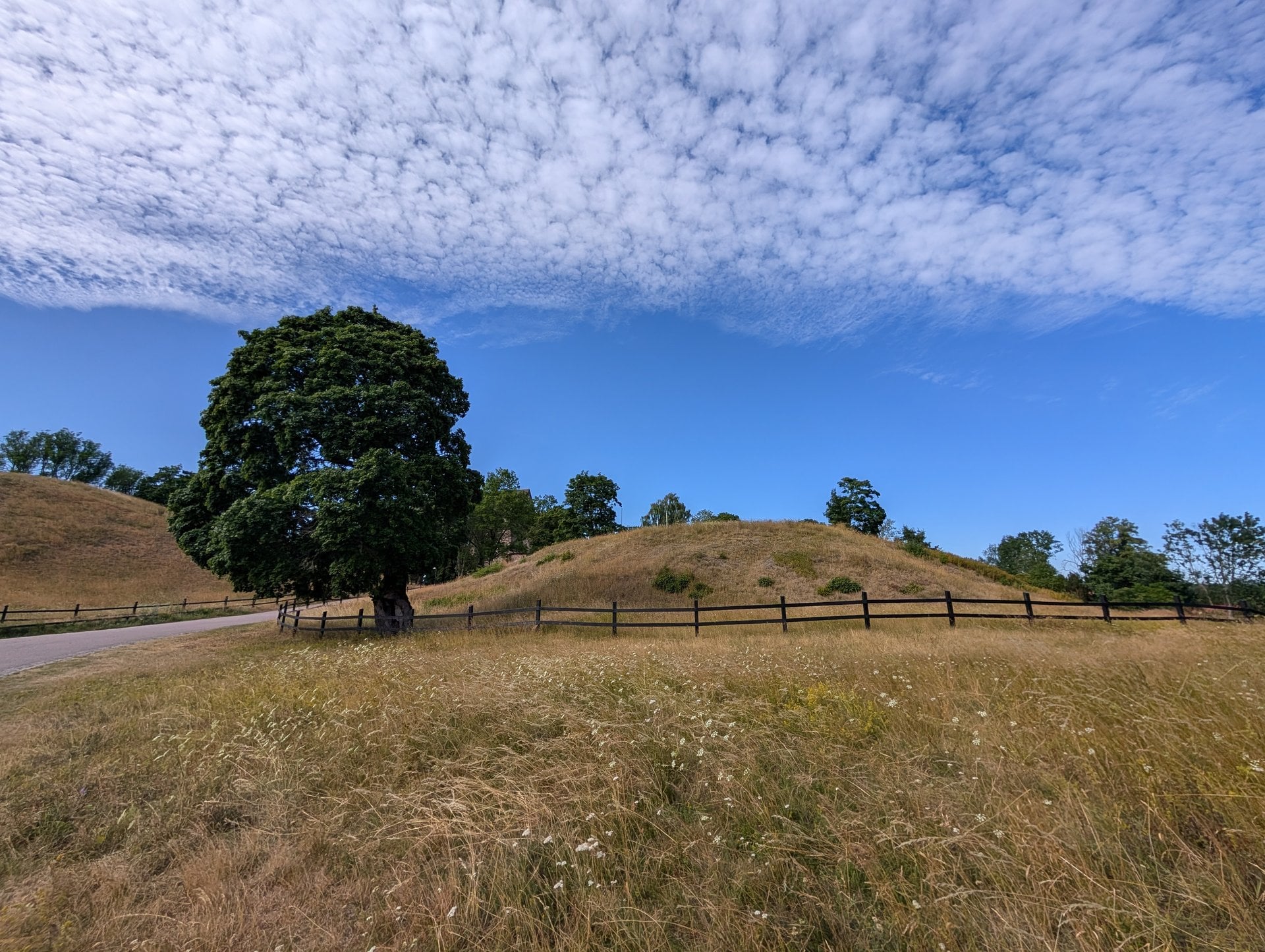
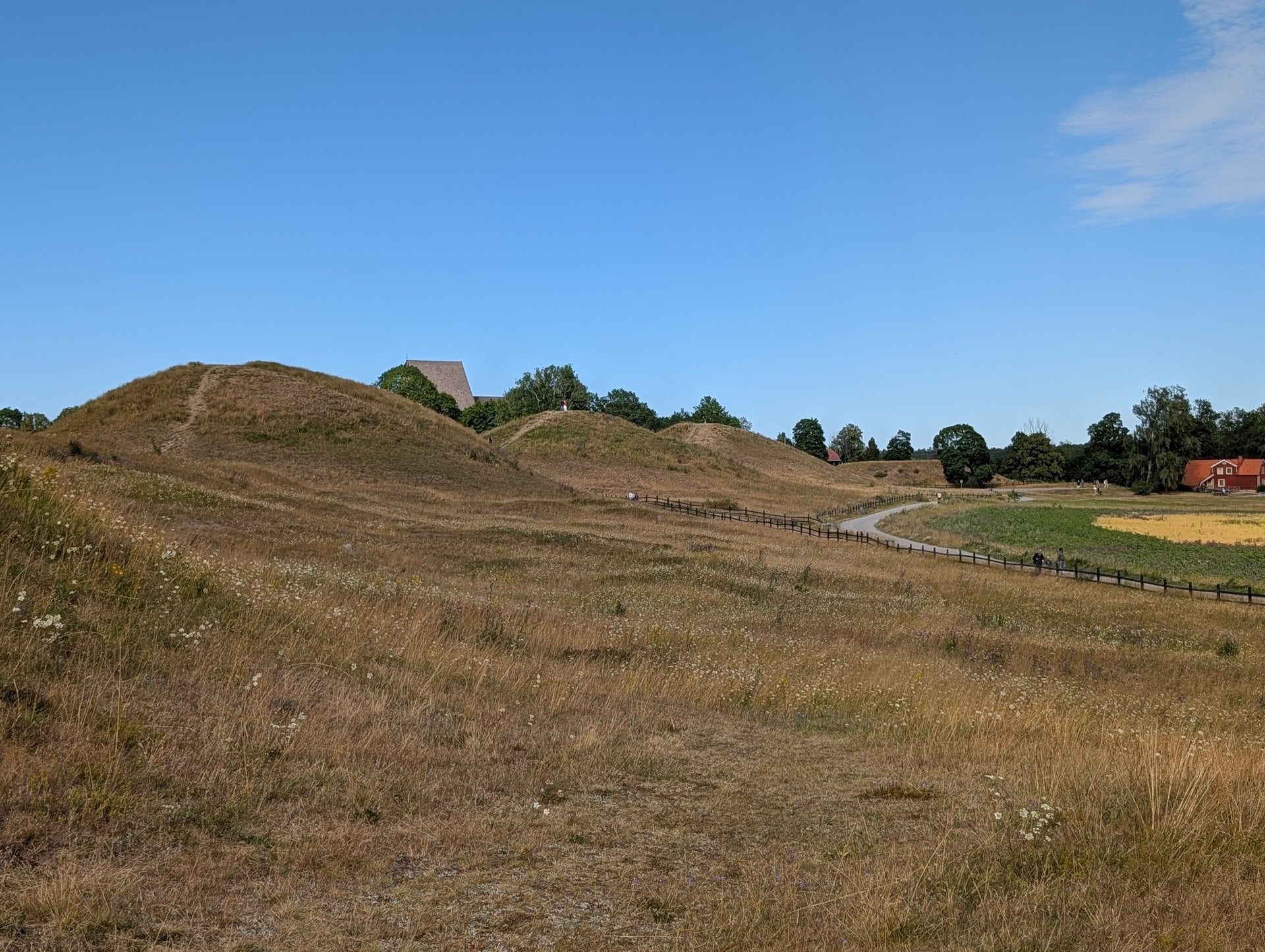
The physical heart of the site is defined by the three "royal" burial mounds, which have been dated to the period between 450 and 550 A.D. These mounds are not merely graves but are themselves integrated into the astronomical grid of the site. Henrikson’s research indicates that the mounds were oriented to help regulate the sacrificial calendar, acting as permanent markers in a landscape designed for celestial observation.
To understand the visual impact of the site during its peak, one must account for significant geological changes. Today, the mounds sit amidst a vast, flat plain. However, 1,500 years ago, the local sea level was approximately 19.5 meters higher than it is today. This change is due to post-glacial rebound, a process where the land rises after the weight of Ice Age glaciers is removed.
During the era of the Goth sacrifices, the Baltic Sea reached to within half a mile of the burial mounds. This proximity to water added a dramatic visual element to the rituals. According to Henrikson, the rays of the rising Sun would reflect off the water on both sides of the pole rows, while the shadows cast by the poles would align perfectly with the rows themselves. This interplay of light, shadow, and reflection provided a "magnificent and very precise" visual confirmation that the correct date for the sacrifice had arrived.
Boat Graves and the Afterlife
The astronomical focus of the Goths extended to their funerary practices. In addition to the large mounds, archaeologists have investigated 15 "boat-graves" dating from 550 to 1100 A.D. These graves contain the remains of elite warriors and chieftains buried inside full-sized vessels.
The orientation of these boat-graves is telling; preliminary investigations show they are aligned toward the rising full Moon of the Great Midwinter Sacrifice. This suggests that the eight-year cycle was not only a regulator of time for the living but also a roadmap for the dead. The Goths believed in a complex afterlife where a chieftain would require his full status and equipment. These burials included horses, dogs, weapons, and even complete kitchens, all intended to be transported by the boat into the next realm.
The Moon held a central place in this belief system. Henrikson notes that the Moon was viewed as a primary Goth deity, representing a force that governed both the tides of the sea and the cycles of life and death. The alignment of the graves ensured that the deceased would be launched toward the divine light of the Moon at the most auspicious moment in the eight-year cycle.
Historical Implications and Academic Analysis
The findings at Old Uppsala challenge long-standing assumptions about the intellectual capabilities of pre-Christian Germanic tribes. For centuries, these groups were characterized by later Christian chroniclers as unrefined barbarians. However, the discovery of a calendar that outperformed the contemporary Roman and early medieval systems suggests a society with a highly developed class of "time-keepers" or astronomer-priests.
The Goths’ ability to maintain such precise records over centuries implies a stable oral or proto-written tradition and a social structure capable of mobilizing massive labor forces for the construction of the pole rows and burial mounds. Furthermore, the integration of astronomy, geography, and theology at Old Uppsala indicates a holistic view of the universe that is largely absent from modern, compartmentalized scientific thought.
The fact that these pagan traditions persisted so strongly—and utilized such advanced technology—explains why the eventual Christianization of Sweden was a slow and often contentious process. The Catholic Church eventually established a cathedral at Old Uppsala, literally building over the pagan site in an attempt to co-opt its spiritual authority. Yet, the precision of the Goth calendar remains a point of historical irony, as the "pagan" measurements of the solar and lunar years were, for a time, more accurate than the liturgical calendars of the Mediterranean.
Conclusion
The archaeological and astrophysical revelations at Old Uppsala provide a window into a world where science and superstition were inextricably linked. The ancient Goths were a people driven by the fear of cosmic disorder, yet they met that fear with rigorous observation and mathematical precision. While the shadows of the Great Midwinter Sacrifice have long since faded, the alignment of the mounds and the phantom rows of poles continue to testify to a culture that looked at the stars not just with wonder, but with a desperate, calculated need for certainty. As research continues, Old Uppsala stands as a premier site for understanding the deep roots of European astronomy and the complex, often violent origins of northern civilization.