Galang Taruna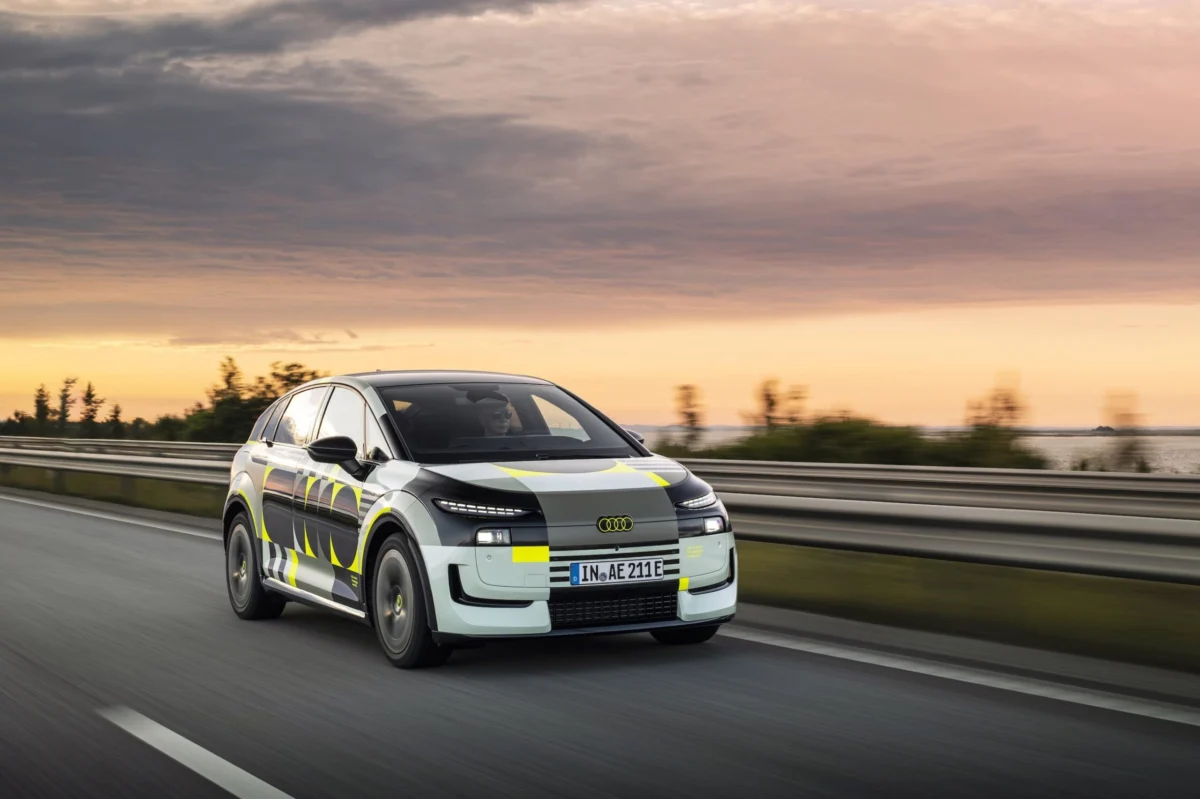
Ingolstadt, Germany – Weeks ahead of its official debut, the Audi A2 e-tron is beginning to shed light on its closely guarded secrets, positioning itself as the most accessible and remarkably efficient electric vehicle in the brand’s rapidly expanding portfolio. With an impressive projected autonomy of up to 649 kilometers (WLTP) and an ultra-low consumption rate, this compact electric car is poised to redefine expectations for sustainable urban and long-distance travel. Audi’s meticulous engineering, particularly in the realm of aerodynamics, is credited as the primary driver behind these groundbreaking figures.
Audi has been a significant player in the electric vehicle market for seven years, steadily building its e-tron range, which until now has primarily concentrated on larger sedans and SUVs. This strategy addressed a premium segment of the market, establishing the brand’s presence in electrification. However, the landscape of EV adoption is shifting, with increasing demand for more compact, affordable, and yet highly capable electric models. The A2 e-tron represents Audi’s decisive entry into this crucial compact segment, signaling a strategic diversification of its electric lineup.
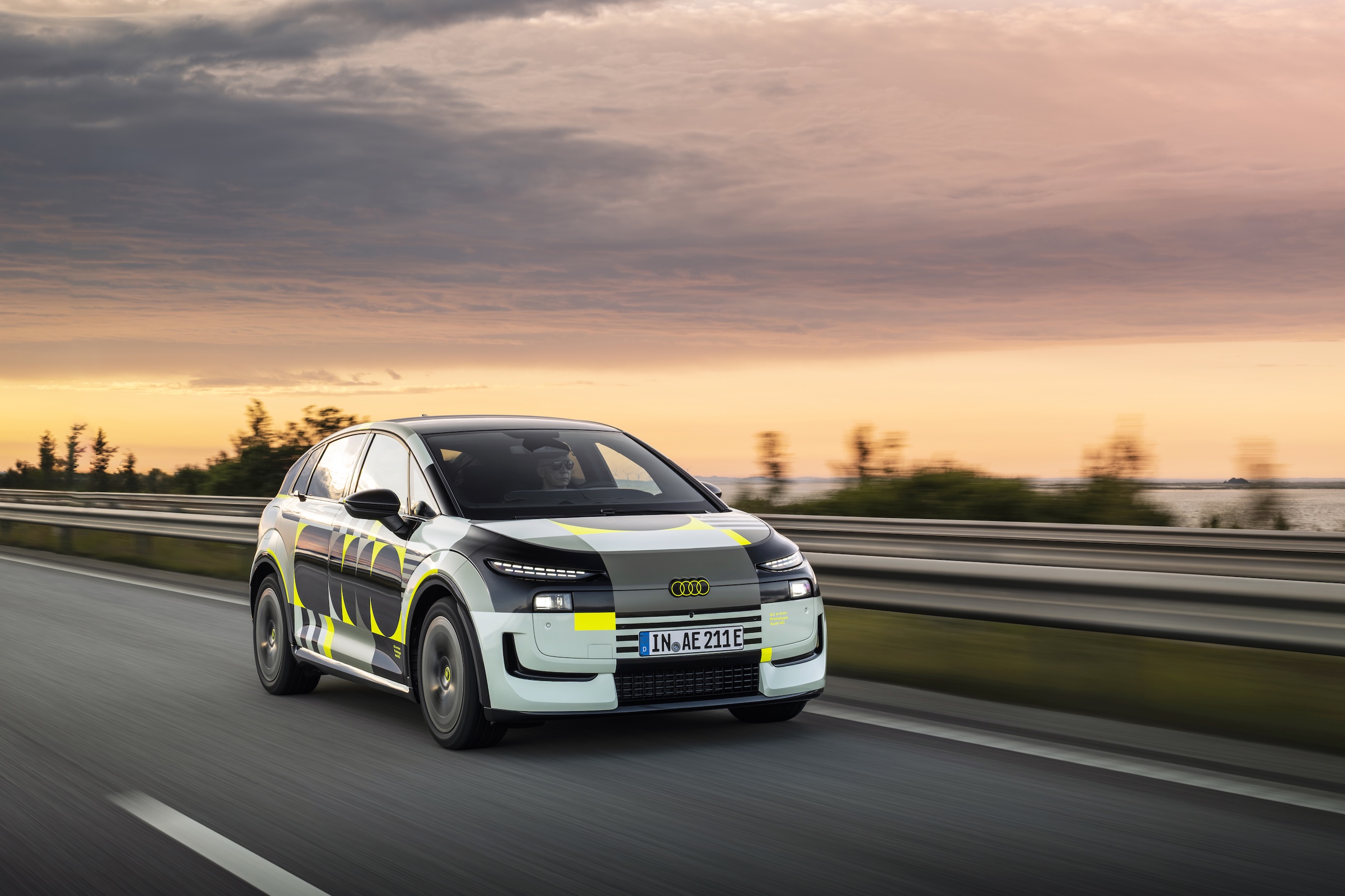
Slated for a definitive presentation at the prestigious Mondial de l’Auto de Paris in October 2026, the Audi A2 e-tron is anticipated to hit the market by the end of 2026. This upcoming model is not merely a new addition but a strategic pivot, aiming to become both the smallest and the most budget-friendly electric Audi, without compromising on range or performance. Sharing its fundamental architecture with the recently updated Volkswagen ID.3 Neo, the A2 e-tron distinguishes itself through an intensive and rigorous focus on maximizing energy efficiency, particularly through advanced aerodynamic design.
The decision by Audi to dedicate a comprehensive communication campaign to its aerodynamic achievements underscores the significance of this aspect in the A2 e-tron’s development. This proactive disclosure has allowed a deeper understanding of what promises to be a pivotal model in Audi’s electrification journey, a compact electric sedan designed to set new benchmarks in efficiency.
A Return to Form: The Aerodynamic Masterpiece

The latest official communications provide an illuminating glimpse into the distinctive lines of the electric Audi A2. For those who remember the original A2 from the late 1990s and early 2000s, there’s a clear nod to its predecessor’s iconic, somewhat unconventional silhouette. This neo-retro design is not merely a stylistic homage; it is a profoundly functional choice, primarily engineered to optimize aerodynamic performance.
The original Audi A2, launched in 1999, was ahead of its time. It was groundbreaking for its lightweight aluminium space frame construction, which made it exceptionally fuel-efficient. It was lauded for its innovative design and engineering but perhaps misunderstood by the market at the time. The new A2 e-tron revives this spirit of innovation and efficiency, translating it into the electric era. By retaining a recognizable, distinctive profile, Audi aims to evoke the original’s legacy while pushing the boundaries of electric vehicle efficiency.
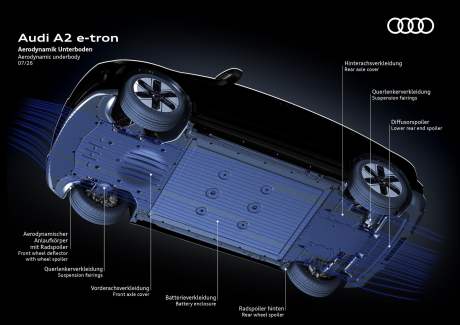
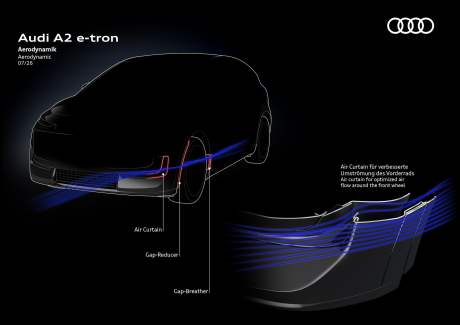
The car’s exterior design is a testament to meticulous aerodynamic sculpting. At the front, a rounded, largely closed surface facilitates smooth airflow over the vehicle. This is further enhanced by carefully integrated air channels along the flanks and an active air intake system with adjustable flaps. These elements work in concert to manage air intake for cooling and to minimize drag when not needed, thereby reducing aerodynamic resistance.

The air continues its smooth path over the highly profiled silhouette, characterized by a gracefully sloping roofline that tapers towards the rear. The wheels are also integral to this aerodynamic strategy, combining low-rolling-resistance tires with specially optimized wheel designs. Furthermore, "gap reducers"—small, precisely positioned aerodynamic elements—are strategically placed to minimize the space between the tire and the bodywork, preventing air turbulence in this critical area.
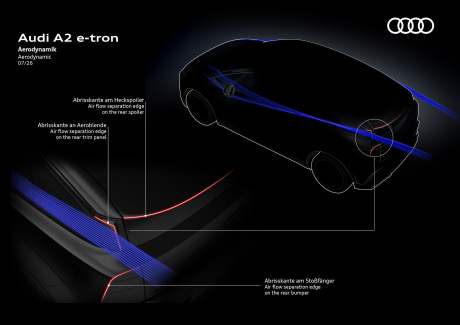
At the rear, a generously proportioned spoiler and sharp, defined edges are designed to guide airflow cleanly away from the vehicle, significantly limiting disruptive turbulence and ensuring a smooth air detachment. Complementing these exterior features is a fully faired underbody, which creates a smooth surface beneath the car, further reducing drag.
The culmination of these sophisticated aerodynamic enhancements results in an exceptionally low drag coefficient (Cx) of just 0.24. This figure is not only excellent for any passenger car but is particularly remarkable for a compact vehicle, which typically struggles to achieve such low values due to their smaller frontal area and less elongated profiles compared to larger sedans. To put this into perspective, the Tesla Model 3, renowned for its efficiency, boasts a Cx of around 0.23, while many compact EVs hover around 0.26-0.28. This positions the A2 e-tron among the most aerodynamically efficient vehicles on the market.
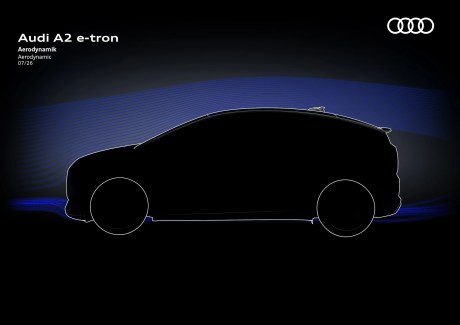
Audi estimates that this extensive aerodynamic optimization translates into a substantial energy saving of 0.9 kWh per 100 kilometers under the WLTP cycle. This saving directly converts into additional "free" kilometers of range, enhancing the car’s practicality and appeal. Previous communications hinted that the Audi A2 e-tron’s consumption would start at an impressive 13.0 kWh/100 km, a figure that includes charging losses. This consumption rate is on par with the highly efficient Tesla Model 3 Rear-Wheel Drive (Propulsion), often regarded as a benchmark for electric vehicle frugality, and notably superior to the Volkswagen ID.3 Neo’s minimum consumption of 13.9 kWh/100 km. Such efficiency figures underscore Audi’s ambition to make the A2 e-tron a leader in energy consumption for its class.
Design Evolution and Dimensions
Beyond its aerodynamic prowess, the A2 e-tron appears to integrate several design cues from the Concept C, a visionary prototype unveiled in late 2025 in Munich. The Concept C was hailed as a harbinger of Audi’s evolving design philosophy, moving towards a more streamlined, minimalist, and understated aesthetic rather than overt ostentation. This shift suggests an interior design for the A2 e-tron that prioritizes clean lines, high-quality materials, and advanced, integrated technology.
In terms of dimensions, the A2 e-tron measures 4.32 meters in length, 1.79 meters in width, and 1.55 meters in height. These compact dimensions make it highly maneuverable in urban environments while still offering sufficient interior space for passengers and cargo, aligning with the expectations of a compact electric sedan. Its footprint is comparable to popular compact hatchbacks, yet its optimized interior packaging, a hallmark of purpose-built EV platforms like MEB, should ensure a surprisingly spacious cabin.
A Deep Dive into the Technical Specifications
While Audi remains relatively discreet regarding the interior design and dashboard layout of its electric A2, the brand has been considerably more forthcoming with its technical specifications, revealing a robust and highly efficient powertrain.
Unsurprisingly, the A2 e-tron will leverage the latest evolution of the Volkswagen Group’s highly versatile MEB platform. The Modular Electric Drive Matrix (MEB) has been the cornerstone of VW Group’s mass-market electrification strategy, underpinning a wide array of electric vehicles including the Volkswagen ID.3, ID.4, ID.5, ID. Buzz, Audi Q4 e-tron, Skoda Enyaq iV, and Cupra Born. The "latest evolution" or MEB+ signifies improvements in charging speeds, motor efficiency, and potentially greater battery capacity options, further enhancing the platform’s capabilities.
For this initial teaser, Audi has primarily highlighted a specific variant of the A2 e-tron, equipped with a Lithium Iron Phosphate (LFP) battery pack offering 59 kWh of usable energy (61 kWh gross capacity). LFP batteries are known for their cost-effectiveness, enhanced safety, longer cycle life, and thermal stability, making them an excellent choice for mainstream electric vehicles, particularly those focused on affordability and durability.
The A2 e-tron will offer a tiered battery strategy to cater to different needs and price points. The entry-level model will feature a slightly smaller LFP pack with 50 kWh net (52 kWh gross). For those prioritizing maximum range, a Nickel Manganese Cobalt (NMC) battery pack will be available, boasting 79 kWh net (84 kWh gross). It is this NMC variant that will deliver the impressive 649 km (WLTP) autonomy, making the A2 e-tron a formidable contender for long-distance electric travel in the compact segment. NMC batteries typically offer higher energy density, translating to more range for a given weight and volume, albeit often at a higher cost and with slightly different thermal characteristics compared to LFP.
Powering the A2 e-tron will be Audi’s new permanent magnet synchronous motor, dubbed APP350, indicating a robust 350 Nm of torque. This motor is not merely a carry-over from existing MEB models; it has undergone significant refinement to boost its efficiency. Key improvements include the integration of silicon carbide (SiC) semiconductors in the power electronics. SiC technology offers superior efficiency, higher operating temperatures, and faster switching speeds compared to traditional silicon-based components, leading to reduced energy losses and improved performance, particularly under high load and during regeneration.
Further efficiency gains come from the electric motor’s design itself, featuring thinner stator laminations (0.2 mm, down from the previous 0.3 mm). Thinner laminations reduce eddy current losses, which are a major source of energy waste in electric motors. Additionally, the stator windings have been configured in a delta (triangle) arrangement rather than the more common star configuration. Delta winding can offer advantages in certain operating ranges, contributing to overall efficiency and torque delivery. Finally, the reduction gearbox, which transmits power from the motor to the wheels, is bathed in a specialized low-friction oil, further minimizing mechanical losses. Each of these enhancements, though seemingly minor individually, collectively contributes to the A2 e-tron’s exceptional overall energy efficiency.
Market Implications and Future Outlook

The introduction of the Audi A2 e-tron marks a significant strategic move for Audi and the wider Volkswagen Group. By offering a highly efficient, compact, and more affordable electric vehicle, Audi is directly addressing a burgeoning segment of the EV market that demands practicality, range, and premium quality at a more accessible price point. This car will position Audi to compete more directly with compact EVs from other premium and mass-market brands, including the likes of the Cupra Born, Renault Megane E-Tech, and upcoming models such as the Volvo EX30 and Peugeot e-308.
The A2 e-tron’s emphasis on efficiency and range, particularly the 649 km WLTP figure, could be a game-changer for consumer perception of compact EVs, often associated with more limited range. It demonstrates that long-distance capability is not exclusive to larger, more expensive electric vehicles. This could accelerate EV adoption by alleviating range anxiety for a broader segment of buyers.
The detailed technical disclosures regarding aerodynamics, battery technology, and motor design underscore Audi’s commitment to pushing the boundaries of electric vehicle engineering. These innovations are likely to trickle down to other VW Group models, benefiting the entire portfolio.

Many questions still surround this highly anticipated vehicle. Will the pursuit of efficiency impact the interior space or the overall driving dynamics? What will the dashboard design look like, and will it align with the minimalist aesthetic of the Concept C and the advanced digital cockpits seen in models like the Q4 e-tron? Crucially, what will be the starting price point for this "most affordable" Audi EV, and how will it be positioned against its Volkswagen Group siblings and external competitors?
All these questions, and more, are expected to be answered when Audi officially unveils the A2 e-tron at the Mondial de l’Auto de Paris in October 2026. The world awaits to see if this new iteration of the A2 can replicate its predecessor’s innovative spirit and carve out a significant niche in the rapidly evolving electric vehicle market.