Vera Intan Clara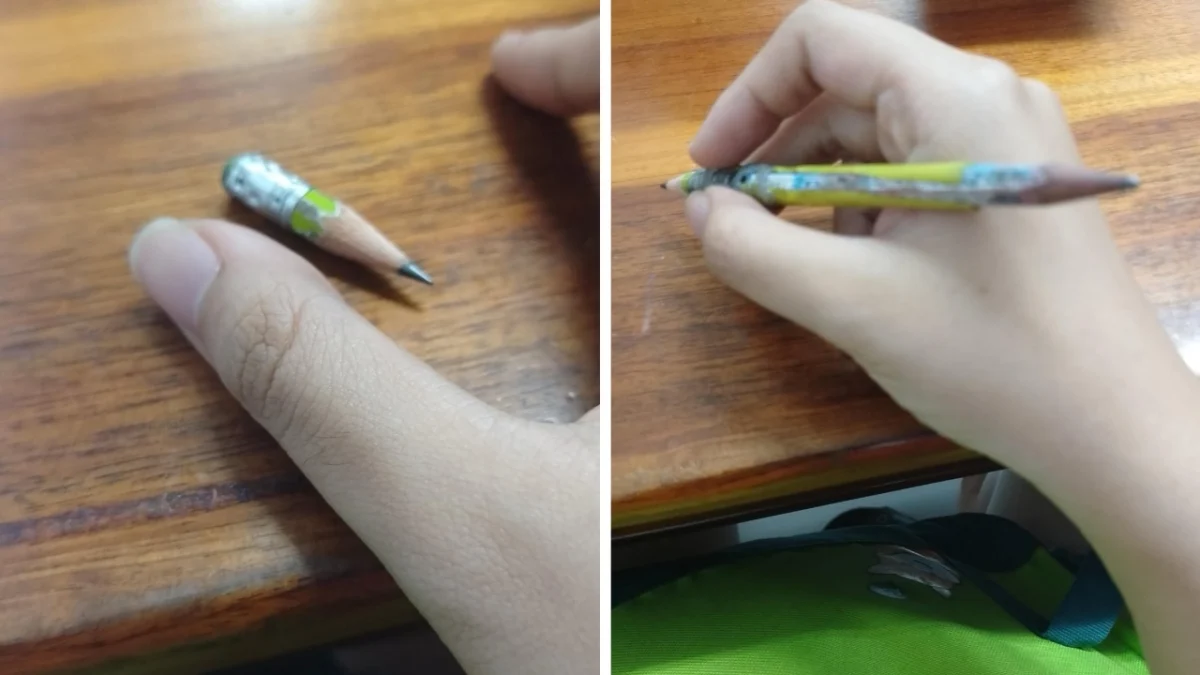
A seemingly innocuous Reddit post featuring a pencil deemed "too short to hold comfortably" ignited a fervent discussion on the r/mildlyinfuriating subreddit, sharply dividing users into two distinct philosophical camps. The original poster shared an image of the minuscule writing implement, recounting their mother’s insistence on discarding it, reportedly to spare them "misery" over a mere pencil. This simple domestic interaction swiftly escalated into a comprehensive online discourse, probing deeper themes of waste, resourcefulness, consumer guilt, and psychological attachment to inanimate objects.
The Genesis of the Debate: A Tiny Pencil’s Big Stir
The catalyst for this extensive online engagement was the poster’s counter-argument to their mother’s pragmatic stance. "It’s not about the price," the user wrote, "I feel guilty when the pencil still has worth." This statement, articulating a sentiment of intrinsic value beyond monetary cost, became the epicenter of the subsequent debate. The initial reactions on the thread immediately bifurcated: one faction focused on the practical ergonomics and diminishing utility of such a small pencil, while the other delved into the underlying emotional and ethical considerations of retaining it.
The immediate wave of comments reflected a concern for physical well-being. One commenter, echoing the mother’s practicality, cautioned against the potential for hand strain associated with manipulating an overly short pencil, highlighting health implications over perceived waste. This perspective was succinctly encapsulated by another user who stated, "Excellent point – hands are worth more than pencil stubs." Such remarks underscore a common societal prioritization of personal comfort and health over the absolute maximization of an object’s lifespan, especially for inexpensive items.
Innovative Solutions and the Spirit of Resourcefulness
Amidst the practical concerns, the original poster revealed their own ingenious solution: "I put it in a straw to make it longer." This DIY approach, born out of a desire to extend the pencil’s utility, initially drew a jocular response: "Well now you just wasted a straw!" However, the poster clarified their commitment to resourcefulness, explaining that the straw was not a one-time use item but rather a reusable extender, repurposed whenever another pencil reached its uncomfortable minimum length. This detail shifted the perception for some, highlighting an active effort to minimize waste rather than simply clinging to an object.
The discussion then naturally progressed to more conventional, albeit less improvisational, solutions. Several Reddit users suggested a widely available commercial product: the pencil extender. These devices, often metal or plastic sleeves designed to securely hold short pencils, have a long history of use, particularly among artists who rely on expensive colored pencils and wish to utilize every millimeter of their valuable tools. One commenter specifically cited their use of extenders for costly colored pencils, illustrating a pragmatic approach to preserving investment and functionality. Another simply advised, "Consider a proper pencil extender," signaling a mainstream acceptance and availability of such tools.
The poster, however, revealed an even more elaborate homemade solution, refusing to fully embrace the commercial extender. They detailed creating their own custom extender using a straw, hot glue, and a longer pencil as a base. This bespoke innovation garnered a degree of admiration for its ingenuity and commitment to the "no waste" principle. Yet, despite the cleverness, a significant portion of the Reddit community maintained their stance that the pencil’s time had simply come. Comments like, "You have to let go… walk into the light my sweet pencil," and the more blunt, "Just let go bro," underscored a prevalent sentiment that some objects, regardless of remaining material, reach a natural point of obsolescence.
The Deeper Dive: Psychology of Attachment and Completionism
The debate’s trajectory veered significantly when discussions began to scrutinize the poster’s initial statement about feeling "guilty when the pencil still has worth." Several commenters drew parallels between this sentiment and what they described as "hoarding tendencies." It is crucial to note, as the original article implicitly acknowledges, that online forums are not clinical environments, and such characterizations, while part of the social discourse, carry no diagnostic weight. Nevertheless, these observations sparked a more serious vein of discussion, exploring the psychological underpinnings of attachment to inanimate objects and the aversion to waste.
One Reddit user shared a personal anecdote, explaining how assigning emotional value to objects eventually led them to struggle with hoarding, providing a cautionary tale. Another recounted a parent who maintained piles of half-used pencils, offering a relatable example of extreme frugality bordering on accumulation. These comments transformed the discussion from a simple debate about a pencil into a broader examination of consumer behavior and the psychological complexities of accumulation versus disposal.
The concept of "completionism" also emerged. One commenter described fully utilizing pencils and pens as a "niche pastime" and labeled the poster a "completionist," suggesting a personality trait driven by the satisfaction of seeing tasks or objects through to their absolute end. This perspective highlights a desire for efficiency and thoroughness, finding contentment in extracting maximum utility from resources. However, this was countered by others who argued for practical limits, with one user stating, "That’s not even a pencil anymore dude," emphasizing that an object can cease to fulfill its primary function long before its material is exhausted.
The Environmental Footprint of Everyday Objects: A Broader Context
While the Reddit debate primarily focused on individual behavior, the underlying tension between perceived waste and practical disposal touches upon significant global environmental concerns. The lifecycle of a pencil, from resource extraction to disposal, contributes to humanity’s ecological footprint. A standard wooden pencil involves several components: wood (often cedar), graphite (a form of carbon), clay, and sometimes an eraser (rubber or synthetic polymers) and a metal ferrule. Each of these components requires energy for extraction, processing, manufacturing, and transportation.
Globally, stationery waste contributes to landfill accumulation. While a single pencil stub might seem negligible, the cumulative effect of billions of such items, alongside other disposable goods, is substantial. According to various environmental reports, office and school supplies contribute to a considerable portion of municipal solid waste. For instance, the U.S. Environmental Protection Agency (EPA) data consistently shows paper and paperboard products, which include many stationery items, as major components of the waste stream. Although specific data on "pencil stub" waste is not readily available, the principle of reducing, reusing, and recycling applies broadly to all manufactured goods. The poster’s "guilt" over a pencil "still having worth" resonates with a growing public consciousness about sustainability and resource conservation. The debate, therefore, inadvertently became a micro-representation of a macro environmental discussion.
A History of Resourcefulness: From Pencil Stubs to Extenders
The practice of using pencils until they are mere stubs is not new; it harks back to eras characterized by greater frugality and less disposability. Before the age of mass production and affordable goods, every item was valued for its utility and material cost. Pencil extenders themselves are a testament to this historical ethos. Invented in the 19th century, they were originally designed for artists and draftsmen to maximize the use of expensive drawing materials. These tools allowed for continued comfortable use of pencils even when they became too short to hold, preventing waste and saving money. The Reddit poster’s homemade straw solution is a modern, DIY iteration of this long-standing tradition of resourcefulness, demonstrating that the impulse to extract maximum value from objects persists in contemporary society, even amidst an abundance of cheap alternatives.
The Digital Agora: Reddit as a Mirror of Societal Values
The Reddit platform, specifically r/mildlyinfuriating, served as an apt stage for this debate. Subreddits dedicated to minor annoyances often become unexpected arenas for exploring deeper societal tensions. The anonymity and immediacy of online forums allow for a diverse range of opinions to be expressed, often without the social filters present in face-to-face interactions. This particular thread exemplifies how a seemingly trivial personal grievance can quickly escalate into a robust, multi-faceted discussion that touches upon consumer ethics, psychological traits, environmental responsibility, and cultural values. It highlights the power of digital communities to dissect and debate even the most mundane aspects of everyday life, often revealing underlying anxieties and aspirations regarding modern living.
The Enduring Debate: Letting Go vs. Sustainable Use
Ultimately, the Reddit thread showcased an ideological split that mirrors broader societal discussions about consumerism. On one side stood the proponents of "letting go" – those who advocate for practical efficiency, acknowledging a point of diminishing returns for objects, and prioritizing personal comfort or mental space over absolute material utilization. Their arguments often leaned into the psychological benefits of decluttering and avoiding excessive attachment.
On the other side were those who celebrated the poster’s determination and resourcefulness. One commenter articulated this perspective powerfully: "No keep it and be proud of using it, if we all had your sense the world would be a lot cleaner." This viewpoint champions a mindset of sustainability, waste reduction, and a deliberate rejection of a disposable culture. It suggests that the act of fully using an item, even a humble pencil, can be a small but meaningful act of environmental stewardship and a source of personal satisfaction.
Implications and Broader Context
The Reddit pencil debate, while seemingly about a minuscule object, serves as a poignant microcosm of larger societal questions. It underscores the tension between individualistic consumer desires (comfort, convenience, novelty) and collective responsibilities (environmental sustainability, resource conservation). It highlights the psychological complexities of human-object relationships, where monetary value often pales in comparison to perceived intrinsic worth or the satisfaction derived from "completion."
In an era increasingly concerned with climate change and resource depletion, the impulse to extract maximum utility from every item, even a pencil stub, resonates with a growing number of individuals. Conversely, the counter-argument for letting go speaks to a desire for practicality and a rejection of behaviors that might be perceived as obsessive or detrimental to personal well-being. The enduring popularity of such debates on platforms like Reddit suggests that these tensions are not merely academic but are actively navigated by individuals in their daily lives, shaping personal habits and contributing to the evolving discourse on responsible consumption in the 21st century. The humble pencil, in its final, tiny form, became a surprising catalyst for a profound examination of what we value, what we discard, and what it truly means to live responsibly in a world of abundant, yet finite, resources.