Sisilia Frederika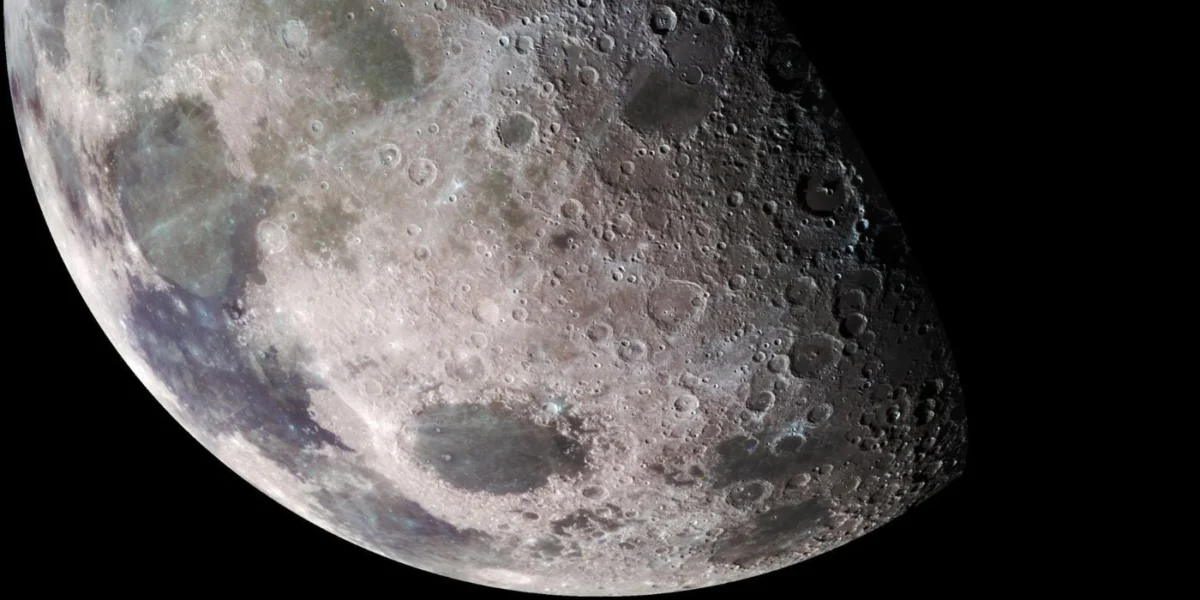
For more than six decades, the Search for Extraterrestrial Intelligence (SETI) has been defined by a persistent "synchronicity problem." Traditional SETI efforts have largely focused on the detection of radio signals or optical transmissions—transient phenomena that require an alien civilization to be actively broadcasting at the exact moment humanity is listening. Given that the Milky Way galaxy is approximately 13.6 billion years old and the human era of radio astronomy has spanned less than a century, the statistical probability of such a temporal overlap is profoundly low. To address this gap, a team of researchers led by Lewis J. Pinault, an associate researcher at the SETI Institute, has proposed a radical shift in methodology: searching for physical, microscopic evidence of alien technology embedded within the lunar regolith.
The study, recently submitted to the International Journal of Astrobiology and available on the arXiv pre-print server, suggests that the Moon serves as an ideal "cosmic garbage collector." Unlike Earth, which is geologically active and possesses a thick atmosphere, the Moon preserves a pristine record of the solar system’s history. The researchers argue that searching for "technosignatures"—physical artifacts of extraterrestrial origin—could bypass the limitations of signal-based SETI and provide a window into civilizations that may have vanished millions or even billions of years ago.
The Evolution of SETI and the Search for Physical Artifacts
The concept of searching for physical alien artifacts is not entirely new, but it has long been overshadowed by the search for electromagnetic signals. In 1960, physicist Ronald Bracewell proposed the existence of autonomous interstellar probes, now known as "Bracewell Probes," which could be sent to other star systems to monitor for the emergence of intelligent life. Decades later, in the 1990s, Ukrainian astronomer Alexei Arkhipov introduced the idea of "Arkhipov Particles"—microscopic fragments of industrial debris resulting from large-scale extraterrestrial engineering projects, such as Dyson swarms or stellar engines.
The new research by Pinault and his colleagues synthesizes these concepts into a modern framework. As the Sun orbits the center of the Milky Way, completing a revolution approximately every 230 million years, the solar system has traversed vast swathes of the galaxy multiple times. During these transits, the solar system likely passed through clouds of interstellar dust and debris. If any advanced technological civilizations existed elsewhere in the galaxy during these epochs, it is statistically plausible that fragments of their technology—whether intentional probes or unintentional industrial runoff—entered our solar system.
Why the Moon is the Ideal Repository for Technosignatures
The Earth is a much larger gravitational target than the Moon, yet it is a poor site for the preservation of microscopic interstellar artifacts. The Earth’s atmosphere acts as a shield, vaporizing the majority of small particles through friction-induced heat. Furthermore, the Earth’s surface is constantly reshaped by plate tectonics, volcanic activity, and the hydrological cycle, which would destroy or bury microscopic evidence within relatively short geological timescales.
The Moon, by contrast, offers three distinct advantages for the preservation of technosignatures:
- Lack of Atmosphere: Without a significant atmosphere, microscopic particles can reach the lunar surface without being incinerated by reentry heat. While high-velocity impacts can cause vaporization, certain physical mechanisms may allow for the survival of specific materials.
- Geological Stability: The Moon has no plate tectonics and no liquid water. Once a particle settles on the surface, it remains there, largely undisturbed by the geological forces that characterize Earth.
- Impact Gardening: This process involves the continuous churning of the lunar soil by micrometeoroid impacts. While this might seem destructive, it actually serves to bury surface material under layers of regolith. This "gardening" can protect microscopic artifacts from the degrading effects of solar wind and high-energy cosmic rays, effectively "filing" them away in a subsurface record that extends back billions of years.
The Physics of Interstellar Particle Survival
The journey from a distant star system to the lunar surface is fraught with peril. Interstellar particles are subjected to an onslaught of cosmic radiation and high-velocity dust collisions. However, the researchers note that grains composed of refractory materials—such as advanced ceramics, graphene, or titanium-tungsten superalloys—could potentially survive these conditions for 100 million to 1 billion years.
The most significant hurdle is the velocity of impact. As particles are drawn into the solar system by the Sun’s gravity, they accelerate. By the time a particle reaches 1 Astronomical Unit (the distance of Earth/Moon from the Sun), it could be traveling at a relative velocity of 42 kilometers per second. Hitting the Moon at such speeds would result in instantaneous vaporization.
The paper proposes a mechanism for "soft landings" involving solar radiation pressure. For particles of a specific size and density, the outward pressure of sunlight can counteract the Sun’s gravitational pull, slowing the particles down. If the radiation pressure is sufficient, these grains could impact the lunar surface at speeds low enough to remain intact and recognizable as artificial structures.
AI-Driven Detection and the YOLO-ET Model
Searching for a microscopic needle in a lunar haystack presents a monumental data challenge. One cubic meter of lunar regolith weighs approximately 1.5 tonnes and contains upwards of one trillion micron-sized grains. Manual inspection via traditional microscopy is impossible.
To solve this, the research team proposes the use of high-resolution Scanning Electron Microscopy (SEM) combined with advanced artificial intelligence. The team has developed a computer vision model known as YOLO-ET (You Only Look Once – Extraterrestrial), based on the popular YOLO object detection architecture. This AI would be trained to identify anomalous geometric shapes, non-natural metallic lusters, or chemical compositions that do not match the known mineralogy of the Moon.
Particles flagged by the AI would then be subjected to more rigorous analysis, including Focused-Ion-Beam (FIB) milling to examine internal structures and nano-CT scanners to create 3D reconstructions. This automated pipeline would allow scientists to screen millions of particles per hour, a feat previously unimaginable in the field of astrobiology.
Statistical Constraints and the Kardashev Scale
The study emphasizes that even a "null result"—finding no evidence of technology in a sample—would be scientifically valuable. In the realm of SETI, a null result provides "constraints," helping scientists rule out certain scenarios.
According to the researchers’ calculations, if a thorough search of one cubic meter of lunar soil yields no technosignatures, it would imply that Sun-like stars in the Milky Way have not dispersed more than 0.1 Earth masses of artificial dust over the galaxy’s history. While 10% of Earth’s mass sounds substantial, it is a relatively small amount for a Kardashev Type II civilization—a hypothetical society capable of harnessing the entire energy output of its host star.
Furthermore, a null result would suggest that no civilization has been intentionally sending out smart-dust probes at a rate exceeding 0.4 kilograms per billion years. These constraints are the first steps toward building a rigorous statistical map of technological life in our galaxy.
Implications for Future Lunar Exploration
The proposal comes at a pivotal moment in space exploration. With the NASA-led Artemis program and various international efforts aiming to establish a permanent human presence on the Moon, the opportunity to conduct this research is growing. Future lunar bases could host dedicated laboratories for the analysis of regolith, turning the Moon into a giant observatory for the history of the Milky Way.
The scientific community has responded to the proposal with a mixture of intrigue and caution. Dr. Jason Wright, a leading figure in technosignature research, has noted that while the search for physical artifacts is difficult, it addresses the fundamental "timing" flaw of radio SETI. Unlike a radio signal, which exists for a fleeting moment, a physical artifact is a "message in a bottle" that can wait for eons to be discovered.
Conclusion: A New Frontier in the Search for Life
The search for microscopic technosignatures in lunar soil represents a shift from "listening" for life to "prospecting" for its remains. It acknowledges that humanity is a latecomer to a very old galaxy and that the evidence of those who came before us may be right in our celestial backyard, buried beneath a few meters of gray dust.
As we move toward becoming a multi-planetary species, our relationship with the Moon is evolving from a distant object of wonder to a site of archaeological significance. Whether or not Pinault’s team finds a trillion-year-old piece of graphene or a dormant smart-dust probe, the endeavor itself pushes the boundaries of how we define our place in the universe. If the Moon is indeed a cosmic collector, it may hold the answer to humanity’s most profound question: Are we alone? For the first time, we have the tools—in the form of AI and high-resolution imaging—to begin looking for the answer in the dirt.