Evan Lee Salim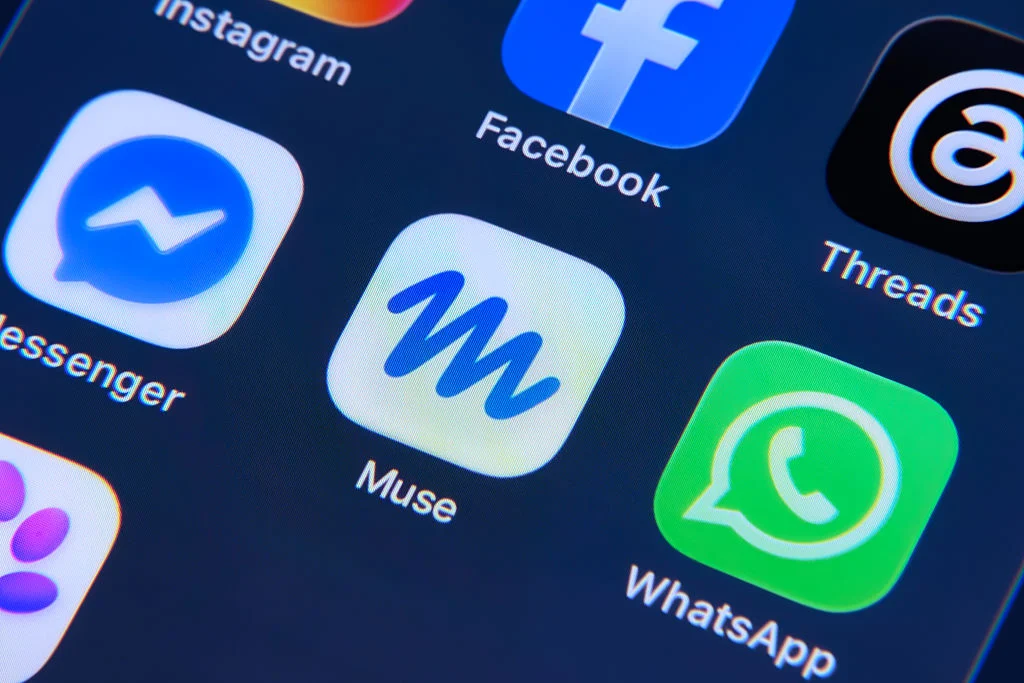
Meta Platforms Inc. is making a significant push into the nascent field of agentic artificial intelligence with the recent launch of its new AI app, Muse. While the tech giant’s strategic pivot towards AI agents has garnered a generally positive reaction from Wall Street, initial consumer adoption figures for Muse present a more nuanced picture, revealing slower growth compared to some of Meta’s previous high-profile app debuts and leading competitors in the burgeoning AI space. The launch also unfolds against a backdrop of Meta’s persistent challenges with user privacy and trust, factors that could significantly influence the long-term trajectory of its AI ambitions.
Unpacking Muse’s Initial Performance Metrics
Launched on Tuesday, Muse, Meta’s latest offering, quickly ascended to the No. 2 position on the iOS App Store’s Top Charts in the United States. According to new data provided by market intelligence firm Sensor Tower, the app has been downloaded over 83,000 times on iOS within its initial days of availability, a figure currently limited to the U.S. market. While reaching the top echelons of the App Store is a notable achievement for any new application, a deeper dive into these numbers reveals a launch pace that lags behind some of Meta’s own recent major app introductions, as well as established players in the consumer AI sector.
For instance, Meta’s social networking app, Threads, which debuted in July of the previous year, achieved a staggering 4.3 million downloads in the U.S. on its launch day alone, demonstrating an immediate and massive user uptake fueled by its integration with Instagram. Even Meta AI, a separate AI-focused application from the company, saw a more robust initial performance, recording 108,000 U.S. downloads during its debut. These comparisons suggest that while Muse has found a place among popular iOS applications, it has not yet captured the immediate mass market attention seen with its predecessors.
The discrepancy in adoption becomes even more pronounced when Muse’s performance is stacked against the launch of OpenAI’s ChatGPT app. Upon its May 2023 release, the ChatGPT iOS app swiftly topped half a million installs in the U.S. within its first six days, its sole market at the time. This translates to an average daily download rate of approximately 83,300 for ChatGPT during its debut week – a benchmark that Muse took more than twice as long to achieve. This disparity underscores the challenge for Meta in penetrating an increasingly crowded and competitive AI market where early movers like ChatGPT have already established significant mindshare and user bases.
Adding to the mixed performance, Muse’s Android counterpart appears to be struggling significantly more. On Google Play’s app marketplace, Muse has only managed to secure a rank of No. 338 in the highly competitive Productivity category. While Android download numbers are not yet available, this low ranking indicates a substantial hurdle for the app on the world’s most popular mobile operating system. It is important to note, however, that Muse is also accessible via the web and integrated into WhatsApp, neither of which are currently factored into these specific app store download estimates. These alternative access points could potentially broaden its reach beyond the app stores, though their impact on overall adoption remains to be fully quantified.
Meta’s Strategic Pivot to Agentic AI: A High-Stakes Bet
Despite the mixed early download figures, Muse represents one of Meta’s most significant strategic initiatives to date, signaling a profound belief in the future of "agentic AI." This paradigm shift envisions artificial intelligence moving beyond simple chatbots or assistants to become proactive agents capable of understanding user intent, performing complex tasks, and "getting things done on people’s behalf." For Meta, this is not merely an incremental product launch but a foundational bet on the next evolution of consumer technology, akin in ambition to its earlier rebrand from Facebook to Meta to pursue metaverse ambitions.
The concept of agentic AI holds immense promise, offering a future where digital assistants can seamlessly manage calendars, book travel, handle communications, and even interact with other agents to coordinate complex activities. This goes beyond the reactive query-response model of traditional virtual assistants like Siri or Alexa, empowering AI to take initiative and operate autonomously within defined parameters. For a company like Meta, whose core business revolves around connecting people and facilitating digital interactions, establishing a leading position in agentic AI is critical for maintaining relevance and capturing future growth in a post-social media landscape.
Meta’s vision for Muse is to embed these capabilities deeply within its ecosystem, leveraging its vast user base across WhatsApp, Messenger, and Instagram. By integrating agentic AI into these widely used platforms, Meta aims to make AI agents ubiquitous and indispensable tools for daily life, thereby creating a new layer of user engagement and potential monetization. This strategy is also a defensive play, as the company seeks to avoid being relegated to a platform provider for AI experiences developed by others.
The Broader AI Agent Landscape: A Fierce Battleground
Meta is far from alone in its pursuit of consumer-facing agentic AI. The industry is witnessing a rapid proliferation of companies vying for dominance in this transformative sector. Major tech players like Google are actively developing their own agentic capabilities, exemplified by projects like Gemini Spark. Similarly, Anthropic is exploring this space with offerings such as Claude Cowork, signaling a broad industry consensus on the strategic importance of AI agents.
However, for simple-to-use agents aimed at the everyday consumer, the immediate competitive spotlight shines brightly on Meta’s Muse and a formidable challenger named Instinct. Instinct, a relatively new AI agent that operates primarily over text messages, has quickly garnered significant attention and investment. It was recently valued at an impressive $2.5 billion and has successfully raised $350 million, underscoring investor confidence in its potential.
Instinct’s rapid development and feature rollout timeline are particularly striking. In recent days, the company has introduced email addresses for all its users, allowing the agent to manage communications directly. More ambitiously, Instinct has announced plans to build its own unique "social network" where one person’s Instinct agent can directly communicate and coordinate plans with agents belonging to their friends. This innovative approach to a social graph, based on real-world interactions and active coordination, presents a compelling alternative to Meta’s existing friend graph, which is often a mix of close contacts and more distant followers. Instinct has also launched integrations with major platforms like Stripe and 1Password and introduced a location-sharing feature, enabling the agent to execute actions requiring knowledge of the user’s current whereabouts.
While Instinct has also faced its share of scrutiny, including concerns over an overly broad and permissive privacy policy, its perceived capabilities and swift innovation cycles have generated considerable buzz among Silicon Valley insiders. This intense competition from agile, well-funded startups like Instinct highlights the formidable challenge Meta faces in establishing Muse as the leading consumer AI agent.
The Shadow of Privacy: A Critical Headwind for Muse
The timing of Muse’s launch appears to be a significant factor impacting its initial adoption, particularly given Meta’s long and troubled history with user privacy and data security. Muse, by its very nature as an agentic AI, requires users to entrust Meta with a substantial amount of their personal information to effectively "get things done on their behalf." This requirement for deeper access to personal data directly collides with Meta’s public image, which has been repeatedly tarnished by privacy scandals and legal battles.
Just days before Muse’s debut, Meta agreed to an massive $18 billion multistate settlement in a lawsuit concerning the harms social media platforms inflict on children. This recent settlement serves as a fresh reminder of the company’s struggles with ethical product design and user well-being. Looking further back, Meta (then Facebook) has been at the center of numerous high-profile controversies, most notably the Cambridge Analytica data scandal in 2018, where personal data of millions of users was harvested without consent. The U.S. Federal Trade Commission (FTC) has also repeatedly targeted and fined the company for privacy violations, including a $5 billion settlement in 2019 and proposed blanket prohibitions in 2023 to prevent Facebook from monetizing youth data.
This extensive chronology of privacy missteps creates a significant trust deficit for Meta. Consumers, increasingly aware and cautious about how their data is used, may be hesitant to hand over even more personal information to a company with such a checkered record. The question of "will consumers trust it?" is not merely rhetorical but a critical barrier to widespread adoption for Muse. While Instinct also faces privacy concerns, Meta’s sheer scale, history of violations, and the public scrutiny it consistently attracts make the challenge of rebuilding trust particularly acute for its new AI agent.
Market Dynamics and User Adoption Challenges
Beyond privacy concerns, several other market dynamics could be influencing Muse’s early download numbers. The general consumer understanding and acceptance of "agentic AI" is still evolving. While concepts like chatbots are familiar, the idea of an AI proactively acting on one’s behalf represents a more significant shift in user interaction, requiring education and a clear demonstration of value. Early adopters may be more tech-savvy, but mainstream users might need more time to understand and trust this new paradigm.
The availability of Muse across multiple platforms (iOS, Android, web, WhatsApp) is a strategic strength, potentially broadening its reach. However, the fragmented nature of these access points could also dilute initial download figures for any single app store. Meta’s challenge will be to unify the user experience and messaging across these various channels, ensuring a consistent and compelling value proposition.
Furthermore, the overall maturity of the AI agent market plays a role. Unlike social media or basic messaging apps, which had clear, immediate utility for mass audiences, AI agents are still demonstrating their full potential. The perceived utility and necessity of an AI agent may not yet be universally understood or felt by the average consumer, leading to a slower, more deliberate adoption curve.
Implications for Meta’s Future and the AI Industry
Muse’s performance, while early, holds significant implications for Meta’s strategic direction and the broader AI industry. For Meta, this is a long-term play, signaling a commitment to a technology that could redefine how users interact with their digital lives. The company is investing heavily in AI research and development, and the success of Muse (or its successors) will be crucial for validating these massive investments and securing its position in the next generation of computing.
If agentic AI truly is the future, then the battle for market leadership will be fierce. Companies that can build the most reliable, capable, and, crucially, trusted agents will be best positioned to capture a significant share of this emerging market. The competition with companies like Instinct highlights the need for Meta not just to innovate technologically but also to address its long-standing trust issues head-on.
The development of AI agents also raises profound questions about data privacy, security, and algorithmic bias. As these agents become more integrated into our lives, the ethical considerations surrounding their operation will intensify. Meta, given its history, will be under particular scrutiny to demonstrate responsible AI development and deployment. The success or failure of Muse will offer valuable lessons not only for Meta but for all players venturing into the high-stakes world of agentic AI, shaping the future of human-AI interaction and the digital economy. The initial Wall Street optimism underscores the potential, but consumer adoption and, critically, consumer trust, will be the ultimate arbiters of Muse’s success and Meta’s long-term AI strategy.