Sisilia Frederika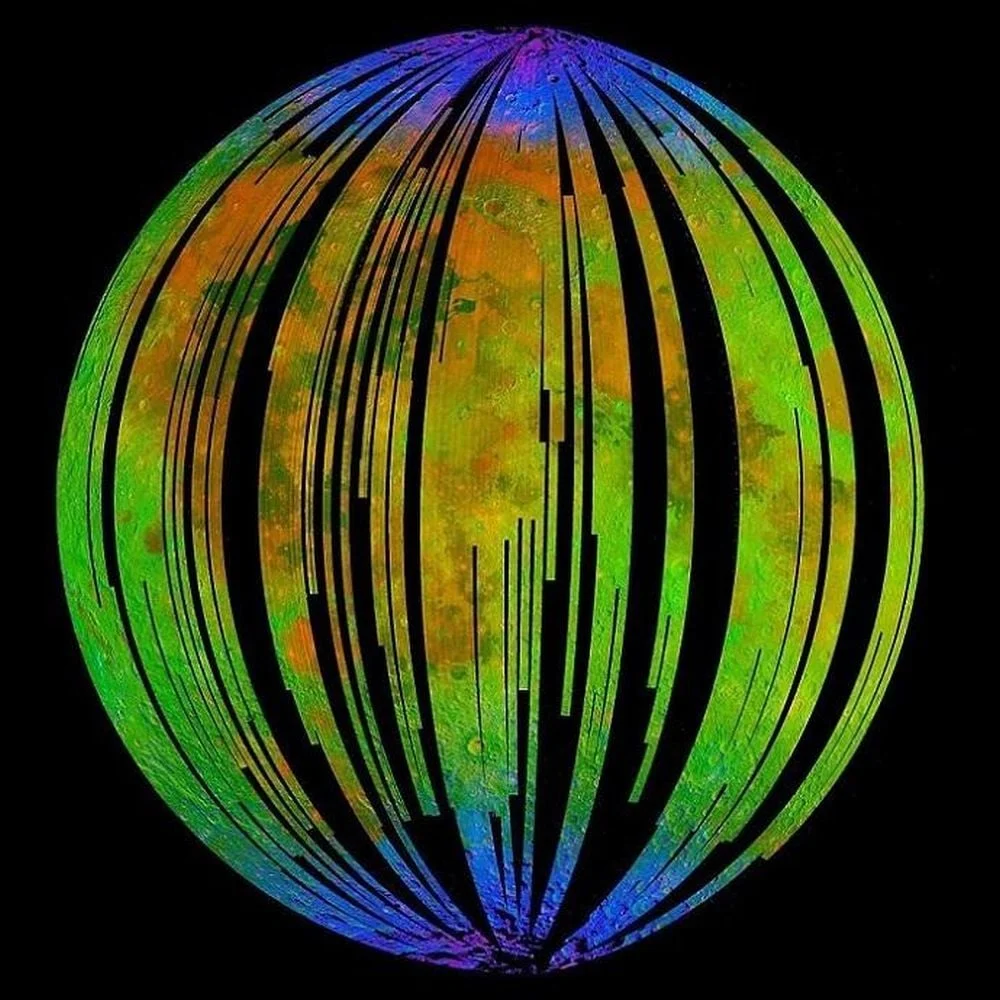
The romanticized vision of the Moon as a bustling "eighth continent" teeming with industrial hubs and sprawling metropolitan centers faces a stark geological reality: there simply is not enough water to sustain a large-scale civilization. While the mid-20th-century space age was defined by a specific brand of technological optimism, recent scientific analysis suggests that the billionaire-led dreams of lunar cities housing millions of people are fundamentally unfeasible. According to a new study published in Frontiers in Space Technologies, even a seemingly vast reserve of one billion tons of lunar water would be exhausted within decades by a population of just one million residents.
The research, titled "No cities on the Moon: a billion tons of water is not enough for sustainability," was authored by Dr. Martin Elvis of the Smithsonian Astrophysical Observatory and Dr. Jonathan McDowell of the Space Research Centre at Durham University. Their findings challenge the prevailing narrative that lunar resources are effectively infinite. By applying rigorous metabolic and industrial data to current estimates of lunar ice, the researchers argue that while a small research outpost—akin to those in Antarctica—is sustainable, a true city is a mathematical impossibility under current resource constraints.
Historical Context: From Project Horizon to the Artemis Era
The ambition to colonize the Moon is not a new phenomenon. In the late 1950s and early 1960s, the "futuristic zeitgeist" led to serious military and scientific proposals for lunar settlement. In 1959, the U.S. Army’s Project Horizon explored the feasibility of establishing a lunar outpost to protect American interests in space. Simultaneously, visionaries like Arthur C. Clarke imagined inflatable, pressurized domes that would eventually expand into interconnected lunar cities.
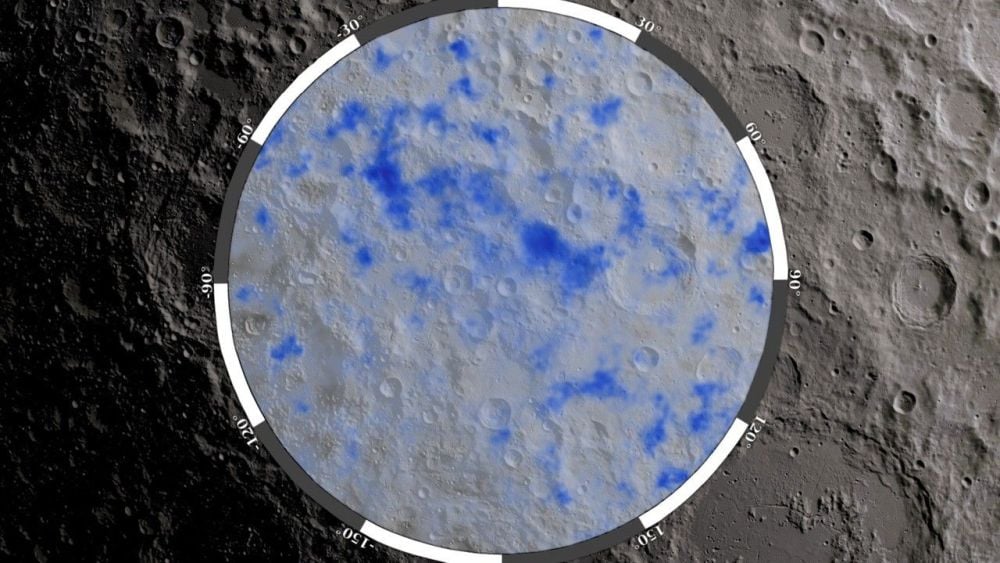
For decades, these plans remained dormant due to the perceived dryness of the lunar surface. However, the discovery of water ice in the Moon’s Permanently Shadowed Regions (PSRs) at the poles reignited interest. Missions such as the Clementine (1994), Lunar Prospector (1998), and the LCROSS impactor (2009) confirmed that ancient ice, sheltered from the Sun for billions of years, exists within deep craters like Shackleton. This discovery shifted the global perspective, leading contemporary figures like Elon Musk and Jeff Bezos to propose grand visions of heavy industry and self-growing cities on the lunar surface.
The Water Bottleneck: Quantifying the Lunar Reserve
The core of the Elvis and McDowell study rests on the scarcity of water. While the Moon has a surface area roughly 50% larger than North America, it lacks the hydrological cycle that sustains life on Earth. Earth possesses approximately 1.4 billion billion tons (1.4 × 10¹⁸ metric tons) of water. In contrast, the most generous baseline estimate for the Moon’s water ice is a mere one billion tons.
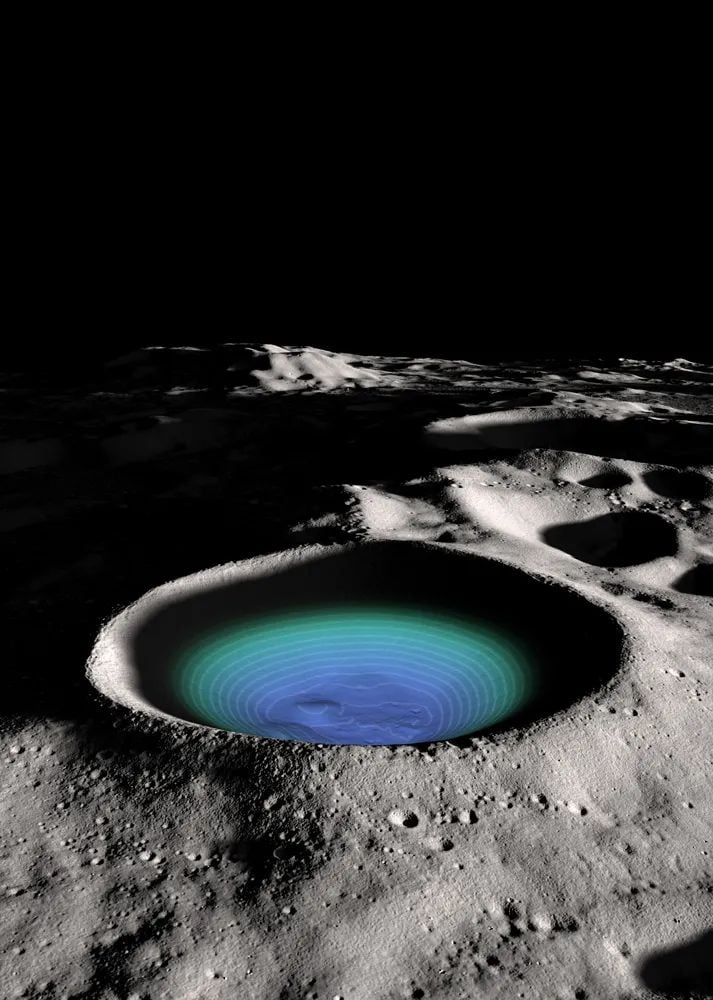
This one billion tons is not readily available; it is trapped in the regolith (lunar soil) of PSRs where temperatures never exceed -150°C. Furthermore, the exact quantity remains a subject of intense scientific debate. For instance, studies of the 21-kilometer-wide Shackleton Crater suggest it could contain anywhere between 1.6 million and 4.5 million tons of ice. The discrepancy highlight a lack of "ground truth"—direct physical sampling—that makes large-scale planning risky.
Even if the one-billion-ton estimate is accurate, the researchers point out that water is a non-renewable resource on the Moon. Unlike Earth, where water is recycled through the atmosphere and oceans, lunar water used for life support, rocket fuel, and industrial processes is subject to loss.
The Metabolic Cost of Lunar Life
To understand why a billion tons is insufficient, the study breaks down human consumption requirements. On Earth, a person in a developed nation like the United States uses roughly 125 tons of water per year for personal needs. However, the largest drain on water resources is not hygiene or hydration, but food production.
According to World Bank data, it takes between 2,000 and 5,000 liters of water to produce the daily food requirements for one person. This translates to an annual requirement of 730 to 1,825 tons of water per person just for agriculture. When these figures are applied to a hypothetical lunar city of one million people, the results are catastrophic:
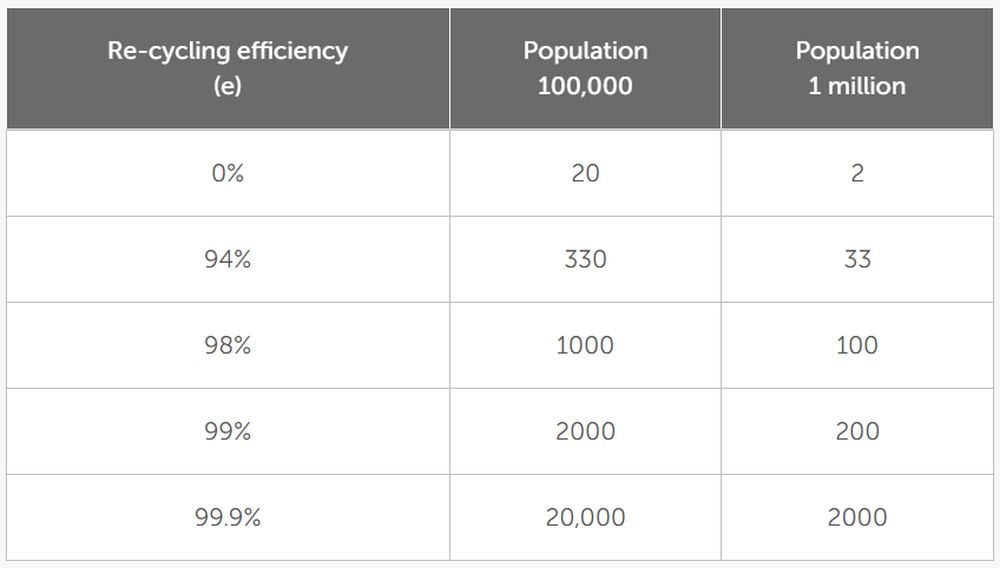
- Zero Recycling: The city would exhaust the entire one-billion-ton lunar water supply in just 2.4 years.
- Current ISS Efficiency (94%): At the recycling rate maintained by the International Space Station until early 2023, the water would last approximately 40 years.
- State-of-the-Art Recycling (98%): Even at the 98% efficiency recently achieved by the ISS, a city of one million would deplete the lunar reserves in 100 years.
"For such a large investment, a lifetime of about a century seems to fall short of the sustainable, long-term settlement beyond Earth that some advocate," Elvis and McDowell explain. A city that collapses after three generations is not a civilization; it is a temporary camp.
Energy vs. Resources: The Power Paradox
Interestingly, the researchers found that energy is not the primary limiting factor for lunar settlement. While extracting ice from frozen craters and processing it requires immense power, the Moon offers unique advantages for energy generation.
The rims of the very craters that house ice—often referred to as "Peaks of Eternal Light"—receive nearly constant sunlight. Photovoltaic arrays could be mounted vertically on these rims, rotating to follow the Sun. The authors calculate that solar power, potentially supplemented by nuclear fission or future fusion technology, could easily support a population of one million.
"If industry requires no more than double the personal use rate, then a million people can be supported on the Moon with either solar or fission power," the authors write. The bottleneck, therefore, is not the ability to power a city, but the ability to provide the basic biological building block of life.
Redefining Sustainability: From Megacity to Village
The study suggests that the only way to achieve true sustainability on the Moon is to significantly scale back population expectations. If the goal is a settlement that lasts for a millennium, the population must be kept in check.
A city of 100,000 people, utilizing 98% water recycling efficiency, could potentially survive for 1,000 years on a billion tons of water. However, even this requires a radical departure from Earth-like living. Diets would likely need to be strictly vegan, as raising livestock or poultry requires vast amounts of water that the Moon cannot afford.
The most realistic future, according to Elvis and McDowell, is a "Moon Village" with a population of approximately 1,000 people—roughly equivalent to the winter population of scientific bases in Antarctica. At this scale, the lunar water supply could be used "relatively carefree" without the immediate threat of exhaustion.
Implications for Policy and Space Governance
The findings have significant implications for international space policy, particularly the Artemis Accords and the 1967 Outer Space Treaty. If lunar water is as scarce as the study suggests, the "first come, first served" approach favored by commercial entities could lead to the rapid depletion of a finite planetary resource.
The authors call for a global framework for the stewardship of lunar water. "Humanity will need to plan, govern and regulate the use of lunar water, rather than adopt a free-for-all approach to water extraction and use," they assert. Without regulation, early industrial mining operations—such as those intended to produce liquid oxygen and hydrogen for rocket fuel—could inadvertently "bankrupt" the Moon’s water reserves before a permanent settlement can even be established.
The Search for "Ground Truth"
The ultimate feasibility of lunar habitation rests on the discovery of more water. There is a possibility that vast reservoirs of water ice exist deep underground, shielded from current detection methods. If such deposits are found, doubling the available water would double the lifespan of any potential settlement.
However, until robotic and human missions can drill into the lunar surface and provide "ground truth" data, the grand plans of space billionaires remain grounded in speculation rather than science. As Dr. Elvis noted in an accompanying letter, "If the ambitious plans of the space billionaires are to be realized, then finding more water will be the first step."
For now, the Moon remains a harsh, arid frontier. While it may serve as a vital scientific outpost or a refueling station for missions to Mars, the dream of lunar metropolises appears to be a mirage shimmering over the airless, frozen plains of the lunar poles. The science suggests that for the foreseeable future, the Moon will remain a place where humans visit and study, but not a place where they thrive by the millions.