Clarissa Hana
A sophisticated and far-reaching cybercriminal operation has been discovered to be utilizing over 5,400 compromised small-business websites to distribute malicious payloads, a significant portion of which are stored within smart contracts on the BNB Smart Chain (BSC). Researchers have identified a persistent campaign that leverages the blockchain’s inherent resilience to evade traditional takedown methods, marking a concerning evolution in malware distribution tactics. The operation, which has been active for several months, primarily targets websites built on popular platforms like WordPress and PrestaShop, suggesting a broad attack surface exploitation.
The EtherHiding Technique: Blockchain as a Resilient Infrastructure
The core of this operation lies in a technique known as "EtherHiding," which allows threat actors to embed malicious code or crucial configuration data directly into blockchain smart contracts. In this specific campaign, the compromised websites are injected with a script that, instead of directly downloading malware, fetches its next-stage payload from a smart contract deployed on the BSC Testnet. This approach offers significant advantages to attackers: blockchains are decentralized and highly resistant to censorship or single points of failure, making it exceptionally difficult for security researchers and law enforcement to disrupt their infrastructure.
Netskope, the cloud security platform that brought this operation to light, explained that the BSC Testnet, while designed for developers to test applications, functions much like the main production blockchain but is accessible free of charge. This accessibility makes it an attractive and cost-effective staging ground for malicious activities. By storing payloads on the blockchain, attackers can ensure their malware remains accessible even if individual compromised websites are cleaned or taken offline. Furthermore, the ability to modify the payload within the smart contract means the attackers can dynamically update their malicious offerings, adapting to new security measures or evolving their attack objectives.
A Multi-Stage Delivery Chain: From Lure to Payload
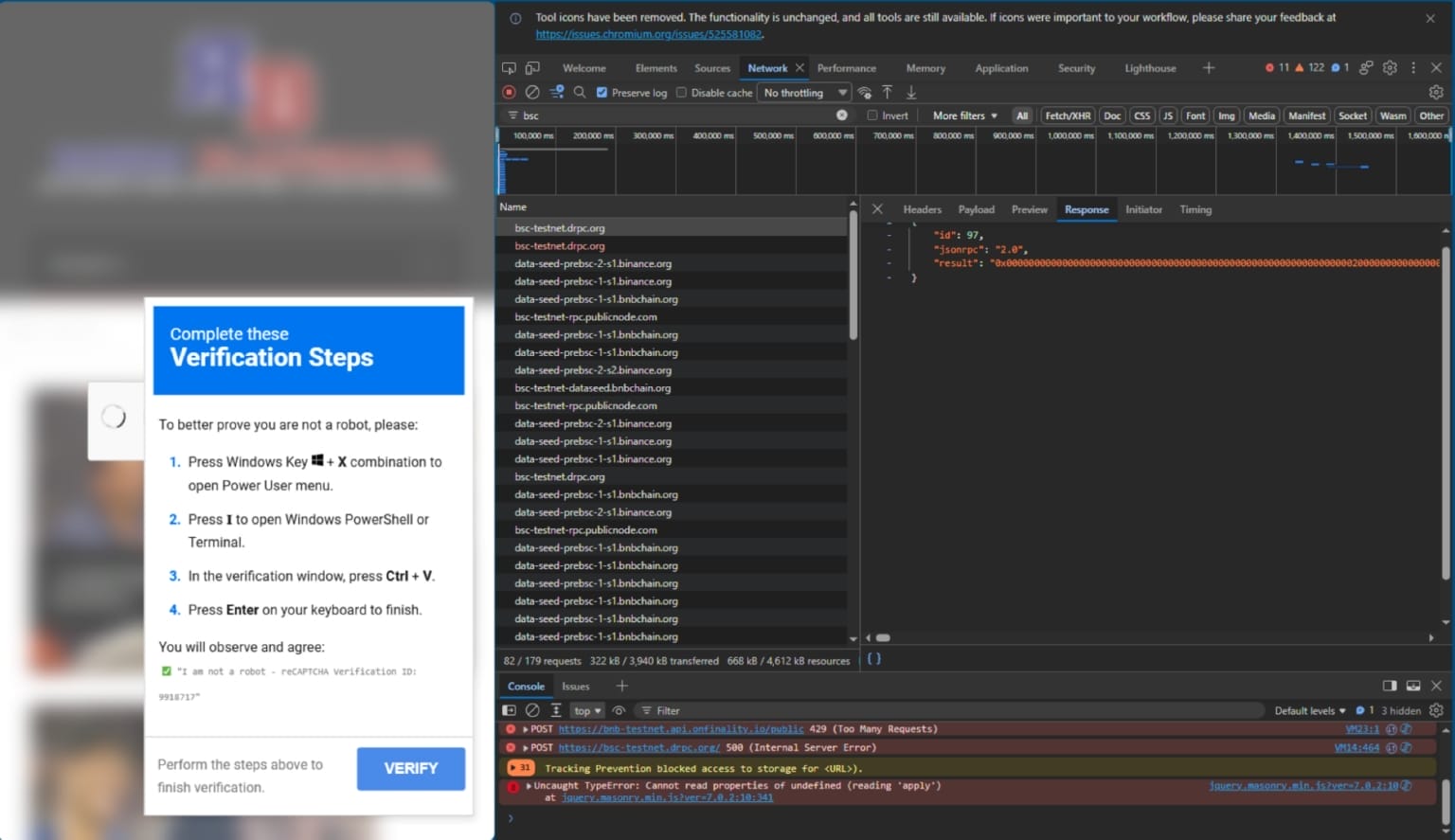
The observed delivery chain begins with the compromised websites displaying a deceptive "ClickFix" lure. This lure typically presents visitors with a fake CAPTCHA, a common security measure designed to distinguish humans from bots. However, in this malicious context, the CAPTCHA serves as a social engineering tactic to trick users into performing a specific action. The lure instructs unsuspecting visitors to open the Windows Run dialog box and paste a PowerShell command. This command, when executed, is designed to initiate the download and execution of the final malicious payload onto the victim’s machine.
The initial compromise vector for these thousands of websites remains unknown, which is a critical gap in understanding the full scope and origin of the operation. However, the consistent injection of the malicious script across such a large number of sites points to a well-resourced and organized threat actor. The choice of WordPress and PrestaShop as primary targets is also significant, as these platforms power a vast number of small and medium-sized businesses globally, offering a wide pool of potential victims.

Evolution of the Payload: From ClickFix to WebRTC
Initially, the ClickFix payload delivered by this operation was designed to perform actions related to the malware’s primary objectives, which likely involve information theft, establishing backdoors, or participating in botnets. However, researchers observed a notable evolution in the campaign’s methodology. In later stages, the threat actor replaced the ClickFix payload stored within the smart contract with a more advanced component: a WebRTC data-channel stager.
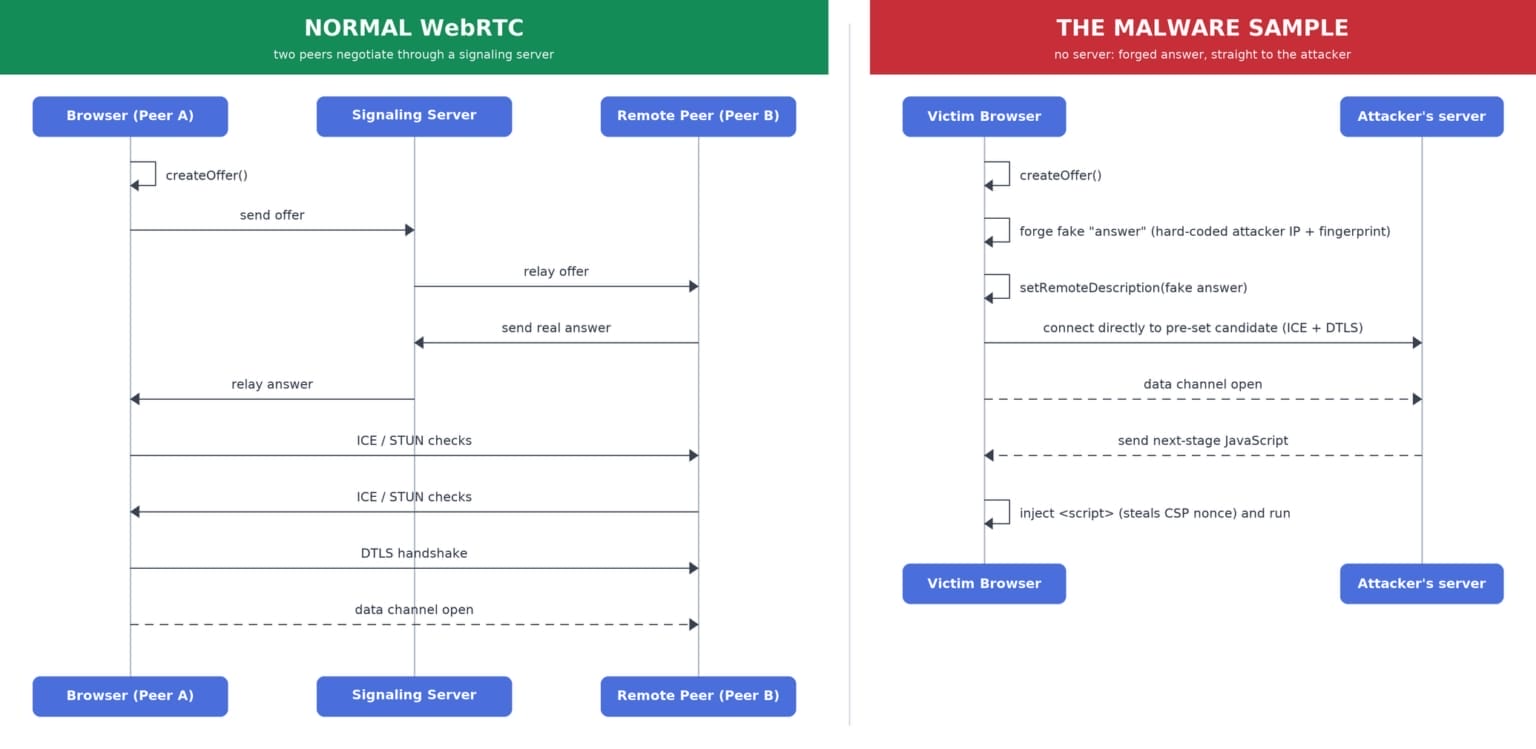
This shift to WebRTC signifies a move towards more covert and sophisticated communication channels. WebRTC (Web Real-Time Communications) is a technology that enables real-time communication applications, such as video conferencing and instant messaging, directly between web browsers. In this malicious context, the attackers exploit WebRTC to establish a covert, encrypted channel between the compromised victim machine and their command-and-control (C2) infrastructure.
The mechanism behind this WebRTC exploitation is particularly ingenious. According to Netskope’s analysis, the script creates a peer connection and a data channel, initiating a process that mimics a legitimate WebRTC handshake. However, instead of engaging in a genuine handshake with a remote peer, the attacker’s code "hand-writes the answer itself." This manipulation bypasses the standard authentication and negotiation process, effectively opening a data channel directly to the cyberattacker without any external interaction.
Once this covert channel is established, the stager receives JavaScript code from a hardcoded C2 address. This code is then buffered and executed, either when the channel is closed or after a predetermined delay of approximately ten seconds. A critical aspect of this execution is that the received code is assembled and run directly in the browser’s memory. By injecting this code into the head of the Document Object Model (DOM), the attackers avoid writing the malicious script to the disk, making it significantly harder for traditional endpoint security solutions to detect. This "fileless" malware technique is notoriously difficult to trace and remove.
Scale and Persistence of the Operation
The sheer scale and persistence of this operation are alarming. Netskope’s telemetry data indicates that the campaign is actively engaging hundreds of compromised websites daily. In August alone, nearly 400 websites were observed calling the BSC Testnet RPC endpoints each day. The operation reached an all-time peak in daily activity with 536 compromised websites contacting the endpoints. This consistent high volume of activity underscores the ongoing nature of the threat and the attackers’ commitment to maintaining their infrastructure.
The steady growth in the number of compromised sites contacting the BSC Testnet endpoints since spring highlights a strategic and expanding effort by the threat actors. This growth suggests that the attackers are not only maintaining their existing network of compromised sites but are also actively seeking and compromising new ones to expand their reach and impact.
Broader Implications and Defender Recommendations
The use of blockchain technology for malware distribution presents a significant challenge for cybersecurity defenders. The decentralized and immutable nature of blockchains makes it incredibly difficult to identify and remove malicious content once it has been deployed. Traditional takedown procedures, which often involve contacting hosting providers or domain registrars, are largely ineffective against blockchain-based infrastructure.
This operation underscores a broader trend where threat actors are increasingly exploring and exploiting novel technologies to enhance their evasion capabilities and operational resilience. The adoption of fileless techniques and covert communication channels further complicates detection and response efforts.
In response to this threat, Netskope recommends that organizations take proactive measures to defend against this campaign. Specifically, they advise defenders to block the entire pool of BSC testnet RPC endpoints that have been identified and made publicly available through their threat intelligence resources. This is a crucial first step in preventing compromised systems from communicating with the malicious infrastructure.
Furthermore, Netskope suggests monitoring for non-web UDP traffic that is associated with WebRTC. By identifying and analyzing such traffic patterns, security teams can potentially detect the covert communication channels being established by the WebRTC stager, even if the underlying payload remains elusive.
The success of this operation also highlights the ongoing vulnerability of small and medium-sized businesses to sophisticated cyberattacks. These entities often lack the extensive security resources and expertise of larger corporations, making them prime targets for mass compromise. The initial compromise method’s unknown status also implies a need for greater vigilance in website security practices, including regular updates, robust access controls, and diligent monitoring for suspicious activity.
The Evolving Threat Landscape
The continued evolution of cyber threats necessitates a dynamic and adaptive approach to cybersecurity. The utilization of blockchain for storing and distributing malware, as demonstrated by the ClickFix campaign, is a clear indicator that attackers are constantly seeking new avenues to enhance their operations. As security measures improve, so too will the ingenuity of those seeking to bypass them.
The fact that the attackers can modify their payloads dynamically within the smart contracts means that even if a specific variant of the malware is identified and neutralized, the threat can re-emerge with different functionalities or objectives. This requires a continuous effort in threat intelligence gathering, analysis, and the rapid deployment of countermeasures.
The campaign’s longevity and expanding reach, evidenced by the increasing number of compromised sites, suggest that this is not an isolated incident but rather a significant and ongoing threat. The implications extend beyond individual businesses, potentially impacting the wider digital ecosystem if these compromised sites are used to launch further attacks or distribute other forms of malware.
The use of WebRTC for covert communications is particularly concerning, as it leverages a legitimate technology for malicious purposes. This makes it harder to distinguish between benign and malicious network traffic, demanding more sophisticated detection mechanisms that can analyze traffic patterns and behavioral anomalies.
Ultimately, this operation serves as a stark reminder of the ever-changing nature of cyber threats and the critical importance of robust, multi-layered security strategies. Organizations must remain vigilant, invest in advanced threat detection and response capabilities, and foster a culture of security awareness to mitigate the risks posed by such sophisticated and resilient cybercriminal enterprises. The fusion of blockchain technology with advanced malware distribution techniques represents a significant hurdle that the cybersecurity community must continue to address with innovation and collaboration.