Sisilia Frederika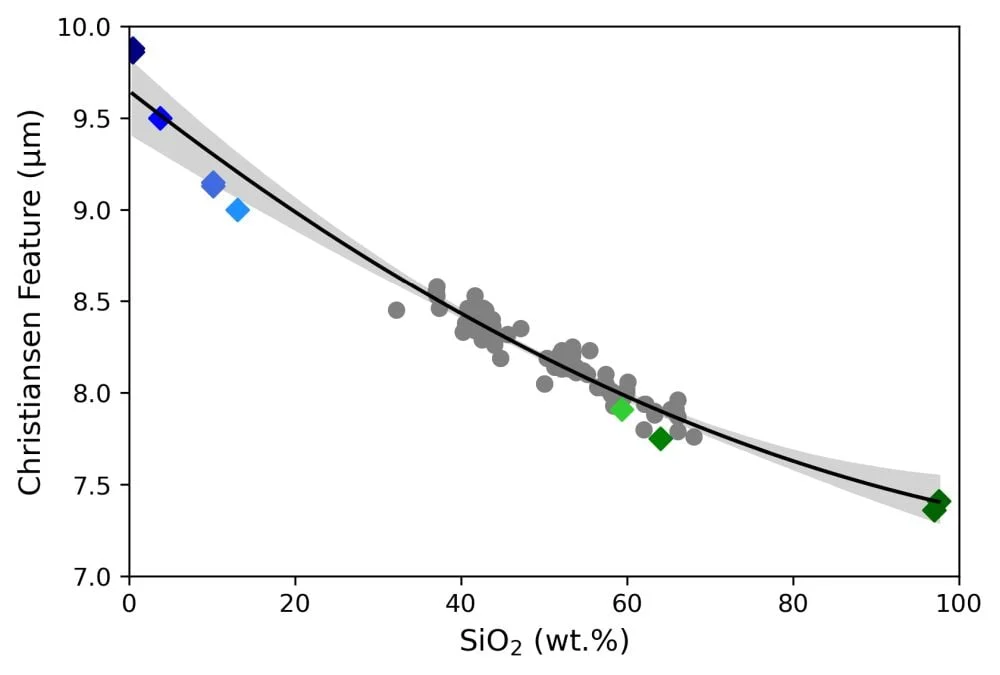
The smallest and innermost planet of our solar system, Mercury, has long been characterized by its desolate, crater-scarred landscape, bearing a striking resemblance to Earth’s Moon. However, recent scientific inquiries are reshaping the narrative of this seemingly dormant world, suggesting a past defined by volcanic activity far more intense and thermally extreme than previously understood. According to a new study published in the journal Planetary Research, titled "The SiO2 abundance on the surfaces of the Moon and Mercury," the chemical composition of Mercury’s crust indicates that its volcanic rocks originated from significantly deeper and hotter regions of the mantle than earlier models predicted.
Lead author Christian Renggli, a research scientist at the Max Planck Institute for Solar System Research (MPS) and head of the Experimental Laboratory Magma Ocean research group, spearheaded the study to refine our understanding of planetary crustal evolution. By analyzing the abundance of silicon dioxide (SiO2), or silica, researchers have unlocked new insights into the magmatic processes that shaped the terrestrial planets. The findings suggest that Mercury’s surface contains approximately 25% less silica than previously estimated, a revelation that carries profound implications for the planet’s internal temperature and its early geological history.
The Role of Silica in Planetary Evolution
In the field of planetary geology, silica content serves as a primary metric for understanding the nature of volcanic rock and the evolution of a planet’s crust. The concentration of SiO2 is intrinsically linked to the viscosity of magma; high-silica magmas tend to be more viscous and explosive, while low-silica magmas are typically "runnier," leading to the formation of vast, flat lava plains. On Earth, this distinction defines the difference between the explosive eruptions of Mount St. Helens and the fluid lava flows of Hawaii’s Mauna Loa.
On Mercury, the abundance of silica provides a window into the planet’s thermal state during its formative years. As a young rocky planet cools, its mantle begins to solidify. During this process, the first minerals to crystallize typically exclude silica, causing the remaining molten mantle to become progressively enriched with SiO2 over time. Consequently, lava that wells up from a partially cooled, shallower mantle will generally have a higher silica content. Conversely, lava originating from a deeper, hotter, and more primitive mantle will exhibit lower silica levels.
The new data, which places Mercury’s surface silica abundance at approximately 37 weight percent (wt.%), suggests that the volcanic material forming the planet’s vast plains was sourced from extreme depths. This indicates that Mercury remained much hotter internally for a longer period than scientists had once assumed, driven by a mantle that underwent deep-seated melting.
The Christiansen Feature: A Spectral Fingerprint
To reach these conclusions without the benefit of physical samples from Mercury’s surface, Renggli and his team utilized a remote sensing technique centered on the Christiansen Feature (CF). The CF is a specific point in the mid-infrared spectrum where a mineral or rock surface becomes effectively "transparent" at a particular wavelength. This wavelength is highly sensitive to the mineralogical composition and crystalline structure of the material being observed.
"The SiO2 abundance on rocky planetary surfaces is a key indicator for planetary crust composition and magmatic evolution," the researchers noted in their paper. By calibrating how the CF shifts in response to varying levels of silica, the team developed a method to map the chemical makeup of planetary surfaces from orbit or Earth-based observatories.
Before applying this technique to the difficult-to-study Mercury, the researchers used the Moon as a "touchstone." The Moon provides an ideal laboratory for such calibrations because scientists possess both high-resolution orbital data and physical samples returned by the Apollo, Luna, and Chang’e missions. The team’s remote-sensing map of the Moon successfully reproduced the well-known "bi-modal distribution" of the lunar surface—distinguishing between the silica-poor basaltic maria (lava plains) and the slightly more silica-rich lunar highlands. The accuracy of the CF-based map in matching the ground-truth samples from landing sites gave the researchers the confidence to apply the model to the Hermean surface.
Lessons from the MESSENGER Mission
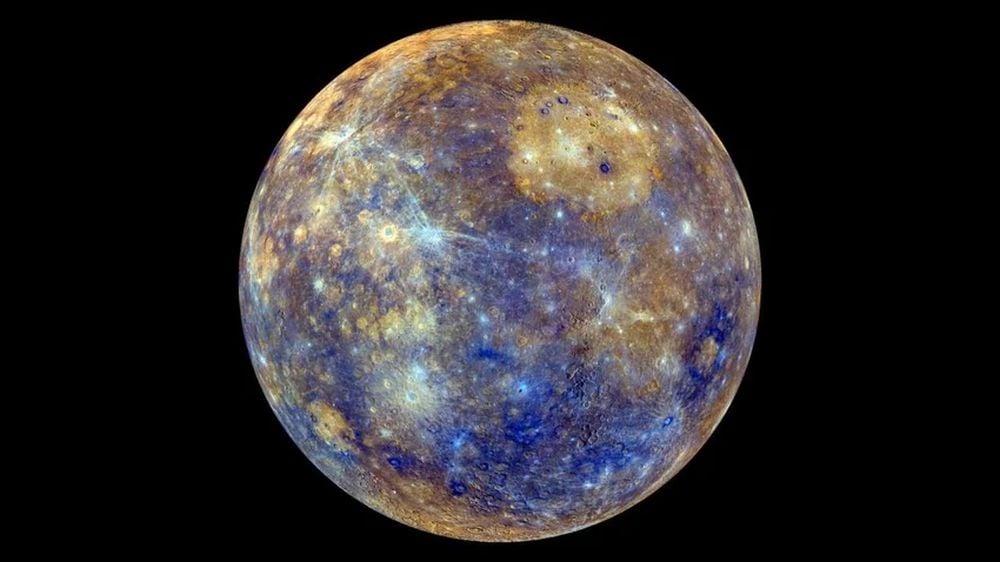
Much of our modern understanding of Mercury comes from NASA’s MESSENGER (MErcury Surface, Space ENvironment, GEochemistry, and Ranging) mission, which orbited the planet from 2011 to 2015. MESSENGER transformed our view of the planet, revealing that it was not merely a dead rock but a world with a complex volcanic past.
The mission identified vast lava plains, some exceeding one kilometer in thickness, which covered roughly 6% of the planet’s surface. These plains were primarily formed between 4.1 and 3.5 billion years ago. Beyond the plains, MESSENGER discovered "hollows"—strange, bright, shallow depressions that appear to be unique to Mercury—and pyroclastic vents surrounded by reddish deposits known as faculae. These features are indicative of explosive volcanic eruptions fueled by magmas rich in volatile compounds, such as sulfur and potassium.
However, MESSENGER’s instruments had limitations in precisely quantifying silica levels across the entire globe. The new research by Renggli’s team builds upon the MESSENGER foundation by refining the interpretation of mid-infrared data, leading to the discovery that the silica levels are much lower than the MESSENGER-era estimates had suggested.
The Challenges of Reaching the Innermost Planet
Mercury remains one of the least explored terrestrial planets, largely due to the immense technical challenges associated with reaching it. Despite its proximity to Earth compared to the outer planets, Mercury is notoriously difficult to orbit or land upon.
The primary obstacle is the Sun’s massive gravitational well. A spacecraft traveling toward Mercury accelerates as it "falls" toward the Sun. To enter a stable orbit around the small planet, the spacecraft must perform massive braking maneuvers, requiring an enormous amount of fuel. In terms of "Delta-V" (the change in velocity required), it actually takes more energy to reach and orbit Mercury than it does to reach Pluto. Furthermore, the intense solar radiation and heat—reaching up to 430 degrees Celsius (800 degrees Fahrenheit) on the day side—require specialized shielding that adds weight and complexity to any mission.
Because no spacecraft has ever landed on Mercury to conduct in situ analysis or return a sample, scientists must rely entirely on remote sensing and laboratory simulations. This lack of physical samples makes the calibration work performed by Renggli’s team on lunar samples essential for interpreting the data sent back by orbital instruments.
Looking Ahead: The BepiColombo Mission
The timing of this research is particularly significant as the international scientific community prepares for the arrival of the BepiColombo mission. A joint venture between the European Space Agency (ESA) and the Japan Aerospace Exploration Agency (JAXA), BepiColombo is currently en route to Mercury and is scheduled to enter orbit in late 2025 or early 2026.
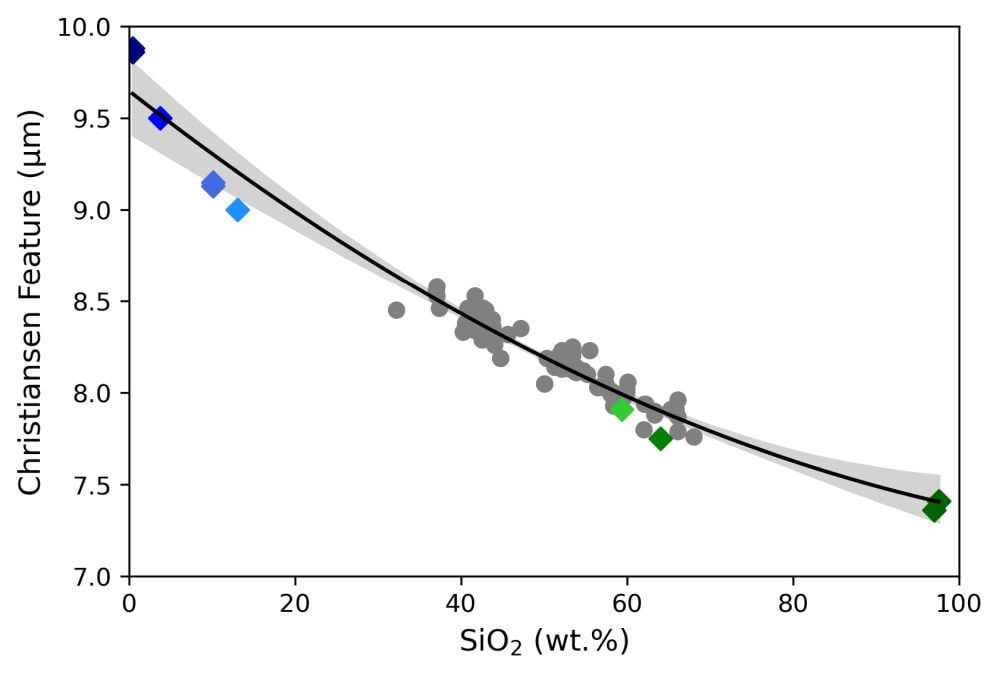
One of the mission’s most critical instruments is MERTIS (Mercury Radiometer and Thermal Infrared Spectrometer). MERTIS is designed to map the planet’s surface composition, mineralogy, and thermal profile in the mid- to far-infrared wavelengths with unprecedented resolution.
"Our study lays the groundwork for deriving the most accurate information possible about the silicon dioxide content of Mercury’s surface from BepiColombo’s measurements," said Renggli. By providing a refined calibration for silica detection, the new research ensures that when MERTIS begins its global scan, scientists will be able to interpret the data with a higher degree of geological certainty.
Implications for Planetary Formation Theories
The finding that Mercury’s crust is significantly more silica-poor than previously thought forces a reconsideration of the planet’s early thermal evolution. If the lava that formed the surface was sourced from a deeper, hotter mantle, it suggests that Mercury’s interior was more dynamic and stayed hotter for longer than models of small-planet cooling typically allow.
This raises new questions about Mercury’s abnormally large iron core, which makes up about 85% of the planet’s radius. Some theories suggest that a massive impact in the early solar system stripped away much of Mercury’s original silicate crust and mantle, leaving behind a core-heavy world. Others suggest that the intense heat of the early Sun vaporized the outer layers of the planet.
If the remaining mantle was capable of producing such low-silica, deep-melt volcanism, it implies a specific chemical and thermal starting point for the planet that must be accounted for in future formation models. The "violent" nature of its volcanism—characterized by high-temperature, low-viscosity flows and volatile-driven explosions—paints a picture of a world that was geologically hyperactive during its first billion years.
As BepiColombo nears its destination, the groundwork laid by Renggli and his colleagues provides the framework for a new era of Hermean exploration. By the end of the decade, the data provided by MERTIS and other instruments will likely confirm whether Mercury’s "hollows" and "faculae" are the dying gasps of a once-fervent interior or if the planet still holds thermal secrets deep beneath its charred, cratered skin. For now, the evidence points toward a planet that was once a much more fiery and chemically complex world than its moon-like appearance suggests.