Vera Intan Clara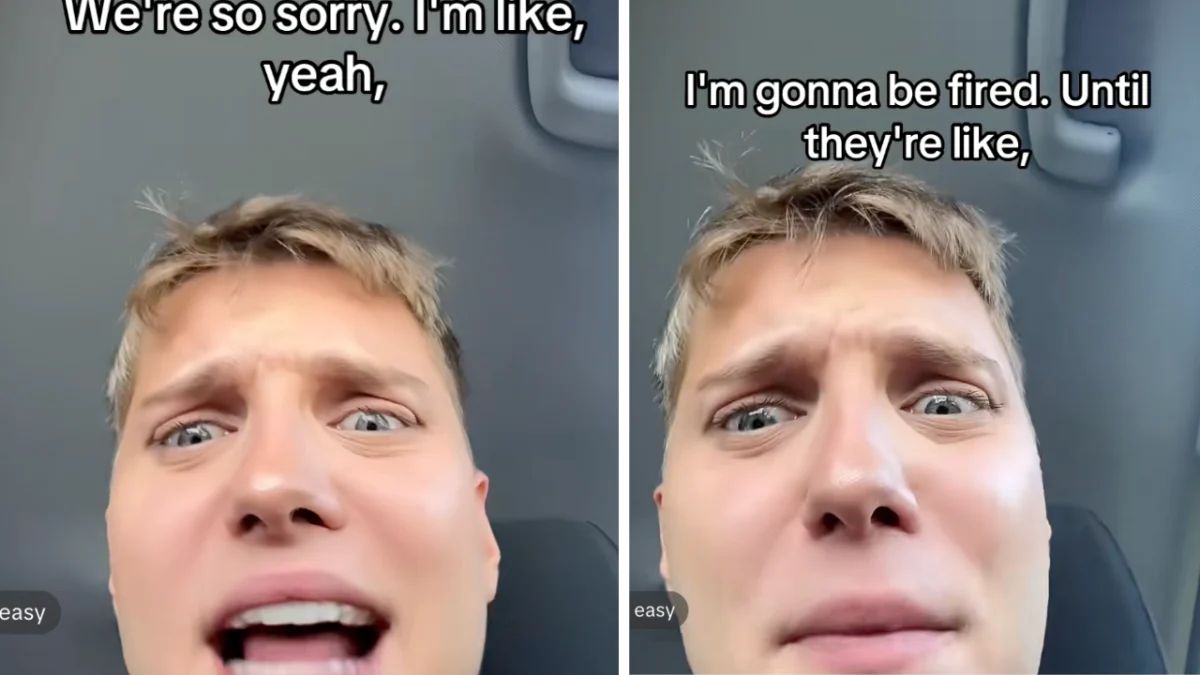
A recent viral video on TikTok has ignited a widespread discussion across the hospitality industry and social media platforms, detailing a server’s audacious attempt to manage a critical service failure with an elaborate, fabricated narrative. Dean Redmonds, known as @deanredmonds on TikTok, shared an account of how he concocted a story involving a chef’s vehicular accident to explain significant delays for a large party of 30 diners, a narrative that later escalated with the unexpected participation of a colleague. The video, which has garnered over 127,000 views and dozens of comments, highlights the intense pressures faced by frontline restaurant staff and the creative, albeit ethically questionable, lengths to which some may go to maintain customer satisfaction.
The Incident Unfolds: A Chronological Account of Service Recovery
The sequence of events, as recounted by Dean, began with the daunting task of serving a reservation for 30 people, a scenario inherently fraught with logistical challenges for any restaurant. Large parties often strain kitchen capacity, complicate order accuracy, and demand exceptional coordination from front-of-house staff.
The initial challenge arose not from a delay, but from a dietary miscommunication. Dean described being alerted by a co-worker that a vegan diner at the table was about to consume a non-vegan dish—specifically, a bacon, egg, and cheese order. "I just had a 30-person table. As I’m putting in their food order, my co-worker comes up to me and he’s like, ‘That vegan over there doesn’t know if she could eat that bacon, egg and cheese.’ So I literally have to run over and slap it out of her hand and be like, ‘You can’t eat any of that, ma’am,’" Dean recalled in his video. This immediate intervention, while preventing a significant dietary mishap, underscored the high-stakes environment of managing diverse customer needs within a busy service period.
The pivotal error, however, occurred shortly thereafter when Dean realized he had forgotten to input approximately half of the 30-person table’s food orders into the kitchen system. By this point, a considerable amount of time had passed, and the diners were already experiencing an extended wait for their meals. Faced with the unenviable prospect of admitting his mistake and informing hungry customers of an even longer delay, Dean opted for an unconventional solution. Instead of transparency, he decided to employ a creative, albeit entirely fictional, explanation.
His chosen narrative was dramatic: the restaurant’s chef had been involved in a serious vehicular accident on the way to work that morning, causing a significant disruption in kitchen operations and, consequently, the delay in their food. This explanation, designed to elicit sympathy rather than frustration, was delivered to the waiting customers.
The situation took an unexpected turn when the customers, presumably growing impatient despite the emotional excuse, requested to speak with a manager. This development amplified Dean’s fear of repercussion. "The food runner comes back a little bit after and he’s like, ‘They’re asking for our manager.’ I literally think I’m done for. I’m gonna be fired," Dean recounted, reflecting his immediate panic. However, his concern was quickly mitigated by the food runner’s next statement: "’So I told them that our manager carpooled with the chef and was also in the accident.’" This spontaneous act of solidarity from his colleague not only extended the fabricated narrative but also provided Dean with a temporary reprieve from facing the consequences of his initial error. The collaborative deception successfully bought time and averted an immediate confrontation with management, at least in the eyes of the table.
The Pressures of Hospitality: Navigating Large Parties and High Expectations
Serving large parties is a recognized crucible in the restaurant industry, presenting unique challenges that often test the limits of staff efficiency and resilience. Industry data suggests that serving large groups (typically defined as 10 or more guests) significantly increases the likelihood of operational errors, ranging from order inaccuracies to timing discrepancies, by an estimated 15-20% compared to smaller tables. This elevated risk is primarily attributed to the increased complexity of kitchen communication, the synchronization required among multiple servers, and the sheer volume of dishes needing to be prepared simultaneously.
The logistical hurdles are substantial. A 30-person table, for instance, requires precise timing from the kitchen to ensure all dishes are ready around the same time, preventing some guests from waiting while others eat. It demands a heightened level of attentiveness from servers, who must manage multiple individual requests, dietary restrictions, and drink orders while also coordinating with the kitchen and bar. The pressure on individual servers, like Dean, is immense, often leading to increased stress levels and a higher propensity for human error under duress.
Moreover, customer expectations for large gatherings are often elevated. These groups are frequently celebrating special occasions, such as birthdays, anniversaries, or corporate events, and anticipate a seamless, memorable dining experience. Any significant delay or error can disproportionately impact their perception of the entire event, leading to negative reviews or a reluctance to return. A 2023 survey by the National Restaurant Association highlighted that managing customer expectations is a significant challenge for over 60% of servers, indicating the widespread nature of the pressure Dean described. The fear of disappointing a large party, and the potential financial implications for the restaurant (e.g., lost tips, negative word-of-mouth), can drive servers to desperate measures to salvage the dining experience.
The Ethical Tightrope: Honesty, Deception, and Service Recovery
Dean’s viral story brings to the forefront a complex ethical dilemma prevalent in customer service: when, if ever, is it acceptable to deviate from the truth to ensure customer satisfaction? The decision to invent a dramatic accident scenario instead of admitting a mistake highlights a common tension between maintaining operational integrity and managing immediate customer perception.
Customer service experts often advocate for transparency and swift, honest communication when errors occur. Strategies for effective service recovery typically emphasize acknowledging the mistake, apologizing sincerely, and offering a tangible solution or compensation (e.g., complimentary items, discounts). The rationale is that honesty, even in the face of imperfection, builds trust and can often turn a negative experience into a positive one, demonstrating the establishment’s commitment to accountability. Studies on consumer behavior suggest that while honesty is highly valued, prompt resolution and a positive attitude from staff can often mitigate negative feelings about service errors, sometimes even more effectively than a perfectly executed initial service.
However, Dean’s actions reflect a different approach, born perhaps from intense pressure and a fear of negative consequences. His choice to fabricate a story suggests a belief that a dramatic, sympathy-inducing narrative would be better received than an admission of forgetfulness. This "white lie" approach, while ethically ambiguous, can sometimes yield short-term success in de-escalating customer frustration. The immediate relief Dean felt after the food runner’s improvisation suggests that, in that moment, the deception achieved its desired outcome: avoiding a direct confrontation with an unhappy manager and potentially preserving the customers’ mood, albeit under false pretenses.
This scenario raises questions about the industry culture itself. Do restaurant environments, with their high-stress demands and emphasis on customer satisfaction at all costs, inadvertently encourage such creative problem-solving over strict adherence to truth? The fear of being fired, as expressed by Dean, can be a powerful motivator for servers to bend the rules or invent scenarios to protect their jobs and tips.
Social Media’s Role in Shaping Service Narratives
TikTok, with its short-form video format and vast global audience of over a billion users, has become a significant platform for individuals to share personal anecdotes, including detailed accounts of their professional lives. Content related to "work life," "behind the scenes," and "customer service stories" consistently garners high engagement, largely due to its relatability and the humanizing effect it has on service workers.
Dean Redmonds’ video is a prime example of how social media can amplify individual experiences, transforming a seemingly isolated incident into a broad public discourse. By sharing his story, Dean not only found an outlet for his own high-pressure experience but also tapped into a collective understanding among hospitality workers. The comments section of his video became a forum where fellow servers shared similar experiences, offered support, or reflected on their own methods of navigating difficult situations. This communal aspect of social media allows for a candid exchange of industry realities that might otherwise remain unspoken.
However, the virality of such content also presents a double-edged sword. While it fosters a sense of community and transparency about the realities of service work, it also opens individual actions to widespread scrutiny and judgment. Although Dean did not name his specific restaurant, the story contributes to the broader public perception of the hospitality industry, potentially influencing how customers view service staff and how management approaches employee training and accountability. The anonymous nature of the online discussion allows for both empathetic understanding and critical evaluation of the ethical boundaries pushed in the pursuit of customer satisfaction.
Management Perspectives and Operational Realities
From a restaurant management perspective, incidents like Dean’s present a complex challenge. While the immediate goal is always customer satisfaction, the long-term health of an establishment relies on operational integrity, staff accountability, and transparent communication. A manager, upon discovering such a fabricated story, would face a dilemma: reprimand the employee for dishonesty, or acknowledge the ingenuity (and underlying pressure) that led to the deception.
Most restaurant operations manuals emphasize honesty and direct communication when errors occur. Training protocols typically cover procedures for admitting mistakes, apologizing, and offering solutions. The core reason for this approach is to build trust with customers and maintain the establishment’s reputation for professionalism. Fabricated stories, while potentially effective in the short term, carry significant risks. If the deception is discovered, it can severely damage the restaurant’s credibility and lead to a loss of customer trust far greater than an honest admission of a mistake.
For a 30-person table, management would ideally implement specific protocols: assigning multiple servers, pre-planning kitchen timing, and having a manager regularly check in with the table. When an error like a forgotten order occurs, the standard procedure would involve the server immediately informing a manager, who would then decide on the best course of action, which might include expediting the missing orders, offering complimentary items, or personally apologizing to the table. Dean’s decision to act unilaterally, driven by fear, bypassed these established channels, creating a potentially larger problem if the lie had unraveled.
The Online Discourse: Mixed Reactions and Relatability
The comments section of Dean’s TikTok video became a microcosm of public opinion on customer service ethics and the pressures of the hospitality industry. Viewer reactions were notably mixed, reflecting a spectrum of experiences and moral perspectives.
Many commenters found Dean’s quick thinking and creative storytelling to be humorous and relatable. "Dude, you’re an inspiration to fellow waiters and waitresses, keep it up," one user wrote, expressing admiration for his ability to navigate a difficult situation without immediate negative consequences. This sentiment resonated with servers who have likely found themselves in similar high-pressure scenarios, where quick improvisation is often perceived as a necessary survival skill. Another user remarked, "This guy makes me feel like I’m not doing a good enough job covering things up," highlighting the aspirational aspect of Dean’s tale for some in the industry. These reactions underscore a shared understanding among service workers of the intense pressure to maintain a facade of perfection, even when behind-the-scenes chaos ensues.
However, not all reactions were celebratory. Some viewers shared their own less fortunate experiences with attempting similar deceptions, illustrating the risks involved. "But like I lied once and they called me out on it in front of everyone and I died that day," a commenter shared, serving as a cautionary tale. While not explicitly critical of Dean, these comments indirectly point to the precarious nature of his actions and the potential for severe embarrassment or job loss if the lie were exposed. The mixed reactions demonstrate that while many appreciate the ingenuity, there’s also an acknowledgment of the ethical tightrope walked by service professionals. The comments ultimately showed that Dean’s experience, even if exaggerated for TikTok, was relatable to a significant portion of restaurant workers, regardless of how they might have personally handled similar situations.
Broader Implications for the Service Industry
Dean Redmonds’ viral TikTok story, while anecdotal and unverified, provides a compelling snapshot into several broader implications for the service industry. It highlights the human element of service work, where individual servers are often caught between systemic operational challenges, intense customer expectations, and personal accountability.
Firstly, it underscores the persistent issue of server well-being and the psychological toll of high-pressure environments. The fear of failure, the potential loss of tips, and the threat of disciplinary action can lead employees to engage in unconventional behaviors to cope. This raises questions about whether current industry practices adequately support staff or inadvertently foster a culture where deception becomes a perceived solution.
Secondly, the incident reflects the evolving landscape of customer expectations in an age of instant communication and online reviews. Diners are more informed and empowered than ever, and a single negative experience, particularly for a large group, can quickly escalate and impact a restaurant’s reputation. This pressure can lead servers to prioritize immediate customer satisfaction over strict adherence to company policy or ethical guidelines.
Finally, the story contributes to the ongoing conversation about transparency and authenticity in the service industry. While customers generally appreciate honesty, the widespread relatability of Dean’s video suggests a tacit understanding that the "show must go on," even if it requires a touch of theatricality. This challenges the industry to find a balance between fostering an honest, accountable work environment and equipping staff with the tools and support needed to genuinely recover from mistakes without resorting to elaborate fiction.
In conclusion, Dean Redmonds’ TikTok video serves as more than just an entertaining anecdote; it is a vivid illustration of the complex interplay between human error, the intense pressures of the hospitality sector, and the creative lengths to which individuals may go to navigate challenging situations. While the veracity of the specific events remains unverified by independent sources, the widespread reaction to his story confirms its resonance within the service community and its capacity to spark important discussions about ethics, stress, and customer management in modern dining.