Galang Taruna
The familiar digits 112, 15, 17, and 18 are ingrained in public consciousness as lifelines in times of crisis. However, beneath this apparent familiarity, a profound technological evolution—marked by the impending sunset of 2G and 3G networks, the advent of Voice over LTE (VoLTE), and the sophisticated precision of Advanced Mobile Location (AML)—necessitates a re-evaluation of our emergency preparedness. In an era where digital infrastructure underpins critical services, understanding these shifts is paramount to ensuring that help is always just a call away, even when circumstances are at their most dire.
While no one wishes to confront an emergency, unexpected events are an unfortunate reality, often striking at the least opportune moments. For the collective safety and well-being of the population, it is imperative to thoroughly review the essential emergency numbers in France, the crucial reflexes to adopt, and the pertinent technical details that underpin modern emergency communication. This comprehensive guide aims to equip individuals with the knowledge required to navigate urgent situations effectively, leveraging both established protocols and cutting-edge technologies.
The 112: Europe’s Unified Lifeline
The 112 stands as the singular, pan-European emergency number, a testament to cross-border cooperation in public safety. Established by the European Council Decision 91/396/EEC and later reinforced by the European Parliament and Council Decision 2002/20/EC, it serves as a common point of contact for all emergencies across the European Union. This number is universally accessible, free of charge, and operates 24 hours a day, 7 days a week, from any mobile device, even if the screen is locked or the device lacks an active SIM card. Crucially, calls to 112 are granted priority on cellular networks; mobile operators are legally obligated to route these calls, even during periods of network congestion or saturation. This quality of service (QoS) ensures that emergency communications bypass non-urgent traffic, providing a vital pathway for distressed callers. Across Europe, millions of calls are made to 112 annually, demonstrating its critical role in public safety infrastructure.
In France, dialing 112 will direct callers to the relevant Public Safety Answering Point (PSAP), which then dispatches either the fire brigade (Sapeurs-Pompiers) or the medical emergency service (SAMU), depending on the specific department and the nature of the emergency. This makes 112 the recommended default if a caller is unsure which specialized service to contact—a common occurrence in moments of panic. Its utility extends beyond national borders, serving as the go-to emergency number for French citizens traveling anywhere within the EU, simplifying what could otherwise be a confusing situation in a foreign country.
The robustness of emergency systems is periodically tested, sometimes with grave consequences. A notable incident occurred in June 2021 when a widespread technical failure, primarily affecting Orange’s network, severely disrupted access to emergency numbers across France for several hours. This unprecedented outage, which was attributed to a software bug in a critical voice platform, underscored the critical importance of a resilient and multi-layered emergency communication infrastructure. The incident led to a governmental inquiry, with then-Interior Minister Gérald Darmanin calling for a swift investigation and operator accountability. Lessons from this event continue to drive enhancements in network resilience and inter-operator cooperation to prevent future recurrences, further solidifying 112’s role as a vital universal entry point when national systems face unforeseen challenges.

France’s Traditional Emergency Services and Specialized Numbers
While 112 offers a universal entry, France maintains its traditional, specialized emergency numbers, which remain entirely valid and are often the most direct route to the appropriate service when the nature of the emergency is clear.
- 15 – SAMU (Service d’Aide Médicale Urgente): This number is dedicated to medical emergencies requiring immediate attention, such as serious accidents, sudden illnesses, or loss of consciousness. SAMU operators are trained medical professionals who can provide immediate advice, coordinate with hospitals, and dispatch ambulances (SMUR teams) with doctors and nurses on board. Calling 15 directly can often lead to a faster and more tailored medical response by specialists.
- 17 – Police Secours (Police Assistance): For all incidents related to public order, crime, or threats to personal safety, the 17 connects callers directly to either the National Police (Police Nationale) in urban areas or the Gendarmerie Nationale in rural areas. This includes reporting thefts, assaults, disturbances, or suspicious activities. A prompt call to 17 can be crucial in crime prevention or apprehension, ensuring law enforcement intervention.
- 18 – Sapeurs-Pompiers (Fire and Rescue): While primarily associated with fires, the Sapeurs-Pompiers offer a far broader range of emergency services. They are the primary responders for fires, but also for road accidents, domestic accidents (e.g., gas leaks, water damage), industrial accidents, natural disasters, and various rescue operations (e.g., trapped individuals, animal rescues, water rescues). Their comprehensive training often makes them the first point of contact for diverse emergencies requiring rapid intervention and technical expertise.
Beyond these core numbers, several other specialized services cater to specific vulnerable populations or unique circumstances:
- 114 – Emergency for Deaf and Hard of Hearing: This crucial service allows individuals with hearing or speech impairments to contact emergency services via SMS, fax, or a dedicated mobile application. Operators then relay the information to the appropriate emergency service (15, 17, 18). It ensures equal access to emergency assistance for this community.
- 119 – Allô Enfance en Danger (Child Protection): This confidential and free service provides a listening ear and support for children in danger or at risk, as well as for adults concerned about a child’s well-being. It helps report child abuse or neglect, operating 24/7.
- 116 000 – Enfants Disparus (Missing Children): A European hotline dedicated to assisting parents and authorities in cases of missing children, offering support and disseminating information across borders.
- 115 – SAMU Social: This number provides assistance to homeless individuals, coordinating shelter, food, and social support. It’s particularly vital during harsh weather conditions.
- 196 – CROSS (Centres Régionaux Opérationnels de Surveillance et de Sauvetage): For maritime emergencies, this number connects callers directly to coastal rescue coordination centers, vital for sailors, boaters, and anyone experiencing distress at sea along the French coastline.
- 191 – Urgence Aéronautique: Dedicated to aeronautical emergencies, primarily for pilots or witnesses of aircraft incidents.
The existence of these specialized numbers highlights the importance of choosing the most appropriate service when possible, as it can significantly expedite the response by directly connecting the caller to the experts best equipped to handle the specific situation.
Pinpointing Distress: The Evolution of Geolocation in Emergencies
In an emergency, knowing one’s exact location is as critical as making the call itself. Traditional cellular network triangulation often provided a location accurate only to within several hundred meters, or even kilometers in sparsely covered areas. This imprecision could significantly delay rescue efforts, especially in rural or complex urban environments. Recognizing this challenge, the European Union mandated the integration of Advanced Mobile Location (AML) into all smartphones sold within its borders since March 2022.
AML represents a monumental leap in emergency geolocation technology. When a user dials an emergency number, their smartphone automatically activates its GPS and Wi-Fi capabilities during the call. It then calculates its precise position using a combination of satellite, Wi-Fi, and cellular data, and transmits this data to the emergency services via a silent, automated SMS. This process occurs seamlessly in the background, requiring no user intervention. According to data from the Agence du Numérique de la Sécurité Civile (ANSC), AML has dramatically reduced the margin of error to just a few tens of meters—a significant improvement from the previous hundreds or thousands of meters. This level of precision significantly enhances the ability of rescue teams to locate and reach individuals in distress, transforming the efficiency of emergency response across the continent. Studies by the European Emergency Number Association (EENA) have shown that AML can cut emergency response times by an average of 30 seconds, potentially saving countless lives.
Despite this technological marvel, human input remains invaluable. While AML provides an incredibly accurate initial fix, it does not absolve callers from the critical responsibility of verbally communicating their location. Details such as street names, house numbers, floor levels, visible landmarks (e.g., "near the old oak tree," "next to the blue building"), or kilometer markers on motorways provide crucial contextual information. This human verification and additional detail can be decisive, particularly in multi-story buildings, dense urban areas, or complex natural environments where even a few tens of meters can distinguish between the correct building and an adjacent one. AML, while robust, is still a technological solution that can face limitations (e.g., poor satellite signal indoors, GPS inaccuracies in urban canyons). Therefore, your verbal description will never be superfluous. Manufacturers like Apple are continuously refining these systems; recent iOS updates, such as those included in iOS 17 and further enhanced in upcoming versions, continue to improve the management and accuracy of emergency number features specifically for the French market, leveraging local infrastructure and protocols.

The Digital Transition: 2G/3G Sunset and the Rise of VoLTE
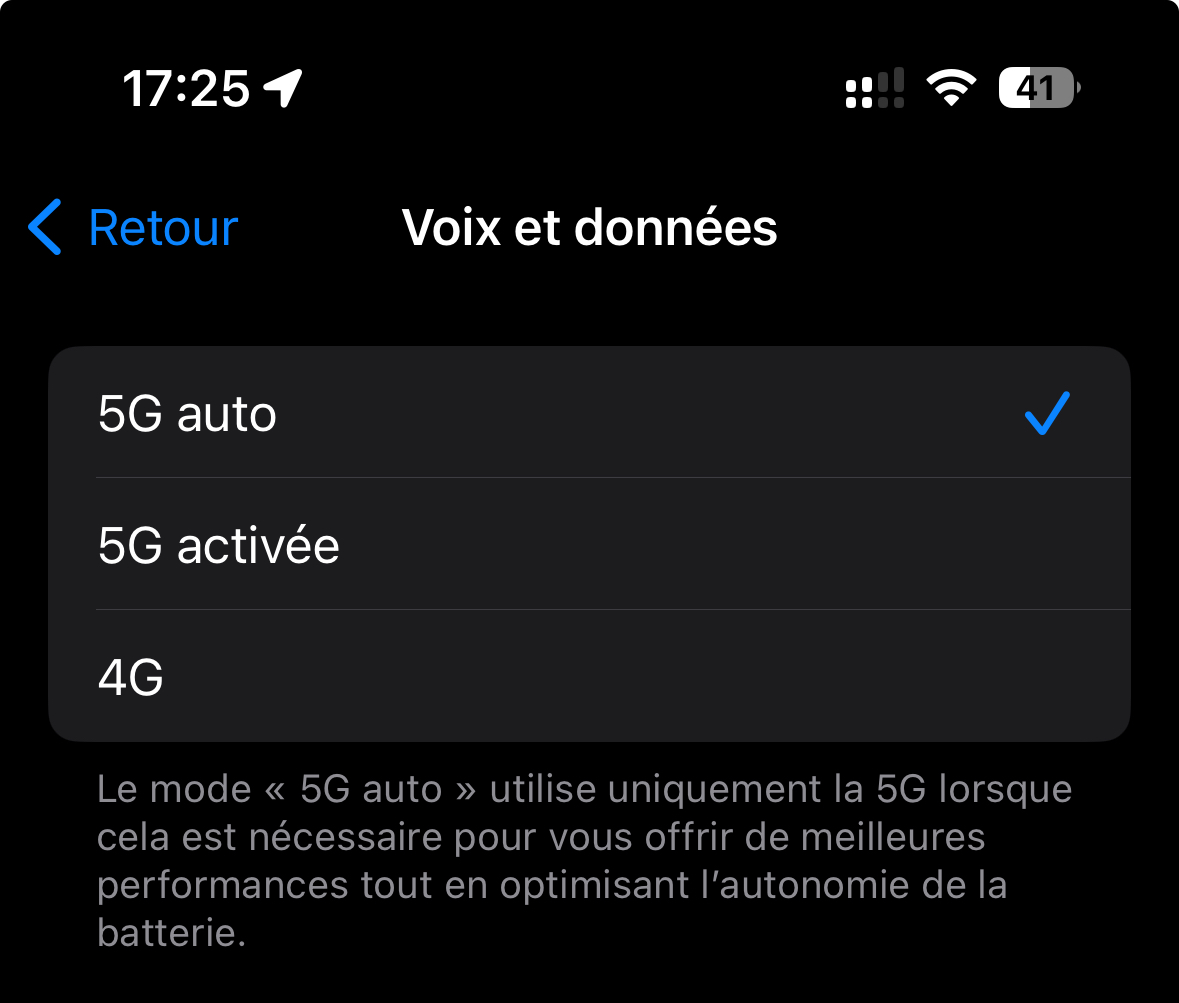
The telecommunications landscape is undergoing a significant transformation with the impending shutdown of 2G and 3G networks across France and much of Europe. This massive undertaking, driven by the need to reallocate valuable radio spectrum for more efficient 4G and 5G technologies, reduce maintenance costs, and improve energy efficiency, has direct implications for emergency calls. In France, the 2G network is slated for decommissioning by the end of 2026, with the 3G network following suit between 2028 and 2029.
This multi-year process began with Orange, which initiated its 3G shutdown on March 31, 2026, in the South-West region, with a nationwide generalization planned for autumn. SFR and Bouygues Telecom aim to complete their 3G shutdowns by the end of the year, with 2G following by 2026. This transition marks the end of an era for older mobile phones that operate exclusively on 2G or 3G networks. As a reporteur for the Commission Supérieure du Numérique et des Postes (CSNP) starkly put it, a classic device like the "Nokia 3310 will become a paperweight in 2026." This concerns not only nostalgic feature phone users but also a significant segment of the elderly population who may rely on