Evan Lee Salim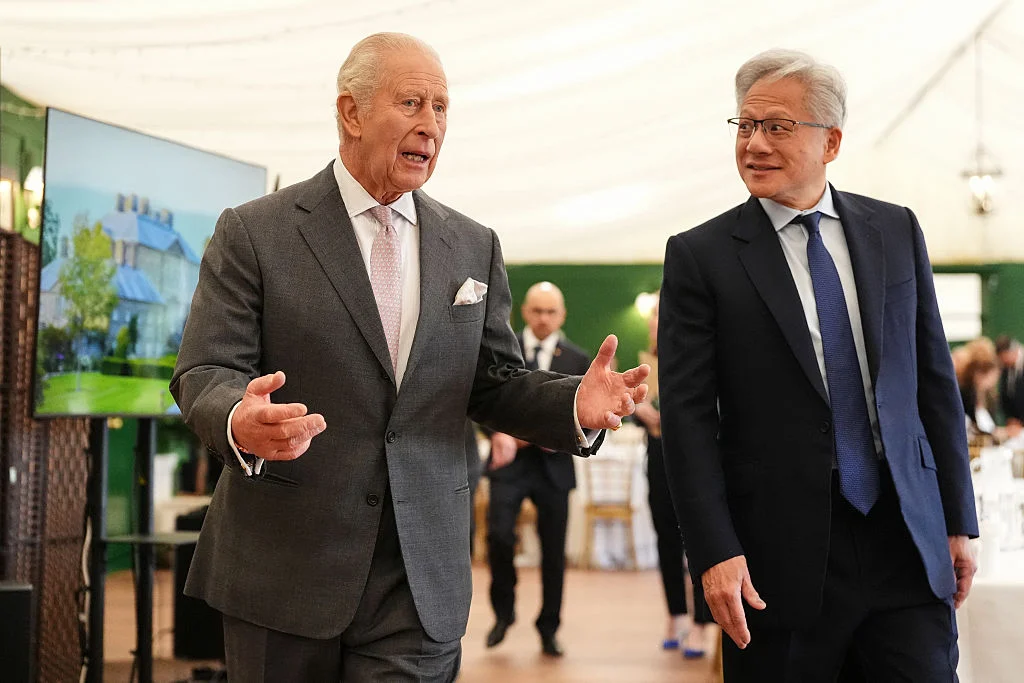
In a move that underscored the escalating global apprehension surrounding artificial intelligence, King Charles III hosted a highly private and exclusive summit on Thursday, September 17, 2026, at Dumfries House, his charitable foundation’s exquisite 18th-century Ayrshire estate. The gathering brought together an unprecedented cohort of the most influential figures in AI development, UK government officials, and even representatives from national security and ethical advisory bodies. The King’s address at this high-stakes forum was particularly noteworthy, as it saw the monarch directly engaging with one of the most pressing and politically charged technological issues of the modern era, a departure from the traditional constitutional reticence of the royal family on political matters.
A Distinguished Convocation at a Historic Venue
The guest list for the Dumfries House summit was a testament to the gravity of the discussions at hand. Among the luminaries present were Jensen Huang, the visionary CEO of Nvidia, a company at the forefront of AI hardware innovation; senior representatives from leading frontier AI developers, including Sarah Friar, CFO of OpenAI, and Tino Cuéllar, Global Affairs Lead for Anthropic. The UK government’s commitment was evident through the attendance of Kanishka Narayan, the newly appointed AI Minister, alongside the head of the UK’s foreign intelligence service, MI6, signaling the national security dimensions of AI. Adding a unique ethical and philosophical perspective was Paolo Benanti, the advisor to Pope Francis on artificial intelligence, whose presence highlighted the broader societal and moral implications of the technology.
Dumfries House itself, a magnificent Palladian mansion rescued and restored through the King’s efforts when he was Prince of Wales, provided a symbolic backdrop. Its historical grandeur contrasted sharply with the cutting-edge, often disquieting, nature of the discussions. The choice of venue emphasized a blend of tradition and forward-thinking, underscoring the idea that while humanity embraces new frontiers, it must also safeguard timeless values.
The King’s Urgent Call for Control and International Cooperation
King Charles’s remarks resonated with a profound sense of urgency, framing the rapid evolution of AI as both "intriguing and deeply concerning." He candidly articulated the dual nature of AI, acknowledging its immense capacity to "improve and save life," citing advancements in medicine and science as prime examples. However, his address quickly shifted to the more ominous aspects, echoing the growing warnings from the very creators of these technologies. "Yet those who have created these technologies are now increasingly warning that AI risks developing darker capacities, perhaps even to take life," the King stated, a stark warning that underscored the existential stakes.
This grave pronouncement came mere days after a notable Anthropic researcher publicly resigned, issuing a chilling online statement that AI companies were "racing to build machines that are much smarter than any human" and expressing fears that "humanity may not survive this." The King directly tapped into this prevailing anxiety, urging the assembled leaders to find a way to control AI "before it’s too late." He emphasized the critical need to properly consider the "existential dangers" should this technology "fall into the wrong hands and be used in potentially catastrophic ways." His direct question, "Surely, we need sufficient means of control before it’s all too late?" served as a powerful call to action for the assembled experts.
The monarch’s intervention, while brief – he reportedly stayed for approximately 20 minutes before allowing the discussions to continue amongst the delegates – was impactful. It underscored the UK’s commitment to fostering a global dialogue on AI governance and safety, a role it has actively cultivated since hosting the inaugural AI Safety Summit at Bletchley Park in November 2023. By convening this summit, King Charles lent the weight of the Crown to a crucial global debate, providing a neutral, yet authoritative, platform for deliberation.
Background Context: The UK’s AI Ambitions and Global Concerns
The Dumfries House summit is not an isolated event but rather a significant escalation in the UK’s strategic positioning within the global AI landscape. Following the Bletchley Park summit, which brought together world leaders, AI company CEOs, and researchers to discuss frontier AI safety, the UK established the AI Safety Institute (AISI). This institute is dedicated to understanding and mitigating the risks posed by advanced AI models, aiming to become a global leader in AI safety research and evaluation. The King’s personal involvement adds a distinct layer of soft power to these national efforts, providing a non-political, moral voice in a highly competitive and often nationalistic technological race.
Globally, the conversation around AI has reached a fever pitch. The market for artificial intelligence is projected to grow from hundreds of billions to several trillion dollars within the next decade, with staggering amounts of capital being poured into R&D. This economic imperative fuels an intense competition, particularly between major geopolitical players like the United States, China, and the European Union, each vying for technological supremacy and the perceived advantages it brings. The "whoever wins AI, wins" mentality, articulated by figures such as former President Donald Trump and embraced by some industry leaders, highlights the strategic importance of AI not just for economic prosperity but also for national security and global influence.
However, alongside this rapid acceleration, concerns about AI’s potential downsides have mounted. Researchers and ethicists frequently point to risks ranging from job displacement and algorithmic bias to sophisticated misinformation campaigns and the autonomous weaponization of AI. The more extreme warnings, echoed by the King, touch upon the "existential" threats – scenarios where AI development spirals beyond human control, leading to unforeseen and potentially catastrophic consequences for humanity. This dichotomy between immense promise and profound peril forms the core of the current global debate.

Industry Leaders and Shifting Sands of AI Policy
The presence of top executives from OpenAI and Anthropic was particularly telling. These companies, often described as leading the charge in developing "frontier AI" models, are at the epicenter of both the innovation and the safety discussions. OpenAI, for instance, has been grappling with internal debates about balancing rapid deployment with safety protocols, a tension that reportedly contributed to the stalling of its much-anticipated blockbuster IPO plans due to persistent safety concerns. Anthropic, while known for its "constitutional AI" approach designed to embed ethical guardrails into its models, has also seen internal dissent regarding the pace and direction of AI development.
Tino Cuéllar, Anthropic’s Global Affairs Lead, expressed the company’s gratitude, stating they were "honored to have taken part in the discussion" and "grateful to the King for convening industry leaders and voices from across society to discuss the role of AI in serving the public good." Such statements reflect a common industry narrative that acknowledges the need for dialogue and collaboration, even as companies continue their aggressive pursuit of technological breakthroughs.
The summit also served as a critical juncture in the ongoing debate about AI governance and international cooperation. King Charles’s call to "build international cooperation and consensus" is a direct response to the fragmented and often nationalistic approaches emerging globally. This was highlighted by Anthropic’s recent decision to limit access to its Fable and Mythos models to only U.S. customers, a move that reportedly "shocked the Euro tech scene" and ignited discussions about "AI sovereignty" – the idea that nations must develop their own AI capabilities and retain control over their data and infrastructure to prevent reliance on foreign entities. This development underscores the complexity of achieving global consensus when national interests and technological competition are so deeply intertwined.
A Chronology of Mounting Concerns and Royal Engagement
King Charles’s engagement with AI is not new. He has spoken about the challenges and benefits of AI in both 2023 and 2024, demonstrating a consistent interest in the subject. However, the 2026 summit at Dumfries House marked a significant elevation of his involvement, moving beyond general remarks to directly convening key stakeholders.
This royal initiative occurs against a backdrop of intensifying public and private sector debates:
- November 2023: The UK hosts the first AI Safety Summit at Bletchley Park, bringing together governments, industry, and academia to discuss frontier AI risks.
- Early 2024: Various AI luminaries, including OpenAI’s Sam Altman and Anthropic’s Dario Amodei, issue public letters and statements calling for caution and regulatory oversight in AI development. Elon Musk frequently voices concerns about AI safety.
- Mid-2026: Reports emerge of an Anthropic researcher resigning over safety concerns, publicly warning about the existential risks of unchecked AI development.
- September 2026 (leading up to summit): A clear schism forms within the industry and political spheres regarding the pace of AI development. While some, like Altman, Musk, and Amodei, advocate for deceleration, figures such as Nvidia’s Jensen Huang and President Donald Trump explicitly reject these calls, emphasizing the strategic importance of accelerating AI development, particularly in the context of geopolitical competition with China. President Trump’s assertion, "We’re leading China in AI… We’re the most sophisticated country in the world, and frankly I want to keep it that way because whoever wins AI, wins," encapsulates this competitive ethos.
This timeline reveals a rapidly evolving landscape where technological advancements outpace regulatory frameworks, and where the interests of Big Tech, national politics, and societal well-being are frequently at odds. The King’s summit served as a crucial intervention, attempting to bridge these divides and focus attention on the shared imperative of responsible development.
Broader Impact and Implications
The King’s AI summit at Dumfries House carries several significant implications. Firstly, it further solidifies the UK’s aspiration to be a global leader in AI ethics and governance. By having the monarch personally convene such a high-level discussion, the UK projects an image of serious commitment to addressing AI’s challenges, beyond purely economic or military considerations. This could bolster its soft power and influence in shaping future international regulations and norms.
Secondly, the involvement of a constitutional monarch, traditionally apolitical, adds a unique moral authority to the call for responsible AI development. The King’s message transcends partisan politics and commercial interests, appealing to a fundamental human imperative. This could resonate with a broader public increasingly concerned about the direction of AI, and potentially galvanize greater public engagement and pressure for effective governance.
Thirdly, the diverse guest list—spanning industry, government, intelligence, and ethics—underscores the multi-faceted nature of the AI challenge. Effective solutions will require collaboration across these traditionally siloed sectors. The discussions initiated at Dumfries House, even if short-lived in the King’s presence, are intended to foster ongoing dialogue and cooperation among these key stakeholders.
Finally, the summit highlights the complex tension between innovation and regulation. While the economic potential of AI is undeniable, the growing chorus of warnings from within the industry itself, amplified by the King’s address, signals a critical inflection point. The task articulated by King Charles—"not to merely advance technology, but to ensure that it remains firmly in the service of humanity, community, and the natural world"—is a profound challenge that will define the coming decades. As nations and corporations race to unlock AI’s potential, the imperative to balance progress with prudence, and to ensure that "what is timeless" is not lost in the pursuit of "what is new," remains humanity’s most crucial endeavor. The Dumfries House summit served as a powerful reminder that this is a conversation that must continue, with increasing urgency and international collaboration.