Evan Lee Salim
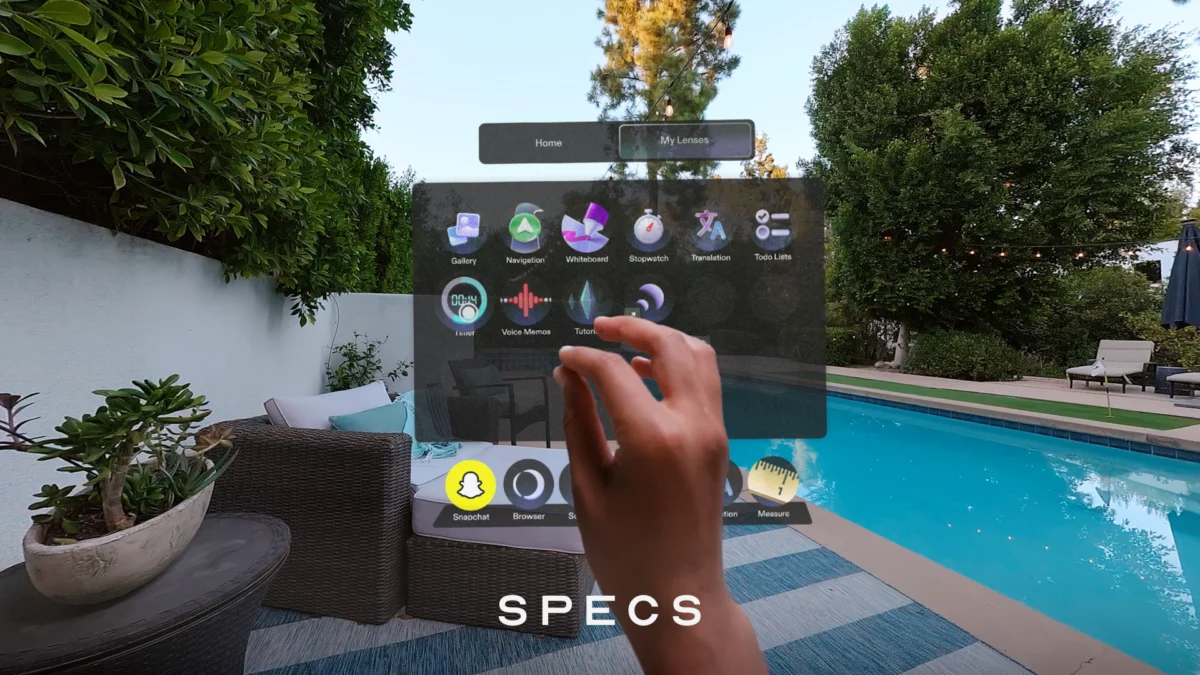
The voice artificial intelligence (AI) sector has emerged as one of the most dynamic and heavily invested areas within the broader AI landscape, attracting billions of dollars from investors keen on capitalizing on its transformative potential. This burgeoning field spans an extensive array of applications, from streamlining customer support and optimizing sales calls through automation to developing sophisticated meeting notetakers and pioneering AI-powered smart glasses that leverage voice as their primary mode of interaction. As AI research laboratories consistently unveil advanced models and hardware manufacturers strive to engineer optimal user experiences for interacting with these intelligent devices, a critical need arises for rigorous testing and robust feedback mechanisms to drive continuous improvement. It is precisely at this pivotal intersection that Treble, an innovative startup based in Iceland, is strategically positioning itself, creating a comprehensive simulation platform designed to serve the diverse requirements of AI model developers, robotics companies, and consumer hardware manufacturers.
Navigating the Booming Voice AI Landscape
The global voice AI market is experiencing exponential growth, driven by advancements in natural language processing, machine learning, and the increasing demand for intuitive, hands-free interfaces. Valued at approximately $30 billion in 2023, the market is projected to reach an astounding $150 billion by 2030, exhibiting a compound annual growth rate (CAGR) exceeding 25%. This rapid expansion underscores the pervasive integration of voice technology into daily life, from smart home devices and automotive infotainment systems to enterprise solutions for enhanced productivity and accessibility.
However, the path to seamless and reliable voice AI is fraught with significant technical hurdles. Developing AI models that can accurately understand and respond to human speech across an infinite variety of real-world acoustic environments is a monumental challenge. Factors such as background noise, varying room acoustics, speaker distance, accents, speech patterns, and even device placement can severely impact performance. Traditional development methodologies often rely on collecting vast amounts of real-world audio data, a process that is not only time-consuming and expensive but also inherently limited in its ability to cover every conceivable scenario. Furthermore, the iterative process of designing, prototyping, and testing hardware components like microphones and speakers in physical environments adds layers of complexity and cost, significantly slowing down innovation cycles.
Treble’s Foundational Role in AI Development
Founded in 2020 by a pair of seasoned acoustic engineers, Finnur Pind and Jesper Pedersen, Treble has rapidly ascended to prominence by offering a cutting-edge solution to these industry-wide challenges. The company’s core innovation lies in its simulation platform, which enables developers to virtually test and refine voice AI models and hardware designs in highly realistic, controllable acoustic environments. This capability is proving indispensable for companies at the forefront of AI innovation, allowing them to accelerate development, reduce costs, and ensure the highest quality of their voice-enabled products.
The Icelandic startup recently announced a significant financial boost, securing an additional $18 million in an extension of its Series A funding round. This latest injection of capital was led by Paladin Capital Group, with robust participation from existing investors, including KOMPAS VC, Frumtak Ventures, EIC, and Omega ehf. This investment follows a $12 million raise earlier in 2024, bringing Treble’s total funding to date to over $40 million. This substantial backing underscores investor confidence in Treble’s unique value proposition and its potential to become a foundational infrastructure layer for the entire voice AI industry. The company already boasts an impressive roster of clients, including technology giants like Amazon and Logitech, a testament to the efficacy and market relevance of its platform.
A Deep Dive into Treble’s Simulation Capabilities
Treble’s platform is meticulously designed to address several critical verticals within the voice AI ecosystem, providing a holistic approach to development and testing.
-
Synthetic Data Generation for Advanced AI Models:
At its core, Treble offers a sophisticated synthetic data generation platform. This is crucial for training and refining voice AI models, particularly in areas like speech enhancement, noise suppression, and general model training. Finnur Pind, co-founder and CEO of Treble, articulated the fundamental challenge to TechCrunch: "Audio AI is really a data challenge, and this is where the most opportunities to enable next-generation models and hardware lie. To date, pretty much all sound-related AI has been made from recordings and data scraped from the internet. We believe that accurate physics simulation can be an alternative way to create data for sound."
This perspective highlights a paradigm shift. Instead of relying solely on real-world recordings—which can be noisy, inconsistent, and limited in scope—Treble leverages physics-based simulations to generate vast quantities of clean, precisely controlled audio data. This synthetic data can simulate countless acoustic scenarios, including specific room geometries, material properties (e.g., carpeted vs. tiled floors, glass vs. concrete walls), and various noise sources, all without the logistical complexities and costs associated with real-world data collection. This enables AI labs to train more robust models capable of performing optimally in diverse and challenging acoustic environments, significantly accelerating the development of next-generation voice AI.
-
Rigorous Evaluation of Voice AI Models:
Beyond data generation, Treble’s platform plays a vital role in evaluating voice AI models under a multitude of conditions, providing invaluable feedback to developers. Earlier this year, in a strategic move to standardize performance benchmarks, Treble partnered with Hugging Face, a prominent platform for machine learning development. Together, they launched a benchmark for speech recognition models, FFaSR (Fast Fourier Acoustic Scene Recognizer), designed to assess model performance across various realistic conditions. This collaboration provides a standardized, objective metric for comparing different speech recognition models, helping developers identify strengths and weaknesses and ultimately push the boundaries of accuracy and reliability. The ability to simulate specific, reproducible test conditions ensures that model improvements are genuinely impactful and not merely artifacts of specific training datasets. -
Virtual Prototyping and Hardware Design Optimization:
Treble’s expertise extends significantly into the realm of hardware design and testing, particularly from an acoustic perspective. The company collaborates closely with manufacturers of audio devices such as headphones and smart speakers, offering virtual prototyping capabilities. This allows these companies to simulate how their products will sound and perform in various environments before committing to expensive physical prototypes. For instance, Treble can model how a specific headphone design might render audio in a busy street environment versus a quiet office, or how a smart speaker’s ability to understand commands might be affected by its placement in a living room, considering factors like reflections off walls and furniture. This virtual testing drastically reduces development cycles and costs, enabling faster iteration and superior product design. More recently, Treble has expanded its simulation testing services to encompass emerging categories like smart glasses and other innovative AI-powered wearable devices, which often present unique acoustic challenges due to their compact form factors and close proximity to the user.
The Vision for "Superhuman Hearing" and Physical AI
Finnur Pind articulated an exciting vision for the future, particularly concerning wearables. He expressed enthusiasm for devices that could dramatically enhance users’ auditory experiences, coining the term "superhuman hearing." "I’m really excited about the next generation of these devices like headphones and smart glasses that can enable [a feature like] superhuman hearing," Pind shared. "That’s an area where you can really just hear better in challenging acoustic environments. Maybe you are in a restaurant, and you only want to hear people within two meters of range, or you are in a seminar, and want to mute people around you." This concept represents a profound leap beyond simple noise cancellation, envisioning intelligent audio processing that can selectively filter, amplify, and spatialise sound based on user intent and environmental context, creating a truly personalized and enhanced auditory reality.
Beyond consumer wearables, Treble is also strategically increasing its focus on the burgeoning "physical AI" space. This includes sectors such as robotics, automotive, and drone technologies. The goal is to enable sophisticated sound-based functions for these autonomous systems through advanced testing and simulation. For instance, in robotics, sound sensing can be crucial for environmental awareness, anomaly detection (e.g., unusual machinery noises), and human-robot interaction. In autonomous vehicles, acoustic sensors can aid in identifying emergency sirens, other vehicle noises, or even subtle indications of mechanical issues. Drones could utilize sound for navigation, surveillance, or detecting specific acoustic signatures in their environment. By providing simulation and testing infrastructure for these applications, Treble aims to unlock new capabilities and ensure the reliability of sound-based intelligence in increasingly complex autonomous systems.
Investor Confidence and Broader Implications
Francois Ruether, VP of Paladin Capital Group, emphasized the distinctiveness and growing importance of Treble’s platform. "Our thesis is that, as more products depend on understanding sound, this infrastructure becomes increasingly valuable across voice AI, wearables, robotics, and physical AI," Ruether told TechCrunch. He highlighted a key benefit for customers: "Customers retain ownership of their models, products, and development workflows, while benefiting from a shared foundation of a simulation-native acoustic infrastructure layer." This perspective underscores Treble’s role not as a competitor to AI developers, but as an essential enabling technology, providing a shared, high-fidelity acoustic simulation environment that accelerates innovation across the entire industry.
The implications of Treble’s work extend far beyond individual product development cycles. By providing a scalable, efficient, and highly accurate method for testing and refining voice AI, the company is poised to:
- Accelerate Innovation: By dramatically reducing the time and cost associated with physical prototyping and real-world data collection, Treble’s platform empowers companies to iterate faster and bring cutting-edge voice AI products to market more quickly.
- Enhance User Experience: More robust testing leads to more reliable and intuitive voice interfaces, reducing frustration and increasing user adoption across various devices and applications. This also contributes to making AI more inclusive, by ensuring better performance across diverse accents, speech patterns, and environmental conditions.
- Unlock New Capabilities: The ability to simulate complex acoustic scenarios allows developers to explore novel applications for sound-based AI in areas like predictive maintenance, environmental monitoring, and advanced human-machine interaction, particularly in the rapidly expanding physical AI domain.
- Standardize Development: The partnership with Hugging Face for benchmarks like FFaSR signifies a move towards standardizing evaluation metrics, fostering transparency and healthy competition within the voice AI community, ultimately leading to higher quality models.
- Drive Economic Efficiency: For companies like Amazon and Logitech, leveraging Treble’s platform means significant savings in research and development costs, fewer late-stage design changes, and a faster path to market for their voice-enabled products.
Conclusion: Treble’s Strategic Position at the Forefront of AI Evolution
In an era where conversational AI and intelligent audio interfaces are becoming ubiquitous, the quality and reliability of these technologies are paramount. Treble, with its sophisticated simulation platform and significant new funding, is not just participating in the voice AI revolution; it is actively building a critical piece of its foundational infrastructure. By tackling the complex challenges of acoustic variability and data generation through physics-based simulation, Treble is enabling developers to create more accurate, robust, and user-friendly voice AI experiences. As the boundaries of AI continue to expand into wearables, robotics, and other forms of physical AI, Treble’s role as a provider of simulation-native acoustic infrastructure will only grow in importance, solidifying its position as a key enabler for the next generation of intelligent devices and systems.