admin
admin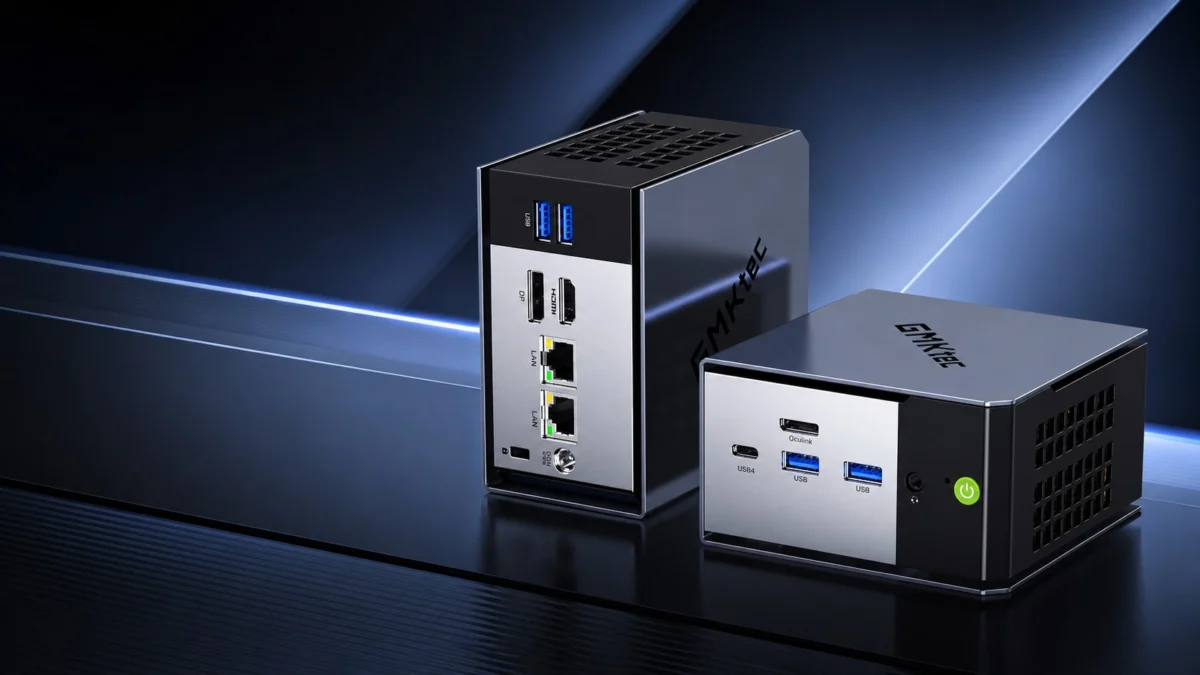
Technical Specifications and the Gorgon Point Architecture
At the heart of the GMKtec EVO-X1 Pro lies the AMD Ryzen AI 9 HX 470, a member of the newly minted Zen 5 "Refresh" family. This processor architecture is built on a sophisticated hybrid topology, featuring 12 cores and 24 threads. The underlying Zen 5 architecture provides a substantial increase in Instructions Per Clock (IPC) compared to its Zen 4 predecessors, allowing the system to maintain high efficiency even under heavy multi-threaded loads. With a maximum boost frequency of 5.2 GHz, the HX 470 ensures that single-threaded performance remains competitive for gaming and legacy applications.
A defining characteristic of the Gorgon Point series is its focus on the Neural Processing Unit (NPU). The EVO-X1 Pro delivers a combined AI compute capability of 86 TOPS (Trillion Operations Per Second). Of this total, the dedicated NPU accounts for 55 TOPS, comfortably exceeding the 40 TOPS threshold required for Microsoft’s Copilot+ PC certification. This specialized hardware allows the mini PC to execute AI-driven tasks—such as real-time language translation, background blur in video conferencing, and local Large Language Model (LLM) processing—without taxing the primary CPU or GPU cores.

Graphical Prowess and the OCulink Advantage
While the EVO-X1 Pro features the integrated Radeon 890M graphics—a solution based on the RDNA 3.5 architecture—GMKtec has recognized the limitations inherent in integrated silicon for high-end enthusiasts. The Radeon 890M is arguably the most powerful integrated GPU on the market, capable of running modern AAA titles at 1080p with respectable frame rates. However, for users demanding 4K resolution or professional-grade rendering, the EVO-X1 Pro includes a dedicated OCulink (Optical-Copper Link) port.
The inclusion of OCulink is a critical differentiator in the current mini PC landscape. Unlike USB4 or Thunderbolt 4, which often face bandwidth bottlenecks and latency issues due to protocol overhead, OCulink provides a direct PCIe Gen4 x4 connection to the system’s motherboard. This interface offers up to 64 Gbps of bandwidth, significantly reducing the performance loss typically associated with external GPU (eGPU) enclosures. By utilizing the OCulink port, users can transform the EVO-X1 Pro into a high-end gaming rig or a CUDA-powered workstation by connecting desktop-class graphics cards such as the NVIDIA RTX 40-series or AMD RX 7000-series.
Memory, Storage, and Configuration Strategy
In a departure from industry norms that often offer 16GB or 32GB entry-level models, GMKtec has opted to standardize the EVO-X1 Pro with a minimum of 64GB of LPDDR5x memory. This decision reflects the growing memory requirements of local AI applications and professional creative suites. High-capacity RAM is essential for the "Gorgon Point" architecture to function optimally, as the integrated GPU and NPU share the system memory pool.

The storage configurations are equally robust, with the base model featuring a 1TB PCIe 4.0 NVMe SSD, and a higher-tier variant offering 2TB of storage. The internal layout of the chassis is designed to accommodate these high-speed components while maintaining thermal stability. The system’s pricing reflects its premium positioning: the 64GB + 1TB configuration is marketed at $1,599, while the 64GB + 2TB flagship model is priced at $1,769. These price points place the EVO-X1 Pro in direct competition with high-end laptops and mid-tower desktop PCs, banking on the value of its extreme power-to-size ratio.
Connectivity and Networking Infrastructure
The EVO-X1 Pro is equipped with a comprehensive array of I/O ports designed to support complex workstation setups. The rear and front panels include:
- USB4: A full-function port supporting 40Gbps data transfer, DisplayPort Alt Mode, and Power Delivery.
- OCulink: The aforementioned PCIe Gen4 x4 interface for external expansion.
- HDMI 2.1 and DisplayPort 2.1: Enabling support for up to three simultaneous displays at resolutions reaching 8K at 60Hz.
- Dual 2.5G LAN: Providing redundant or aggregated high-speed wired internet, essential for NAS connectivity and low-latency server tasks.
- USB 3.2 Gen 2: Multiple Type-A ports for legacy peripherals and high-speed external drives.
Wireless connectivity is handled by the latest standards in the industry. The integration of WiFi 7 (802.11be) ensures that the device can take advantage of the 6GHz band, offering lower latency and higher throughput in congested environments. This is complemented by Bluetooth 5.4, which provides improved stability and energy efficiency for wireless peripherals such as keyboards, mice, and high-fidelity audio equipment.

Proprietary Software and the AI Ecosystem
To complement the hardware, GMKtec has introduced "GMKtec Claw," a proprietary AI ecosystem pre-installed on the EVO-X1 Pro. This software suite is designed to act as a bridge between the user and the system’s NPU. GMKtec Claw supports various AI agents and local AI applications, allowing users to leverage the 55 TOPS of NPU power for productivity without relying on cloud-based services. This local-first approach to AI addresses growing concerns regarding data privacy and the latency associated with remote server processing.
Market Context and Chronology
The release of the EVO-X1 Pro follows a period of rapid iteration in the mini PC sector. Previously, GMKtec released the EVO-X1 AI, which utilized the Ryzen AI 9 HX 370. While the HX 370 was a formidable processor, the transition to the HX 470 (Gorgon Point) represents a refinement in power delivery and AI optimization.
The timeline of this release is strategic. By launching in the third quarter of the year, GMKtec is positioning the EVO-X1 Pro to capture the "Back to School" and early holiday shopping markets. The official launch included a limited-time promotional discount of $20, available through August 15, intended to incentivize early adopters within the enthusiast community.

Comparative Analysis and Industry Implications
The EVO-X1 Pro enters a market where the boundaries between different computer categories are increasingly blurred. Traditionally, a mini PC was a compromise—offering small size at the expense of thermal headroom and graphical power. However, the combination of AMD’s Zen 5 efficiency and the OCulink interface effectively negates these traditional drawbacks.
Industry analysts suggest that the shift toward 64GB RAM as a standard in high-end mini PCs could signal a broader trend. As AI models become more integrated into daily OS functions, the demand for "Unified Memory" (memory shared between CPU and GPU) will continue to rise. GMKtec’s decision to bypass lower memory tiers suggests that 32GB may soon be considered the "new minimum" for AI-capable workstations.
Furthermore, the inclusion of DisplayPort 2.1 and HDMI 2.1 positions the EVO-X1 Pro as a future-proof hub for the next generation of high-refresh-rate 4K and 8K monitors. For creative professionals, the ability to drive multiple high-resolution displays from a box that can fit in a backpack is a compelling value proposition.

Conclusion and Future Outlook
The GMKtec EVO-X1 Pro is a testament to the rapid maturation of the SFF market. By leveraging the AMD Ryzen AI 9 HX 470, GMKtec has produced a machine that is as much a statement of intent as it is a consumer product. It challenges the necessity of bulky desktop towers for all but the most extreme cooling requirements.
As software developers continue to optimize applications for AMD’s XDNA 2 NPU architecture, the value of the EVO-X1 Pro’s 86 TOPS of AI performance will likely increase. For now, the device stands as a high-performance beacon for enthusiasts who demand the latest in Zen 5 architecture, high-speed connectivity, and the modular flexibility provided by OCulink. With its official availability on the GMKtec website, the EVO-X1 Pro sets a new benchmark for what is possible in the realm of compact, AI-powered computing.